Just Me Travel

Just Me Travel

Solo Travel Blogger

Month: October 2026

TOP REASONS TO VISIT KANGAROO ISLAND ON A DAY TOUR FROM ADELAIDE

My Kangaroo Island Guide: 3 Awesome Sights to Visit in One Day.   Just a short journey from Adelaide, Kangaroo Island is a South Australian destination where spectacular coastal scenery…

My Kangaroo Island Guide: 3 Awesome Sights to Visit in One Day.


Just a short journey from Adelaide, Kangaroo Island is a South Australian destination where spectacular coastal scenery and native wildlife take centre stage. Joining a day tour meant I could see the island’s best-known sights without worrying about the logistics. In one day, I looked down on a colony of wild sea lions at Seal Bay, wandered among the sculpted granite boulders of Remarkable Rocks, and watched fur seals lounge beneath the sea-carved Admirals Arch. If you’re planning a day trip, these are the three stops I’d put at the top of your list.

Below, I’ll share why each one deserves a spot on your itinerary. I’ve also included a short section on the best time to go and how to get there, so you can start planning.


About Kangaroo Island

Kangaroo Island lies off the coast of South Australia, about 15 kilometres from the tip of the Fleurieu Peninsula and 110 kilometres southwest of Adelaide. Measuring 155 kilometres from east to west and 55 kilometres at its widest, it is Australia’s third-largest island after Tasmania and Melville Island. Despite its size, much of the island remains wild and unspoilt, with around a third protected as national and conservation parks and a population of about 5,000 residents.

Kangaroo Island is one of Australia’s best places to see native animals in their natural habitat, from sea lions and fur seals on the coast to kangaroos, wallabies, koalas, and echidnas inland. The landscape is just as varied, from rugged cliffs and granite formations shaped by the Southern Ocean to white-sand beaches and quiet bushland. Beyond nature, the island is known for local produce, including seafood, honey, wine, and gin, making it as rewarding for food lovers as for wildlife fans.

It is also surprisingly easy to reach. You can take the ferry from Cape Jervis or fly from Adelaide, making a day tour possible. You can cover the island’s top sights in a single day, though you may want to stay two or three nights.


Meet the Sea Lions at Seal Bay Conservation Park


One highlight of my Kangaroo Island day tour was visiting Seal Bay Conservation Park, on Kangaroo Island’s south coast, to see Australian sea lions. There’s nothing quite like looking down on a beach where sea lions sprawl across the sand, completely unbothered by your presence. Seal Bay is home to one of the largest colonies of Australian sea lions, one of the world’s rarest sea lion species.

We only did the boardwalk and lookout because we didn’t have time for the guided beach walk, given the tour’s late start from the Penneshaw Ferry Terminal. But it still delivered. As we walked along the boardwalk, we saw sea lions napping on the beach and in the dunes. Many pups nursed beside their mothers, and sea lions came and went from the sea. If you have more time and the beach is open, the ranger-guided beach walk takes you onto the sand for a closer look at the colony.

The Australian sea lion is now endangered, and its population is still declining. Sea lions are particularly sensitive to disturbance, and adult males can be aggressive towards humans. This is why walking on the beach without a ranger guide is disallowed. The boardwalk allowed us to keep a safe distance from the sea lions. We were also advised to keep our voices down and to stay together as a group.

If you only see one wildlife spot on the island, make it this one.

From the south coast, it’s a drive west into Flinders Chase National Park, where the wildlife gives way to some of the island’s most striking scenery.


Remarkable Rocks: Nature’s Sculptures on the Coast


Remarkable Rocks is one of Kangaroo Island’s most recognisable natural landmarks, and it’s easy to see how it earned its name. Perched on a granite outcrop overlooking the Southern Ocean in Flinders Chase National Park, these enormous boulders have been shaped by nature into unusual forms that look almost too strange to be real.

What makes the rocks so fascinating is their variety of shapes and the way they appear to balance on the granite platform. Their curves, hollows, and weathered surfaces create an extraordinary collection of natural sculptures. The orange tones of the lichen covering parts of the granite add another layer of colour, contrasting with the blue ocean and the surrounding landscape.

Walking among these formations lets you appreciate them from different angles. Each viewpoint reveals something new, making this a particularly rewarding stop if, like me, you enjoy photographing unusual landscapes. The rocks are impressive in their own right, but the sweeping coastal views make the experience even better.

Take your time here rather than stopping for a quick photo; the distinctive granite formations and spectacular ocean views showcase nature’s extraordinary power, and it’s worth soaking it in.

Back on the bus, it’s a short drive to the island’s southwest coast, where the ocean has carved something just as dramatic.


Admirals Arch: A Dramatic Natural Wonder

Another highlight of my Kangaroo Island day tour was Admirals Arch, a spectacular natural rock formation at Cape du Couedic in Flinders Chase National Park. Here, the relentless action of the Southern Ocean has carved an impressive arch into the coastal rock, framing the sea beyond. What makes it unusual is the stalactites hanging from its roof, a rare sight on a coastline.

The walk down to the arch is easy, along a boardwalk that hugs the rugged coastline. Long-nosed fur seals (also known as New Zealand fur seals) lounged on the rocks below the boardwalk and played in the water, adding a wildlife element to this already striking coastal landscape.

I found Admirals Arch a fitting companion to Remarkable Rocks. While the giant granite boulders at Remarkable Rocks illustrate how weathering sculpts the landscape over time, Admirals Arch showcases the sea’s power along Kangaroo Island’s rugged coastline.

If you are visiting Kangaroo Island for the first time, I strongly recommend making room for both. They are very different sights, but together they give you a wonderful appreciation of the island’s natural beauty.


When to Visit

The best time to visit Kangaroo Island depends on what you want to do: see wildflowers and newborn seal pups, enjoy comfortable bushwalks, swim and snorkel, or go whale watching. Or is the weather itself a major factor for you? You may find the following guide useful for choosing the best time to visit: Kangaroo Island Seasonal Guide.


Getting There

The Kangaroo Island SeaLink ferry operates regular departures between Adelaide on the Australian mainland and Kangaroo Island.


I took the SeaLink Kangaroo Island vehicle and passenger ferry from Adelaide to Kangaroo Island, departing from Cape Jervis, about 2 hours south of Adelaide, at 9.00 am. Because I booked the SeaLink 1 Day Kangaroo Island Experience, the tour included hotel pick-up and drop-off in Adelaide, plus return ferry transport to Kangaroo Island.

The ferry crossing took about one hour through the rocky Backstairs Passage. If, like me, you get seasick, the crew recommend sitting at the rear of the ferry. On the return trip, I found that standing on the ferry’s bow and watching Kangaroo Island get smaller and smaller was the best way to keep seasickness at bay.

For detailed information on travelling to Kangaroo Island by ferry, check out this link: Getting to Kangaroo Island. The site includes a link for booking the ferry.

The fastest way to reach Kangaroo Island is to fly directly with QantasLink from Adelaide to Kingscote Airport. The flight takes about 30 minutes.


Kangaroo Island left me with three standout memories: seeing Australian sea lions at Seal Bay, marvelling at the unusual formations of Remarkable Rocks, and taking in the rugged coastal scenery at Admirals Arch. Each sight offered a different perspective on the island’s natural beauty, and together they were the highlights of my day tour from Adelaide. 

It was a long day – 16 hours from my hotel in Adelaide, return. However, if you’re deciding whether a day tour from Adelaide is worth it, my answer is a firm yes. It’s an easy way to experience some of the island’s major highlights if you are short on time.


Disclaimer: This post contains no affiliate links. All views and opinions are my own and non-sponsored. All photos are my own and remain the copyright of Joanna Rath/Just Me Travel.

© Just Me Travel 2018-2026.


Have you been to Kangaroo Island, or is it on your list? Tell me your favourite stop, or any questions about planning your trip, in the comments below.


Like this post? Save it for later!


Author’s Note: Please check the latest travel restrictions before planning any trip and follow government advice.


Sign up to receive the latest in travel destinations, topics, resources and guides.


© Just Me Travel 2018-2026. All rights reserved.


No Comments on TOP REASONS TO VISIT KANGAROO ISLAND ON A DAY TOUR FROM ADELAIDE

THE BEAUTIFUL CHER RIVER: FRANCE’S HIDDEN GEM IN THE LOIRE VALLEY

Slow Travel at its Best – Barging on the Romantic Cher River   Seven days and one quiet river. I spent a week drifting along France’s Cher River on a…

Slow Travel at its Best – Barging on the Romantic Cher River


Seven days and one quiet river. I spent a week drifting along France’s Cher River on a hotel barge, watching hand-cranked locks, century-old needle dams, and riverside villages pass by from the water. Here’s what that slower side of travelling the Loire Valley looked like, in photos.


The Cher River doesn’t announce itself. No towering châteaux wait at the first bend, no crowds line the banks; just slow water, hand-cranked locks, and villages that seem to have forgotten what century it is. For seven days, our hotel barge drifted through this quieter corner of the Loire Valley, tracing a loop from Moulin de Nitray to Bléré, Chissay-en-Touraine, Saint-Aignan, and Montrichard, before returning to Nitray.

The Cher rarely gets top billing in the Loire Valley. Travellers come for the grand rivers and the châteaux that line them, and the Cher, a tributary of the Loire River that winds through Touraine, tends to be mentioned only in passing, usually as the moat-like backdrop to Château de Chenonceau. But spend seven days moving along it at barge speed, and a different picture emerges: a working river, still shaped by 19th-century engineering, still crossed by hand-operated locks and needle dams, and still lined with villages that see more herons than tourists.

This post is the photo-essay supplement to my earlier post on the Châteaux in the Loire Valley. That one covers what we found on land while exploring off the barge. This one stays on the water and looks at the river itself: the locks, the dams, the riverbank villages, and the wider landscape as seen from above.


A quick note before we set off: At the time of writing, multi-day hotel barge cruises are no longer operating on the Cher River. The barge I sailed on has since relocated to another region. I’m sharing this photo essay as a record of what the river looked like from the water, including the villages, locks, and needle dams, for anyone curious about this stretch of the Loire Valley, even though this exact itinerary can no longer be booked. Shorter day and evening cruises are still available on parts of the Cher if you’d like to see it for yourself.


Life on the Water

Our luxury hotel barge moors opposite a village on the Cher while we take time on land for a shore excursion.


The picturesque village of Véretz overlooks the left bank of the River Cher in the Loire Valley, France. The 19th-century Château de Véretz rises above the houses.


The Véretz Bridge spans the Cher’s still waters.


The 19th-century Château de Véretz in the town of Véretz dominates the Cher River valley and guards the local bridge.


A local boat moored on the Cher River in the Loire Valley, France.


Our barge approaches the unique Château de Chenonceau, spanning the Cher, and cruises beneath its arches.


Through the Manually Operated Locks

The navigable section of the Cher River has 14 operational locks. Six of these are operated manually by lock keepers.

The process is relatively simple but a fascinating piece of engineering:

  1. The barge enters the lock chamber through the open gates, which then close behind it.
  2. The lock keeper adjusts the water level in the chamber by turning a crank to raise small sluice openings (called paddles) in the gates until the chamber level matches the river on the other side.
  3. The lock keeper then manually opens the far gates, usually by pushing on the long wooden balance beams or turning a wheel, and the barge continues on its way.

It is a much slower, more hands-on process than travelling through a modern automated lock, but it is also part of the character of cruising the Cher. This is what slow travel is all about, with absolutely no rushing the process. I must admit, sitting on deck and watching the keeper manually operate the lock was perhaps the most relaxed I felt on the cruise. And it was a very relaxing cruise!

Our barge enters the lock chamber of one of the Cher’s manually operated locks.


The resident lock keeper now turns the hand crank to open the lock gates as the water level in the chamber matches the river level on the other side.


The Cher’s Remarkable Needle Dams

Needle dams are movable weirs built from a row of slender wooden poles, the “needles”, placed vertically side by side across the river. Operators can remove or adjust the needles individually to control downstream flow and maintain a navigable water level.

When the needles are in place, they raise the water upstream enough to keep the river navigable for flat-bottomed boats, and the lock lets boats pass the dam. The Cher can rise quickly after heavy rain. Because the needles can be removed one by one, the dam can be partly or fully opened to let floodwater pass, rather than backing it up and flooding the banks. A solid, fixed dam can’t do this.

Needle dams were a common 19th-century solution for canalising rivers in France. The canalised Cher holds some of the last remaining active needle dams in France. Historic sites like the Nitray lock complex still actively use, maintain, and showcase this working heritage.

One of the Cher’s historic needle dams spans the river, thereby controlling its flow.


Men keep the spaces between the ‘needles’ clear of debris on a needle dam across the Cher River.


The Cher and Loire Valley from Above

From the deck, the landscape felt intimate and close. From above in a hot air balloon, the Cher River became part of a much larger Loire Valley landscape.

The Cher River meanders through the beautiful Loire Valley landscape, past villages, towns, woodlands, and pastures.


An aerial view of Château de Chenonceau, a bridge, and a needle dam spanning the Cher.


Our hot air balloon provides a unique perspective of Château de Chenonceau.


When I look back on my seven days on the Cher River, what I remember most is how enjoyable it was to slow down and watch the world go by. The villages, bridges, countryside, locks, and needle dams each became part of the journey. I found myself taking just as much pleasure in the scenery between the highlights as in the more famous sights.

Of all the sights along the way, passing beneath Château de Chenonceau was undoubtedly one of my favourite moments. It was thrilling to approach this beautiful château by water and see it from such an unusual perspective. Knowing I would later see it from the ground and from above in a hot air balloon made the experience even more memorable. 

The multi-day hotel barge cruise I took is no longer available, which makes me especially glad I recorded the journey in photos. If this post does anything, I hope it leaves a record of what that slower, quieter version of the Loire Valley looked like from the water. If you are drawn to this part of France, the day and evening cruises still running on the Cher River are a good way to get a taste of it. And if you haven’t already, my post on the Loire Valley rounds out the trip with the châteaux we visited along the way.


Disclaimer: This post contains no affiliate links. All views and opinions are my own and non-sponsored. All photos are my own and remain the copyright of Joanna Rath/Just Me Travel.

© Just Me Travel 2018-2026.


If you could see a famous landmark from an unusual perspective, whether by boat, hot air balloon, or any other means, which would you choose? I would love to hear your thoughts in the comments.


Like this post? Save it for later!


Author’s Note: Please check the latest travel restrictions before planning any trip and follow government advice.


Sign up to receive the latest in travel destinations, topics, resources and guides.


You might also like

A collage of three French castels in the Loire Valley - Chateaux Chenonceau, Villandry, and Chambord.SEE 7 UNIQUE FRENCH CHÂTEAUX IN THE BEAUTIFUL LOIRE VALLEY. Discover seven magnificent châteaux in France’s Loire Valley, from Villandry and Amboise to Chenonceau and Chambord, seen by land, water and air.


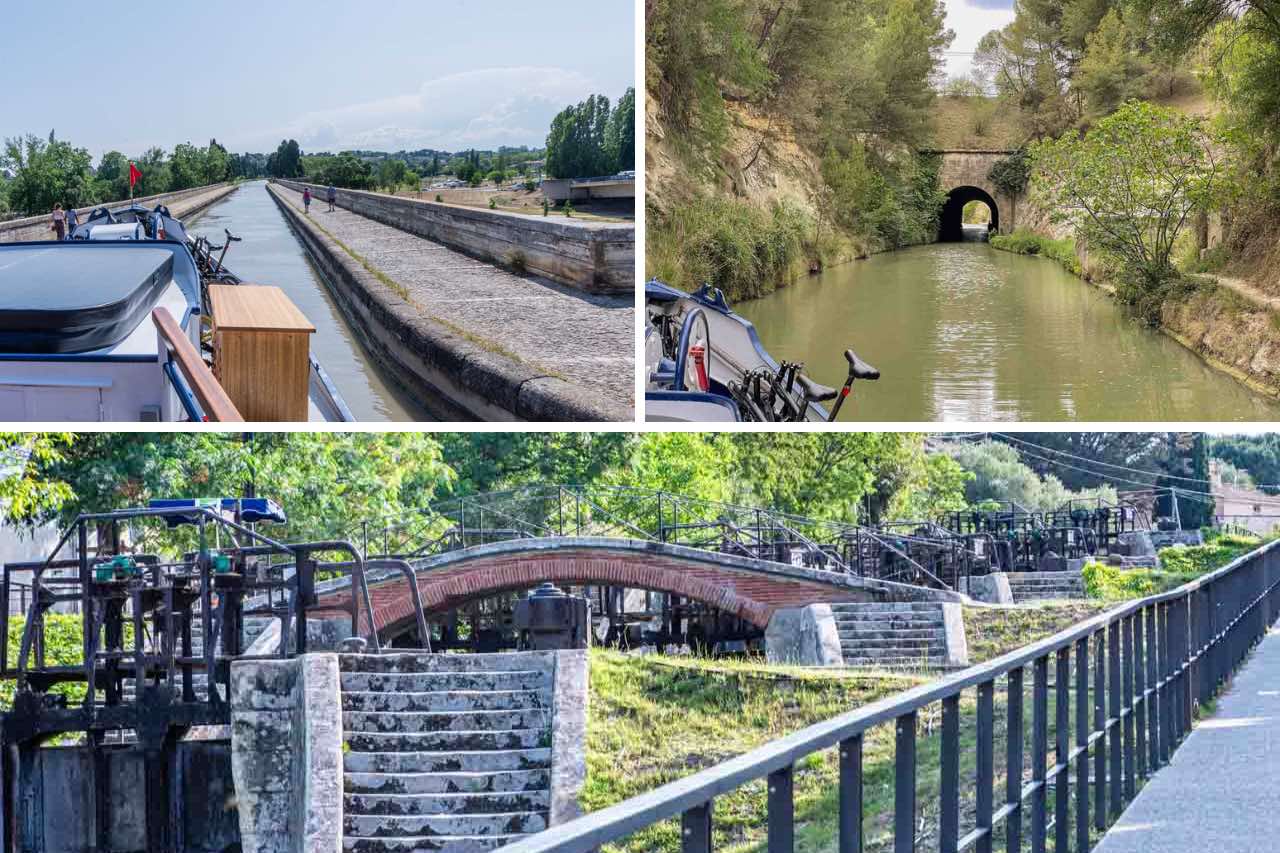
The image shows three photos of engineering marvels on the Canal du Midi - a boat crossing the Orb Aqueduct, a boat approaching a canal tunnel, and a seven-rise lock staircase.SEE 3 ASTOUNDING ENGINEERING MARVELS ON THE CANAL DU MIDI. Prepare to be awestruck by three engineering feats that have stood the test of time and captivated all who encounter them.


© Just Me Travel 2018-2026. All rights reserved.


No Comments on THE BEAUTIFUL CHER RIVER: FRANCE’S HIDDEN GEM IN THE LOIRE VALLEY

Type on the field below and hit Enter/Return to search