Just Me Travel

Just Me Travel

Solo Travel Blogger

Category: Destinations

WHY VISIT SENEGAL, WEST AFRICA? Here are 11 Excellent Attractions

My Senegal Highlights: The Best Things to Do in This Vibrant Country.   Welcome to the vibrant and captivating country of Senegal in West Africa. During my trip to this…

My Senegal Highlights: The Best Things to Do in This Vibrant Country.


Welcome to the vibrant and captivating country of Senegal in West Africa. During my trip to this extraordinary destination, I enjoyed experiencing a diverse range of incredible attractions that truly showcase Senegal’s unique culture, natural beauty, and rich history. From historic islands and vibrant cities to peaceful nature reserves and warm coastal communities, Senegal offers a remarkable array of experiences for all travellers that’s hard to match.

This post isn’t an exhaustive list of everything to do in Senegal – it’s my top highlights. These are the 11 experiences that left a lasting impression on me, stirring emotion, sparking curiosity, and making me say, “I’m so glad I came”.

If you’re considering a visit – or just curious about what makes Senegal so special – these highlights might just inspire your next adventure.


About Senegal

A young black man dressed in yellow shirts ans shirt kicks with a soccer ball on a beach.

Soccer is the second most popular sport in Senegal, after wrestling.


Senegal is a vibrant and culturally rich country located on the westernmost tip of Africa, bordered by the Atlantic Ocean. It is renowned for its dynamic blend of tradition, modern development, and natural beauty. Often considered one of West Africa’s most politically stable and welcoming nations, Senegal offers travellers a captivating mix of experiences – from historic sites and lively cities to stunning beaches and wildlife reserves.

The capital, Dakar, is a lively coastal metropolis renowned for its music, art, and nightlife, as well as its poignant history tied to the transatlantic slave trade, most notably at Gorée Island. Inland, visitors can explore the Great Mosque of Touba, the spiritual heart of the Mouride Brotherhood, or journey north to Saint-Louis, a UNESCO-listed colonial city with charming, faded facades.

Nature lovers will find plenty to admire, from the pink waters of Lac Rose to the birdlife at Djoudj National Bird Sanctuary and the roaming wildlife at Bandia Wildlife Reserve. The country’s coastline offers both bustling fishing towns like Kayar and peaceful resort areas along the Petite Côte.

Senegal’s rich culture is evident in its diverse ethnic groups, including the Wolof, Serer, Fulani, and Diola, each with its own distinct language, customs, and traditions. French is the official language, but Wolof is widely spoken. Renowned for its legendary teranga (hospitality), lively music and dance, tasty cuisine such as thieboudienne (a fish and rice dish), and a calendar filled with vibrant festivals, Senegal offers a truly engaging and authentic African experience.

 MY 11 REASONS TO VISIT SENEGAL

The purpose of this map is to show the locations of my Senegal highlights attractions, with three attractions in Dakar. The map does not cover my entire trip around Senegal. (Map data ©2025 Google)


Attractions

IFAN Museum of African Arts: A Pillar of West African Cultural Heritage

Visit the IFAN Museum of African Arts in Dakar to explore one of West Africa’s oldest and most significant collections of traditional masks, sculptures, textiles, and musical instruments, offering a profound insight into the region’s rich cultural heritage.

Established in 1936, the IFAN Museum of African Arts, officially known as the Théodore Monod African Art Museum, in Dakar, is one of the oldest and most significant art museums in West Africa.

It is a small, well-organised museum that covers all aspects of African culture, spanning centuries and regions, and is a delight to explore. I discovered exhibits of traditional clothing, carvings, musical instruments, ceremonial masks, tools, ceramics, textiles, weapons, and more. All the information plaques were in French, but I was fortunate to have a very patient guide who translated everything for me, as my schoolgirl French was insufficient to understand the written text. Had I visited the museum on my own, I would have simply been gazing at the objects without knowing the stories behind them.

Interestingly, I wasn’t allowed to take photos inside the museum with my camera, but I was allowed to do so with my mobile phone. Go figure!

During my visit, the IFAN Museum of African Arts hosted a comprehensive and brilliant exhibition that highlighted the differences and similarities among the former French West African colonies. Much of what I saw reminded me of my trip to Mali some years ago.

Visiting the IFAN Museum provides an insightful exploration of the artistic and spiritual traditions of West Africa. The artifacts on display change regularly, so even if you’ve visited before, it’s worth revisiting.

Museum of Black Civilisations: A Journey Through African Heritage and Global Dialogue

Visit the Museum of Black Civilisations in Dakar to explore a monumental celebration of African heritage and the global Black diaspora, where expansive exhibits – from ancient artifacts to contemporary art – highlight Africa’s profound contributions to world history, science, and culture.

The Museum of Black Civilisations, which opened on 6 December 2018, is a national museum in Dakar that traces the journey of Black civilisations from the cradle of humanity through the Iron Age, medieval empires, spiritual traditions, and the African diaspora, including slavery, resistance, and independence movements.

It is a groundbreaking cultural institution dedicated to celebrating the histories, achievements, artistic expressions, and global impact of Black civilisations across Africa. The museum’s extensive collection ranges from prehistoric tools and ancient sculptures to contemporary art and textiles, illustrating the significant contributions of African civilisations to global culture and science.

Although the information about the exhibits was written only in French, which my guide translated, I found it easy to follow and understand the timelines presented on my own.

I enjoyed the artworks on display on the museum’s upper floors. While able to discern the connection to the cultural artifacts I saw at the IFAN Museum of African Arts, these presented a modern perspective on the traditional.

The Museum of Black Civilisations was more than just its exhibitions. I found it to be an educational platform that explores Africa’s significant contributions to science, art, philosophy, and global culture, while also confronting the legacies of colonialism and the diaspora. Above all, it was a place for reflection!

Gorée Island: A Powerful Memorial to the Transatlantic Slave Trade

Gorée Island is a hauntingly powerful destination. 

Visit Gorée Island to walk through a powerful chapter of history, where pastel colonial buildings and the haunting House of Slaves tell the story of West Africa’s role in the transatlantic slave trade.

Colourful colonial buildings line Gorée Island’s harbour.


Just a short ferry ride from Senegal’s capital, Dakar, Gorée Island presents a charming exterior with its pastel facades and flower-filled narrow alleys while holding a deep history of centuries of pain, resistance, and remembrance. It offers an experience that is both enchanting and emotional.

Visiting Gorée Island on a day trip from Dakar, I walked through cells once used to imprison enslaved Africans and stood before the Door of No Return, reflecting on and haunted by the lives forever changed by the transatlantic slave trade.

Gorée Island was designated a UNESCO World Heritage Site in 1978 to recognise its historical significance in the slave trade and its well-preserved colonial architecture.

A visit to Gorée Island is more than just a day trip; it’s a powerful encounter with history. Visiting it offers a sobering yet vital experience that connects past injustices to ongoing discussions about identity, heritage, and the pursuit of healing.

To discover the island in full and understand why it left such a lasting, emotional impression, read my blog post, A UNIQUE DAY TRIP: The Haunting Memory of Gorée Island, Senegal.

Fadiouth Island: A Unique Island Built on Shells

Visit Fadiouth Island to experience a one-of-a-kind village built almost entirely on seashells, where rich cultural traditions and peaceful religious coexistence create a truly unforgettable atmosphere.

Fadiouth Island: A mosque, a Catholic church, and a street made entirely of clamshells. Note the size of the wheels on the wheelchair (pushed by the man in the red shirt) needed to roll over the shells.


Fadiouth Island is also called “Shell Island” because this small island is entirely made up of cockle (clam) shells, a result of centuries of shellfish gathering. The residents collect the cockles at low tide, remove the meat, dry it, and discard the shells on the ground. These shells form the island’s foundation, streets, buildings, and pathways, creating a uniquely strange environment. According to my local guide, the shells are three metres thick. The crunching sound when you walk means there was no sneaking up on anyone!

The island is famous for its cemetery, which is also made entirely of shells. But what truly sets this cemetery apart is its testament to religious tolerance and peaceful coexistence. Throughout Senegal, Muslims and Christians are buried in separate cemeteries. However, in Fadiouth cemetery, the graves of Muslims and Christians lie side by side in the same sacred space.

Fadiouth Island is located on the southern edge of Senegal’s Petite Côte, about 114 kilometres south of Dakar, near the town of Joal.

Fadiouth is more than a quirky geological curiosity. The warm welcome from residents, their pride in their traditions, and their harmonious mixed-faith community, along with their willingness to share stories, made this island a place like no other I have visited.

Bandia Wildlife Reserve: Senegal’s Accessible Safari Experience

Visit Bandia Wildlife Reserve to experience an accessible West African safari, where giraffes, rhinos, zebras, ostriches, and antelopes roam freely among ancient baobab trees, all within a conservation success story just an hour from Dakar.

A white rhino, an ostrich, and a giant eland were just some of the animals seen in the Bandia Wildlife Reserve.


Just 65 kilometres south of Dakar, Bandia Wildlife Reserve is a private nature reserve covering 3,500 hectares of fenced savannah. It is a conservation success story that reintroduced native species that had been lost from the region for a long time due to poaching and habitat loss. Expect to see a diverse range of wildlife up close, such as giraffes, white rhinos, zebras, buffalo, antelopes, warthogs, monkeys, ostriches, and crocodiles – all from a hired safari vehicle or your own vehicle.

With a mix of wildlife and West African culture – think ancient baobab trees used as tombs – Bandia Wildlife Reserve is more than just a place to see native animals; it’s a testament to conservation, a visual reminder of Senegal’s diverse culture and natural beauty, and a chance to connect with the wild.

Bandia isn’t the Serengeti, but a well-managed, family-friendly reserve that brings the magic of African wildlife within easy reach of Dakar.

Discover why Bandia Wildlife Reserve gave me a better safari experience than some of Africa’s largest national parks: SAFARI BLISS IN SENEGAL: My Adventure at Bandia Wildlife Reserve.

Lac Rose (Lake Retba): Senegal’s Pink-Hued Wonder

Visit Lac Rose (“Pink Lake”) to witness its astonishing pink waters—caused by salt-loving algae—and experience the unique buoyancy of its hypersaline lake, all just an hour from Dakar.

Lac Rose (Pink Lake).


Lac Rose (also known as Lake Retba) is a stunning natural wonder in Senegal, located approximately 35 kilometres northwest of Dakar. A shallow lake (1.5 metres deep) surrounded by dunes, it is famous for its vibrant pink waters, caused by a salt-loving algae. The lake is at its most stunning pink hue during the dry season, from November to June, when there is little rain to dilute the salt.

With a salt content higher than the Dead Sea, you won’t sink when swimming in the lake – an unusual experience. Just make sure you have no open wounds or cuts.

Lac Rose has a thriving salt harvesting industry, utilising traditional methods to collect salt from the lakebed. I watched men wade into the lake with canoe-like boats to dig up the salt, shovelling bucket loads into their boats. Once full, they pushed the boats to the shore, where they transferred the salt into metal basins. Women carried these salt-filled basins, weighing about 50 kilograms, on their heads to the salt mounds on the shore. My guide told me that the women go back and forth for three hours straight – a hard job, but well paid.

Workers collecting salt from Lac Rose.


Lac Rose is not just a visual spectacle – it’s a place where nature, culture, and industry come together in vivid colour. Whether you’re drawn by its beauty, its stories, or its salt-laden waters, it’s a destination that leaves a lasting impression.

The combination of the pink lake, salt collection, salt mounds, and dunes provided me with numerous opportunities to capture exceptional and memorable photos.

Before leaving the area, my driver let some air out of the tyres for a thrilling drive over the dunes to the wild Atlantic coast.

Kayar: Senegal’s Vibrant Fishing Community

Visit Kayar to witness the vibrant rhythm of one of Senegal’s largest artisanal fishing centres, where colourful pirogues line the golden shores, and the daily catch drives rich cultural traditions and coastal life.

Kayar Fishing Harbour – Selling the morning’s catch directly from the boat.


Kayar is a lively coastal town about 60 kilometres north of Dakar. Best known as the country’s third-largest and most self-regulated artisanal fishing centre, Kayar is a place where the Atlantic Ocean, quite literally, feeds daily life. Each morning, Kayar’s beach transforms into a vibrant, open-air fish market where I had the opportunity to witness the local fishing culture firsthand.

Kayar was a hive of activity and a kaleidoscope of colour from hundreds of hand-painted, vividly coloured wooden pirogues (traditional fishing boats), each bearing unique family symbols. The boats, laden with fish, come to the beach and anchor onshore. Men go to the boats, buy the fish directly from the captains, and then sell the fish to the people waiting on the beach. And then it’s back out to sea for another catch.

The larger pirogues can carry a crew of 30 fishermen, who fish manually. The captain sets the price of the fish, based on the type of fish and how long it took to catch.

Boat building is a related industry along Kayar’s beach and is worth a visit – if you can drag yourself away from the activity along the shoreline – with the boats being handmade.

I didn’t explore the town itself but spent my time on the beach watching traditional practices in action. I can only describe it as a thrilling experience – one that should not be missed when visiting Senegal.

Kayar is not about luxury or arranged experiences – it’s about immersion. It’s where you witness the rhythm of life shaped by the tides, and where resilience and tradition meet in every haul of the net.

Saint-Louis, Senegal: A Timeless Island of Culture, History, and Charm

Visit Saint-Louis to soak up the charm of Senegal’s former colonial capital, where faded French architecture, a rich trading history, and a thriving arts scene come together on an island at the mouth of the Senegal River.

Saint-Louis’ French colonial architecture sets a backdrop for its fishing fleet.


Saint-Louis is an island and a city at the mouth of the Senegal River, 234 kilometres north of Dakar, near the border with Mauritania. It is connected to the mainland by the UNESCO World Heritage-listed Faidherbe Bridge, designed by Gustave Eiffel and opened to the public in 1897.

Faidherbe Bridge, designed by Gustave Eiffel, connects Saint-Louis to the mainland.


Founded in 1659 by the French, Saint Louis was the first French settlement in West Africa and served as the capital of French West Africa until the early 20th century. Now a UNESCO World Heritage Site, it is celebrated for its unique blend of faded pastel-coloured colonial buildings, vibrant street life, artistic flair, traditional fishing communities, and its famous jazz festival.

After settling into my hotel, I joined my guide to explore Saint Louis in a traditional caleche (horse-drawn cart). Though a very ‘touristy’ activity, it was a practical way to see much of the city in a short time and soak up its atmosphere. Later, I walked back to the areas I had seen on the caleche and wanted to revisit. I especially enjoyed wandering around the quaysides and poking my head into artists’ workshops.

Saint-Louis is more than just a place to visit. It’s where history hangs in the air and creativity flows like the river that surrounds it.

Djoudj National Bird Sanctuary: A Wetland Wonderland for Bird Lovers

Visit Djoudj National Bird Sanctuary to see one of the world’s most important wetland reserves, where more than 400 bird species – including immeasurable flocks of pelicans – gather in a serene UNESCO-listed habitat just north of Saint-Louis.

Pelicans in Djoudj National Bird Sanctuary were continuously taking off and landing.


Located 53 kilometres north of Saint-Louis, Djoudj National Bird Sanctuary is a UNESCO World Heritage Site and one of the most important bird sanctuaries in the world. Opening in 1971 and spanning 16,000 hectares within the Senegal River delta, this wetland ecosystem comprises a network of lakes, streams, ponds, and backwaters.

Serving as a critical stopover for migratory birds crossing the Sahara, Djoudj National Bird Sanctuary hosts over 1.5 million birds annually, including more than 365 species such as white pelicans, flamingos, African spoonbills, great egrets, and cormorants. The optimal visiting period is from November to April, aligning with the peak migratory season, when birds arrive in staggering numbers.

I got to witness the migratory spectacle of white pelicans on a two-hour guided boat tour, with hundreds of pelicans gathered near the reeds, landing in the water, or taking flight in search of a less crowded resting spot. At one point, the pelicans streaked across the sky and down the waterway like planes on a bombing raid. It reminded me of the 1955 film The Dam Busters, as wave after wave of pelicans flew over our heads and to the side of the boat. A truly wondrous sight!

I saw at least a dozen bird species – and they’re just the ones I can remember. On our way back to the jetty, we motored past an island jam-packed with grey-coloured baby pelicans. According to the Djoudj guide, these babies were one and a half months old, and they don’t learn to fly until four months old. I saw some baby pelicans swimming in lines of three abreast, close to the island. It looked like a swimming school!

Djoudj is more than a bird sanctuary – it’s a living, breathing ecosystem that offers a front-row seat to one of nature’s most awe-inspiring migrations. Whether you’re a seasoned birder or a curious traveller, it’s a place that leaves you wanting more.

The Great Mosque of Touba: Spiritual Heart of Senegal’s Mouride Brotherhood

Visit the Great Mosque of Touba to experience one of Africa’s largest and most sacred Islamic sites – a stunning architectural masterpiece and spiritual centre of the Mouride Brotherhood, where the legacy of its founder, Sheikh Ahmadou Bamba, draws millions of pilgrims each year.

The Great Mosque of Touba, in the holy city of Touba, about 200 kilometres east of Dakar, is one of the most iconic religious landmarks in West Africa. Built in 1887 and continually expanded since then, the mosque is the holiest site for the Mouride Brotherhood, a powerful Sufi Islamic order. It houses the tomb of their founder, Sheikh Ahmadou Bamba.

The mosque is an impressive architectural marvel with five minarets, three large domes, and a prayer hall that accommodates over 7,000 worshipers. The interiors feature beautiful Italian terrazzo floors, Moroccan tiles, and handmade carpets.

The mosque is open to non-Muslims outside prayer times. I was provided with a long wrap-skirt and a scarf to wear during my visit.

Touba is a dry city where alcohol, tobacco, music, and dancing are prohibited to maintain its sanctity and devotion.

Visiting the Great Mosque of Touba is not just a cultural experience – it’s a profound encounter with Senegal’s spiritual soul, where faith, architecture, and community converge in harmony.

Kunta Kinteh Island: A Haunting Legacy on the Gambia River

Visit Kunta Kinteh Island to confront the haunting legacy of the transatlantic slave trade at a UNESCO World Heritage Site, where the ruins of Fort James and surrounding landmarks stand as solemn reminders of the resilience of those who endured unimaginable hardships.

The ruins of Fort James on Kunta Kinteh Island – a key site in the transatlantic slave trade.


The Gambia, located on the Atlantic coast, is a narrow country within the borders of Senegal, and is not much wider than the Gambia River, which shapes its geography. I took a day trip to The Gambia to visit Kunta Kinteh Island, crossing the border at Kartong.

Previously known as James Island, Kunta Kinteh Island is a small yet historically significant site located 30 kilometres upstream from the mouth of the Gambia River in The Gambia. Designated a UNESCO World Heritage Site, the island was a key site in the transatlantic slave trade. It housed a fort (Fort James) used by various European powers – Portuguese, Dutch, and British – for the capture, storage, and shipment of enslaved Africans bound for the Americas. Today, its crumbling walls and solitary prison cell stand as haunting reminders of centuries of human suffering.

Kunta Kinteh Island can be reached by boat from Juffureh.

The island was renamed in 2011 to honour Kunta Kinte, the enslaved Gambian man whose story was popularised in Alex Haley’s book Roots. Although fictionalised, the story reflects the real experiences of many Africans forcibly taken from this region. All enslaved Africans captured in The Gambia were imprisoned on Kunta Kinteh Island before being loaded onto the slave ships docked there.

Kunta Kinteh Island is not just a place – it’s a profoundly moving and reflective experience. As with Gorée Island, I felt a connection with the painful legacy of slavery and the enduring spirit of those who lived through it – something I did not expect to feel.

When planning my trip to West Africa (Benin, Togo, Ghana, The Gambia, and Senegal), I was ignorant of the extent of the slave trade in the region. What I saw, read, and heard has left a profound emotional impact that remains deeply ingrained in my memory. The resilience of people never ceases to amaze me.

I was required to show proof of my yellow fever vaccination for entry into The Gambia.

General Travel Tips for Senegal

  •  I travelled around Senegal with a private guide and driver. However, according to my guide, it is possible to get around independently without a guide and driver or on a group tour. While there are no trains in Senegal, there is a public bus system that connects towns. Taxis are not expensive, and you can bargain for the fare.
  • French is the official language of Senegal, but Wolof is the most widely spoken. English is not commonly spoken, and I was hard-pressed to get by in Senegal with my schoolgirl French. Luckily, my private guide spoke excellent English and was happy to translate whenever needed. I found using Google Translate to be an exasperating experience, especially when trying to decipher menus with my camera. I was never sure what I was ordering!
  • Due to its tropical climate, Senegal experiences a warm climate throughout the year, characterised by two distinct seasons: a dry season, which lasts roughly from November to June, and a wet season from July to October. The dry season is considered the best time to visit, as it offers warm, sunny days with lower humidity and cooler nights. It is perfect for visiting places like Saint-Louis, Gorée Island, Bandia Wildlife Reserve, and Djoudj National Bird Sanctuary. Avoid the wet season when heavy rains and high humidity can make travel unpleasant.
  • I visited Senegal in February and experienced temperatures from the mid-20s to the low 30s (degrees Celsius), depending on where I was in the country, with no rainfall. The weather plays a crucial role in your enjoyment of your trip. Knowing the long-range city weather forecasts beforehand can help you avoid disappointment. When planning my trips, my go-to resource is the World Meteorological Organisation’s (WMO) World Weather Information Services. Check my blog post for details on WMO.
  • Be prepared for things to move at a slower pace – patience is the key. Having lived in Namibia for several years, I came to know what I call “African time”!
  • The currency is the West African CFA franc. Cash is king! Many places don’t accept cards, and ATMs can be unreliable. I prepaid all my hotels before leaving Australia.
  • Senegal is predominantly a Muslim country, so dress modestly.


As I reflect on my time spent exploring the wonders of Senegal, I am filled with a sense of awe and gratitude for the incredible experiences I had the privilege of encountering. From the soul-stirring history etched into Gorée Island to the spiritual serenity of the Great Mosque of Touba, and from the lively atmosphere of Kayar’s fishing harbour to the tranquil, shell-laden streets of Fadiouth Island, Senegal has left an indelible mark on my heart and soul. The 11 attractions I have shared with you in this blog post offer just a glimpse into the beauty and diversity that Senegal has to offer. 

I hope this journey through Senegal has inspired you to include this remarkable country in your travel plans. Whether you are drawn to the history, culture, nature, or the warm hospitality of the Senegalese people, I can assure you that a trip to Senegal will be a truly unforgettable experience. So, pack your bags, open your heart to new adventures, and get ready to be immersed in the magic of Senegal, where every corner holds a story waiting to be discovered.

A visit to Senegal is not just a travel destination – it’s a transformative journey that will stay with you long after you have returned home.


Disclaimer: This post contains no affiliate links. All views and opinions are my own and non-sponsored. Unless specifically credited, all photos are my own and remain the copyright of Joanna Rath/Just Me Travel.

© Just Me Travel 2018-2025.


Which of these Senegalese highlights sparks your wanderlust the most? Let me know in the comments below!

I love hearing from you and look forward to reading and responding to your comments. Please join the conversation by leaving a comment below.


Like this post? Save it for later!

an image with two photos: one of Dakar's cityscape and the other of pelicans taking flight and landing.

An image with two photos: one of fish being sold on a beach directly from the boat and the other showing the beautiful architecture of the Great Mosque of Touba.


Author’s Note: Please check the latest travel restrictions before planning any trip and follow government advice.


Sign up to receive the latest in travel destinations, topics, resources and guides.

You might also like

Ocean-front colourful, multistoried, colonial buildings.A UNIQUE DAY TRIP: The Haunting Memory of Gorée Island. Visiting Gorée Island is more than just a day trip to a picturesque destination with vibrant colonial architecture; it’s a profound encounter with a history filled with centuries of pain, resistance, and remembrance. A must-visit spot!


An image with three photos of animals - a white rhino, an ostrich, and a giant eland.SAFARI BLISS IN SENEGAL: My Adventure at Bandia Wildlife Reserve. Senegal is unlikely to feature on your list when considering a safari in Africa. However, the small Bandia Wildlife Reserve, a conservation success story, offered an intimate, rewarding, and rich safari experience unlike those in the big-name parks.


© Just Me Travel 2018-2025. All rights reserved.

6 Comments on WHY VISIT SENEGAL, WEST AFRICA? Here are 11 Excellent Attractions

SAFARI BLISS IN SENEGAL: My Adventure at Bandia Wildlife Reserve

Discover Why Bandia Wildlife Reserve Gave Me a Better Safari Experience Than Some of Africa’s Largest National Parks – All in Two Hours!   Senegal is unlikely to make your…

Discover Why Bandia Wildlife Reserve Gave Me a Better Safari Experience Than Some of Africa’s Largest National Parks – All in Two Hours!


Senegal is unlikely to make your list when considering a safari in Africa. Yet just an hour’s drive from the bustling capital of Dakar, you’ll discover Bandia Wildlife Reserve – home to reintroduced species such as giraffes, rhinos, zebras, and antelopes, offering visitors a chance to see African wildlife in a semi-natural environment. I was thrilled to find such a variety of wildlife in a country where I hadn’t expected to encounter such a setting until it appeared in my travel research. I was surprised in the best possible way!

 Whether you’re a nature enthusiast, a photography buff, or someone searching for a unique day trip, Bandia Wildlife Reserve provides a memorable experience combining Senegalese landscapes, history, and conservation into a single accessible adventure.

Join me as I share my unforgettable safari through Bandia Wildlife Reserve.


About Bandia Wildlife Reserve

Located just 65 kilometres south of Dakar, Bandia Wildlife Reserve was established in 1990 as Senegal’s first private nature reserve. Covering 3,500 hectares of fenced savannah, it’s a conservation success story that reintroduced native species long lost from the region due to poaching and habitat loss.

You can expect to see a diverse range of wildlife, including:

  • giraffes,
  • white rhinoceroses,
  • zebras,
  • antelopes (such as elands and impalas),
  • monkeys (patas and vervet),
  • warthogs,
  • crocodiles,
  • ostriches, and
  • over 120 bird species.

One of Bandia Wildlife Reserve’s unique aspects is its blend of wildlife and West African culture. Scattered throughout the reserve are reconstructed Serer burial mounds, traditional Peulh huts, and an ancient baobab tree once used as a tomb for griots (Senegal’s revered oral historians).

Bandia Wildlife Reserve’s landscape is straight out of an African nature documentary – think towering baobab trees, wide-open plains, and clusters of acacia trees that provide shade to wandering herds. Bandia’s founders have created a balanced ecosystem that’s both welcoming to wildlife and inviting for visitors.

Exploring Bandia Wildlife Reserve is typically done via guided 4WD safari tours, allowing close encounters with wildlife in their natural habitats. The reserve features a restaurant and bar overlooking a waterhole, where you can relax and observe animals like buffalo and crocodiles. There is also an excellent souvenir shop.

Are you a wildlife enthusiast, a photographer, or looking for a family-friendly adventure? Bandia Wildlife Reserve offers an unforgettable experience that feels worlds away yet is incredibly accessible.

The Safari Experience

You can tour Bandia Wildlife Reserve in your own car, by taxi, or hire an on-site open-sided safari truck (reservations aren’t necessary), seating 8-24 people. However, a 4WD is crucial during wet weather.

I was in Senegal on a private tour with a guide and driver in a 4WD vehicle. I travelled through the Bandia Wildlife Reserve in this vehicle. Whether you opt for your own vehicle, taxi, or the reserve’s safari truck, hiring one of Bandia’s specially trained guides is mandatory. These guides are skilled at spotting wildlife and knowledgeable about Bandia’s history, conservation efforts, and cultural heritage.

Driving around Bandia Wildlife Reserve, I was thrilled by how often I spotted animals and birds and the diversity of what I encountered.

I’ve been on safari in several of Africa’s larger, open-range national parks and loved the adventure they offer. However, the vastness of these landscapes can mean hours of driving without a single sighting. In contrast, my experience at Bandia Wildlife Reserve was uniquely different. Within two hours, I encountered an impressive range of wildlife – giraffes, zebras, rhinos, antelope, monkeys, ostriches, and more – with hardly a moment of stillness between sightings. While Bandia may not have the scale or remoteness of the big-name parks, there’s something to be said for a small, well-managed, enclosed reserve where animals roam freely but are easier to find. It didn’t feel staged; instead, it felt intimate and rewarding – ideal for travellers seeking a rich safari experience without the long waits or need for multiple game drives.

My wildlife safari photo gallery

A white rhino rests in the shade of a tree.


A large antelope with brown skin with white stripes, black neck skin, and swivel horns.

A lone giant eland (also known as the Derby eland or Lord Derby’s eland) stands proud in the African bush. It is the largest species of antelope in the world.


A warthog drinks from a waterhole. My Bandia Wildlife Reserve guide told me they are the only animals that can get in and out of the reserve because they burrow under the fencing.


A zebra wanders past boxthorn bushes.

A small bird with blue and brown feathers sit on a tree branch.

The Abyssinian roller, also known as the Senegal roller, has vivid blue body feathers and impressively long outer tail feathers. It is, without a doubt, a stunning bird.


A spotted hyena. The hyenas in Bandia Wildlife Reserve are kept in an enclosure because they were killing the animals.


Cultural and Historical Highlights

The Bandia Wildlife Reserve showcases wildlife and honours Senegal’s rich cultural heritage.

During the drive, my safari guide showed me a one-thousand-year-old sacred baobab tree used historically as a tomb for griots, the traditional West African keepers of knowledge and oral tradition. Baobab trees were considered sacred by the Serer people and regarded as a fitting place for the remains of the griots, who were revered as wise men and sages.

Deceased griots were placed in the hollow trunks of baobab trees rather than being buried in the ground to ensure their knowledge remained accessible and didn’t get lost in the earth. This practice has been outlawed since 1962 due to public health concerns. Nevertheless, the baobab trees still hold sacred significance for the local population.

The one-thousand-year-old sacred baobab tree – an ancient tomb for griots inside Bandia Wildlife Reserve (a practice now banned). There were human skulls inside the hollow of the tree. However, I suspect they were placed there for the benefit of tourists.


Practical Information

Opening hours

Bandia Wildlife Reserve is open daily from 8.00 am to 6.00 pm.

Ticket prices

  • Adults: 12,000 FCFA (West African CFA Franc) (approximately €18,50)
  • Children (under 12 years): 7,000 FCFA franc (approximately €10,50)
  • Vehicle entry (personal car or taxi): 7,000 FCFA (approximately €15)
  • Safari truck rental, 11-seater: 40,000 FCFA (approximately €61)
  • Safari truck rental, 24-seater: 60,000 FCFA (approximately €91)
  • Guide per vehicle (mandatory): 6,500 FCFA (approximately €10)

You can make payments in FCFA, Euros, or by credit card.

On-site facilities

Bandia Wildlife Reserve has a large on-site restaurant overlooking a waterhole teeming with Nile crocodiles. I didn’t eat there as I was having lunch at Lac Rose (Pink Lake), so I can’t comment on the quality of the food on the menu.

Two Nile crocodiles rest on the banks of the waterhole that Bandia Wildlife Reserve’s restaurant overlooks.


An excellent, upmarket, boutique-style souvenir shop is in the same building as the restaurant. I wanted to buy a book on Bandia Wildlife Reserve, but unfortunately, they were only in French.

Best time to visit

Senegal is situated at Africa’s westernmost point, along the Atlantic Ocean. It experiences a tropical climate with two distinct seasons: a dry season from November to June and a wet season from July to October. Temperatures remain warm to hot throughout the year, averaging about 36 degrees Celsius.

I always recommend visiting a wildlife park in Africa during the dry season because the animals are drawn to the waterholes.
For optimal wildlife viewing, visit during the cooler hours of the morning or late afternoon, as animals tend to be more active at these times than in the heat of the midday period.

How to Get to Bandia Wildlife Reserve

Bandia Wildlife Reserve is easily accessible by car from the capital, Dakar, and Saly’s resort area. Except for the last 800 metres, the roads are sealed, well-signposted, and in good condition.

From Dakar (approximately 65 kilometres):

-> Head south on the A1 motorway from Dakar.

-> After approximately 60 kilometres, take Exit 14 toward Sindia/Popeguine.

-> Continue for 2 kilometres, then turn right onto National Road N1 (Dakar-Mbour).

-> Drive 3.3 kilometres on N1, then turn left at the signpost indicating Bandia Wildlife Reserve.

-> Continue on the unsealed track for 800 metres to reach the reserve entrance.

From Saly (approximately 15 kilometres):

-> Head north from Saly on National Road N1 toward Sindia.

-> After approximately 15 kilometres, watch for the signpost to Bandia Wildlife Reserve and turn right.

-> Continue on the unsealed track for 800 metres to reach the reserve entrance.

If you’re not driving, you can organise a private transfer or book a guided tour, typically from Dakar or Saly, that includes transport, park entry, and a safari guide. You can book half-day and full-day tours to Bandia Wildlife Reserve with companies like Viator, GetYourGuide, and ToursByLocals (all of which I’ve used on other trips and found to be excellent). The full-day tours are usually combined with other attractions, such as Pink Lake.


My visit to Bandia Wildlife Reserve was, without a doubt, a highlight of my time in Senegal. It’s more than just a place to see animals; it’s a testament to conservation, a visual reminder of Senegal’s diverse natural beauty, and a chance to reconnect with the wild. It’s an easily manageable day trip that packs a punch, offering a genuine taste of safari life without having to venture deep into other parts of Africa.

Whether you’re a seasoned safari-goer or just seeking something different to do, Bandia Wildlife Reserve provides an accessible and remarkably rewarding experience. So, if you find yourself in Senegal, make time for this magical encounter – it left me with lasting memories, stunning photos, and a deeper appreciation for Senegal’s hidden natural treasures.


Disclaimer: This post contains no affiliate links. All views and opinions are my own and non-sponsored. All photos are my own and remain the copyright of Joanna Rath/Just Me Travel.

© Just Me Travel 2018-2025.


Have you ever visited a smaller wildlife reserve like Bandia? Did it surprise you compared to the big-name safari parks? I’d love to hear about your experiences – share them in the comments below!

I love hearing from you and look forward to reading and responding to your comments. Please join the conversation by leaving a comment below.


Like this post? Save it for later!

An image with two photos of animals - an ostrich and a rhino.

An image with two photos - a zebra and a baobab tree.


Author’s Note: Please check the latest travel restrictions before planning any trip and follow government advice.


Sign up to receive the latest in travel destinations, topics, resources and guides.


You might also like

Ocean-front colourful, multistoried, colonial buildings.A UNIQUE DAY TRIP: The Haunting Memory of Gorée Island, Senegal.  Visiting Gorée Island is more than just a day trip to a picturesque destination with vibrant colonial architecture; it’s a profound encounter with a history filled with centuries of pain, resistance, and remembrance. A must-visit spot!


Dakar cityscape, SenegalWHY VISIT SENEGAL, WEST AFRICA? Here are 11 Excellent Attractions. From a pink lake and a peaceful wildlife reserve to a sacred mosque and an island made of seashells, these are just some of the unforgettable reasons that made my trip to Senegal so memorable.


© Just Me Travel 2018-2025. All rights reserved.

4 Comments on SAFARI BLISS IN SENEGAL: My Adventure at Bandia Wildlife Reserve

POSTCARD FROM LITTLE ADAM’S PEAK, SRI LANKA: Who Said This Was an Easy Climb? (2025 Update)

The Missing Truth About Climbing Little Adam’s Peak in Ella, Sri Lanka.     Dear Fellow Travellers, Hello from Ella in Sri Lanka. While in Ella, I agreed to walk…

The Missing Truth About Climbing Little Adam’s Peak in Ella, Sri Lanka.


Two people are walking on a dirt track up the side of a mountain.

Walking up Little Adam’s Peak, Ella


Dear Fellow Travellers,

Hello from Ella in Sri Lanka.

While in Ella, I agreed to walk up Little Adam’s Peak with my sister and brother-in-law. The walk from Ella to Little Adam’s Peak’s summit is approximately 4.5 kilometres (return) and is said to take about 45 minutes each way. The walk was described in four guidebooks as easy, mostly flat, and with a small amount of climbing at the end.

The hotel’s reference to Little Adam’s Peak summed up the expected experience:

This walk is unlikely to make you break out in a sweat, and the entire round trip can be completed in about two hours. The first part of the walk is quite flat … some climbing is required to reach the summit. The view from the top is more than worth the gentle exertion though, offering a splendid panorama of Ella Rock and The Gap.

Well, they were all wrong! All the guidebooks lied.

  • It was uphill all the way. There was no “flat” and nothing ‘easy’ about the walk.
  • I did break out in a sweat – big time.
  • The walk was two hours one way.
  • ‘The small amount of climbing at the end’ was not just uphill; it was more than 300 vertical steps.
  • As for “gentle exertion”. Nothing was gentle about the blood pounding in my head when I finally reached the summit. This climb was heart-attack material!

Having reached the summit (at the height of 1,141 metres), I was too exhausted and out of breath to appreciate the “splendid panorama”. And I thought I was fit! There is nothing ‘little’ about Little Adam’s Peak.

I didn’t feel a sense of achievement – I just felt jilted by the guidebooks. In hindsight, I should have stayed in Ella drinking coffee and left the walk up to the others to complete.

Walking up Little Adam’s Peak would have to be one of the worst experiences of my life. Well, perhaps not, but it sure felt like it. I left the others at the bottom of the mountain and took a tuk-tuk back to the hotel. It cost me a lot of rupees, but it was worth every one of them.

Till the next adventure,

Joanna


Editor’s Note: I first published this blog post in February 2021 and have since revised it for accuracy, thoroughness, and relevance.


Disclaimer: This post contains no affiliate links. All views and opinions are my own and non-sponsored. All photos are my own and remain the copyright of Joanna Rath/Just Me Travel.

© Just Me Travel 2018-2025. All rights reserved.


Have you faced a challenging climb? What was the outcome? Did you feel a sense of achievement or not?

I love hearing from you and look forward to reading and responding to your comments. Join the conversation.


Like this post? Save it for later!

An image with two photos: one shows lush vegetation on and around a mountain while the other photo is of two people walking on a dirt track on the side of a mountain.


Author’s Note: Please check the latest travel restrictions before planning any trip and always follow government advice.
 

Sign up to receive the latest in travel destinations, topics, resources and guides.
 

You might also like

Are you seeking additional ideas for your trip to Sri Lanka? Then don’t miss these posts:

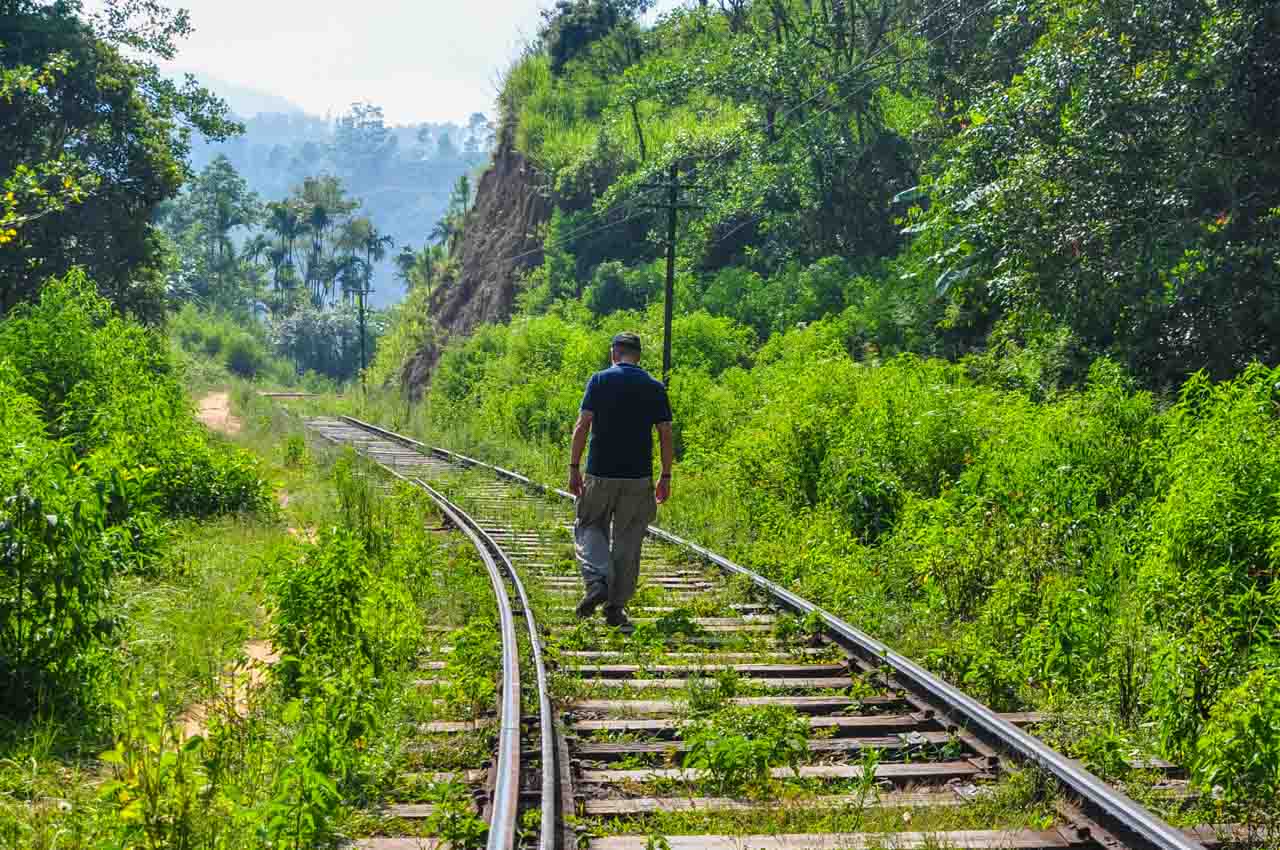
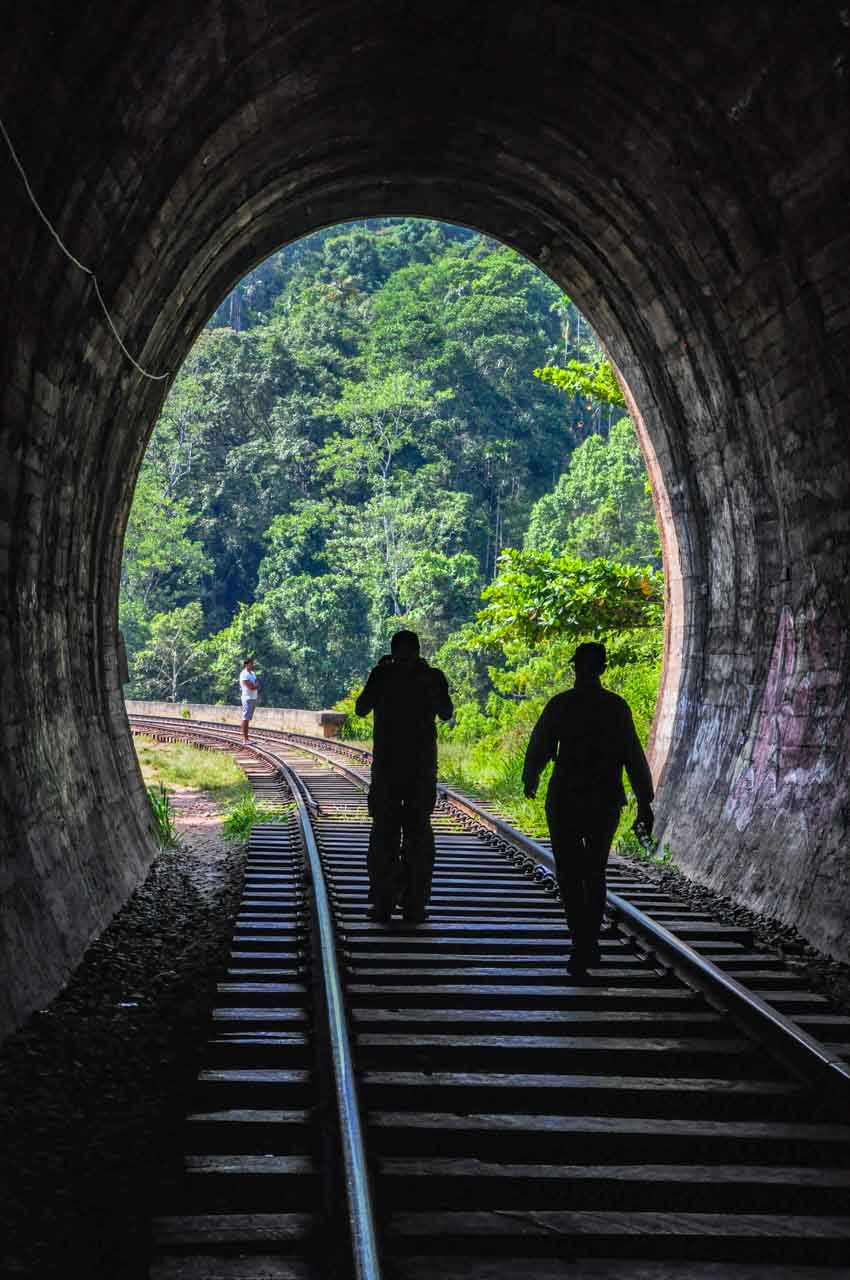
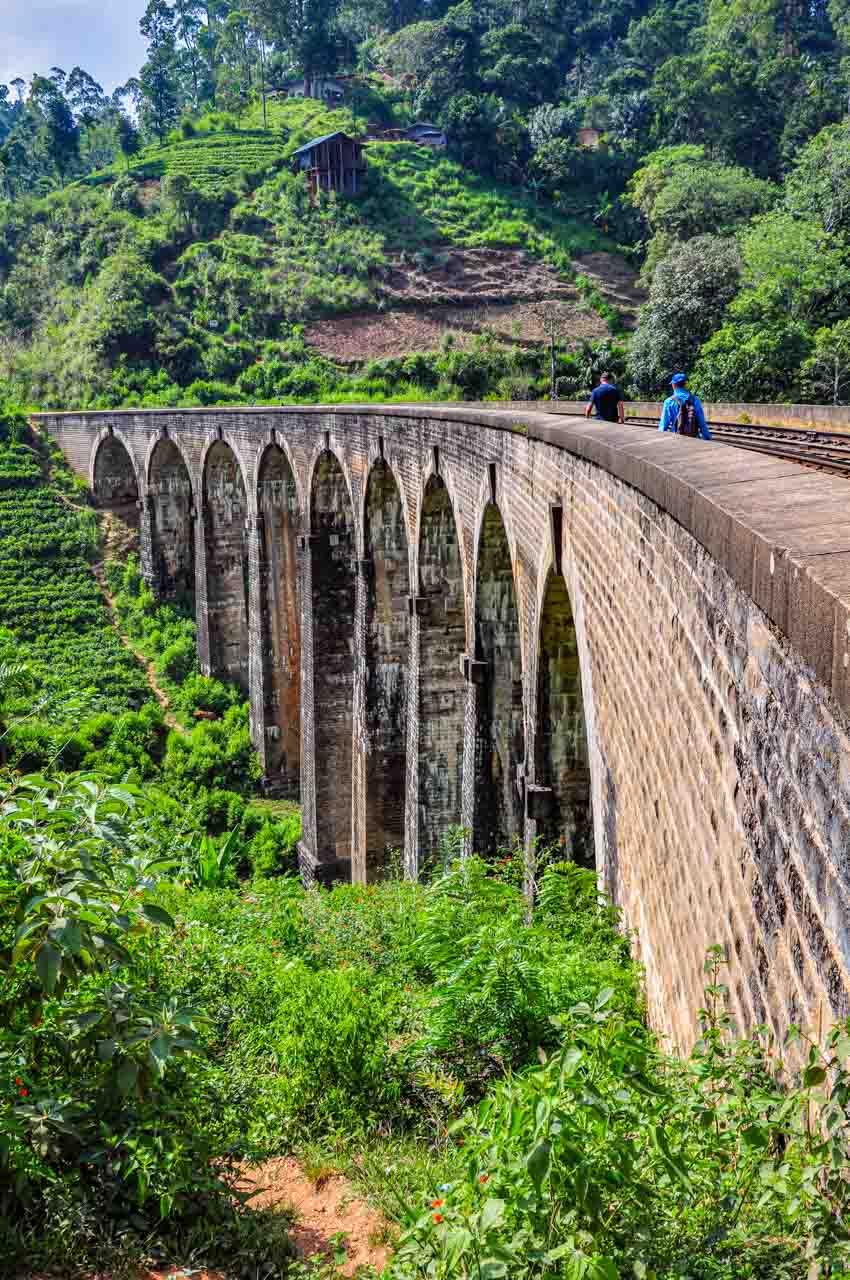
A man walks along a railway line through lush vegetation.HOW TO TRAVEL LIKE A LOCAL – Walk the Railway Line in Sri Lanka (2025 Update). Do as a local and walk the 6.5 kilometres along the railway line from Ella, via spectacular scenery, across the iconic Nine Arch Bridge, and onto Demodara Railway Station. Catch the train back to Ella to complete the experience.


The ocean forms a backdrop to stone walls and palm trees on the foreshore.HOW TO SPEND A PERFECT DAY IN GALLE FORT – Your Ultimate Guide! (2024 Updated). Galle Fort is a UNESCO World Heritage Site and an iconic landmark on Sri Lanka’s southwest coast. My comprehensive guide takes you on a leisurely walk around the fort, where you’ll discover historical sites, hidden gems, and places to eat.


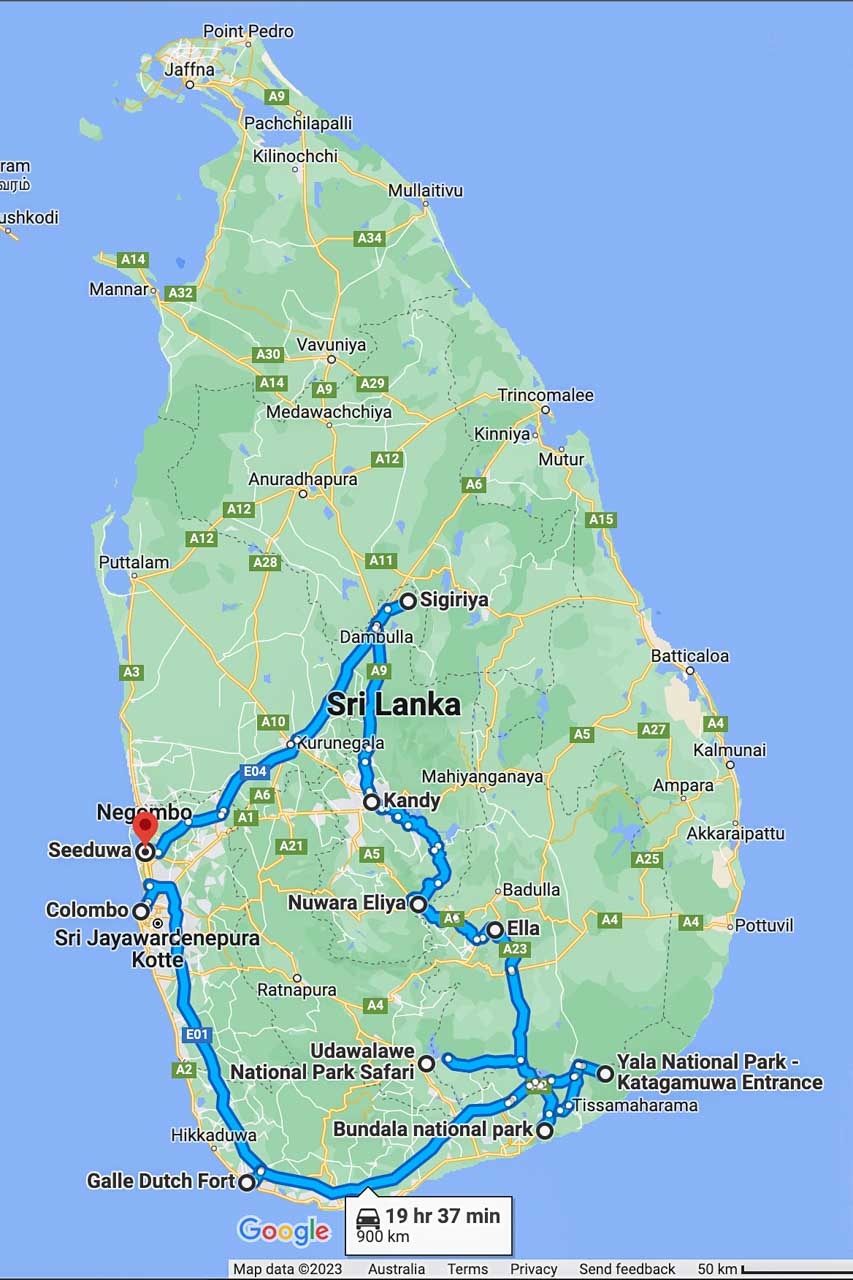
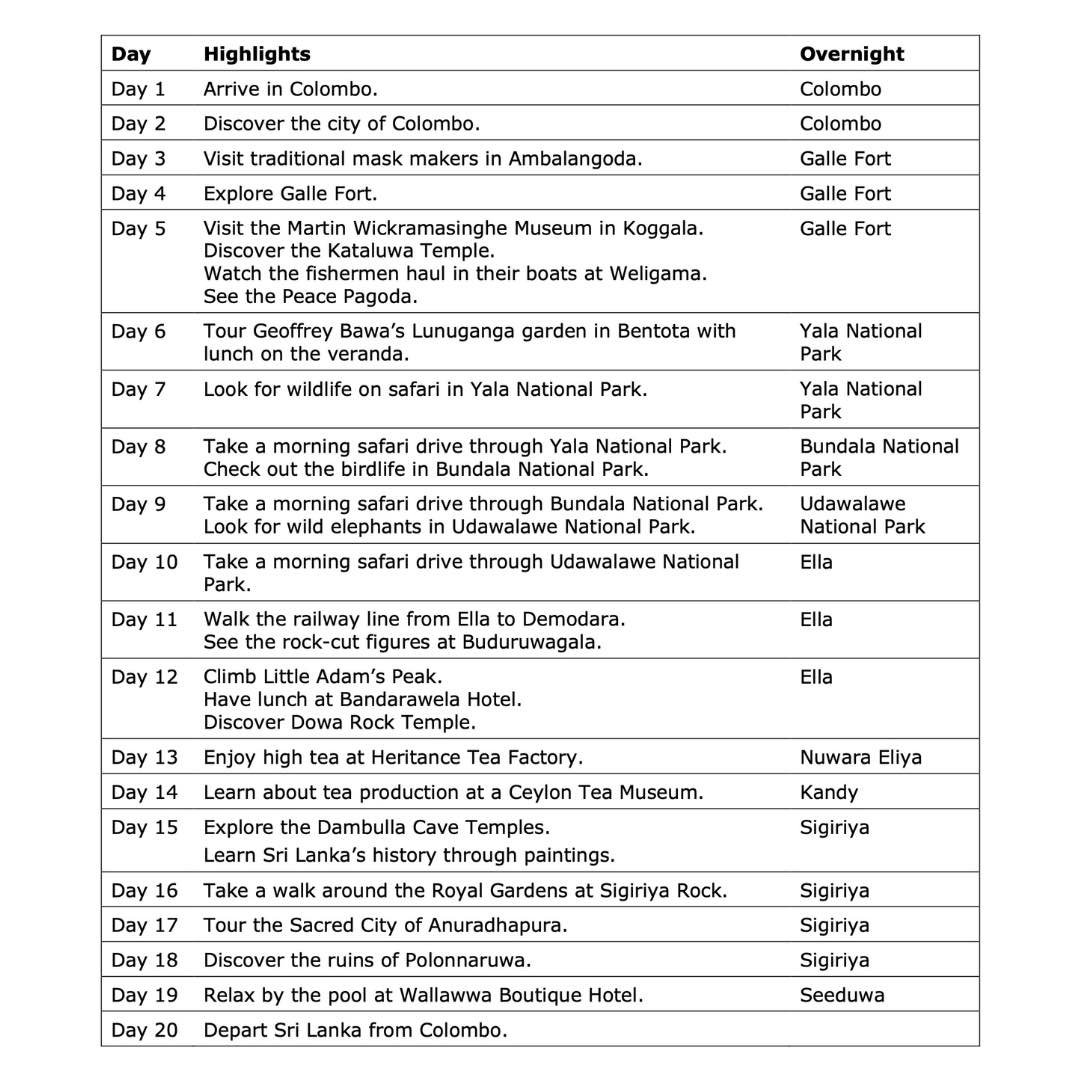
Blue and yellow canoe-like fishing boats on a beachULTIMATE SRI LANKA ITINERARY – The Best of Sri Lanka in 20 Days. Learn where to find the best wildlife encounters, discover the natural beauty of the Hill Country, explore six UNESCO World Heritage Sites, wander through untamed gardens, and so much more.


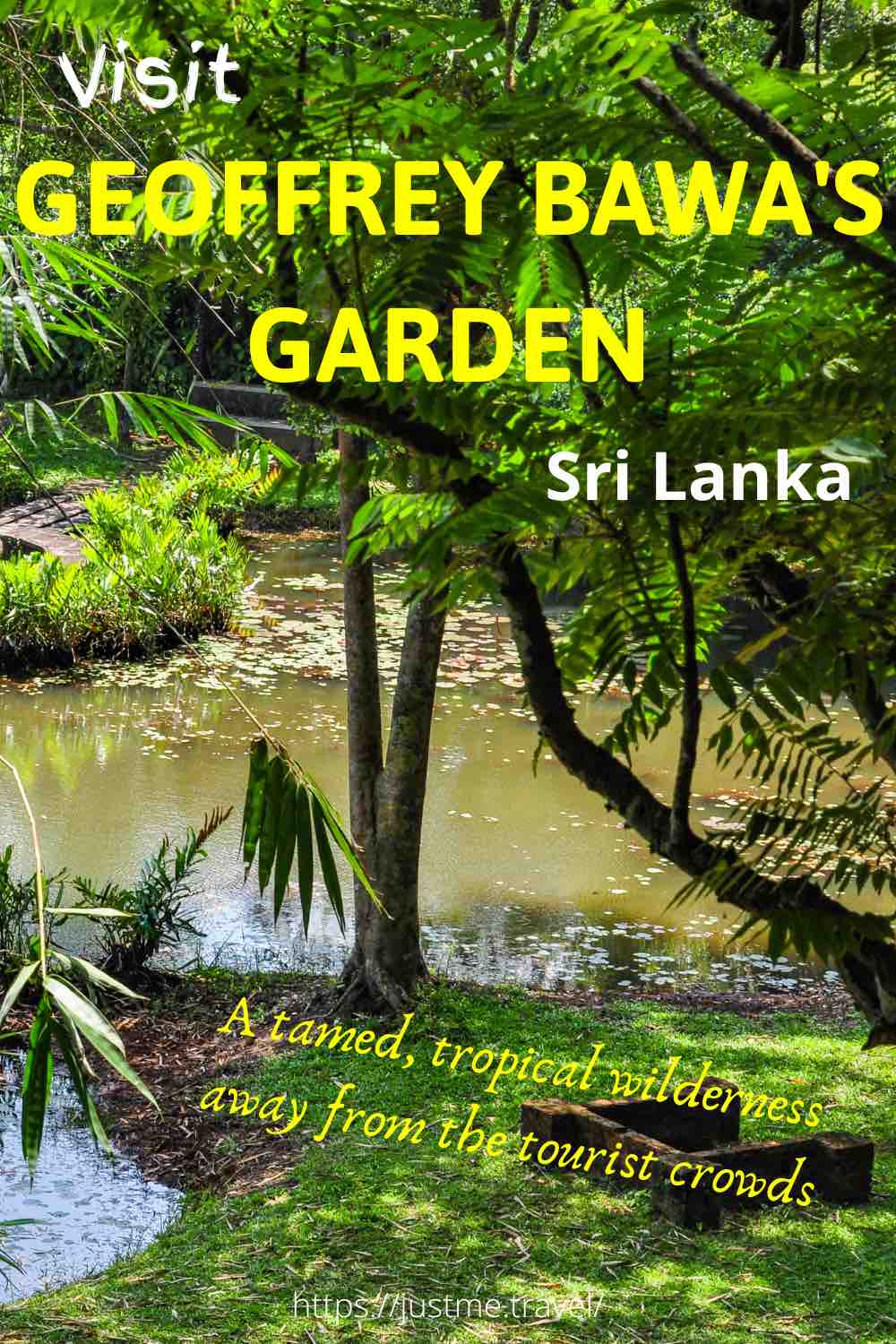
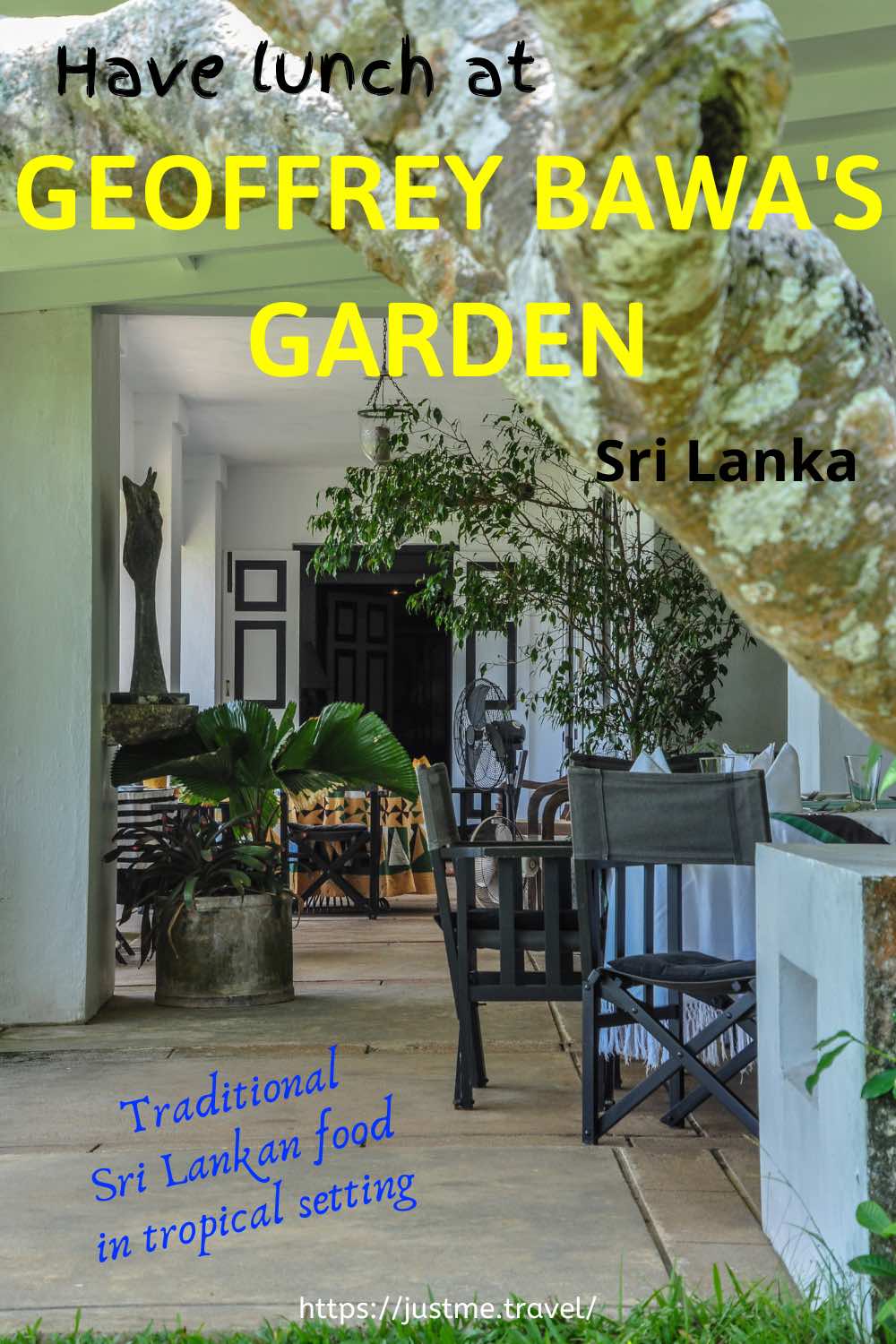
A butterfly-shaped pond with pink water lilies and set amongst green vegetation.A PHOTOGRAPHIC TOUR OF GEOFFREY BAWA’S GARDEN, SRI LANKA (2022 Updated). Escape the crowds and visit Geoffrey Bawa’s magnificent untamed wilderness. It is largely undiscovered by tourists, being something different from the ‘usual’ tourist attraction. Organise to have lunch while you are there.


Wicker couches and chairs on the veranda of a restored colonial manor house and in the garden in front of the veranda

WALLAWWA – A Tranquil Luxury Boutique Hotel in Colombo City (2021 Updated). Read my review of my stay at Wallawwa in Sri Lanka – luxury accommodation in an 18th-century manor house.


© Just Me Travel 2018-2025. All rights reserved.


No Comments on POSTCARD FROM LITTLE ADAM’S PEAK, SRI LANKA: Who Said This Was an Easy Climb? (2025 Update)

A UNIQUE DAY TRIP: The Haunting Memory of Gorée Island, Senegal

This Tiny Island in Senegal Tells a Story the World Must Never Forget   I spent two fabulous weeks in Senegal, West Africa, experiencing as much as possible on a…

This Tiny Island in Senegal Tells a Story the World Must Never Forget


I spent two fabulous weeks in Senegal, West Africa, experiencing as much as possible on a private tour with my guide, Serigne, and driver, Pap, based on an itinerary I developed in consultation with Native Eye Travel. It was a memorable trip with many highlights, including museums in Dakar, Lac Rose (Pink Lake), Fadiouth Island (built on clamshells), Bandia Wildlife Reserve, and more. However, my day trip to Gorée Island was the most poignant. 

Just a short ferry ride from Dakar, Gorée Island presents a charming exterior with its pastel facades and narrow alleys while holding a deep history of centuries of pain, resistance, and remembrance. It offers an experience that is both enchanting and emotional. 

As I walked through cells once used to imprison enslaved people on Gorée Island and stood before the Door of No Return, I reflected on the lives forever changed by the transatlantic slave trade. This post shares what I discovered on Gorée Island – what to see, how to get there, and, most importantly, why this tiny island left such a lasting impression.


About Gorée Island

Gorée Island lies three kilometres off the coast of Senegal, directly across from Dakar. While it is a small island – approximately 900 metres long and 350 metres wide – its historical significance far outweighs its size.

Discovered by the Portuguese in the 15th century, the island was successively ruled by the Portuguese, Dutch, English, and French from the 15th to the 19th century, using Gorée Island as a strategic trading post.

From 1536 to 1848 (when the French abolished slavery), Gorée Island was active in the transatlantic slave trade, particularly under French control. The island served as a major holding and embarkation centre for enslaved Africans who were forcibly taken from West Africa and kept in cramped, dark cells while awaiting transport across the Atlantic to the Americas.

Gorée Island functioned as both a residential and commercial centre for European traders and a place of imprisonment for captured Africans. The island witnessed unimaginable human suffering, with many enslaved people dying before even setting foot on a ship.

While Gorée Island may not have experienced the highest volume of slave departures, its preserved structures and historical exhibits offer a tangible and solemn connection to this dark chapter of human history. The island has become a pilgrimage site, especially for Africans and African Americans seeking to reconnect with their roots.

In 1978, Gorée Island was designated a UNESCO World Heritage Site in recognition of its historical significance in the slave trade and its well-preserved colonial architecture.

How to Get to Gorée Island

Gorée Island is accessible only by boat. The easiest and cheapest way to get there is to take the direct Gorée Ferry from Dakar’s passenger terminal. Ferries depart every two hours, daily, from 7 am to midnight. Tickets are available at the terminal and cost about 5,000 CFA (approximately USD9) for a return trip. A passport is required to purchase a ticket and to board the ferry – a copy is not accepted.

The ferry ride takes 25-30 minutes. Arrive early to grab a seat on the upper deck for scenic views of Dakar and the approach to Gorée Island.

Colourful buildings line the foreshore of a small island with a hill behind.

Approaching Gorée Island, as viewed from the ferry.


Things to Do and See on Gorée Island

Gorée Island offers a unique blend of historical significance and natural beauty. Visit the House of Slaves, a poignant reminder of the island’s transatlantic slave trade, and stroll through the colourful, narrow streets. Admire the colonial architecture, explore the fortifications, and soak up the charming island atmosphere.

House of Slaves (Maison des Esclaves):

The House of Slaves with a view of the Door of No Return. Enslaved Africans were imprisoned in cells on the ground floor while the upper floor was the residence of the slave trader.


The House of Slaves was a slave-holding warehouse and is the island’s most sombre and emotionally powerful site. Built in 1776, this pink-hued building once served as one of the 28 prisons for enslaved Africans on Gorée Island before they were forced aboard ships bound for the Americas. It is now a museum and memorial to the victims of the transatlantic slave trade on Gorée Island – to those who never returned!

Native Eye Travel arranged a private tour of the House of Slaves for me with the Head Curator, and the museum was closed for the duration of my tour.

Inside, narrow corridors led to dark, airless holding cells where men, women, and children were imprisoned separately. Some of these spaces were no larger than a closet, and the living conditions of the enslaved people were atrocious. Families were separated, and children were held away from their mothers. They spent days chained and shackled to the floor, unable to move, and only set free once a day to eat and relieve themselves. Young girls, confined separately from the other women, were particularly vulnerable to sexual exploitation.

However, the most haunting feature of the House of Slaves was the Door of No Return. This small seaside doorway marked the last point of contact for enslaved individuals with their homeland. Standing in its shadow, I felt the weight of history pressing down on me. Its symbolic and emotional significance was immense. I found myself motionless, initially unable to photograph what I saw, as I needed to acknowledge the pain that the Door of No Return symbolised.

The House of Slaves: The Door of No Return. Through this door, enslaved men, women, and children stepped from their homeland onto a waiting ship that would transport them to the Americas.


I truly appreciated my private tour, as having other people moving in and out of the cells and around the Door of No Return would have diminished my emotional experience. The House of Slaves was more than a museum; it was a portal to the collective trauma of a people torn from their roots and a powerful reminder of history.

The Statue of Liberation of Slaves is a powerful statue depicting a man and woman embracing as their chains are released. It is located near the House of Slaves. (Sculptors: Mrs Jean and Christian Moisa)


A walking tour of the island:

Beyond the House of Slaves, the island beckons for quiet exploration. Serigne led me through leafy alleyways, past colourful colonial architecture adorned with wrought-iron balconies and crumbling walls held together by bougainvillea.

We walked past open-air art galleries on our way to the highest point of Gorée Island, called the ‘castle’ even though no castle exists. However, two large cannons installed by the French during the Second World War dominate the hill.

These two French cannons were strategically positioned on Gorée Island’s highest point.


Lastly, Serigne took me to the Historical Museum of Senegal in Gorée, located in the former Fort d’Estrées, which the French built between 1852 and 1856. The museum presents the general history of Senegal and the more specific history of Gorée Island. Its layout follows a circular route divided into 13 rooms, covering periods from the Paleolithic Age to the slave trade and independence.

An old stone fort sits on the ocean bank of an island.

The former Fort d’Estrées, which now houses the Historical Museum.


Having previously visited two excellent museums in Dakar, I found the Gorée Historical Museum relatively uninteresting and neglected. Although all the information about the museum’s exhibits was written in French, this was not an issue, as Serigne was happy to translate for me, as he had done in the museums we visited in Dakar.

Gorée Island was full of contrasts – beauty, serenity, sadness, and suffering.

Where to eat:

Serigne and I lunched on the seafront at the Hostellerie du Chevalier de Boufflers. Shaded by large umbrellas, I ate lunch while looking out over the quiet harbour. My meal consisted of chicken with onion sauce and rice – a delicious traditional Senegalese dish.

A red-coloured, two story building with blue window shutters.

Lunch at Hostellerie du Chevalier de Boufflers offers uninterrupted views of Gorée Island’s harbour and serves a great traditional Senegalese chicken dish with onion sauce and rice.


Tips for Visiting

  • French is the official language of Senegal, but Wolof is the most widely spoken. English is not commonly spoken, and I was hard-pressed to get by in Senegal with my schoolgirl French. Luckily, Serigne spoke excellent English and was happy to translate whenever needed. I found using Google Translate to be an exasperating experience, especially when translating menus with my camera. I was never sure what I was ordering!
  • A day trip to Gorée Island is all you need. I spent five hours on the island and saw everything there was to see, except for the Museum of the Sea and the Women’s Museum.
  • Gorée Island is car-free and has cobblestone streets. It may be tiny, but you will do a lot of walking, so comfortable shoes are essential.
  • Remember, you need a valid passport to travel to Gorée Island from Dakar. You cannot purchase a ferry ticket without one.
  • The House of Slaves is open Tuesday through Sunday and closed on Mondays. Its hours are 10.30 am to 12.00 pm and 3.00 pm to 6.00 pm.
  • The Historical Museum of Senegal in Gorée is open Tuesday through Sunday and closed on Mondays. Its hours are from 10.30 am to 4.30 pm.
  • Do you truly want to understand the history of Gorée Island, rather than merely wandering the streets? I recommend arranging a guided tour from Dakar with a reputable travel agency, such as Viator or Get Your Guide (both of which I have successfully used in the past). Alternatively, you can arrive on Gorée Island and choose one of the guides who meet the ferry.

Reflecting on my Experience

Visiting Gorée Island was not just another travel experience but a journey through history and humanity. It reminded me of the importance of confronting the past, no matter how painful, and honouring those whose lives were shaped by it.

Walking through the corridors that were once filled with unimaginable suffering was a sobering experience. But there was also hope in the quiet determination to remember and never forget.

Last view of the Door of No Return (in the red building) as I leave Gorée Island on the ferry for Dakar.


A visit to Gorée Island is more than just a day trip; it’s a powerful encounter with history. It invites you to slow down, listen, and reflect. While the island’s beauty is undeniable, the emotional weight of its past lingers long after the ferry ride back to Dakar.

Gorée Island reminds us of humanity’s capacity for cruelty but also of its resilience and the importance of remembering. If travelling through Senegal, set aside a day for Gorée Island. It’s not just about sightseeing – it’s about bearing witness. Gorée Island doesn’t just tell a story – it asks you to carry it with you.


Disclaimer: This post contains no affiliate links. All views and opinions are my own and non-sponsored. All photos are my own and remain the copyright of Joanna Rath/Just Me Travel.

© Just Me Travel 2018-2025.


Have you visited Gorée Island or another historic site that left a deep impression on you? I’d love to hear your thoughts.

I love hearing from you and look forward to reading and responding to your comments. Please join the conversation by leaving a comment below.


Like this post? Save it for later!

An image with two photos - colourful buildings lining the ocean shore and a statue of a man and women embracing while showing broken chains.

An image with two photos - a stone cell with dirt floor and an alleyway with plants and flowers.


Author’s Note: Please check the latest travel restrictions before planning any trip and follow government advice.


Sign up to receive the latest in travel destinations, topics, resources and guides.


You might also like

Ocean-front colourful, multistoried, colonial buildings.SAFARI BLISS IN SENEGAL: My Adventure at Bandia Wildlife Reserve.  Senegal is unlikely to feature on your list when considering a safari in Africa. However, the small Bandia Wildlife Reserve, a conservation success story, offered an intimate, rewarding, and rich safari experience unlike those in big-name parks.


Dakar cityscape, SenegalWHY VISIT SENEGAL, WEST AFRICA? Here are 11 Excellent Attractions. From a pink lake and a peaceful wildlife reserve to a sacred mosque and an island made of seashells, these are just some of the unforgettable reasons that made my trip to Senegal so memorable.


© Just Me Travel 2018-2025. All rights reserved.

4 Comments on A UNIQUE DAY TRIP: The Haunting Memory of Gorée Island, Senegal

SEE BEAUTIFUL MELK ABBEY: A Tour Guaranteed to be Special (2025 Update)

Beautiful Melk Abbey Review – A River Cruise Tour You Should Not Miss.   Sailing down the Danube River through Austria’s Wachau Valley, a sight came into view that seemed…

Beautiful Melk Abbey Review – A River Cruise Tour You Should Not Miss.


Sailing down the Danube River through Austria’s Wachau Valley, a sight came into view that seemed straight out of a storybook – Melk Abbey, perched high on a rocky outcrop overlooking the water. With its golden-yellow Baroque façade gleaming in the sunlight, this magnificent Benedictine monastery promised grandeur, history, and breathtaking views. 

As part of a river cruise through central Europe, visiting Melk Abbey was a cultural and architectural highlight I won’t forget. From ornate ceilings and staircases to a library that feels like something out of a fantasy novel, the abbey offered a fascinating glimpse into Austria’s monastic past and Baroque artistry. Whether you’re a history lover, an architecture enthusiast, or someone seeking a unique stop along the Danube, Melk Abbey provides a memorable experience. 

In this post, I share what makes Melk Abbey a standout destination, how I experienced it, and why it deserves a place on your Austrian travel itinerary.


About Melk Abbey

Melk Abbey is a magnificent Benedictine monastery in Lower Austria and a masterpiece of Baroque architecture. It is Austria’s largest Baroque structure and one of Europe’s biggest and most beautiful.

The abbey is perched high on a cliff overlooking the Old Town of Melk and the Danube River. It lies at the confluence of the Danube and Melk rivers within the Wachau UNESCO World Heritage Site.

The abbey you see today was built between 1702 and 1736. But Melk Abbey has more than 930 years of history, told in the abbey’s museum. Originally a palace, Melk Abbey was gifted to the Benedictine monks in 1089 and has remained an active abbey ever since. Today, Melk Abbey has 22 monks, a co-educational secondary school with 900 pupils, an extremely well-presented, minimalist museum, and a magnificent church.

My first glimpse of Melk Abbey from the cruise ship on the Danube River was absolutely breathtaking. From every angle, it was impressive – a fairytale vision brought to life. With its ochre-coloured façade and imposing Baroque architecture, Melk Abbey is among the most beautiful buildings. You might have gathered by now that I was truly awestruck by it, and the approach to the abbey’s entrance and guided tour only cemented my delight.

The approach to Melk Abbey’s entrance is through a small garden.


Touring Melk Abbey: Highlights and Impressions

The 50-minute guided tour of Melk Abbey (arranged by Viking Cruises) includes the museum rooms, the Marble Hall, the Balcony, and the library. It began with a meet and greet in the expansive outer courtyard, the Gatekeeper’s Courtyard. In this courtyard, there is an oak wood statue of Saint Coloman. The sculpture, crafted by Franz Gundacker using only a chainsaw, is 150 years old, and the oak was sourced from the abbey’s forests.

Saint Coloman was Austria’s first patron saint until 1663. He remains the patron saint of Melk Abbey and the town of Melk and is buried in the abbey church.

From the Gatekeeper’s Courtyard, we passed through the Benedict Hall and into the Prelate’s Courtyard.

The Prelate’s Courtyard features four vivid, contemporary frescoes, replacing the Baroque frescoes that could not be restored. These frescoes represent the four cardinal virtues: Prudence, Temperance, Justice, and Fortitude. The modernist style of the frescoes caused some controversy as people tried to adjust to the move away from the original and expected Baroque style.

Leaving the Prelate’s Courtyard through a narrow passageway, the grand Imperial Staircase leads to the Imperial Wing, the abbey’s museum and library. Known for its impressive scale and Baroque design, it is a significant feature of the abbey’s architecture.

The abbey museum and imperial rooms

The Imperial Wing was originally designed for the imperial court. It consists of the Imperial Corridor and the Imperial Rooms, which now house the Melk Abbey Museum.

The Imperial Corridor, measuring 196 metres in length, is impressive. Portraits of Austria’s rulers adorn its walls – from the first Babenberg Emperor, Leopold I, to the last Habsburg Emperor, Karl I. There are more portraits of the Habsburgs since they ruled longer.

The Melk Abbey Museum, located in the imperial rooms to the left of the Imperial Staircase, is exceptionally well-organised and informative and adopts a minimalist approach. You gain a solid overview of the abbey’s history, both past and present, as well as its cultural, political, and economic functions, without feeling overwhelmed or as though there is too much to absorb, ultimately leaving you none the wiser. There is no information overload here.

The museum consists of 11 small rooms. Its overriding theme is “The Path from Yesterday to Today: Melk Abbey in its Past and Present,” and each room features a specific theme. What follows are snippets of interesting information taken from the guide’s explanations throughout the museum tour and my impressions.

Room 3 (“The Ups and Downs of History”) features a wavy floor, symbolising life’s ups and downs. The flooring is not the original Baroque, as Napoleon was an unfortunate guest who burned documents on it.

Rooms 5 and 6 pay tribute to Melk Abbey’s contribution to the Baroque period. The Baroque period was a historical era marked by excess and all that glitters (gold and more gold). “Heaven on Earth” seems to be an appropriate theme for this period. However, Room 7’s “In the Name of Reason” theme represents new times and a sensible, frugal monarch. Joseph II said the Baroque style was too expensive, but perhaps he was too frugal. Taking the Baroque style to the opposite extreme, he allowed only one coffin per church. The coffin designed to meet this requirement had a bottom that would open, allowing the corpse to drop through. Thus, the church could use the coffin again and again.

Room 10 (“To Glorify God in Everything”) contains a 17th-century iron chest for secure storage and transporting the abbey’s most important documents and treasures. The chest features a convoluted locking mechanism comprising 14 still operational locks.

The detailed model of Melk Abbey housed in Room 11 (“Motion is a Sign of Life”) rotates, allowing you to see all sides unobstructed. A mirror on the ceiling provides a view into the model’s courtyards.

The Marble Hall served as a reception area for guests and a dining hall for the imperial family. The name ‘Marble’ Hall is somewhat misleading, as only the door frames are genuine marble. The ‘marble’ on the walls is faux marble. However, I could overlook this due to the magnificent ceiling fresco, which is complemented and framed by stunning architectural paintings.

The abbey library

The library is the second most important room in any Benedictine monastery, second only to the church.

My favourite library to date has been the Coimbra University Library in Portugal. However, the competition between that library and Melk Abbey’s Library would be close; both are stunningly beautiful, and there is something uniquely special about the mix of dark wood and old books.

The Melk Abbey library, completed in 1735, houses approximately 100,000 books and 1800 manuscripts, some dating back to the 9th century. The uniformity of the books on the inlaid bookshelves results from them being bound to match. With internal balconies, wooden sculptures, a massive free-standing world globe, figurines, and frescoed ceilings, the library offers an entrancing vision. It also exudes peace and tranquillity; it is a place where I could easily spend hours just sitting and soaking in the atmosphere. I am waxing lyrical here, but I can’t help it. The Melk Abbey Library does that to me. It’s no wonder Umberto Eco conducted his research for his book, The Name of the Rose, in Melk Abbey’s library. But more on that later.

The library’s upper floor, added in 1768 and accessed via a Rococo-style spiral staircase, is not open to the public.

Melk Abbey’s literary connection extends beyond the books in its historical library.

The Name of the Rose, written by Umberto Eco (1980), is a historical murder mystery (a medieval whodunit) set in an Italian Cistercian monastery in 1327.

But what does a story about murders in a Cistercian monastery in Italy have to do with a Benedictine monastery in Austria? The connection is Melk Abbey’s magnificent library. The focal point in The Name of the Rose is the library where all the murders take place. Melk Abbey’s library is said to be Eco’s inspiration for the library in The Name of the Rose.

But the connection goes deeper than that. One of Eco’s main characters in The Name of the Rose is Adso of Melk, a Benedictine novice from Melk Abbey. The Name of the Rose is Adso of Melk’s story, as he is the narrator. As a way of introduction, Adso of Melk informs us that he is writing his narrative, now an old man, at Melk Abbey. On the last page of The Name of the Rose, Adso of Melk tells the reader he is leaving his manuscript in the library of Melk Abbey.

The guided tour concluded in the library. I stayed behind to soak in the library’s ambience before visiting the church at the guide’s recommendation.

The abbey church

My visit to Melk Abbey’s church was not part of the guided tour, but it is a must-see due to its Baroque architecture and ornate interior of gold leaf, stucco, and marble.

The Altar of Coloman is noteworthy because it contains a sarcophagus with the remains of Saint Coloman, the patron saint of Melk Abbey. Some of the Babenbergs, Austria’s first rulers, are also buried in the church.

The facade of an ochre-coloured, Baroque church.

Melk Abbey’s church is viewed from The Balcony.


The Balcony connecting Marble Hall with the library offers magnificent views of Melk’s Old Town and the Melk and Danube rivers.


Helpful Information

Photography is prohibited inside Melk Abbey’s museum, Marble Hall, the library, and the church.

You don’t have to take the 50-minute guided tour of Melk Abbey (except in the winter months). However, in my opinion, this would be a false economy, as the explanations provided by the guide throughout the tour were invaluable. The guide’s storytelling brought Melk Abbey to life, revealing all its traits.

Melk Abbey’s brochure for individual guests provides detailed information on prices, guided tour times, and a tourist map of the abbey.

I visited Melk Abbey on a shore excursion during a river cruise along the Danube River. However, you can reach Melk by train from Vienna if you’re not on a river cruise. I recommend leaving enough time to explore the old town of Melk.


Melk Abbey isn’t just a beautiful building perched above the Danube; it’s a living piece of Austrian history, rich in art, culture, and spiritual significance. Touring its imperial rooms, ornate church, and the awe-inspiring library was unforgettable. It’s no surprise that Melk Abbey is one of the most photographed stops on Danube River cruises. 

Whether cruising through the Wachau Valley or planning a land-based visit, Melk Abbey is absolutely worth your time. It’s a place where history breathes through frescoed ceilings, golden altars, and ancient manuscripts. It was a highlight of the cruise and one of the most memorable experiences of my trip through Austria.

If you’re looking for a cultural gem that combines architecture, history, and fabulous scenery, include Melk Abbey in your itinerary. You won’t be disappointed; I guarantee it is something special.


Editor’s Note: I first published this blog post in November 2019 and have since revised it for accuracy, thoroughness, and relevance.


Disclaimer: This post contains no affiliate links. All views and opinions are my own and non-sponsored. All photos are my own and remain the copyright of Joanna Rath/Just Me Travel.

© Just Me Travel 2018-2025. All rights reserved.


Have you visited Melk Abbey or taken a Danube River cruise? I’d love to hear about your experience – drop a comment below!

I love hearing from you and look forward to reading and responding to your comments. Join the conversation.


Like this post? Save it for later!

If you’re dreaming of river cruising through Austria or planning your next cultural escape, don’t forget to save this post to Pinterest for easy access later.

An image with two photos: one of an ochre-coloured Baroque abbey on top of a hill, and the other of a modern fresco representing the cardinal virtue of Temperance. The image invites you to see Melk Abbey.


An image with two photos: one of a small garden in front of a building and the other of a Baroque entrance into a courtyard. The image invites you to see Melk Abbey.


Author’s Note: Please check the latest travel restrictions before planning any trip and follow government advice.


Sign up to receive the latest in travel destinations, topics, resources and guides.

© Just Me Travel 2018-2025. All rights reserved.

No Comments on SEE BEAUTIFUL MELK ABBEY: A Tour Guaranteed to be Special (2025 Update)

ADVENTURE TRAVEL MONGOLIA: A Homestay with a Wonderful Nomadic Family

Dreaming of an Immersive, Authentic Travel Experience Off-the-Beaten-Path? Why a Homestay with Mongolian Nomads is Worth It.   Mongolia is one of the last places on Earth where a truly…

Dreaming of an Immersive, Authentic Travel Experience Off-the-Beaten-Path? Why a Homestay with Mongolian Nomads is Worth It.


Mongolia is one of the last places on Earth where a truly nomadic lifestyle still thrives. Scattered across its vast steppes, about one-third of the population continues to live as their ancestors did – moving with the seasons, herding livestock, and residing in traditional gers (yurts). While many travellers visit Mongolia for its dramatic landscapes and rich history, one of the best ways to experience its culture is through a homestay with a nomadic family.

During my journey through Mongolia, I had the incredible opportunity to spend two nights with a nomadic family in the beautiful Orkhon Valley, a UNESCO World Heritage Site recognised for its stunning scenery, deep historical significance, and vibrant culture. This homestay offered an intimate glimpse into a way of life that has remained unchanged for centuries. From learning how to milk yaks, make vodka, and erect a ger to riding horses across the rolling steppe and sharing meals, every moment was a lesson in resilience, simplicity, and hospitality. 

In this blog post, I’ll share my unforgettable adventure – from the journey to the homestay, daily life with my host family, and the cultural traditions that made this experience truly unique. If you’ve ever dreamed of stepping into the world of Mongolian nomads, read on to discover what it’s really like!


My daughter and I were visiting Mongolia on a photography holiday with Frui Creative Holidays. Our itinerary, arranged by Goyo Travel, included a homestay with a nomad family in the scenic Orkhon Valley. By the time we arrived at our homestay, we had been travelling through Mongolia for over a week, enhancing our photographic techniques through various experiences with a professional photographer.

Our trip included many highlights – a day spent captivated by the skills of Mongolian horsemen at a traditional horse festival, discovering dinosaur bones, climbing massive sand dunes that sang in the wind, interacting with monks, riding camels, and practising archery – all leaving lasting memories. However, the homestay with a nomadic family in the Orkhon Valley was the ultimate highlight of this trip.

Throughout my extensive travels, I have experienced numerous homestays in different countries, but I have always felt like an intruder and a tourist in my host family’s home. However, my homestay in Mongolia was the first time I felt accepted and welcomed by the host family, which allowed me to engage with their lifestyle and traditions.

10 powerful reasons to do a homestay with a nomadic family in Mongolia

If you’re dreaming of an immersive, authentic travel experience far from the usual tourist path, a homestay with a Mongolian nomadic family might be exactly what you’re looking for. Here’s why this unforgettable cultural encounter should be on your travel radar:

  1. Authentic Cultural Immersion: There’s no better way to learn about Mongolia’s heritage than by living alongside those who carry it forward every day. A nomadic homestay offers a window into age-old customs, daily routines, and values that remain largely unchanged for centuries.
  1. Learn Centuries-Old Traditions: From milking yaks and herding animals to playing traditional games and drinking airag (fermented mare’s milk), a homestay lets you engage with practices that have been passed down through generations.
  1. Experience Life in a Ger (Yurt): Spending the night in a traditional ger is a unique cultural experience. These portable round tents are ingeniously designed for the nomadic lifestyle – warm in winter, cool in summer, and surprisingly comfortable. You’ll gain an appreciation for the practical beauty of this centuries-old dwelling.
  1. Witness Mongolia’s Natural Beauty Up Close: Most nomadic families live in stunning remote areas like the UNESCO-listed Orkhon Valley. Picture rolling grasslands, distant mountains, grazing herds, and skies so clear you can see the Milky Way. It’s a peaceful, breathtaking setting you’ll never forget.
  1. Slow, Mindful Travel: Homestays encourage you to slow down and fully engage with your surroundings. With limited distractions and no tight schedules, you’ll connect more deeply with people, nature, and yourself.
  1. Support Local Communities: Your stay directly benefits the host family and contributes to preserving Mongolia’s nomadic culture. It’s a powerful way to travel responsibly and ensure your visit has a positive impact.
  1. Make Heartfelt Human Connections: Even with language differences, you’ll find the warmth of Mongolian hospitality unmistakable. Shared meals, laughter, and kind gestures create lasting connections that transcend words.
  1. A True Off-the-Beaten-Path Experience: Mongolia remains one of the world’s most untouched travel destinations. A nomadic homestay is the perfect way to venture off the grid and have a truly unique adventure far from the typical travel trail.
  1. Great Stories and Memories: Every part of your stay – whether horseback riding across the steppe, sharing tea in a ger, or helping herd sheep – becomes a story worth telling. These are the moments that turn trips into lifelong memories.
  1. It’s Life-Changing: Mongolia’s nomadic lifestyle, which involves living simply, close to nature, and in harmony with the seasons, can shift your perspective and inspire you to reconsider what truly matters.

A nomadic homestay in Mongolia isn’t just accommodation – it’s an experience that touches the heart, broadens the mind, and reminds you of the benefit of human connection.

Preparation and briefing

Before arriving at our homestay, our travel guide and translator gave us an invaluable briefing on Mongolian customs, particularly regarding proper etiquette when visiting a nomadic family. For example, do not step on the threshold of the ger, always walk to the left when entering, accept food with your right hand while supporting your elbow with your left, and never throw a tissue into the fire. This latter advice was timely as we were coming down with colds.

These customs reflect deep-rooted values of respect, hospitality, and symbolism in Mongolian culture.

Interested in learning more? I’ve compiled a comprehensive guide on Mongolian cultural norms and traditions, covering everything you need to know to feel prepared and confident during your visit.

Getting to the Orkhon Valley

The Orkhon Valley, one of Mongolia’s UNESCO World Heritage Sites (2004), is celebrated as a cultural site – the Orkhon Valley Cultural Landscape, representing the development of nomadic pastoral traditions spanning more than two thousand years. Often referred to as the cradle of Mongolian civilisation, the Orkhon Valley is a testament to the region’s profound historical and cultural heritage. Mongolian nomadic pastoralists still graze the grassland.

The Orkhon Valley Cultural Landscape lies in central Mongolia, about 360 kilometres southwest of the capital, Ulaanbaatar. It encompasses an extensive area of pastureland on both banks of the Orkhon River and includes numerous archeological remains dating back to the sixth century. This beautiful landscape was the land of our homestay host family.

A man squats beside a stream in a lush valley surrounded by mountains.

The Orkhon Valley – our home for two nights with a view we could never get enough of.


Our travel group comprised two Australians – my daughter and me – along with our English photography tutor and two Mongolians – our tour guide/translator and driver.

We travelled to our homestay in the Orkhon Valley from Talbiun Ger Camp on the edge of the Orkhon Valley National Park. According to Google Maps, the distance was 45 kilometres, taking about 1.5 hours to drive.

I hadn’t timed the journey because we made several photo stops along the way. However, travelling anywhere in Mongolia takes an inordinate amount of time to cover small distances. I put this down to the roads, if you can call them that! The ‘roads’ were indiscernible dirt tracks (and that’s a generous description) in terrible condition – eroded, potholed, marshy, waterlogged, and, at times, flooded. It was like driving an obstacle course! A 4WD vehicle is essential! And there were no landmarks to guide the way, especially in the Gobi Desert. At one point, I asked our driver (via our translator) how he found the way from A to B. He shrugged his shoulders and said (as translated), he just did. Beats me!

About half an hour before we arrived at the homestay, we stopped in the village of Bat-Ulzii for bread, eggs, tea, and other supplies to bring to the host family.

Arrival and Welcome

We arrived at the place where our host family had established their gers for the summer in the Orkhon Valley in time for lunch and a welcome drink of traditional milk tea, also known as suutei tsai, salt tea, or Mongolian salty tea. It is typically made with water, milk, tea leaves, and salt. I found it drinkable but would never order it.

Our hosts were Galaa and Oyunaa (pronounced Iona) – yak herders by trade. Together with their sons, daughters-in-law, and grandchildren, this extended family’s small cluster of gers stood proudly in the middle of the vast steppe, surrounded by free-roaming animals and distant mountains. It was an idyllic place to connect with Mongolia’s nomadic culture.

My daughter and I shared a ger, where we stayed for two nights. The circular, felt-covered structure was spacious, comfortable, and traditionally decorated, with a centrally placed wood stove for heating and wooden furniture, including beds, small chests, and chairs. The toilet was located some distance from the gers and similar in style (a deep pit) to the long drops we have at home, but at least it was private, enclosed by wooden walls and a door.

A young woman inside a Mongolian ger, with beds, chairs, and traditional decorations.

My daughter inside our homestay ger.


A small wooden shed situated in a lush valley surrounded by mountains.

A toilet with a view! Our host family’s toilet in the Orkhon Valley.


In the afternoon, we drove to the Orkhon Waterfall (Ulaan Tsutgalan), about two kilometres from our homestay, capturing photos at the top of the falls in the rain. After all, this was a photography holiday! The homestay experience was an added bonus.

A young woman works on a laptop placed on a chair outside a ger.

Remote worker! My daughter editing trip photos outside our homestay ger.


Immersion in Nomadic Culture

Our immersion into the daily life of a Mongolian nomad began in the late afternoon after returning from the waterfall, where we photographed Galaa milking the horses.

Mare’s milk is fermented into a traditional beverage called airag. It is known for its slightly sour and mildly alcoholic flavour and its potential health benefits due to the natural richness of mare’s milk in vitamins, minerals, and protein. Mongolians enjoy drinking airag, with both men and women and even children consuming it in bowlfuls from morning to night.

Galaa milking one of the mares. The family ferment the milk into a traditional beverage known as airag.


The next morning, I woke early to join Galaa and Oyunaa’s daughter-in-law before breakfast to photograph her milking the yaks. The process was the same as milking horses:

  1. The calves were tied to a rope running along the ground, ensuring that the mothers stayed close to their babies and did not have to be located and rounded up for milking, as the yaks roam free.
  1. The calves were put to their mothers to feed, stimulating their milk production and making it easier to hand-milk the yaks.
  1. Once milking was completed, the calves were put back on their mothers to finish feeding.

Yak calves are tethered to a rope to ensure their mothers stay nearby, preventing the need to round them up for milking.


Galaa and Oyunaa’s daughter-in-law milking one of the yaks.


We later learned how Mongolian nomads make vodka from yak milk.

After breakfast, we saddled up for a horse ride led by Galaa to the small Orkhon River waterfall before continuing to the main waterfall. My daughter and our photography tutor galloped across the steppe while I remained with Galaa, realising I was not as confident on horseback as I had thought. I firmly believe Galaa secretly wanted to gallop across the steppe with the others but was too concerned for my safety to do so.

This time, we photographed Orkhon Waterfall from the base of the falls, which required a precarious climb down the escarpment. The Orkhon Waterfall, fed by the Orkhon River yet located on the Ulaan River, is the largest waterfall in Mongolia. At ten metres wide and 27 metres high, water thunders down the gorge into a pool below. We set up our tripods and cameras on the rocks surrounding the plunge pool and spent an enjoyable couple of hours capturing images of the waterfall.

Galaa and our horses were patiently waiting for us to return for the ride back to our homestay.

In the afternoon, we watched Galaa and his sons disassemble and reassemble a ger. I was amazed at how quickly both processes were completed, with just three (and sometimes four) men undertaking the task – approximately 30 minutes!

Steps to erecting a ger:

In the evening, we watched Oyunaa make vodka from yak’s milk. The process was simple but steeped in tradition. A bowl of yak milk was placed over a wood-burning stove. A wooden drum with no bottom or top was positioned on top of the bowl. Then, another bowl was placed on top of the wooden drum. A cloth was wrapped around the drum and the top bowl to prevent air from escaping, and the top bowl was filled with (and topped up with) cold water. The condensation from the boiling milk and cold water caused liquid (vodka) to run down a wooden tube connected to the wooden drum, which dripped into a tea kettle.

Distilled milk vodka has a high alcohol content, typically ranging from 12% to 15% or higher. It is often served warm and plays a significant role in Mongolian culture, frequently used in toasts and rituals during festive occasions. It symbolises hospitality, friendship, and community bonding.

Everyone enjoyed the vodka!

Our homestay wasn’t just about learning nomadic customs and traditions; it also provided an opportunity to reciprocate – to share cultural insights. For example, Australians are raised on vegemite, while wrestling is Mongolia’s national sport. Galaa and our driver gave a wrestling demonstration, and my daughter, who had brought vegemite from Australia, offered them vegemite to taste.

Galaa and our driver demonstrated their wrestling skills.


Galaa said he liked the vegemite. This was a first for my daughter (who is also well-travelled) and me, as we had never encountered anyone who liked vegemite outside of Australia. Perhaps, when you have grown up on salted tea, vegemite is not such a huge stretch for the taste buds! Or was he just being polite? Unlike my daughter’s ungracious reaction to fermented mare’s milk, who also said she liked it before being sick.

Farewell and Reflection

Our homestay in the Orkhon Valley was in one of the most beautiful areas of Mongolia – a remote but peaceful and breathtaking setting that I will never forget.

A stream runs through a lush valley surrounded by mountains and cattle grazing.

The Orkhon Valley – our Mongolian host family’s summer backyard.


Our host family’s hospitality was unparalleled. I felt genuinely welcomed and appreciated, and for two nights, I experienced a true sense of belonging – something rarely experienced as a traveller.

Spending time with Galaa, Oyunaa, and other family members offered a genuine introduction to the nomadic culture and life in the Orkhon Valley. It was one of the most authentic travel experiences I’ve ever had, and it made me appreciate the resilience, simplicity, and deep connection Mongolian nomads have with nature.

Practical Information

You can book a homestay with Goyo Travel, which offers the itinerary Among Nomads – Heartland. This itinerary includes a stay with Galaa and his family and additional homestays.

We visited Mongolia in the summer, late July and early August. The weather was warm at that time of year, and the landscapes were lush. Traditional festivals were also on the calendar. If you want to experience extreme nomadic life, then the Mongolian winter (November to February) is the time to visit.


Spending two nights with a Mongolian family in the Orkhon Valley deeply enriched my understanding and appreciation of the resilient spirit of Mongolian nomads. It wasn’t just about witnessing a different way of life but immersing myself in it. 

This homestay reminded me that true adventure lies in stepping beyond our comfort zones and embracing the unknown. The Mongolian nomads live a life of simplicity, yet their connection to nature, family, and tradition is truly profound. While modern conveniences were few, the richness of their culture was abundant.

This wasn’t just a homestay; it was a glimpse into the soul of Mongolia, a soul that will forever hold a special place in my travel memories. 

If you ever have a chance to visit Mongolia, I highly recommend seeking out an authentic nomadic homestay. It’s a journey back in time, a lesson in adaptability, and an experience that will stay with you long after you leave the steppe.


Disclaimer: This post contains no affiliate links. All views and opinions are my own and non-sponsored. All photos, except the feature photo, are my own and remain the copyright of Joanna Rath/Just Me Travel.

© Just Me Travel 2018-2025.

I thank and acknowledge Meg Speak for allowing me to use her photo as the feature image for this blog post.


Would you do a homestay with a Mongolian nomadic family?

I love hearing from you and look forward to reading and responding to your comments. Please join the conversation by leaving a comment below.


Like this post? Save it for later!

The image includes two photos - a small wooden shed situated in a lush valley and a woman milking a yak.

The image has two photos - a man squatting beside a stream in a lush valley surrounded by mountains, and two nomadic men securing ropes on a ger.


Author’s Note: Please check the latest travel restrictions before planning any trip and follow government advice.


Sign up to receive the latest in travel destinations, topics, resources and guides.


You might also like

Two gers set on the steeps with mountains in the background. A mongolian nomadic man walks in front of one of the gets.MONGOLIAN CULTURAL NORMS AND TRADITIONS – HOW TO PREVENT CULTURAL ERRORS (2023 Updated). Cultural sensitivity when travelling is a sign of deep respect. Prevent social and cultural faux pas through ignorance. Know before you go!


A person is fossicking for dinosaur fossils along an escarpment of the Flaming Cliffs in Mongolia's Gobi Desert.DINOSAUR FOSSIL HUNTING IN MONGOLIA’S GOBI DESERT AT THE FLAMING CLIFFS (2023 Updated). The Flaming Cliffs are famous for the discovery of dinosaur eggs in 1923 and are one of the world’s greatest dinosaur fossil sites. Go fossicking!


Men in colourful robes sit on a wooden pole fence, with saddled horses behind them.A UNIQUE MONGOLIA HORSE FESTIVAL SHOWCASES IMPRESSIVE HORSE-RIDING TALENT (2023 Updated). Attending a local horse festival in Mongolia is a must. Read my Postcard to Home to learn about the extraordinary horseback skills I saw.


© Just Me Travel 2018-2025. All rights reserved.

2 Comments on ADVENTURE TRAVEL MONGOLIA: A Homestay with a Wonderful Nomadic Family

WHAT BETTER WAY TO CAPTURE A CITY THAN THROUGH A PHOTOGRAPHY TOUR WITH A LOCAL? (2025 Update)

Capture Amsterdam: A Traveller’s Honest Review of a Unique Photo Tour.   Amsterdam is one of the most photogenic cities in the world, with its iconic canals, historic architecture, and…

Capture Amsterdam: A Traveller’s Honest Review of a Unique Photo Tour.


Amsterdam is one of the most photogenic cities in the world, with its iconic canals, historic architecture, and vibrant street life. But how do you go beyond the usual tourist snapshots and truly capture the essence of this stunning city? The answer: a photography tour. 

On my last trip to Amsterdam, I joined Amsterdam Photo Safari for both a day and a night walking photography tour. This experience not only helped me see Amsterdam in a whole new light but also allowed me to improve my photography skills with the guidance of a professional photographer. With a local expert leading the way, I discovered hidden spots I would never have found on my own, refined my composition techniques, and experimented with camera settings to capture the city’s charm. 

If you’re looking for a unique way to explore Amsterdam, here’s everything you need to know about my experience with Amsterdam Photo Safari and why a photography tour is worth considering.


About Amsterdam Photo Safari

Amsterdam Photo Safari is a specialised guided photography tour designed to help visitors capture the city’s beauty while learning valuable photography techniques from a fun and inspiring photographer guide.

What makes Amsterdam Photo Safari special?

  • Tours are conducted by professional photographers offering practical guidance while sharing tales of the city’s history, culture, and personal narratives.
  • The tours highlight hidden gems, venturing beyond the usual tourist spots.
  • Tours are tailored to cater to all skill levels, from beginners to advanced photographers. Non-photographing companions are also welcome.
  • Day and night tours are scheduled to depart at times to capture the best lighting conditions.
  • Group and private tours are available, with a maximum of four people shooting in group tours.

Whether you’re using a DSLR, mirrorless camera, point-and-shoot, or smartphone, the tour is designed to enhance your photography skills while discovering the best of Amsterdam.

My Experience: A Day and Night Photography Tour

I’m always keen to enhance my photography skills and learn how to better use my camera’s settings. What better way to achieve this while capturing the essence of a city than on a photography tour with a local? That’s precisely what I did when I signed up for two photography tours with Amsterdam Photo Safari – a night walk photography tour and a day walk photography tour.

Ruud was my photographer guide on both photography tours. Amsterdam is his home, and I had him to myself for both tours. This was pure luck as I hadn’t booked private tours. He unveiled this fantastic city’s personality as we walked around Amsterdam’s districts, opening its beating heart and multi-faceted soul. Ruud took me to places I would never have visited as a tourist. His knowledgeable stories brought Amsterdam to life for me. According to Ruud, “Every photo has a story, and to every story, there is a photo”. Not only did I feel I improved my photography skills from Ruud’s guided tuition, an excellent teacher, but I discovered Amsterdam from a born storyteller. I found my time with Rudd increased my consciousness of my surroundings. Particularly in terms of what to photograph, what will make an interesting photo, and what will make a photo pop. Thank you, Ruud.

Night tour: Exploring Amsterdam after dark

My night photography tour began before sunset, at 5.30 pm. As such, I experienced Amsterdam through daylight, dusk, and night shooting. Amsterdam is magical at night, with illuminated bridges, glowing windows, and streetlights reflected on the canals.

We spent most of the night tour in the Jordaan, a district now popular with the wealthy as they convert old brewery warehouses along the canals into trendy homes. Ruud grew up in the Jordaan and brought the area to life as he explained the history behind what I was photographing. For instance, he pointed out why hooks and pulleys hang from the tops of warehouses (now homes), translated the meanings of the picture tiles on the fronts of buildings, and explained the history behind the cannons with three crosses that line the streets.

Did you know that the three St. Andrew’s crosses seen all over Amsterdam – on flags, buildings, manhole covers and even on the poles that stop cars from driving on the pavement – represent the city’s official motto, “Valliant, Steadfast, Compassionate”?

A cannon (stopping cars driving on the bridge) with three crosses – the symbol of Amsterdam’s motto.


What I loved about the night tour:

  • I mastered long-exposure photography, an area I was previously unfamiliar with. This has opened a whole new genre of photography for me.
  • I learned how to adjust ISO and shutter speed for low-light conditions.
  • I became confident in using manual focus, with Rudd showing me how it better captures a subject that is, for example, reflected in a window or puddle.
  • I enjoyed soaking up the atmosphere of Amsterdam at night.

Two of my favourite shots were long-exposure images: one of a boat’s light trail as it glided along a canal and the other of building lights reflected in the water. Both scenes would have been difficult for me to capture on my own. Ruud provided invaluable tips on balancing exposure, using a tripod effectively, and composing stunning night images.

A canal boat passing in front of houses on a canal in Amsterdam becomes a transparent, colourful trail of lights through long exposure.


Long exposure: The lights from several buildings along one of Amsterdam’s main canals are reflected in the water.


Day tour: Capturing Amsterdam in natural light

I started my day photography tour in the late morning. Rudd took me to the Maritime Museum for some architectural shots, as the museum resembles a sinking ship with its bow in the air. We then strolled around the harbour, where only boats older than 100 years may moor. We wandered down picturesque streets, quiet courtyards, and lesser-known canals.

What I loved about the day tour:

  • I explored neighbourhoods away from the tourist crowds.
  • I learned how to frame my shots more creatively.
  • I experimented with reflections, capturing them in windows and canals.
  • Learning from Rudd how to tell a story with my photos instead of merely snapping them.

One of my highlights was capturing the street reflected in the windows of a building using manual focus. I’ve always shied away from manual focus, relying instead on autofocus, so manually focusing a shot posed a challenge. Ruud patiently guided me through the manual focus process – when to use it, how to set the focal point, and how to recompose.

The reflections in the windows of this building were like eyes on the street, lending the building a character all its own – quintessential Amsterdam.


Why a Photography Tour is a Great Way to Explore Amsterdam

A photography tour offers a unique and enriching way to explore a destination. Here are several reasons why joining a photography tour, like Amsterdam Photo Safari, can be a great experience:

  1. See Amsterdam Differently: A photography tour encourages you to slow down and notice details you might otherwise miss, such as reflections in canals, hidden alleyways, or interesting architectural details. It’s a chance to experience the city beyond the usual tourist perspective.
  1. Learn from a Local Expert: A professional photographer will give you insider knowledge about the best photo spots, perfect angles, and effective lighting techniques. Whether you’re a beginner or an experienced photographer, the hands-on guidance will enhance your skills in lighting, camera settings, and creative approaches.
  1. Capture Unique and Authentic Moments: Unlike traditional sightseeing tours, a photography tour helps you focus on storytelling through images, allowing you to capture unique and artistic shots instead of generic tourist photos – photos that truly reflect your experience.
  1. Discover Hidden Gems and Local Secrets: Photographer guides know the city and can take you to locations that tourists rarely visit, offering fresh perspectives of Amsterdam beyond the usual landmarks.
  1. Experience Amsterdam in the Best Light: Timing is everything in photography. Photography tours take place at different times of the day, allowing you to see Amsterdam in various moods and lighting conditions.
  1. Travel with Like-Minded People: Photography tours bring together people who share a passion for capturing beautiful moments. It’s an opportunity to exchange ideas, gain inspiration, and enjoy the creative process with fellow travellers.
  1. Save Time Searching for the Best Spots: Your photographer guide has already scouted the most photogenic locations, saving you hours of research and guesswork. You’ll be in the right place at the right time to get the perfect shot.
  1. Develop a Deeper Connection with Amsterdam: Taking the time to frame shots and observe details enhances your appreciation for Amsterdam’s culture, history, and atmosphere.
  1. Bring Home More Than Just Memories: Rather than generic tourist snapshots, you’ll return home with meaningful, high-quality images that truly reflect your experience – photos you’ll be proud to share and revisit.

Overall, a photography tour can be an exciting and rewarding experience for photographers of all levels.

Practical Information

Don’t do a night and day photography tour back-to-back! Both tours involve a lot of constant walking, and you need to have the stamina to keep going. I must admit, by 3.30 pm on the day tour (the day after my night tour), I was ready to sit down and not get up again.

I booked my tours directly through Amsterdam Photo Safari. Living in Australia, I communicated with them via email, but bookings can also be made using WhatsApp. Booking with Amsterdam Photo Safari was incredibly easy, thanks to their prompt and detailed responses to my queries. Once I booked, communication from Amsterdam Photo Safari didn’t stop; they kept me informed about who my photographer guide would be, the meeting place and time and even suggested places worth visiting near Amsterdam.

Tour prices vary depending on the duration (three, five or seven hours) and type of tour (group or private). I paid for my tours through PayPal (no account required).

What to Bring

  • A camera (DSLR, mirrorless, point-and-shoot, or smartphone). I use a Nikon DSLR.
  • A tripod is essential for night photography tours. You can hire one from Amsterdam Photo Safari for €30.
  • For night photography, you will need a remote shutter release or know where the timer is in your camera settings. I had left my remote shutter release in my hotel room (clever!) and couldn’t remember how to set the in-camera timer. Though “not overly familiar” with Nikon cameras (he uses a Sony), Ruud wasn’t fazed by this and quickly found the in-camera timer.
  • Comfortable walking shoes are a must. Although the tours include breaks where you get to sit down, you’ll be walking a lot. Fortunately, Amsterdam is flat.
  • Weather-appropriate clothing. On this trip, I travelled to Amsterdam at the end of summer. The temperature was mild, and after having rained all day, the skies were clear for the night photography tour. There was a spell of heavy rain during the day photography tour; however, it had stopped by the time we finished our lunch break.
  • Bring an open mindset and be prepared to be challenged. Ruud was particularly enthusiastic about using a shallow depth of field, suggesting that I set the camera’s f-stop to f/3.5 (the lowest my camera allows). For those unfamiliar with photography, a shallow depth of field means the immediate foreground is in focus, such as a box of flowers or a bicycle. At the same time, the background appears out of focus (blurred). My passion lies in travel photography, and I questioned whether such a shallow depth of field would meet my needs. Ruud argued that even though the background is blurred, it remains recognisable and results in a more creative photo. Check out the photo below for a visual explanation of what I’m talking about. Although I went along with Ruud’s suggestion, I thought I would never use such a shallow depth of field in my travel photography. I tend to prefer having everything in focus. Yet, to my surprise, I found myself using f/3.5 during my further travels through Europe and quietly thanked Ruud. Now, I have some pretty good, creative photos to add to my memories of the places I’ve visited.
  • Most of all, enjoy yourself!
Canal boats line the banks of a canal in Amsterdam.

Shallow depth of field: The flowers are sharp (in focus), while the canal boats are blurred (out of focus).


Final Thoughts: Is Amsterdam Photo Safari Worth It?

Absolutely! Whether you’re a photography enthusiast or just want to see Amsterdam in a unique way, Amsterdam Photo Safari’s photography tours offer an unforgettable experience. Ruud’s extensive knowledge and passion for the city and photography made the tour educational, fun, and inspiring.

Would I do it again? Without a doubt! If you love travel photography or simply want a fresh perspective on Amsterdam, I highly recommend Amsterdam Photo Safari.


My Amsterdam Photo Safari tours were more than just photography sessions; they were an opportunity to engage with the city meaningfully and creatively. With expert guidance, I discovered photogenic spots off the beaten path, gained a deeper understanding of my camera, and left with a portfolio of photos I’m truly proud of.  

This experience reminded me that photography isn’t just about taking pictures – it’s about seeing a destination through fresh eyes. If you want to elevate your photography and experience Amsterdam in a unique and authentic way, I wholeheartedly recommend joining a tour with Amsterdam Photo Safari.


Editor’s Note: I first published this blog post in November 2019 and have since revised it for accuracy, thoroughness, and relevance.


Disclaimer: This post contains no affiliate links. All views and opinions are my own and non-sponsored. All photos are my own and remain the copyright of Joanna Rath/Just Me Travel.

© Just Me Travel 2018-2025. All rights reserved.


Have you ever taken a photography tour while travelling? Share your experience in the comments.

I love hearing from you and look forward to reading and responding to your comments. Join the conversation.


Like this post? Save it for later!


Author’s Note: Please check the latest travel restrictions before planning any trip and follow government advice.


Sign up to receive the latest in travel destinations, topics, resources and guides.


© Just Me Travel 2018-2025. All rights reserved.


1 Comment on WHAT BETTER WAY TO CAPTURE A CITY THAN THROUGH A PHOTOGRAPHY TOUR WITH A LOCAL? (2025 Update)

COBBOLD GORGE ADVENTURE: My Honest Review of the Official Guided Tour

Is This Queensland’s Best Kept Secret? Discover the Beauty of Cobbold Gorge: a Hidden Gem on the Savannah Way.   Nestled in the heart of outback Queensland, Cobbold Gorge is…

Is This Queensland’s Best Kept Secret? Discover the Beauty of Cobbold Gorge: a Hidden Gem on the Savannah Way.


Nestled in the heart of outback Queensland, Cobbold Gorge is a stunning natural wonder that provides an immersive adventure into Australia’s rugged beauty. This ancient hidden gem in the heart of the Gulf Savannah region is one of the country’s youngest gorges. It features breathtaking sandstone formations, a tranquil waterway, and an unforgettable tour experience.

During my visit to Cobbold Gorge, I joined the three-hour official guided tour, including a scenic circular escarpment walk, an exhilarating glass bridge suspended over the gorge, and a peaceful cruise through the gorge’s serene waters on an electric boat. This unique experience provided a perfect blend of adventure and tranquillity, allowing me to appreciate the gorge from above and below, with each perspective unveiling something new and awe-inspiring.

In this post, I’ll share my experience of the Cobbold Gorge tour, my thoughts on what made it special, and essential practical tips to help you plan your own visit to this spectacular hidden gem in the Australian outback.


About Cobbold Gorge

Cobbold Gorge is located on a working cattle station, Robin Hood Station, 461 kilometres (about six hours) west of Cairns in Queensland’s remote Gulf Savannah region. The closest town is the historic gold mining town of Forsayth, about 45 kilometres away.

The gorge is part of a geologically ancient landscape slowly carved over millions of years by water erosion. Although this natural wonder is 135 million years old, Cobbold Gorge is Queensland’s youngest and narrowest gorge. Its narrow sandstone walls, some as close as two metres apart, make it one of the most unique gorges in Australia. Unlike larger, more open gorges, Cobbold Gorge offers an intimate, almost otherworldly experience, especially when seen from the water.

The area is culturally significant to the Ewamian people, the traditional owners of the land, who have inhabited this region for thousands of years.

The 3-Hour Cobbold Gorge Tour

The official guided tour is the only way to access Cobbold Gorge, as it is a protected nature refuge. This arrangement protects its fragile ecosystem while enabling visitors to fully appreciate its stunning beauty.

The well-organised three-hour guided tour, which included travel to and from the gorge, was split into two parts: an escarpment walk with the glass bridge crossing and a silent boat cruise through the gorge.

Escarpment walk to the top of the gorge

A creek flows through the Australian bush.

Cobbold Creek is the starting point for the guided walk up to the escarpment and over the gorge.


The adventure began with a 4WD bus ride from Cobbold Gorge Village to the gorge’s Interpretive Centre (bus shelter). From the Interpretive Centre, the dirt track to the top of the escarpment overlooking the gorge winds through weathered sandstone outcrops, rugged bushland, and panoramic viewpoints. We were told to look for wildlife, such as wallabies and goannas, but I didn’t see any.

While we walked, the guide shared intriguing insights about how the gorge was formed, how water sculpted the landscape, and pointed out fossils embedded in the rocks.

One of the tour’s highlights was the walk across Australia’s first entirely glass bridge at the highest point of the escarpment. The glass bridge spans the 11-metre gap between the gorge’s cliffs. It is made of 41-millimetre-thick glass, which I was assured was thick enough to prevent me from falling 17 metres into the water below. We had to wear blue booties over our shoes to prevent the glass from getting scratched.

View through the glass bridge to the water 17 metres below.


This transparent bridge, constructed in 2019, closed an inaccessible gap and provided extra viewing opportunities along the length of the gorge.

A glass bridge spans a gap between cliffs in a gorge.

Looking back at the glass bridge as we continued our walk over the gorge and down again.


I don’t fear heights, but I must admit that walking across the glass bridge sent adrenaline pumping through my body. I could hear my heart beating in my head!

The walking component of the tour was approximately 1.5 kilometres and took just over an hour to complete. While it was described as an easy to moderate walk, I wouldn’t recommend it for anyone who isn’t sure on their feet. The trail included narrow sections, loose shale, rocks, and ledges to navigate. To the guides’ credit, we were informed about the trail conditions before starting the walk, as it’s not possible to turn back once you commence. We had two people opt out of the walk, choosing to wait by the boats for the cruise component of the tour.

While we were assured the glass bridge is engineered to the highest standards and is perfectly safe, if having just a sheet of glass separating you from the gorge floor below is too much to handle, you might opt for the cruise only.

After soaking in the breathtaking views from the rocky escarpment, the tour descended the gorge through the bush for a completely different perspective – on the water itself.

Boat cruise through the gorge

Thanks to the electric-powered boats, the one-hour journey along Cobbold Gorge’s narrow waterway was peaceful, interrupted only by occasional birdsong, the splash of a fish, and the guide’s quiet storytelling.

Some sections of Cobbold Gorge were so narrow that, at times, I felt enclosed by the towering walls that almost blocked out the sky.

As the electric boat moved soundlessly, the tranquil atmosphere descended upon my mind, leaving me with an experience that would stay long after I left.

As we drifted through the cool, shaded passageways, the water reflected the sandstone walls, creating a mesmerising mirror effect that made me feel like I was floating through an enchanted gap in the earth.

The towering walls of Cobbold Gorge are reflected in the water as an electric boat vanishes into the narrowing passage.


Final Thoughts

Cobbold Gorge is one of those rare places that feels truly untouched. Whether standing high above the gorge, walking across a glass bridge, or floating silently through its waters, this tour offers a perfect blend of adventure, tranquillity, and two unique perspectives.

I only regret missing out on the scenic helicopter flight over the gorge for that third perspective. As a solo traveller, I could have been paired with other travellers. However, flights have a maximum of three passengers and are subject to strict weight limits per flight. As much as the Cobbold Gorge staff tried, the passenger-to-weight ratio didn’t work in my favour during my short stay. Bookings are essential!

Cobbold Gorge is a must-visit if you love off-the-beaten-path destinations, stunning landscapes, and unique experiences. It may be remote, but the reward is a hidden paradise that will be etched in your memory forever.

What You Need to Know

  • Cobbold Gorge is only open from 1 April to 31 October during the dry season.
  • You can only visit Cobbold Gorge on an official guided tour; bookings are essential. You will need comfortable, covered walking shoes, a hat, sunscreen, water, and a camera.
  • The most common way to reach Cobbold Gorge is by self-driving, a six-hour drive from Cairns. If you are comfortable driving on dirt roads, you should not be limited by the vehicle you drive or tow. However, if you hire a car to drive to Cobbold Gorge, you must check their policy regarding driving on dirt roads.
  • I arrived in Cobbold Gorge on APT’s 12-day Savannah Explorer tour from Darwin to Cairns. Some tour companies offer multi-day trips from Cairns, including a stay at Cobbold Gorge and the official guided tour.
  • Accommodation is available at Cobbold Gorge Village, which offers ensuite cabins, motel-style rooms, and camping and caravaning sites (powered and unpowered). The village has a licensed bar, bistro, and store to purchase souvenirs, gifts, and basic grocery items. Our tour group stayed two nights in the “Rouseabout” rooms. My room was comfortable with everything I needed for my stay, including air conditioning, a TV, a bar fridge, and tea and coffee-making facilities. I enjoyed sitting on the balcony of an evening watching the sun slide behind the Australian bush. My only criticism was the tiny ensuite bathroom, so small I had to dry myself in the room’s foyer.


When I left Cobbold Gorge, I felt a deep sense of awe and a renewed appreciation for the raw beauty of the Australian outback. The guided tour was a comprehensive and memorable experience, allowing me to fully appreciate this hidden gem’s unique features. Cobbold Gorge is a must-visit destination for an adventure combining stunning landscapes with insightful commentary. I hope my experience encourages you to discover this remarkable natural wonder for yourself.

Be sure to put Cobbold Gorge on your itinerary; you won’t be disappointed!


Disclaimer: This post contains no affiliate links. All views and opinions are my own and non-sponsored. All photos are my own and remain the copyright of Joanna Rath/Just Me Travel.

© Just Me Travel 2018-2025.


If travelling through Queensland, would you include Cobbold Gorge on your travel itinerary, or would its remoteness deter you?

I love hearing from you and look forward to reading and responding to your comments. Please join the conversation by leaving a comment below.


Like this post? Save it for later!

An image with two photos, one of a water-filled narrow gorge, and the other of a creek flowing through the Australian bush.

An image with two photos, on e of a section of a glass bridge and looking down to the water below and the other being on the water in the gorge and looking up at the glass bridge.


Author’s Note: Please check the latest travel restrictions before planning any trip and follow government advice.


Sign up to receive the latest in travel destinations, topics, resources and guides.


You might also like

Several people swimming in the clear waters of a river surrounded by rainforest.COOL OFF IN TROPICAL PARADISE: 5 Top Swimming Holes Near Cairns. Northern Queensland’s rainforest conceals some of the most refreshing swimming spots in Australia, from crater lakes to cascading waterfalls and ancient gorges. I visited five incredible places on day trips from Cairns, and each was unforgettable. Discover them all in this blog post.


Three red heritage train carriages, under shelter and used as accommodation.UNDARA: SEE AMAZING LAVA TUBES AND STAY IN UNIQUE ACCOMMODATION. Discover the ancient Undara Lava Tubes and sleep in a historic train carriage at Discovery Resorts. Your guide to this unforgettable Outback Queensland adventure. Learn when to go, what to expect, and how to visit.


A creek with paperbark tree and palms lining its banks.SAVANNAH WAY ROAD TRIP: Cool Off in 5 Crocodile-Free Swimming Holes. From Mataranka to Copperfield Gorge, explore five of the Savannah Way’s best, most crocodile-free swimming holes. Includes safety checks and tour notes.


© Just Me Travel 2018-2025. All rights reserved.

4 Comments on COBBOLD GORGE ADVENTURE: My Honest Review of the Official Guided Tour

HOW BEST TO SPEND YOUR FREE TIME IN ROTHENBURG: A Pretty Medieval City (2025 Update)

A River Cruiser’s Guide: The Best of Rothenburg in a Few Hours.   Rothenburg ob der Tauber is the kind of place that feels like stepping into a medieval fairy…

A River Cruiser’s Guide: The Best of Rothenburg in a Few Hours.


Rothenburg ob der Tauber is the kind of place that feels like stepping into a medieval fairy tale. With its half-timbered houses, cobblestone streets, and well-preserved city walls, this charming Bavarian town is a highlight for travellers exploring Germany. I visited Rothenburg on a shore excursion during a river cruise, which included an orientation walking tour before we were free to wander at our own pace. With just a couple of hours to explore, I set off on my own to soak up the town’s enchanting atmosphere, admire its stunning medieval architecture, and walk along the historic city walls. Here’s how I spent my free time in this picture-perfect destination.


About Rothenburg

Rothenburg is the common name for this German town, officially known as Rothenburg ob der Tauber. The translation of Rothenburg ob der Tauber is “Red Fortress above the Tauber.” This name is fitting, as the town sits on a plateau above the Tauber River. “Red Fortress” comes from “rot” (red) and “burg” (burgh, fortified settlement) and is attributed by some to the red roofs of Rothenburg’s houses within the fortifications.

‘Red Fortress’ – the red roofs of Rothenburg’s houses within its fortifications.


Rothenburg represents 1,000 years of history in the making. Once one of the largest cities in the Holy Roman Empire, it survived a siege in 1631 during the Thirty Years’ War between Protestant and Catholic states (1618-1648) and faced stagnation in 1634 due to poverty and plague. This latter factor preserved Rothenburg in its 17th-century form. Rothenburg emerged from WWll largely intact because the invading British army recognised and valued its historical significance. However, I do not intend for this post to be a history lesson. Instead, I want to focus on showcasing Rothenburg visually. Through my photographs, I aim to stir your senses and encourage you to step back in time and explore this beautiful town.

Why choose Rothenburg for your optional river cruise shore excursion when docked in Wurzburg? With its medieval architecture, narrow cobblestone streets and intact fortification wall, Rothenburg is considered one of the prettiest towns in Germany. It is a medieval town frozen in time and considered Europe’s most perfectly preserved, medieval walled city. Rothenburg is one of Germany’s last remaining walled medieval towns, reached via the ‘Romantic Road’ in the Franconia region of Bavaria in southern Germany. There are photo opportunities everywhere you look.

I chose this excursion because I couldn’t resist visiting a place where the river cruise documents described it as ‘romantic’, ‘walled’, ‘medieval’, ‘preserved’, ‘inviting’, and ‘picturesque’. I was not disappointed and immediately loved this picture-perfect medieval walled town. With its half-timbered houses, elaborate shop signs and window boxes brimming with geraniums, every turn felt like a picture postcard moment.

Which shops do these signs represent? (Answers at the end of the post.)

Rothenburg is famous for its well-preserved architecture, which transports visitors back to the Middle Ages. One of the most striking aspects of Rothenburg’s architecture is its half-timbered houses, a hallmark of medieval German towns. These buildings feature exposed wooden beams, intricate carvings, and colourful facades, often painted in warm red, yellow, or green hues. The upper floors typically extend slightly over the lower ones, creating a quaint and picturesque effect.

Medieval half-timbered building.

Rothenburg is famous for its well-preserved half-timbered buildings.


Although primarily medieval in appearance, Rothenburg’s architecture also features elements of Gothic and Renaissance styles. The Lutheran St. James Church (St. Jakobskirche) is a prime example of Gothic architecture, with its soaring arches and intricate stained-glass windows. Meanwhile, Market Square’s Town Hall (Rathaus) blends Gothic and Renaissance styles with its medieval tower and an elegant Renaissance façade.

The best way to discover Rothenburg is to walk. Its relatively flat streets make it easy to walk around. However, due to its cobblestone streets, flat shoes are advisable.

Walking Rothenburg – a guided orientation tour

Arriving in Rothenburg, our guide led us on an orientation walking tour. The tour took us past St. James Church, through Market Square with its 13th-century Gothic/Renaissance Town Hall, and past fountains, museums, and fantastic architecture. Our guide also described the connection between the shops and their signage before the tour concluded at St. John’s Church.

With the orientation completed, we were left to spend our free time as we pleased.

Walking Rothenburg – free time

The Plonlein (“Small Square”) is the most Instagrammed photo in Rothenburg.

I was ready to explore and photograph Rothenburg, creating my own experience by following my feet. With only a couple of hours to do so, I directed my feet towards what the guide claimed was the town’s most Instagrammed photo (the Plönlein) before heading to its medieval fortifications.

Many people assume the name Plönlein refers to the tilted, crooked, yellow timber-framed house at the entrance to the hospital district (pictured above). In fact, the term Plonlein means “small square at the fountain,” thus also including the fountain in front of the yellow timber-framed house and the two towers of the old city wall on either side of it.

The Plönlein is the most iconic landmark in Rothenburg. It has appeared in several films, including Disney’s Pinocchio, and has inspired various video games, music videos, and comics.

Taking the Kobolzeller Gate (built 1360) to the right as you face the Plönlein’s yellow half-timbered house, I climbed the few steps to the town’s medieval wall. Rothenburg’s medieval wall, built in the 13th century, is four kilometres long and completely encircles the town’s historical centre. Walking along the wall, you will find six gates and 42 towers to explore. With my limited time, I only managed two gates (up through one gate and down through the next) and a handful of towers. Despite all the tourists in town, I had the wall to myself – an enjoyable experience.

Coming off the wall, I walked in a large circle back to Market Square, photographing Rothenburg’s architecture and landmarks en route.

Image Gallery – Rothenburg ob der Tauber:

I was back in Market Square in time for when the clock on the 14th century Councillor’s Tavern performed its hourly ritual. Our guide had informed us that every hour on the hour between 10.00 am and 10.00 pm, two doors open on either side of the clock face. Out of one door comes Rothenburg’s former Mayor, Nusch, and out of the other comes the Catholic General, Tilly, who challenged Nusch to drink a gallon tankard of wine in one go without stopping to save Rothenburg during the Thirty Years’ War. And save the town he did! It’s not the most interesting mechanical clock I have seen on my travels, but I did like the story behind it – the “Legend of the Master Draught”.

The facade of a clock with two figures in a window on either side of the clock.

The 14th-century Councillor’s Tavern with the “Legend of the Master Draught” mechanical clock.


Unfortunately, my free time in Rothenburg had ended, and it was time for the drive back to the ship. And yet, I had much more to explore and to see and do.

Free time +

Do you have more than a few hours of free time for Rothenburg, say, two or three days? Yes! Here are my tips to help you expand your discovery of this historical picture-perfect destination.

  • Visit the gardens that replaced Rothenburg Castle, which was destroyed in an earthquake in 1356.
  • Walk the length of the medieval wall, exploring all the gates and towers.
  • Visit the Medieval Crime and Justice Museum in the Old Town.
  • Hike down into the valley and check out the vineyards.
  • Climb the Town Hall Tower to see the views for yourself rather than just read about them.
  • Check out the interior of St. James Church and its famous Holy Blood altarpiece.
  • Sit in a café in the Market Square and people-watch.
  • Try a Schneeball, a local sugary ball of deep-fried dough, even though our guide said they taste horrible.
  • Shop at Kathe Wohlfahart’s Christmas store, which is open all year round.
  • And much more.

I can only say, Rothenburg ob der Tauber, I will see you again.


My visit to Rothenburg ob der Tauber was nothing short of magical. As I wandered through the town’s narrow streets and along its ancient medieval wall, I was captivated by its stunning architecture and rich history. Each photograph I took seemed to capture a piece of Rothenburg’s timeless charm. Although my time there was short, it left a lasting impression on me. If you ever find yourself in Bavaria, Rothenburg is a destination you won’t want to miss. It’s a place where you can truly step back in time and immerse yourself in the beauty of the medieval era.


Quiz answers:

> The ‘cow’ sign was above the butcher shop.

> The ‘train’ sign was above the toy shop.


Editor’s Note: I first published this blog post in October 2019 and have since revised it for accuracy, thoroughness, and relevance.

Disclaimer: This post contains no affiliate links. All views and opinions are my own and non-sponsored. All photos are my own and remain the copyright of Joanna Rath/Just Me Travel.

© Just Me Travel 2018-2025. All rights reserved.


Would history and architecture lovers get more out of Rothenburg than casual tourists?

I love hearing from you and look forward to reading and responding to your comments. Join the conversation.


Like this post? Save it for later!


Author’s Note: Please check the latest travel restrictions before planning any trip and follow government advice.


Sign up to receive the latest in travel destinations, topics, resources and guides.

© Just Me Travel 2018-2025. All rights reserved.

1 Comment on HOW BEST TO SPEND YOUR FREE TIME IN ROTHENBURG: A Pretty Medieval City (2025 Update)

Type on the field below and hit Enter/Return to search