
Postcards From Spain: Your Ultimate Iberian Bucket List for Creating Unforgettable Memories in Spain. Are you travelling to Spain? Are you looking for things to do, places to visit,…
Postcards From Spain: Your Ultimate Iberian Bucket List for Creating Unforgettable Memories in Spain.
Are you travelling to Spain? Are you looking for things to do, places to visit, sites to see in Spain? This post covers an extensive list of top places of interest and things to do in Spain to ensure your Spain bucket list is complete.
The post is not an exhaustive list of the incredible things you should not miss while in Spain. For example, the theatre, amphitheatre, and bridge are not the only Roman sites Merida has to interest the visitor. And there is a fabulous archaeological museum worth visiting.
I have presented my Spain bucket list as postcards (often multiple postcards per destination), with each postcard an authentic personal experience. From historic landmarks and hidden gems to cultural marvels and breathtaking landscapes, my Spain Bucket List of 47 Incredible Things You Should Not Miss is designed to be your go-to resource for planning the journey of a lifetime.
About My Spain Bucket List
I have compiled my Spain bucket list from my personal experiences of spending almost three consecutive months in Spain.
Before arriving in Spain, I spent one week in France on a barge cruise travelling on the Canal du Midi.
My first 18 days in Spain were on the Spanish Heritage Tour with Insight Vacations. This tour almost internally circumnavigated Spain, helping me to familiarise myself with the country, the people, and the culture.
For the remainder of my time in Spain, I travelled solo, basing myself in Seville (three weeks), Merida (one week), Barcelona (four weeks), and Girona (one week). North, south, east, and west, I covered much of Spain in almost three months while allowing time and space to immerse myself.
When I travel, I send digital postcards of the highlights of my travel experiences to family and friends, sharing what I have seen and done. Each entry in this post includes those postcard-worthy moments that vividly capture the essence of each unmissable experience.
Spain has many UNESCO World Heritage Sites, 49 to be precise. It wasn’t until I wrote this post that I realised how many of those sites I visited.
How This Post is Structured
Welcome to Spain, a land of rich history, diverse cultures, and stunning landscapes. Planning a trip to this captivating country can be overwhelming, given its wealth of experiences. Fear not, for I present you with the ultimate trip-planning resource – a comprehensive list of 47 unmissable things to see and do in Spain.
The links immediately below take you to many cities, towns, and villages (in alphabetical order) I visited in Spain. I have then made suggestions, based on my personal experience, of things to see and do within those cities, towns, and villages.
Join me as we travel through my Spain Bucket List postcard series.
- Basilica de la Sagrada Familia
- Casa Batlo
- Casa Mila
- Ciutadella Park
- Palau de la Musica Catalana
- Palau Guell
- Park Guell
BESALU – Medieval Town on the Fluvia River
BILBAO – The Many Faces of the Guggenheim Museum
CANGAS DE ONIS – Roman Bridge of Cangas de Onis
- Roman Bridge of Cordoba
- Mosque-Cathedral of Cordoba (Mezquita-Catedral of Cordoba)
COSTA BRAVA – Catalonia’s Coastline
FIGUERES – Dali Theatre-Museum
- Jewish Girona
- Medieval Girona
- Painted Girona
- The Albaicin
- The Alhambra
MADRID – Madrid Architecture
- A Modern Play in an Ancient Setting
- Roman Bridge of Merida
- Roman Merida
MONTSERRAT MONASTERY – Monastery and Hiking Experience
- A Monument to Culture
- Ernest Hemingway in Pamplona
PUBOL – Gala Dali Castle
QUERALBS – Ancient Village in the Pyrenees
RONDA – New Bridge
SAN SEBASTIAN – Swim, Eat, Repeat
SANTIAGO DE COMPOSTELA – Cathedral of Santiago de Compostela
- Alcazar of Segovia
- Cathedral of Segovia
- Roman Aqueduct
- Jardines de Murillo
- Plaza de Espana
- Real Alcazar (Royal Palace of Seville)
- Seville Cathedral – The Tomb of the Great Navigator
- Triana
- The Mirador del Valle Lookout
- Toledo Cathedral
- Futuristic Valencia
- Valencia’s Old Town
VALL DE NURIA – A Beautiful Valley in the Pyrenees Mountains
VIC – The Old Town
- Grazalema
- Zahara de la Sierra
My Spain Bucket List isn’t just a checklist but an invitation to plan what to do and see during your visit to Spain to make the best of your trip. So, join me as I unveil the 47 incredible things that make Spain a destination like no other. Let’s go!
BARCELONA
Barcelona is on the Mediterranean coast in the northeast of Spain and is the capital of Spain’s Catalonia region. It is known for its art and legendary architecture.
Basilica i Temple Expiatori de la Sagrada Familia
Otherwise known as Sagrada Familia.
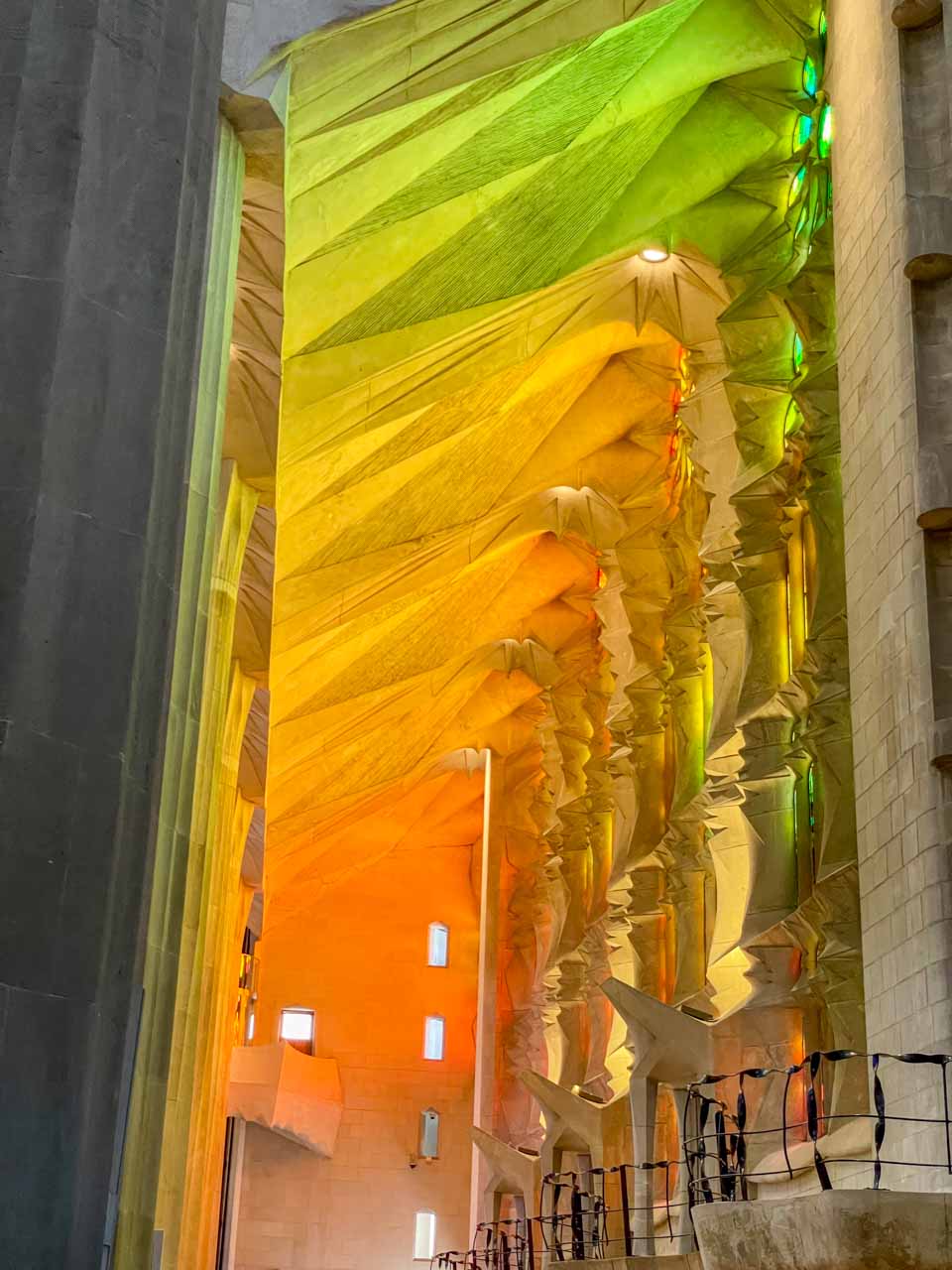
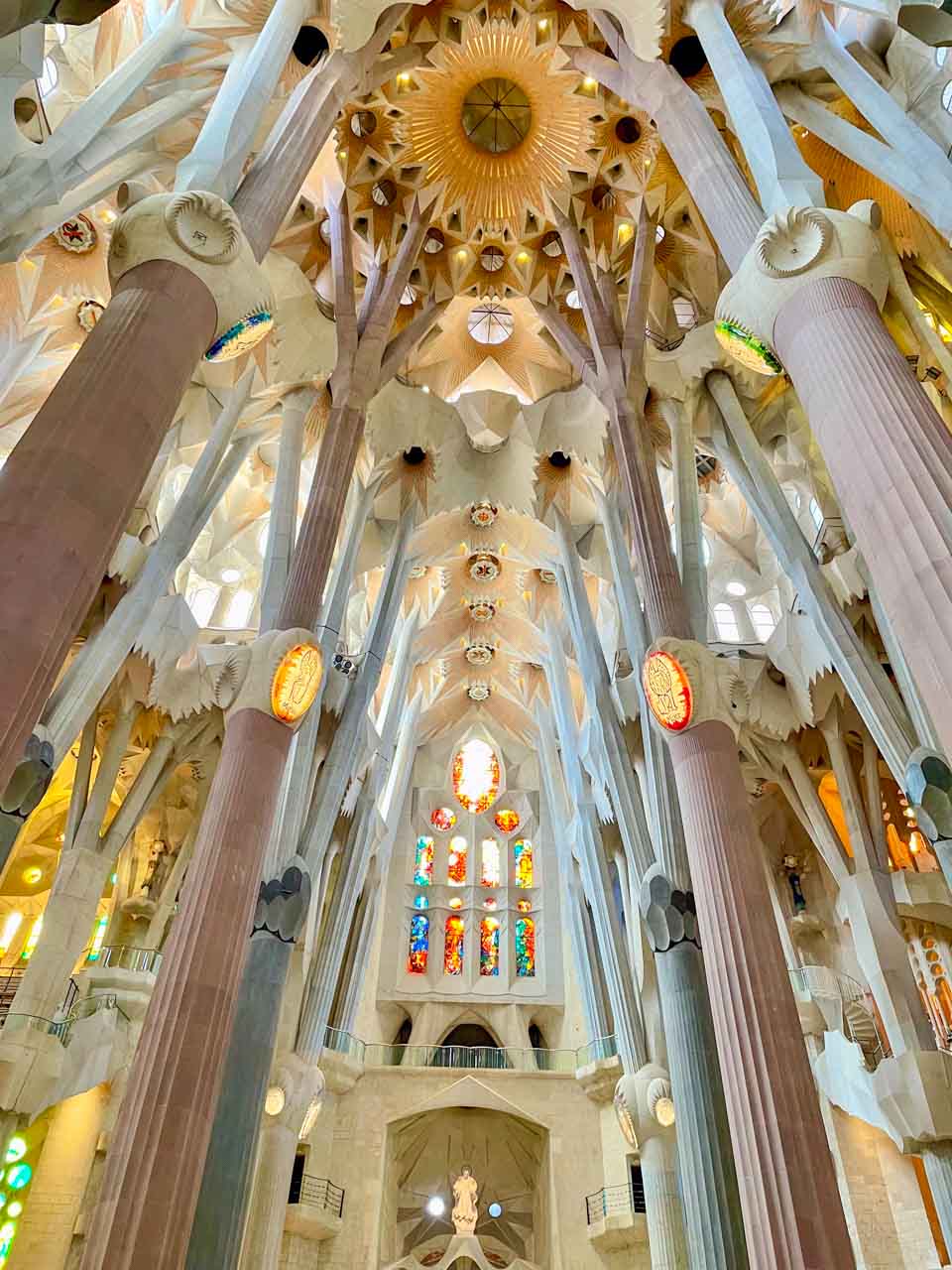
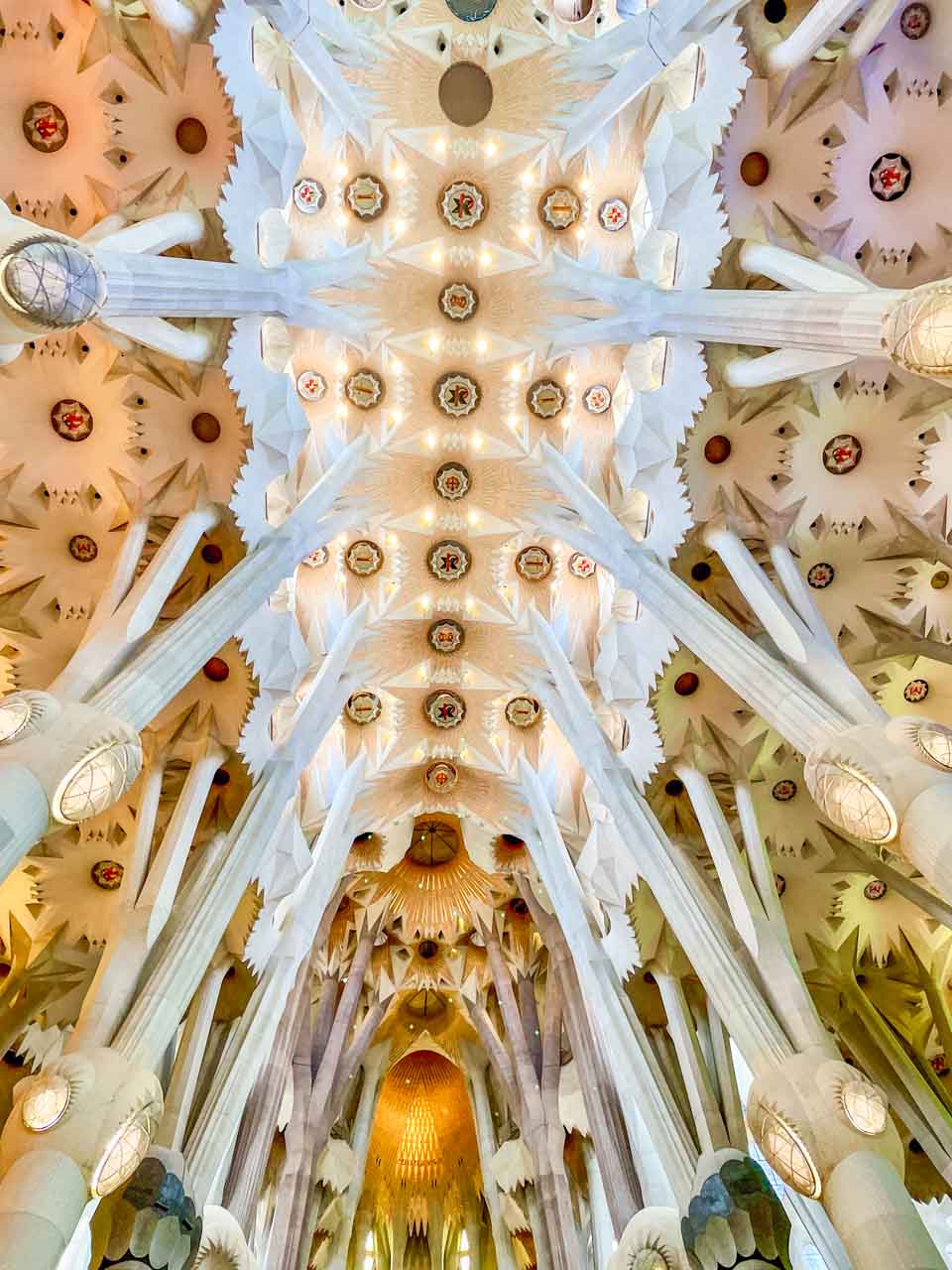
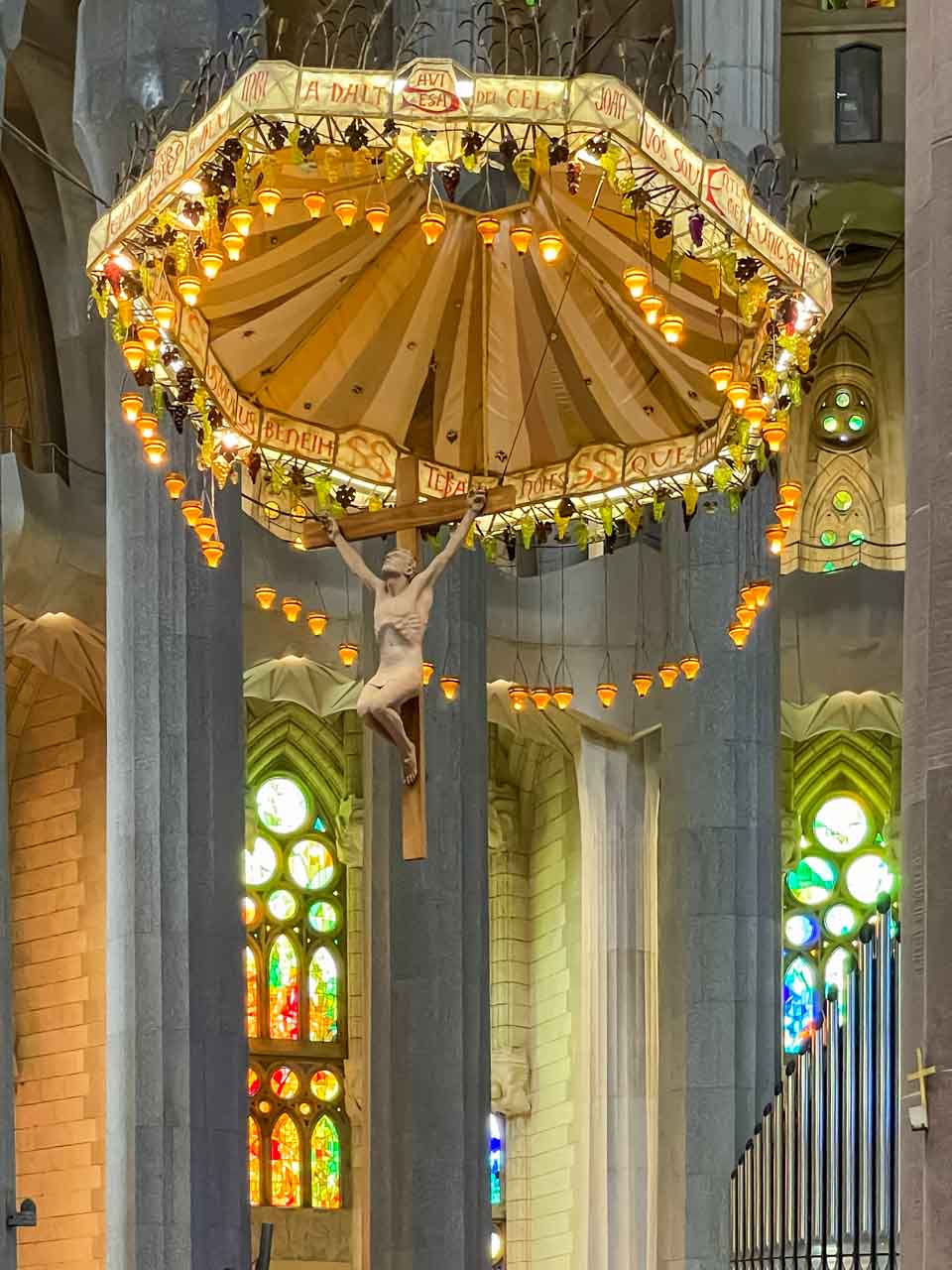
Barcelona and the Sagrada Familia are synonymous – you can’t have one without the other. It is the most-visited monument in Spain and is the only temple in the world still under construction. The Sagrada Familia has been under construction since 1882 and is estimated to be completed in 2026. However, according to my guide, this completion date is not likely to be met because of COVID-19. The building of Sagrada Familia relies heavily on tourist dollars, and none came in while the basilica was closed during the pandemic.
While I failed to see the beauty in the basilica’s exterior, Antoni Gaudi, the Sagrada Familia’s famous architect, has excelled himself with its breathtakingly beautiful interior. See my photo gallery.
A note on Antoni Gaudi (because his architecture appears multiple times on this bucket list): Antoni Gaudi is Barcelona’s most famous architect and led the way for the Modernista movement, which is best known for its architectural style. UNESCO recognised Gaudi’s exceptional creativity and contribution to architecture development by placing seven properties he built on the World Heritage List in 1984. UNESCO has collectively listed these seven properties as the “Works of Gaudi”.
In 2003, Gaudi was on the path to sainthood when the Vatican opened the beautification process for him, the first step towards declaring his sainthood. It is now 2023, and Gaudi still needs to become a saint. The Catholic Church does not rush the beautification process. And there is a question mark over what miracle Gaudi caused!
Casa Batllo
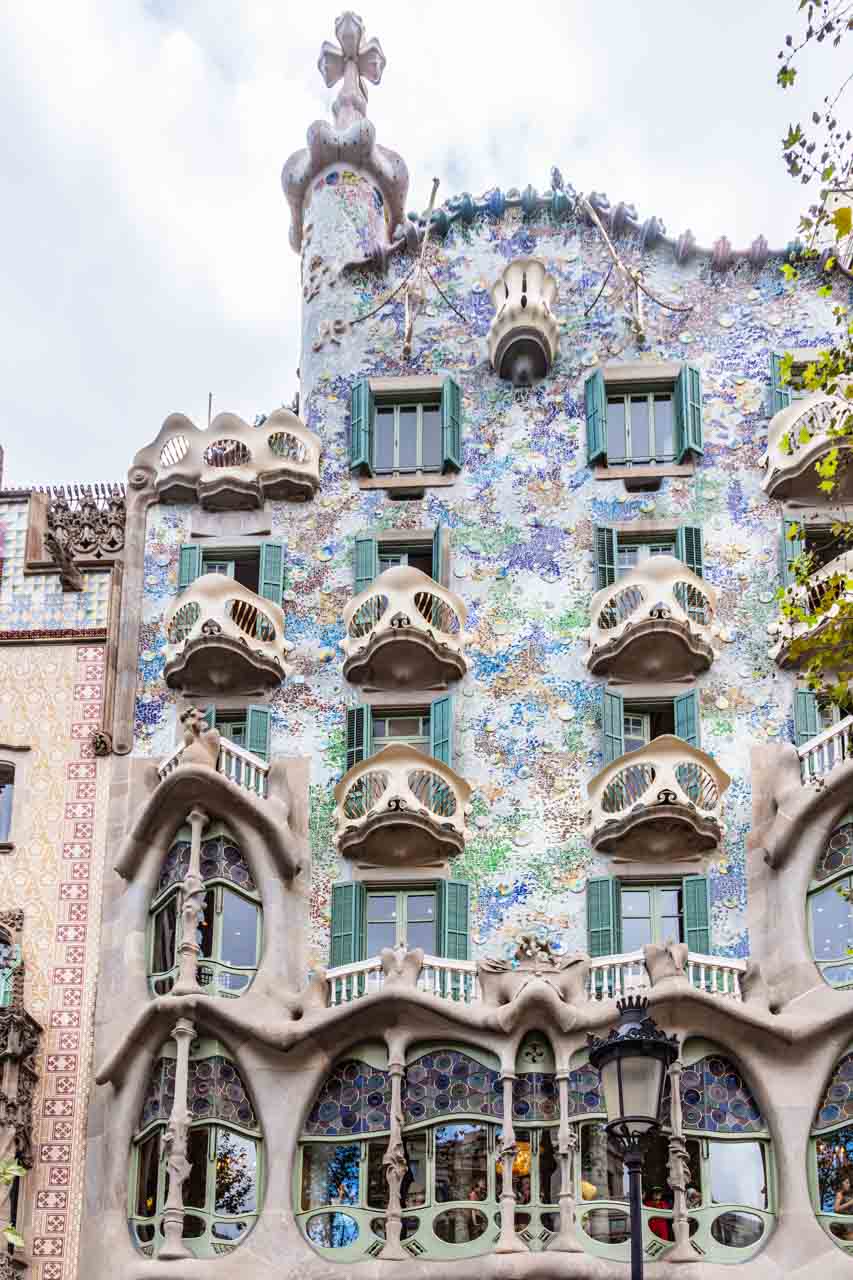
The beautiful facade of Casa Batllo.
The building, now known as Casa Batllo, was constructed in 1877. When Joseph Batllo purchased it in 1903, he gave Antoni Gaudi total creative freedom to complete the entire remodelling of the house, which was completed in 1906.
The interior of this UNESCO World Heritage Site is a vision of wrought iron, wood, stained glass, ceramic tiles, and stone ornaments. The building is energy efficient with extensive use of natural light. Casa Batllo’s exterior was given a unique façade by Gaudi, where stone, glass, and ceramics form waves that mirror a calm sea, and the balconies are shell-shaped.
Located at number 43 on Passeig de Gracia, allow at least 1.5 hours to explore the house.
Casa Mila
Located at number 92 on Passeig de Gracia, Casa Mila was an apartment block completed in 1912, and Antoni Gaudi was the architect. It is popularly known as La Pedrera, meaning “stone quarry” in Catalan, because stone was the primary building material for the façade and balconies. A visit to Casa Mila includes (at additional cost) the apartment where the Mila family lived, still intact with antique furniture. The rooftop provides excellent views over Barcelona.
Casa Mila has two intriguing features:
- There is barely a straight wall in the building, and
- The rooftop is a sculpture park of chimneys that looks like something out of Star Wars. The Spanish poet Pere Gimferrer called it The Garden of Warriors.
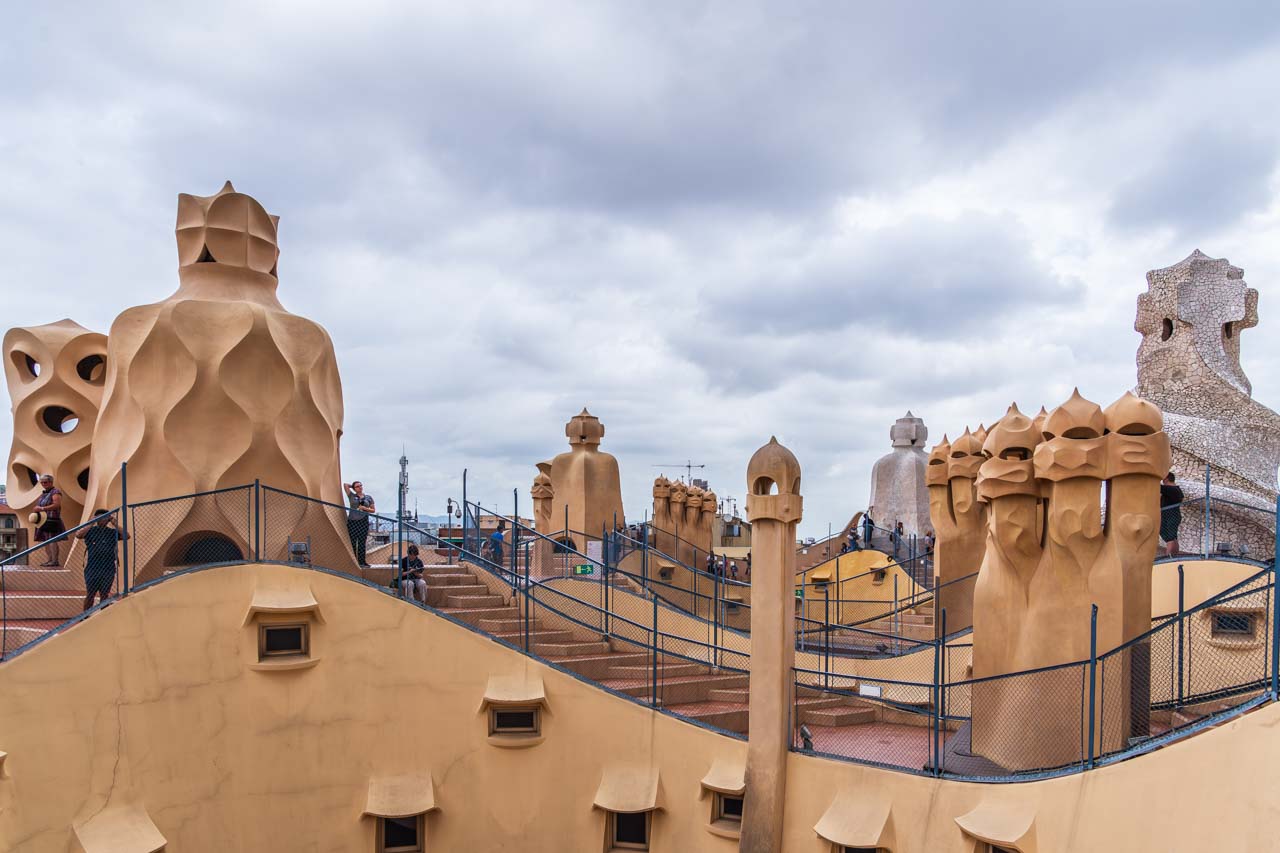
“Warriors” march across Casa Mila’s rooftop.
Ciutadella Park
Go people-watching in Ciutadella Park, Barcelona’s largest landscaped park on Passeig de Picasso.
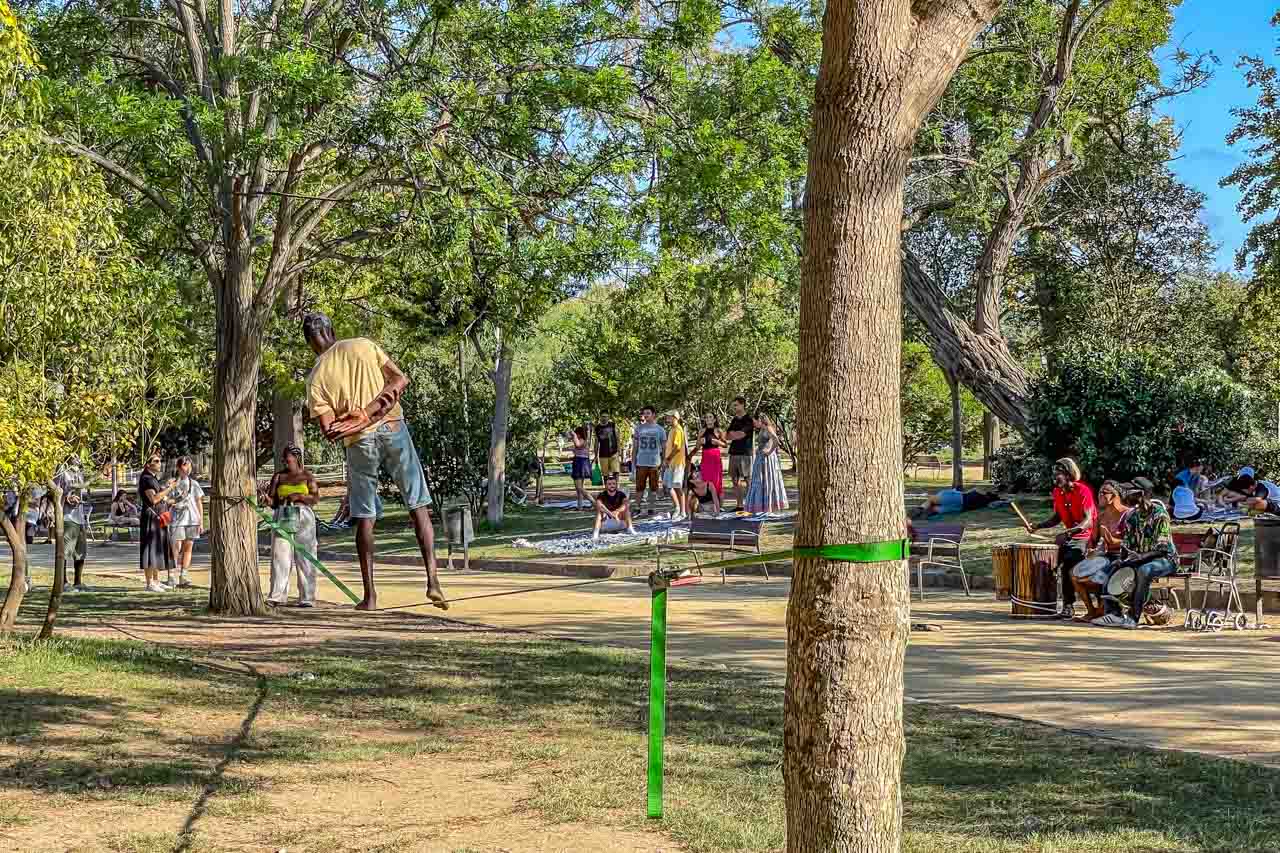
There is much to see and do in Ciutadella Park.
Ciutadella Park is the place to see and be seen, particularly on Sunday afternoons when people gather to play instruments, relax, take a punt on the boating lake, view the extravagant Cascada Monumental, a cascading waterfall fountain topped by a chariot-rider flanked by gryphons which Gaudi helped design, admire the sculptures scattered around the park, or visit the zoo.
Palau de la Musica Catalana
Palau de la Musica Catalana (Palace of Catalan Music) is a concert hall in the Sant Pere district of Barcelona, built between 1905 and 1908. The modernist architect Lluis Domenech i Montaner constructed Musica Catalana as a home for the Catalan Choral Society.
I went to see the Palau de la Musica Catalana because it is a UNESCO World Heritage Site (1997), and I had seen some photos and thought, That’s pretty. “That’s pretty” was an understatement! I was in awe; it was breathtaking! Could there be anything this beautiful? The stained-glass skylight and windows flood the Concert Hall with natural light, the majestic organ has 3,700 pipes, and the 18 muses surrounding the stage, with 18 instruments from different parts of the world, represent music without frontiers.
Palau de la Musica Catalana’s main auditorium seats 1,970, with a further capacity of 600 seats in the Petit Palau (chamber music hall). Discover the secrets of this hidden gem with an in-house guided tour, which includes hearing a short piece played on the organ. Magical!
Check out my photos to see why you should visit this unique Concert Hall.
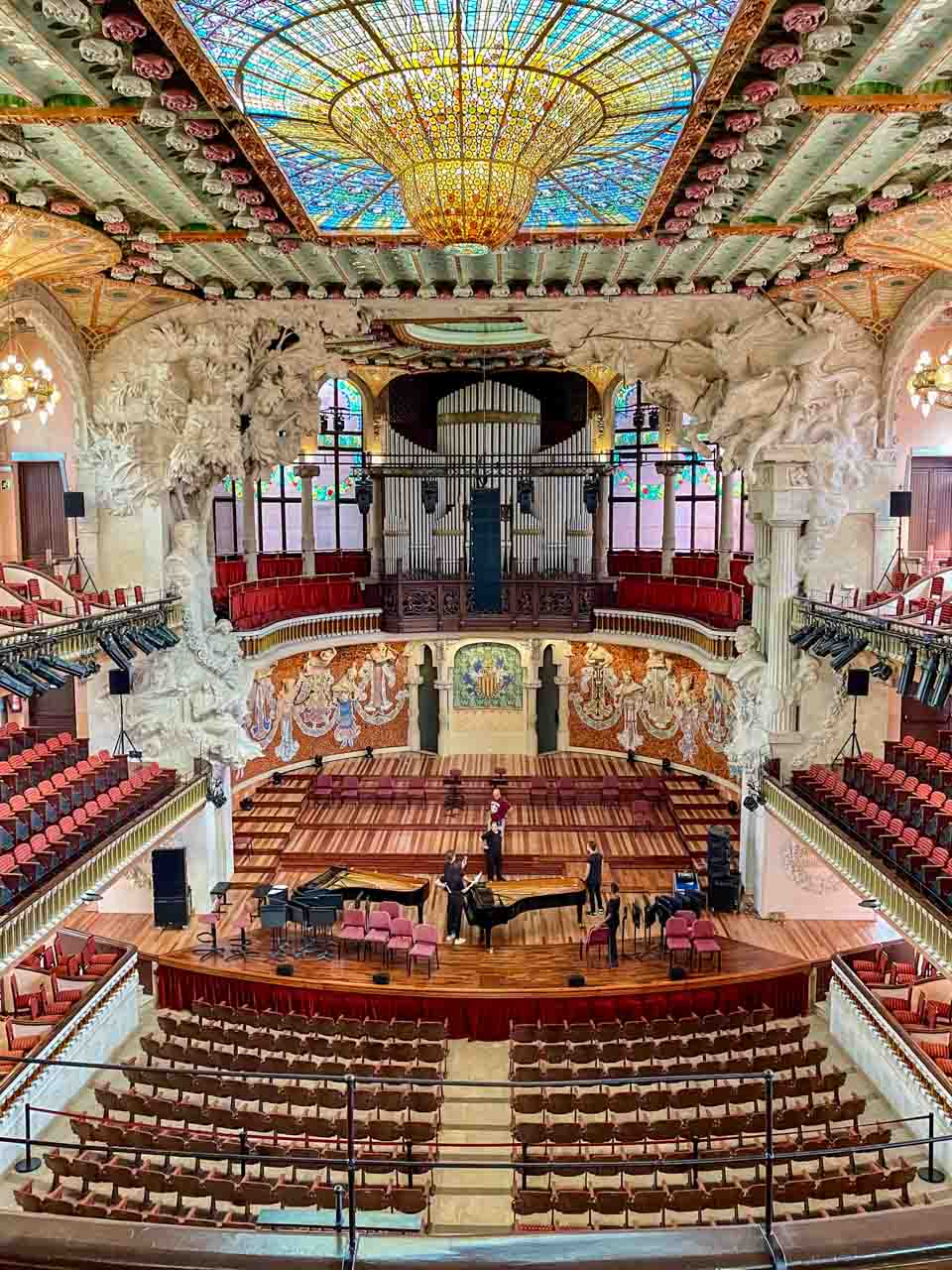
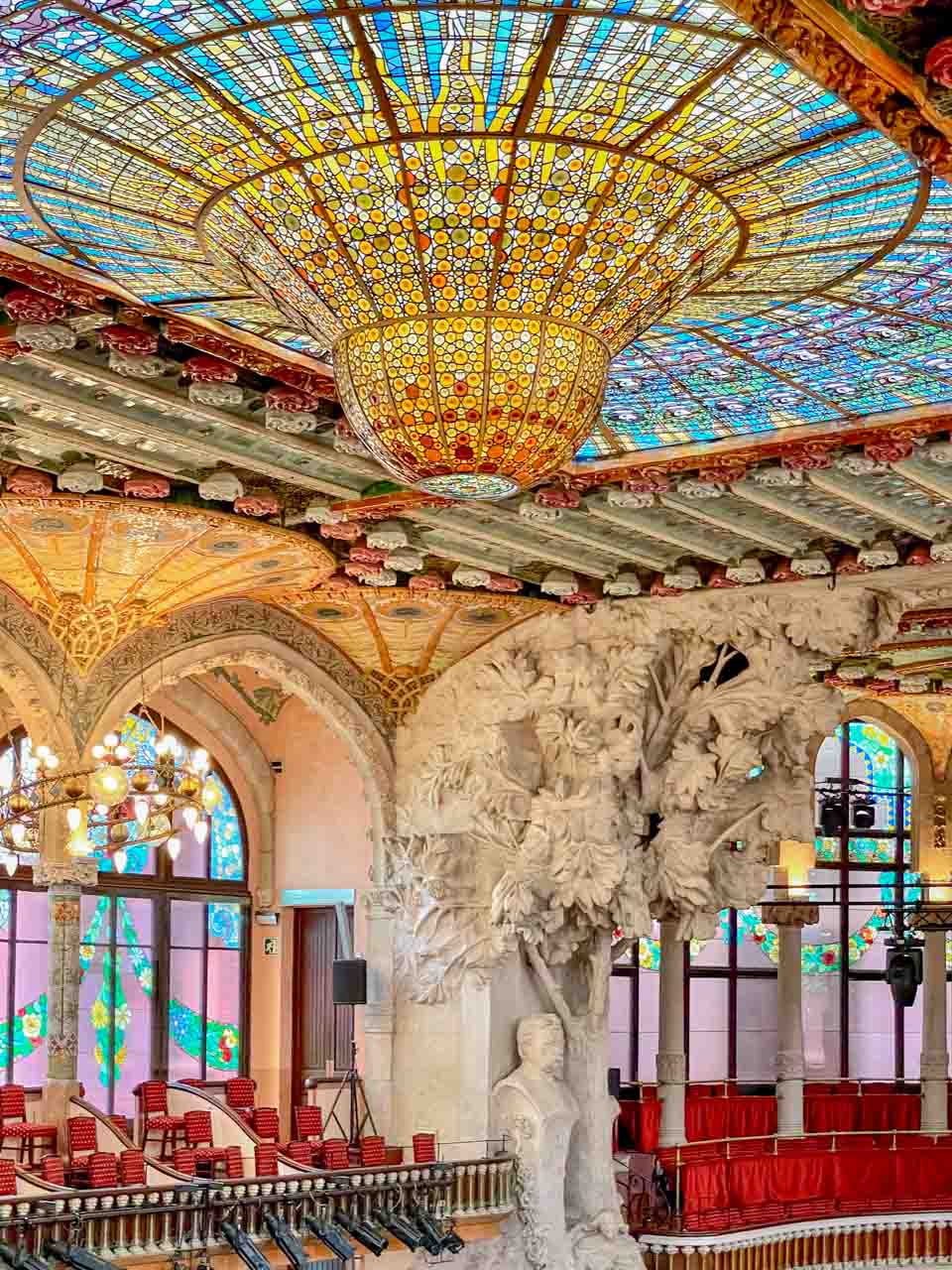
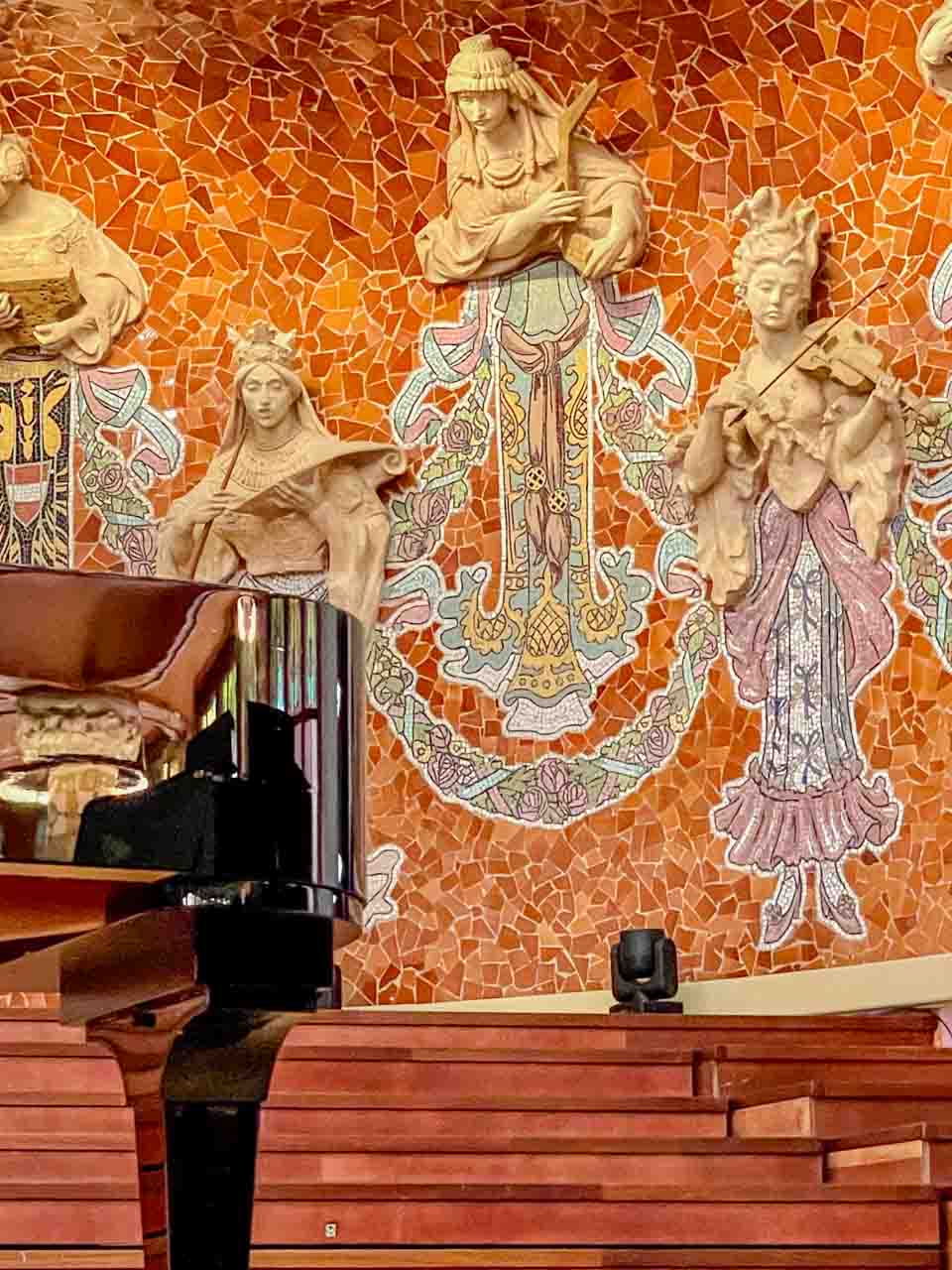
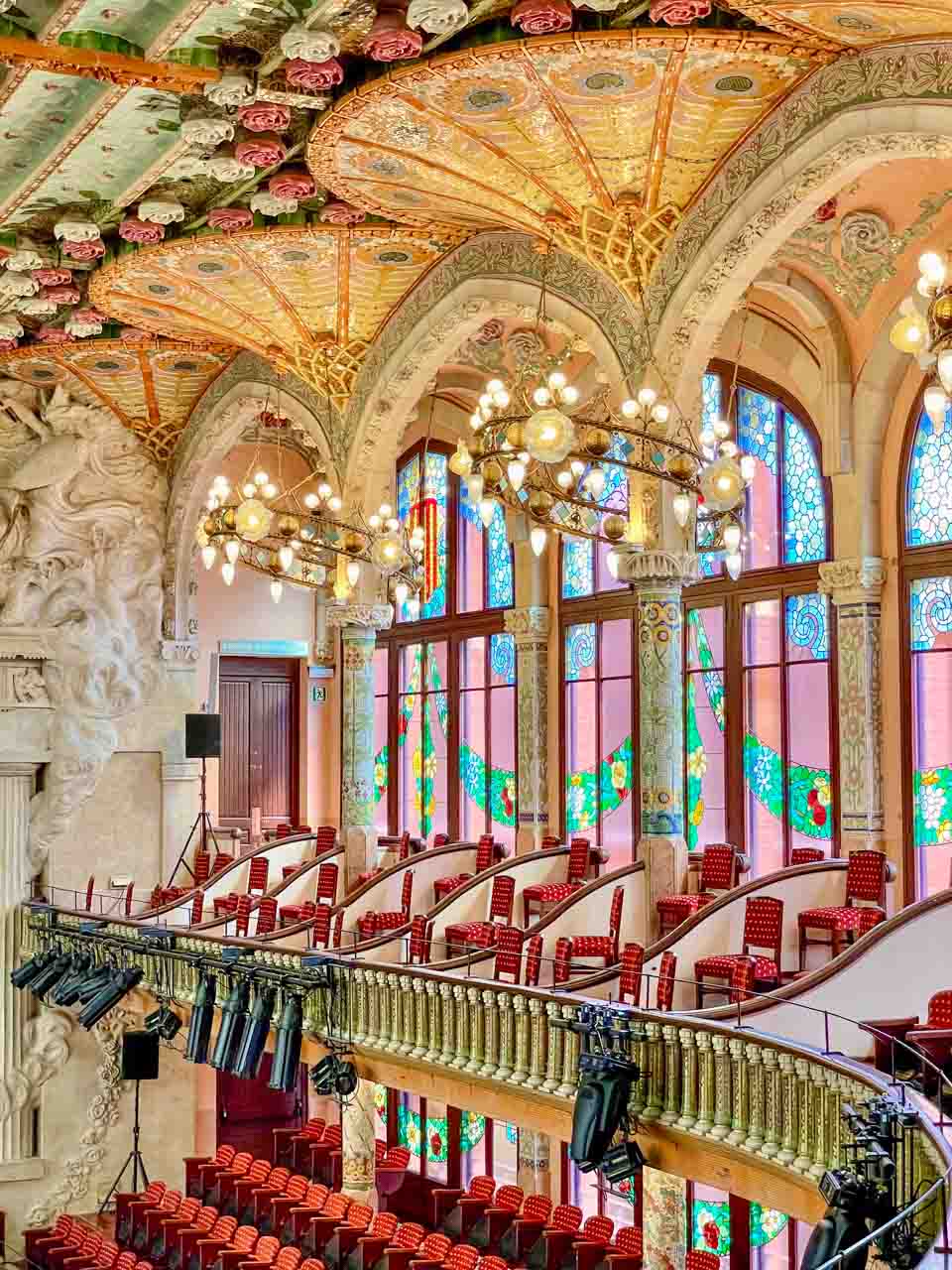
The architect was Antoni Gaudi’s teacher. I can see the influence on Gaudi.
There is a good café (Palau Café) in the Palau de la Musica Catalana foyer where you can eat inside or under the umbrellas outside.
Palau Guell (Guell Palace)
Palau Guell is a luxury mansion on Carrer Nou de la Rambla in the El Raval district of Barcelona. The famous architect Antoni Gaudi designed the palace’s seven floors for the industrial tycoon and Gaudi’s patron, Eusebi Guell, which he completed in 1890. All the palace rooms open onto the spectacular central hall, like an internal courtyard.
The building’s exterior is rather unremarkable, so the interior was a complete surprise. It was spectacular and certainly worth a visit! See for yourself.
Palau Guell was Gaudi’s first actual commission in Barcelona and has been on UNESCO’s World Heritage List since 1984.
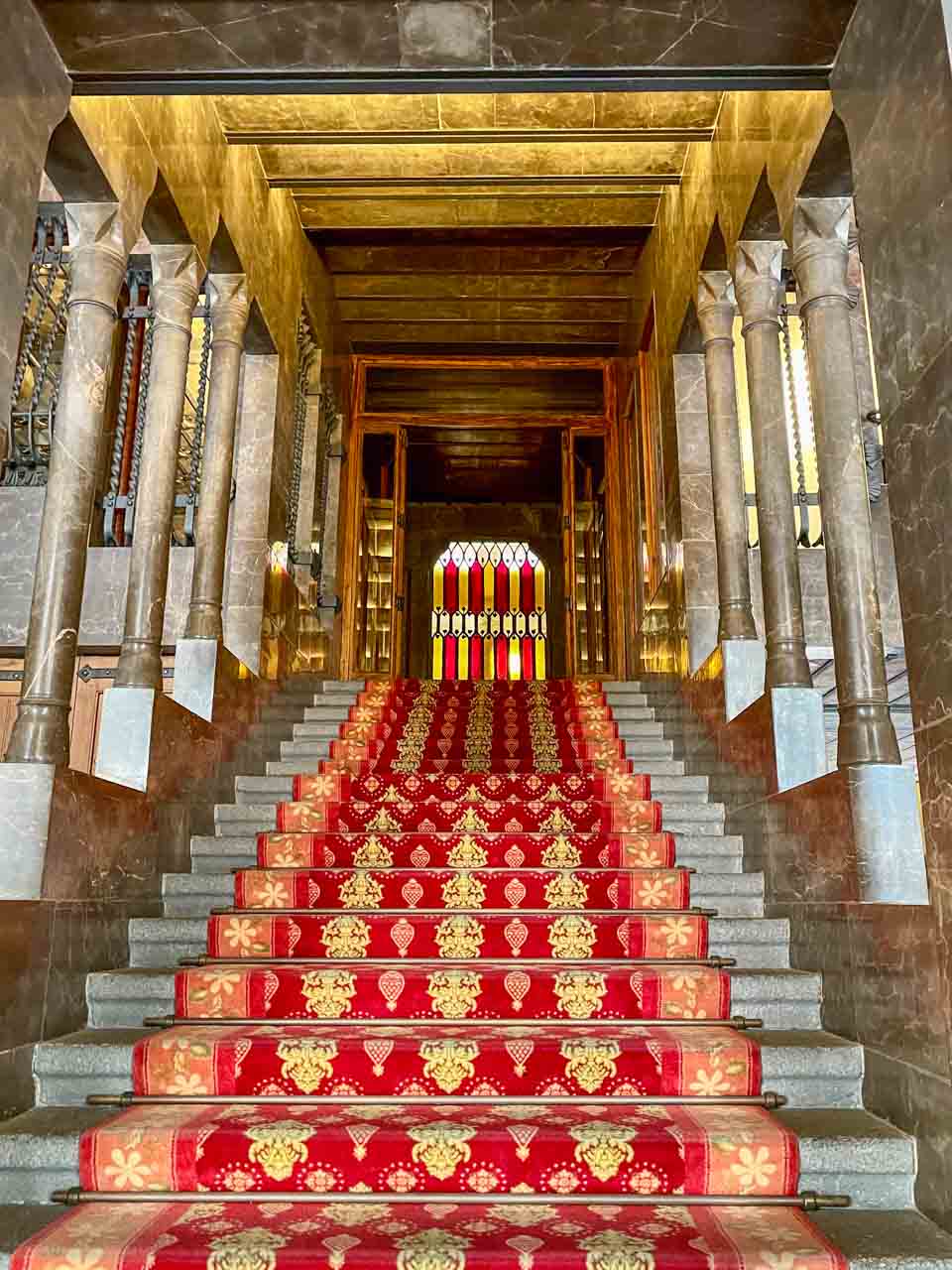
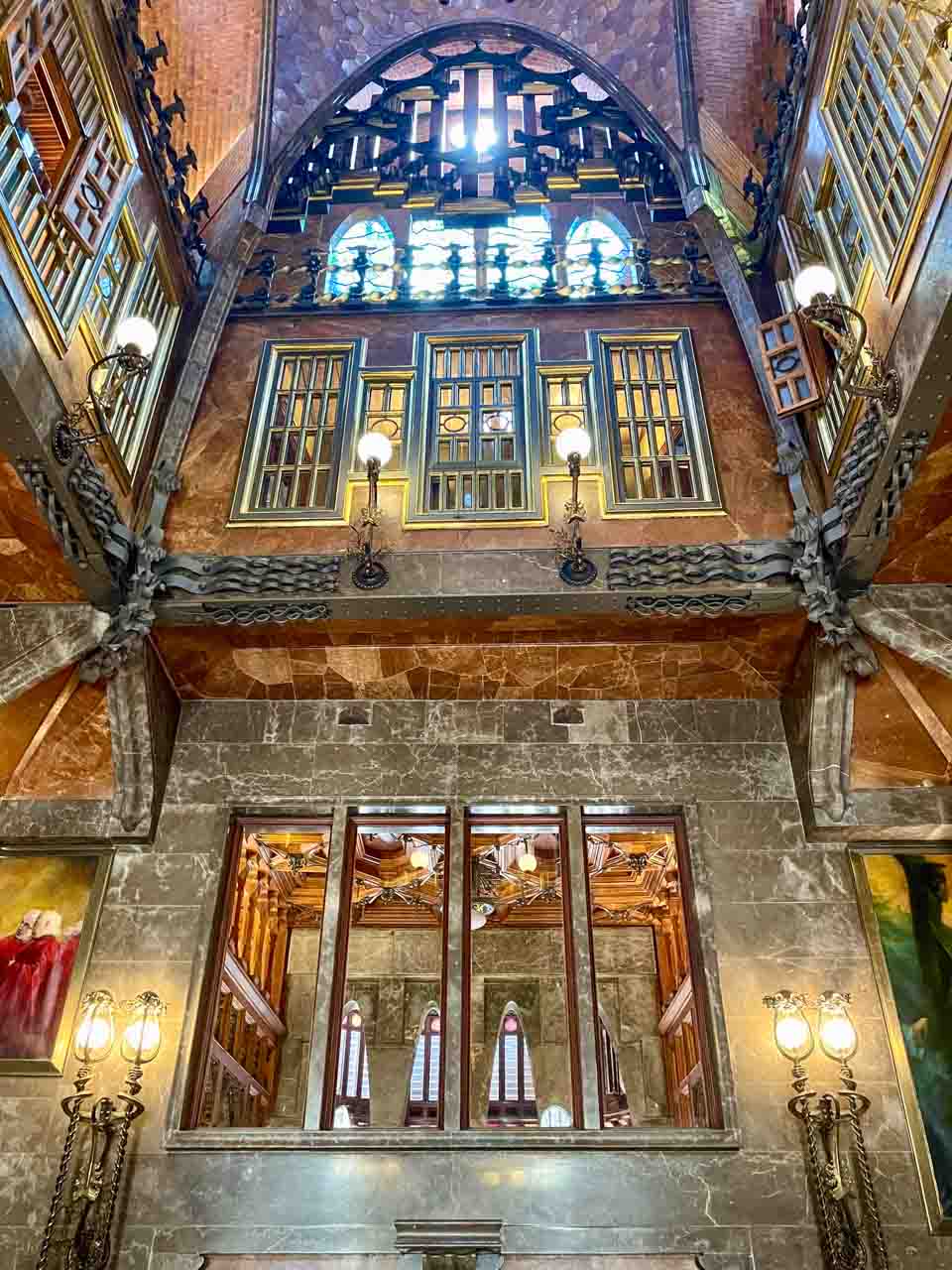
The lobby’s beautiful staircase with its stained-glass window (also designed by Gaudi) leads up to the luxurious central hall that also serves as a source of light for the rooms leading off it over several floors. Gaudi liked to incorporate wood in his designs, and the wooden ceilings in Palau Guell are works of art.
Gaudi installed his signature chimneys on the roof in 1895. There are 20 chimneys in all, which also ventilate the house.
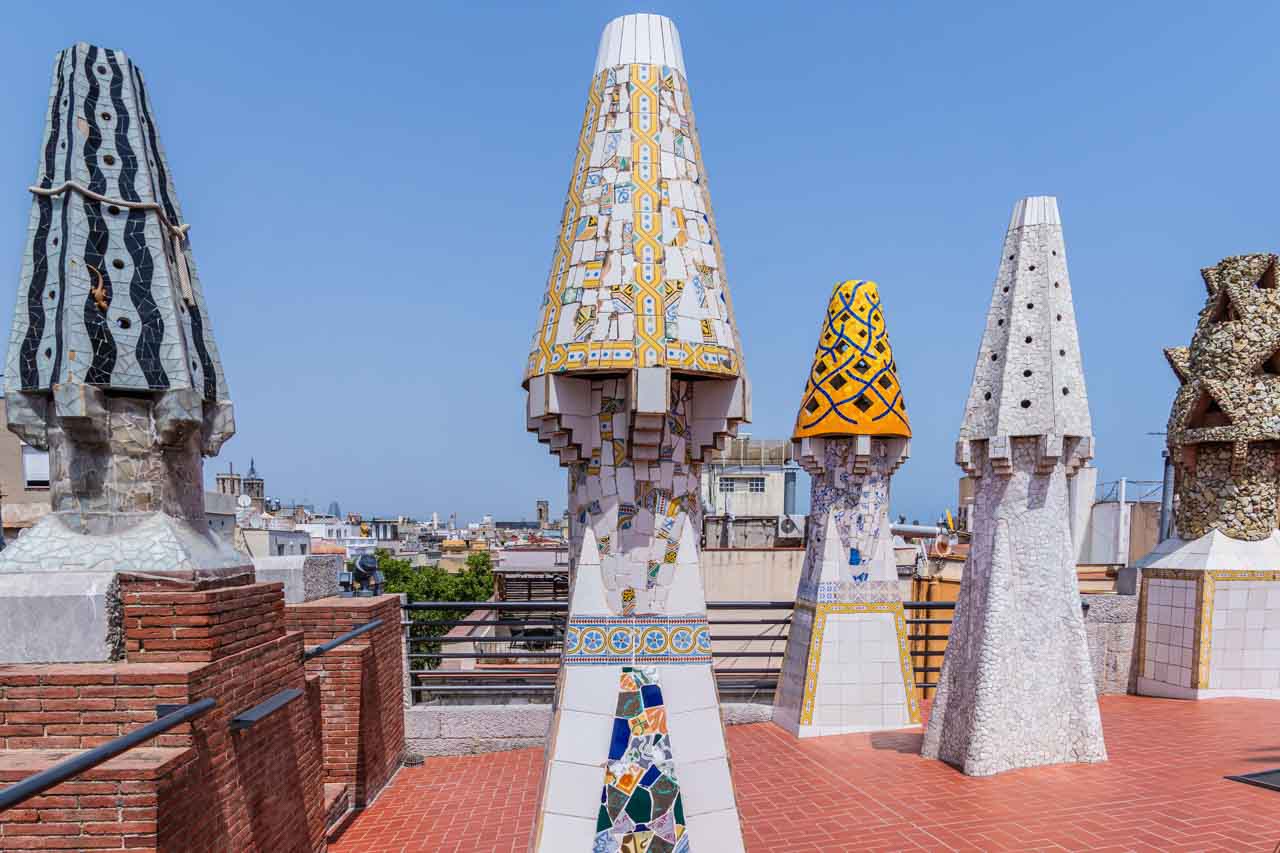
Antoni Gaudi’s signature chimneys on the roof of Palau Guell.
The audio guide was descriptive, informative, and easy to follow.
UNESCO placed Palau Guell on the World Heritage List in 1984. A definite must-see!
Park Guell
A guided tour of Park Guell, designed by the famous Spanish architect Antoni Gaudi, was an optional excursion in Barcelona offered by Insight Vacations on my recent tour with them – and one I couldn’t miss.
Visiting Park Guell was on my bucket list in Barcelona, and it didn’t disappoint. Gaudi’s distinctive, imaginative, and nonconforming architectural style fascinates me and appeals to my photographic eye. Gaudi decorated most of his structures with mosaics made from broken, colourful ceramic and glass pieces.
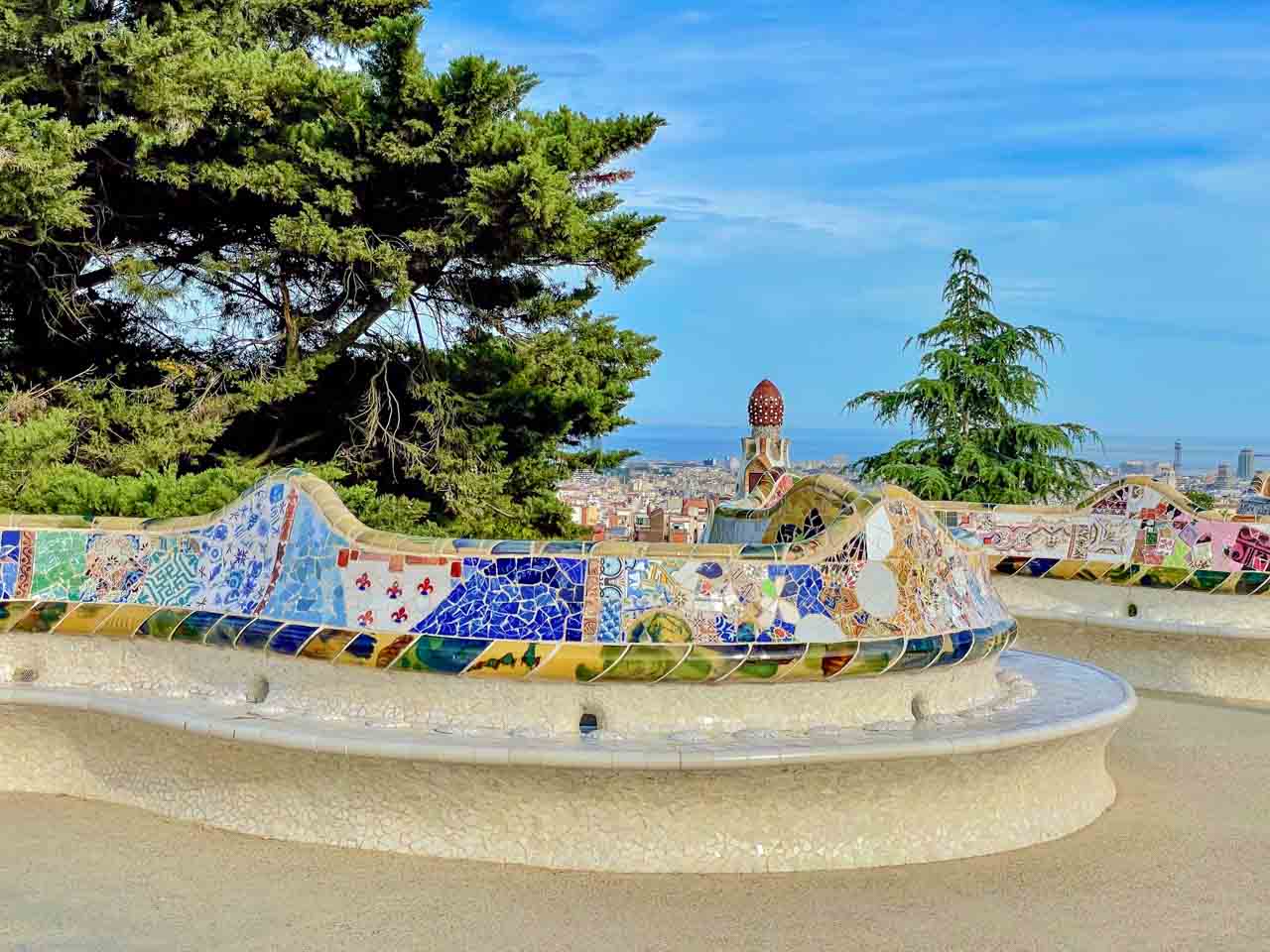
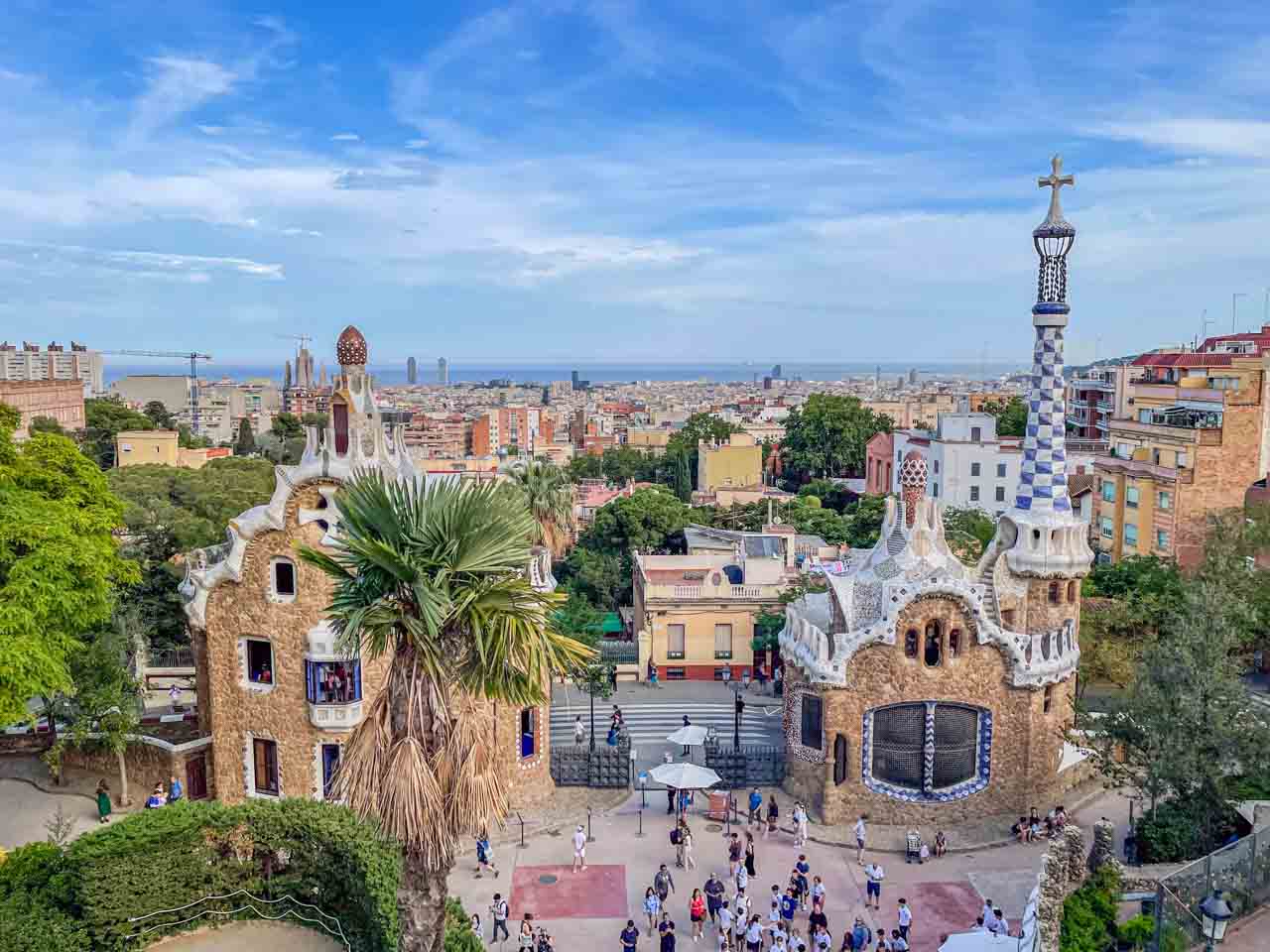
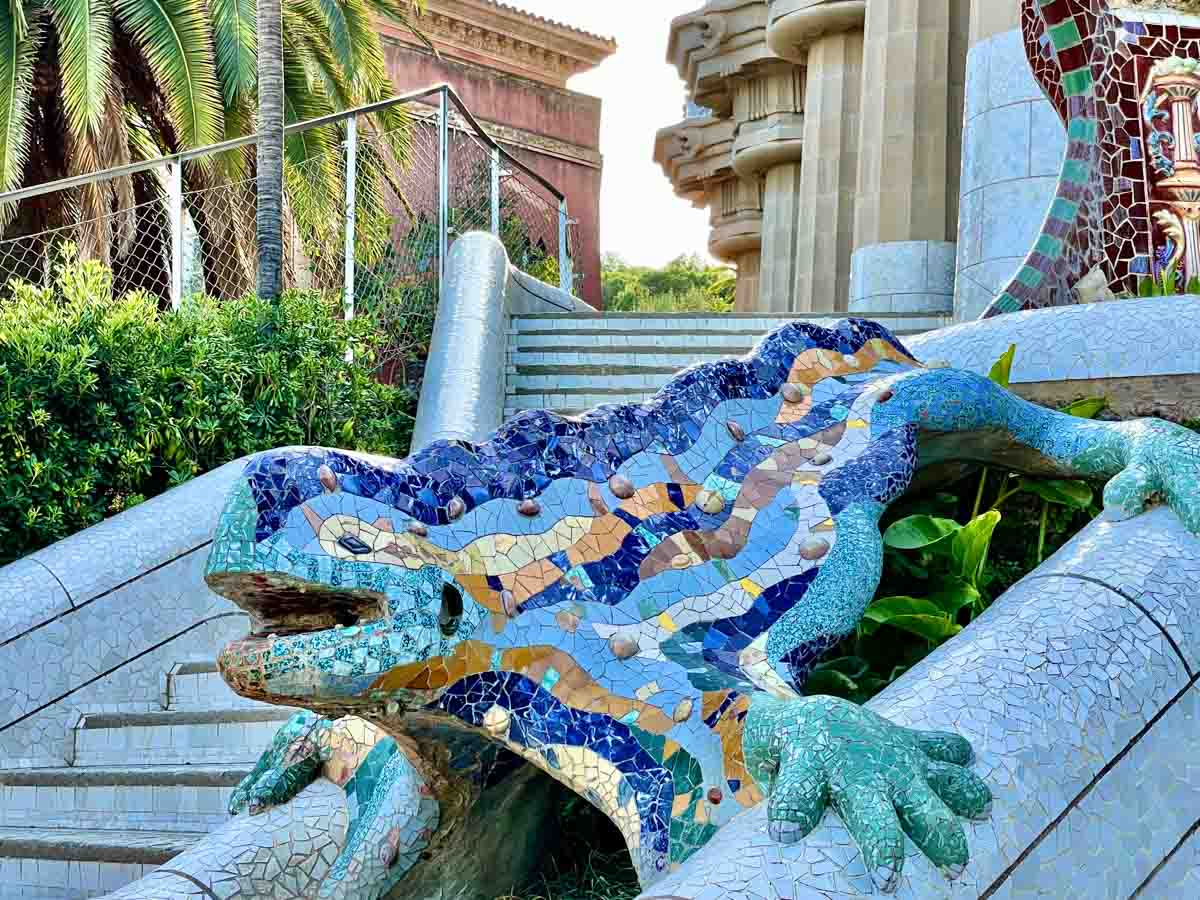
I didn’t know about Park Guell’s original intention as a luxury residential complex (gated community), but this plan was abandoned in 1914 as it was financially unsuccessful. It was opened to the public as a municipal park in 1926.
At more than 17 hectares, the park is one of the largest green spaces in Barcelona.
The Spanish Government declared Park Guell a Monument of Cultural Interest in 1969 in recognition of its historical, architectural, and artistic uniqueness. It was designated a UNESCO World Heritage Site in 1984 and a Catalan National Cultural Interest site in 1993.
I finally learned how to pronounce ‘Guell’ – ‘Gway’, with the ‘G’ pronounced like the ‘g’ in ‘girl’.
Fun Facts:
- Gaudi had a workman drop his pants and sit in the soft plaster for a perfect anatomical curve to ensure the stone bench was comfortable.
- The former guard’s residence and sales office have been dubbed the Hansel and Gretel gingerbread houses by the children of Barcelona.
BESALU – Medieval Town on the Fluvia River
Founded in 878 AD, Besalu is an enchanting medieval town in the southeastern section of the Pyrenees. It is one of Spain’s best-preserved medieval towns and was declared a historic and artistic site of national importance in 1966.
Besalu is home to an 11th-century church and hospital, a 12th-century monastery, the remains of a medieval castle, and an ancient Jewish Quarter, where you will find the ruins of a medieval synagogue and a 12th-century Mikvka (Jewish ritual bathhouse). However, its most significant feature is its 12th-century Romanesque bridge over the Fluvia River with a gateway at its midpoint.
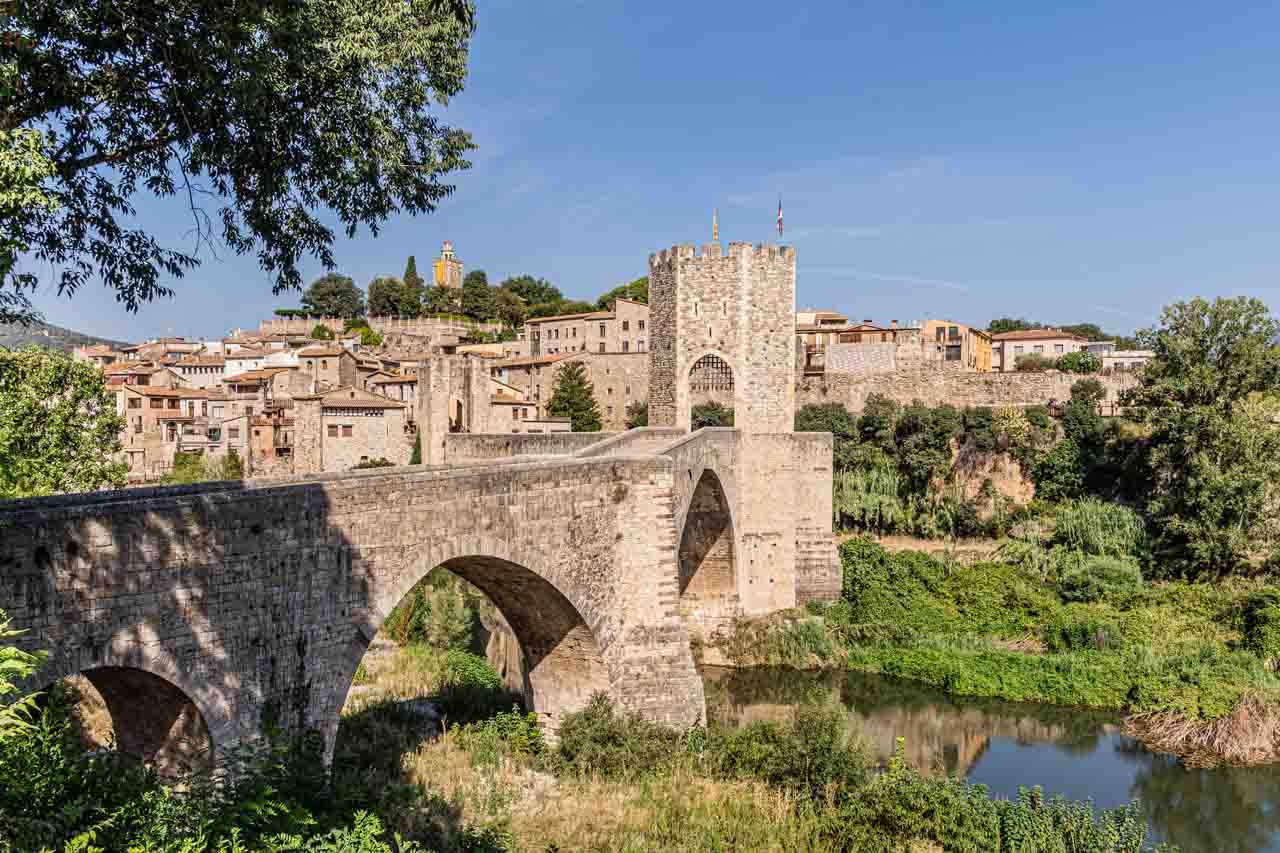
The medieval town of Besalu and its Romanesque bridge.
Keep an eye out for sculptures of chairs scattered around the old town.
BILBAO – The Many Faces of the Guggenheim Museum
Bilbao is an industrial port city in northern Spain and the biggest city in Basque Country. The opening of the Guggenheim Museum in 1997 saw the revitalisation of Bilbao as it transformed from a nondescript town to one of Spain’s bucket list destinations.
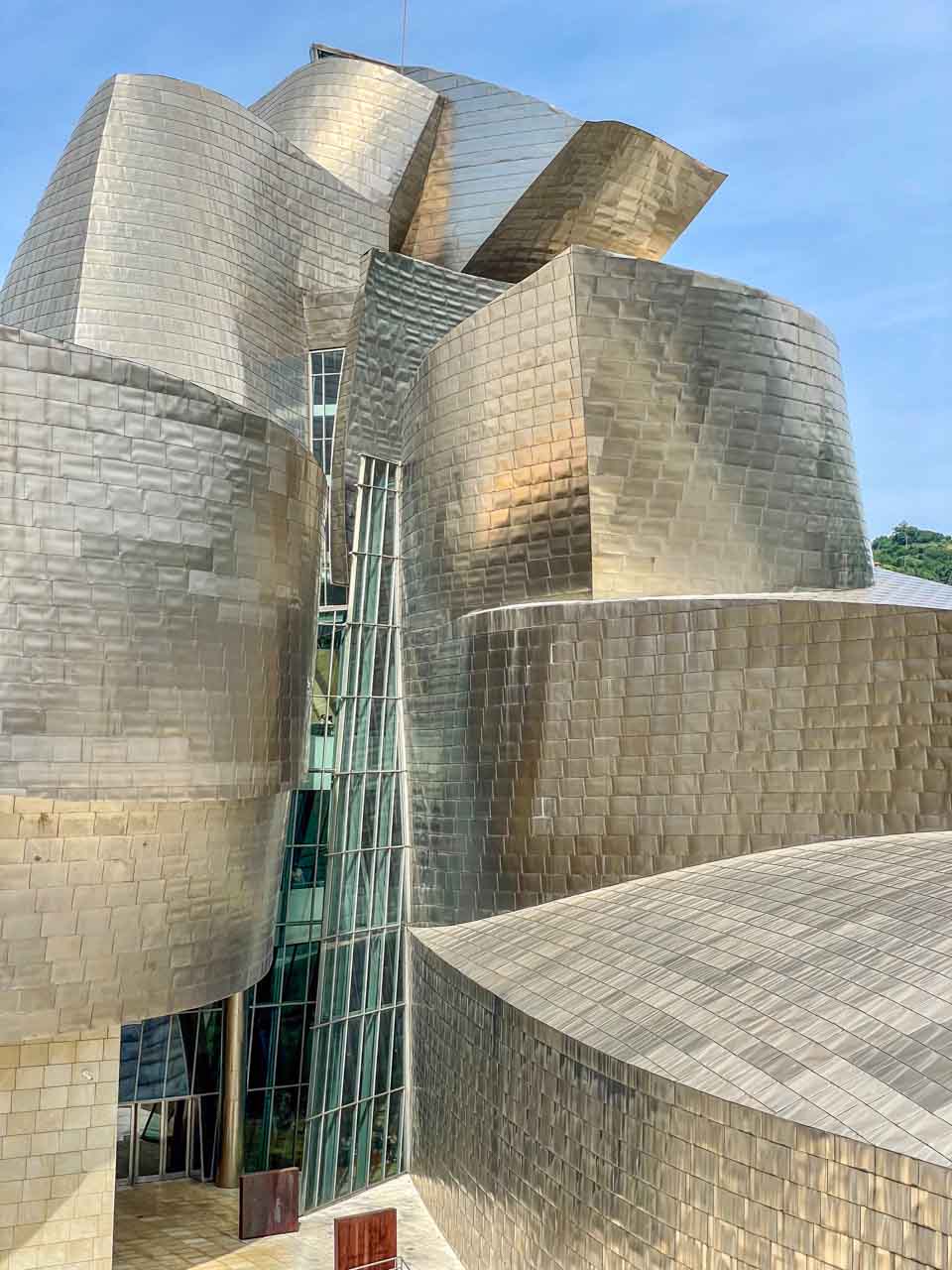
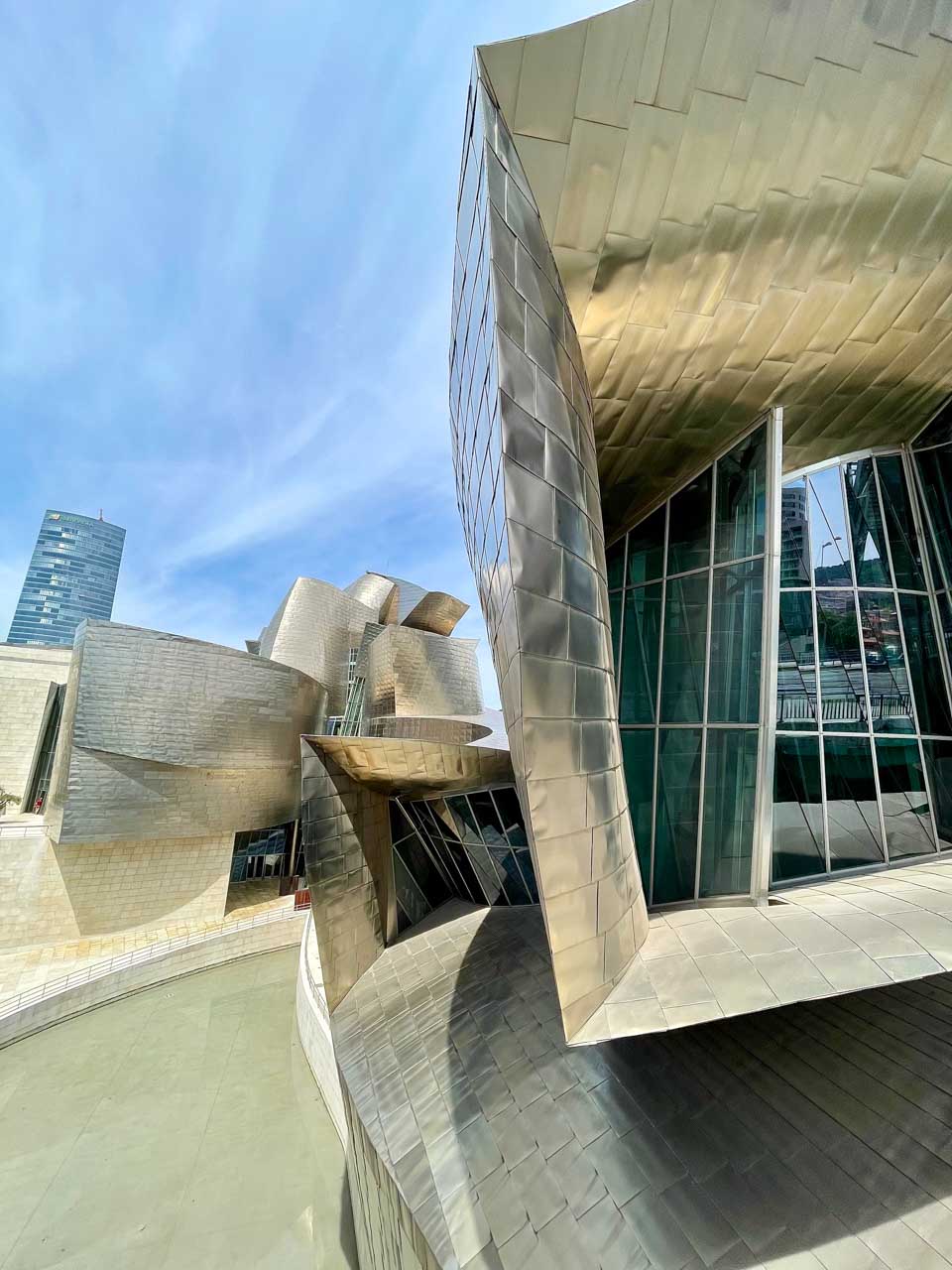
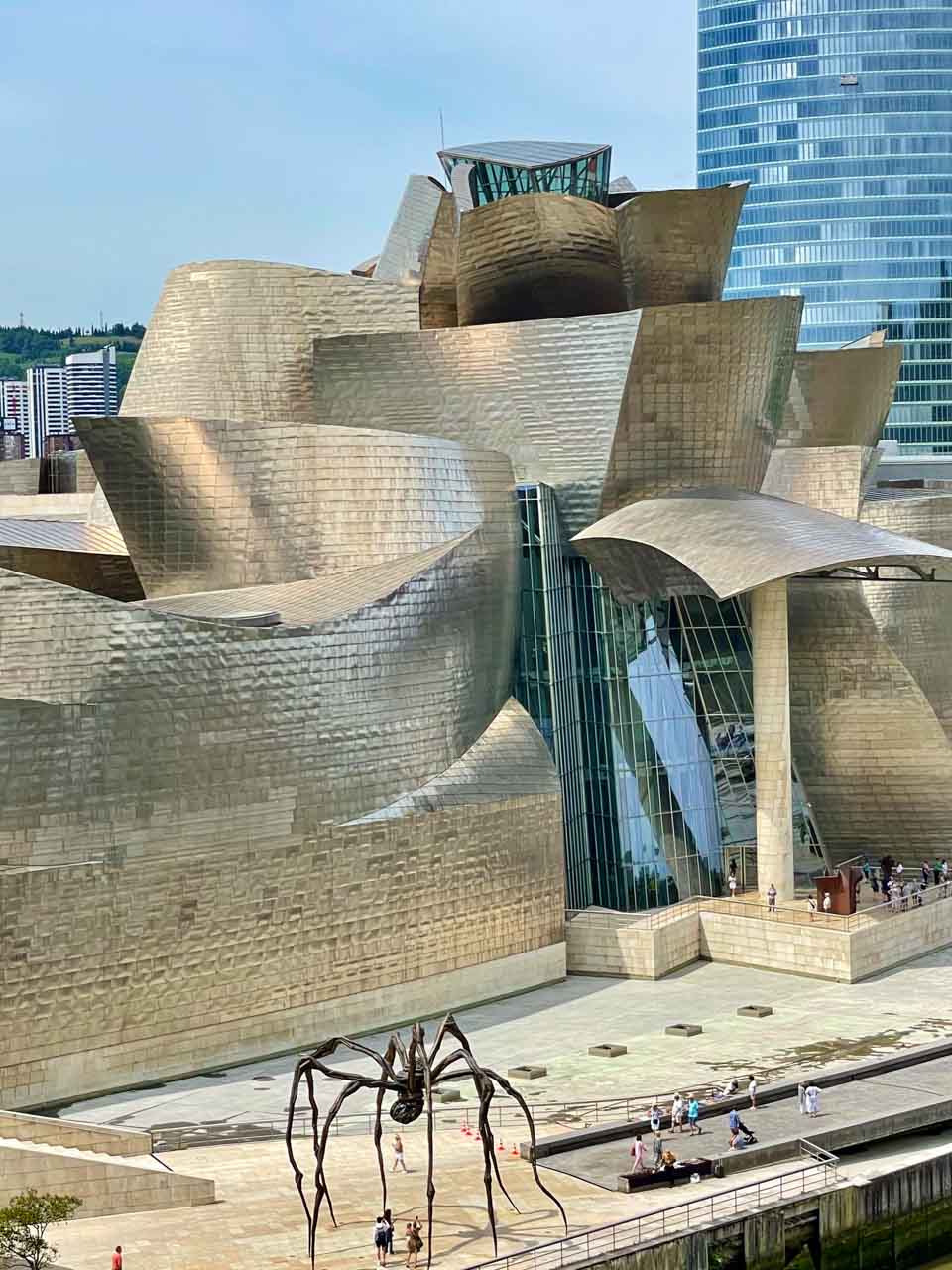
The Guggenheim Bilbao is a modern and contemporary art museum in Northern Spain’s Basque Country. But before the art, it is, first and foremost, the most fantastic piece of architecture. Wow-factor architecture! Do you agree?
The best views of the Guggenheim are from Salve Bridge, from where I took the above photos. The Salve Bridge is informally known as the Guggenheim Bridge because it merges into the Guggenheim Museum. I particularly liked the spider sculpture in front of the museum.
Take the funicular to the top of Mount Artxanda for great views of Bilbao and the Guggenheim Museum.
CANGAS DE ONIS – Roman Bridge of Cangas de Onis
Cangas de Onis is a picturesque town in Spain’s northwest province of Asturias.
The five-arched Roman Bridge of Cangas de Onis spanning the Sella River is not Roman. In fact, it is medieval, possibly dating from the late 13th century.
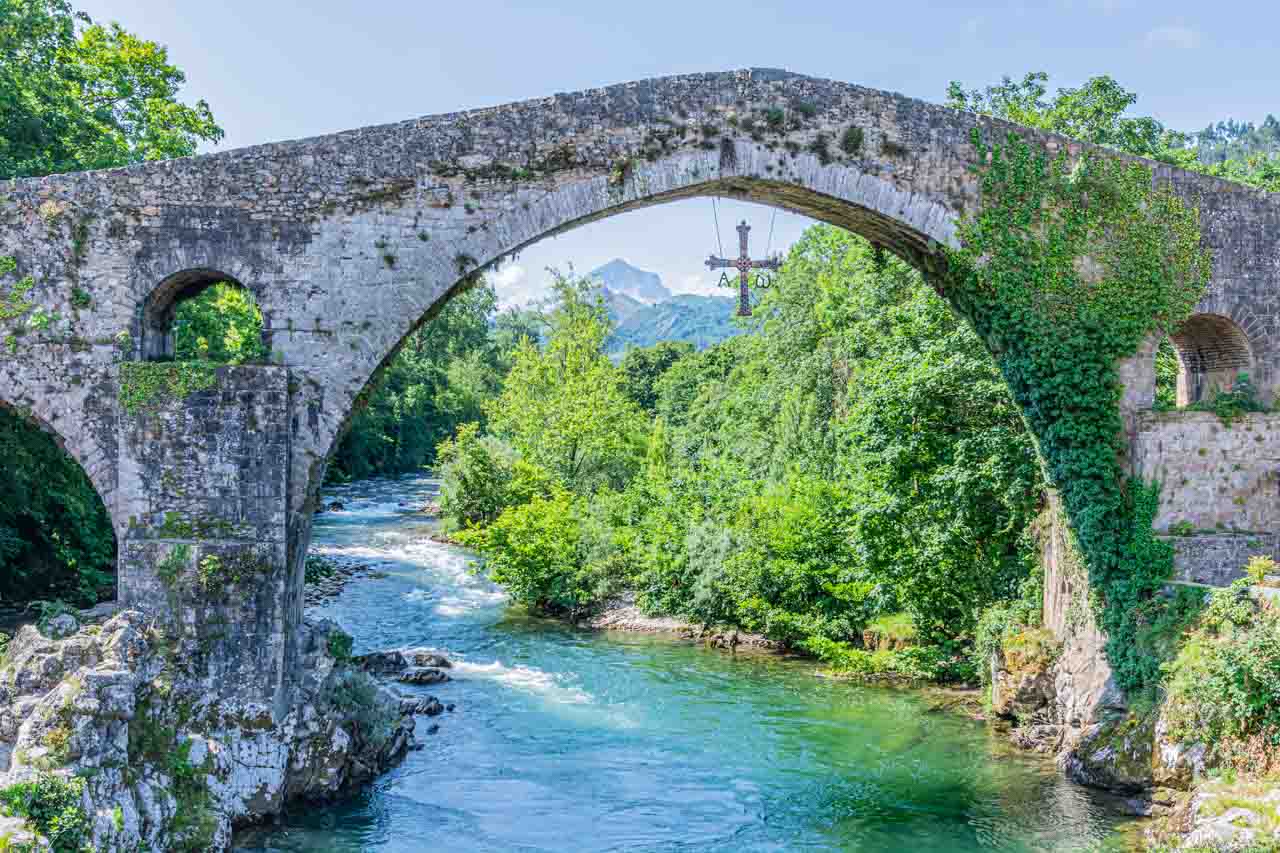
Roman Bridge of Cangas de Onis.
Roman or medieval, it still makes for an interesting bridge in a picturesque landscape. It is a graceful humpback bridge with a large, pointed central arch and is one of the best-known symbols of the Principality of Asturias.
From the centre of the arch hangs a reproduction of the famous Victory Cross – the symbol of the re-conquest of Spain from the Moors. The original Victory Cross is a work of precious metal dating to the start of the 10th century. You will find the Cross in Oviedo Cathedral.
CORDOBA
About 130 kilometres northeast of Seville, Cordoba was an important Roman city and a major Islamic centre in the Middle Ages. In Cordoba, three different cultures peacefully coexisted: Jews, Muslims, and Christians.
Roman Bridge of Cordoba
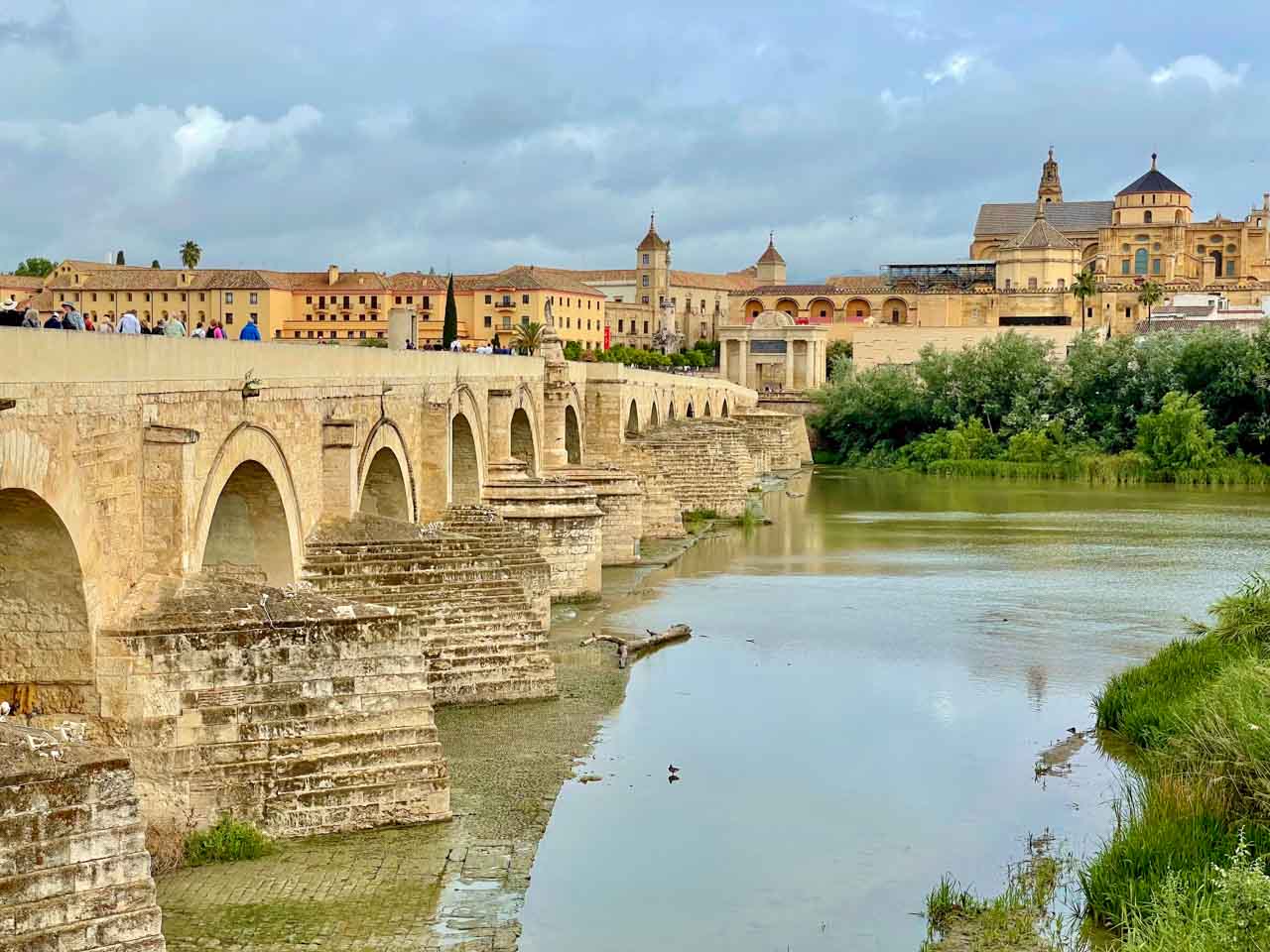
Cordoba’s Roman Bridge.
The stunning Roman Bridge of Cordoba was built across the Guadalquivir River in the first century BC. It has 16 arches supported by robust spurs with semi-cylindrical buttresses and is 247 metres long. It has undergone several reconstructions over the centuries, and today, only the 14th and 15th arches at the northern end are originally Roman. However, it remains a beautiful historical bridge. Since 2004, it has been a pedestrian-only bridge.
For those familiar with the TV series “Game of Thrones”, the Roman Bridge of Cordoba doubled as the Long Bridge of Volantis spanning the Rhoyne River in Season 5.
The Roman Bridge is part of the historic centre of Cordoba, which was declared a UNESCO World Heritage Site in 1984.
Mosque-Cathedral of Cordoba (Mezquita-Catedral of Cordoba)
It is also known as the Great Mosque of Cordoba.
Walking into the mosque stopped me dead in my tracks. It was one of those “Oh my goodness” moments. The main hall is a forest of pillars supporting over 850 double-arched columns – a spectacular sight that is breathtakingly beautiful and unforgettable.
Check out my photo gallery of the eclectic interior of Cordoba’s Mosque-Cathedral:
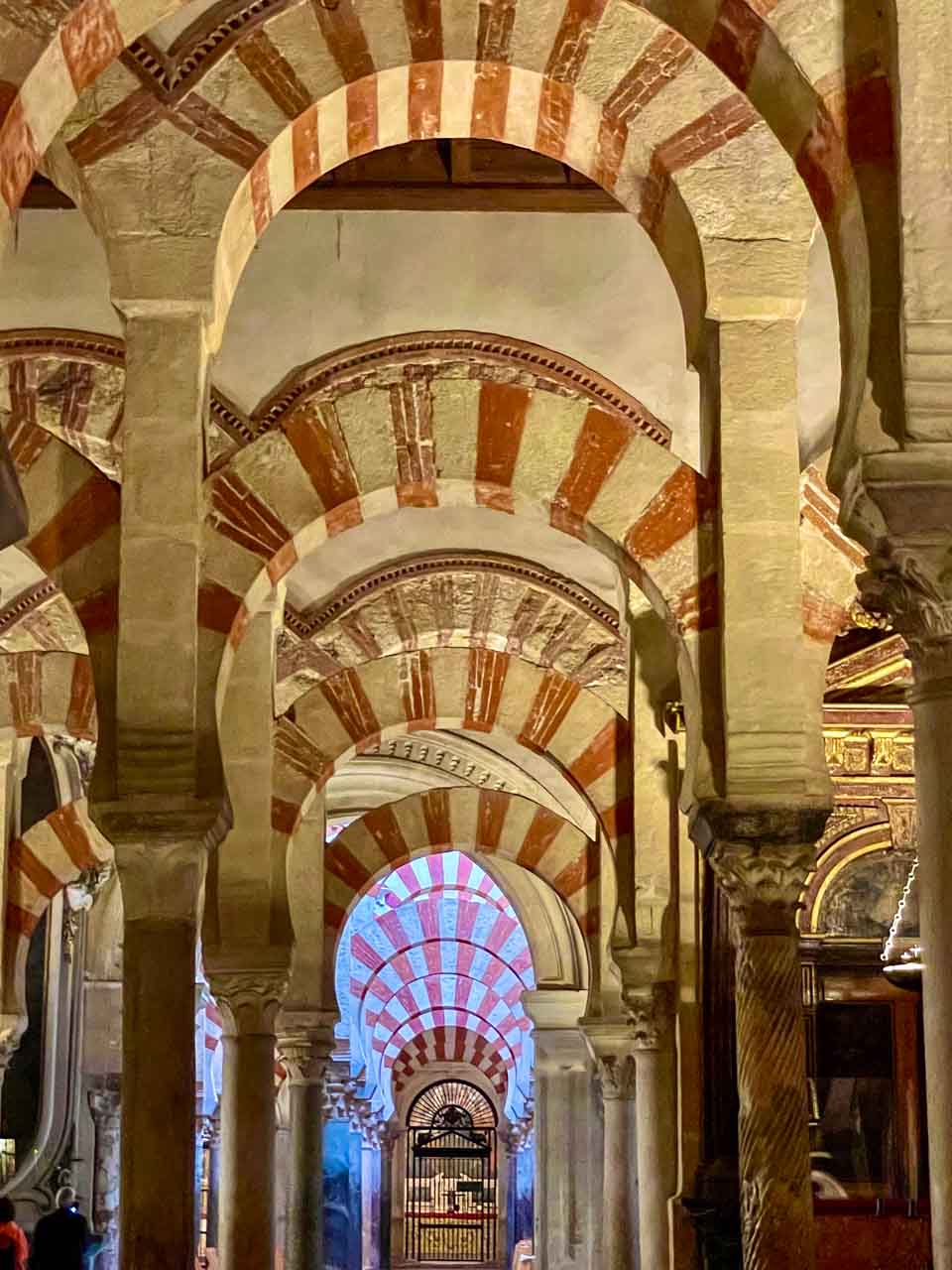
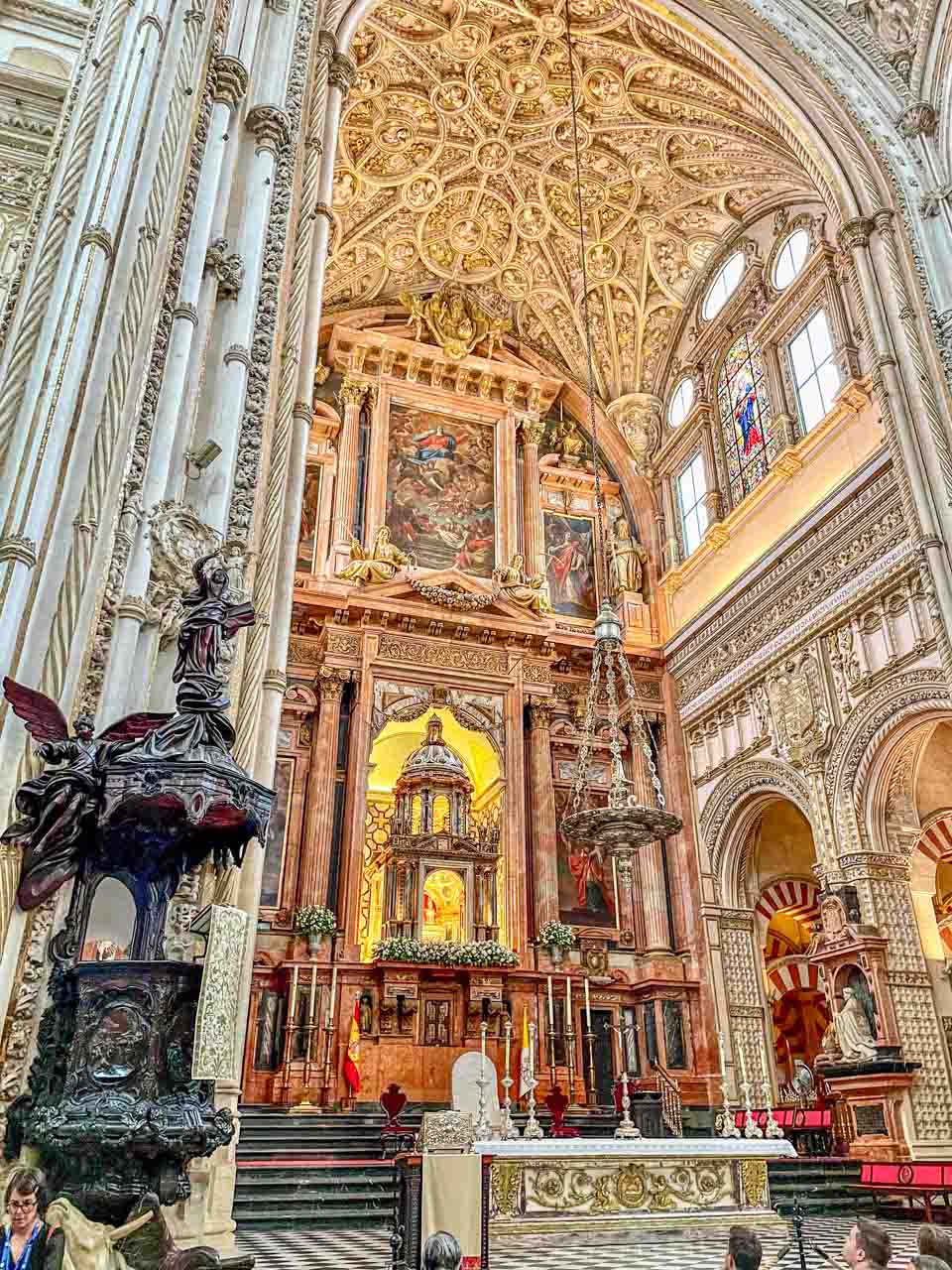
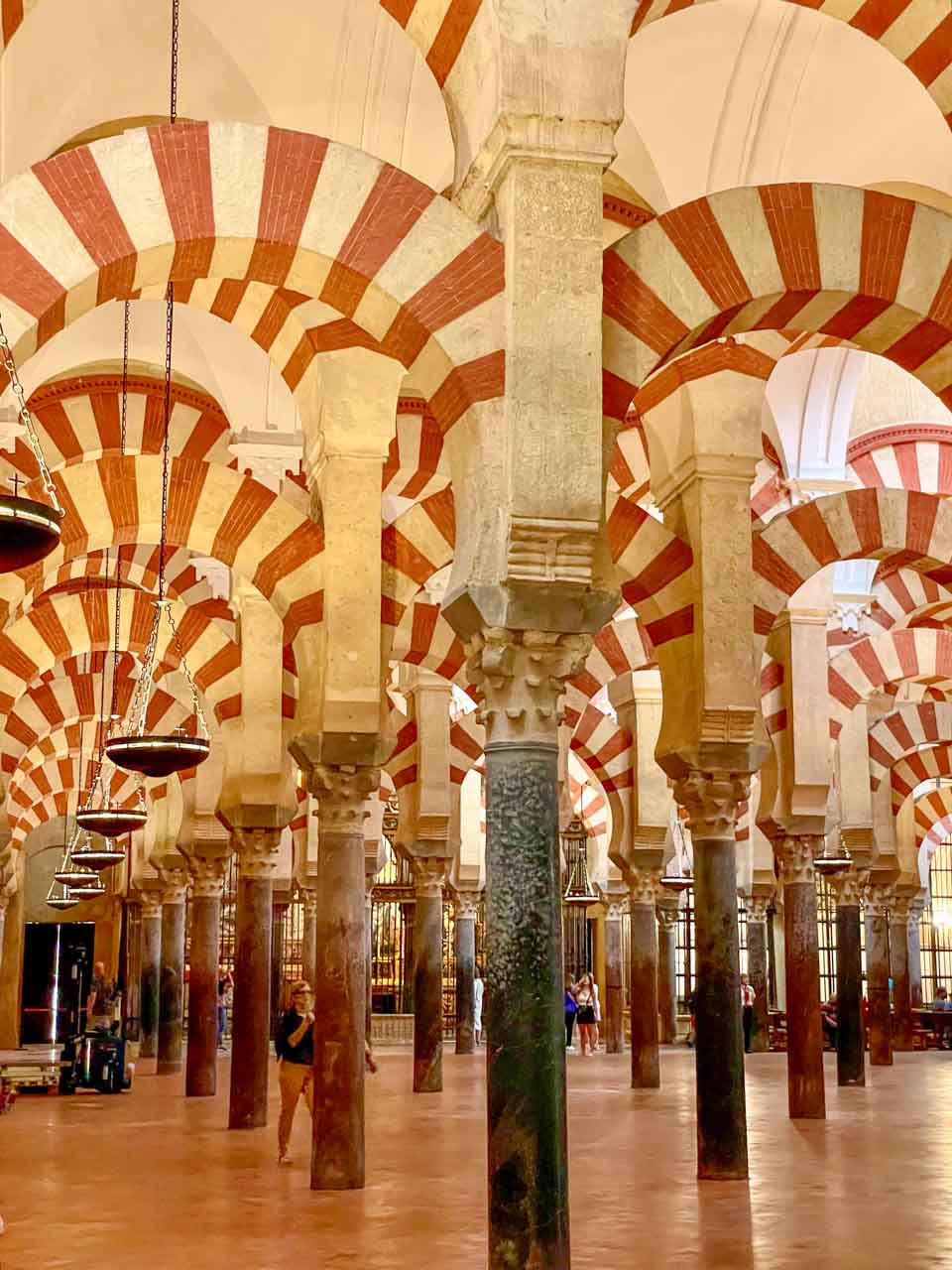
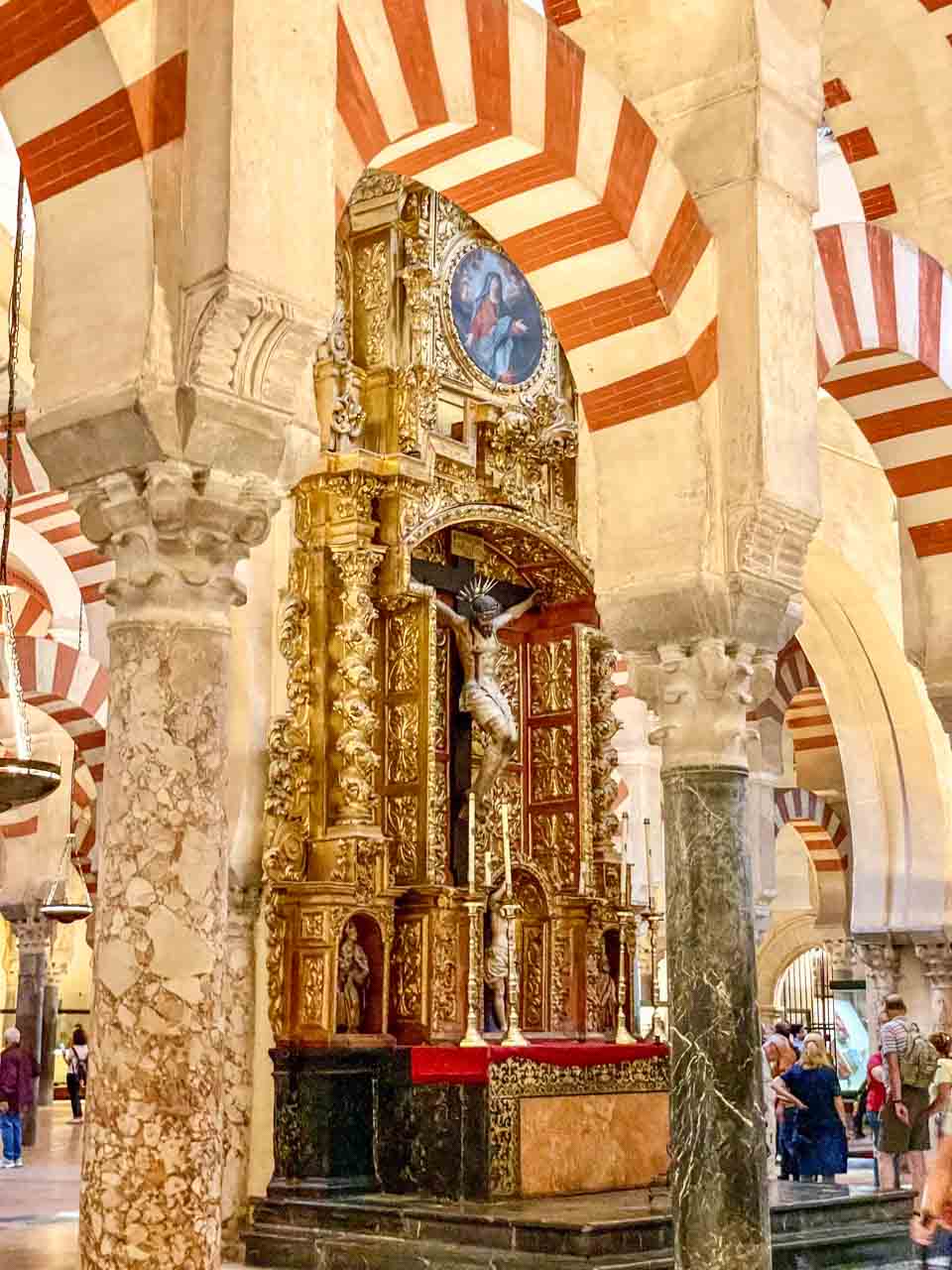
The Mosque-Cathedral of Cordoba is steeped in history and is a unique blend of cultures and architectural styles – Islam and Christianity.
Building commenced on the mosque in 785 and took over two centuries to complete. It was once one of the most important mosques in the Islamic Kingdom. When the Great Mosque was converted into a Christian Cathedral in 1236 after the conquest of Cordoba by Ferdinand III, he never demolished the mosque. The cathedral was built in the centre of the mosque.
The Mezquita was designated a UNESCO World Heritage Site in 1984.
The Mosque-Cathedral is the Cathedral of Cordoba, and Muslim prayer is prohibited. However, historical beginnings linger. My guide told me that Catholic couples say they are marrying in the mosque, not the cathedral.
The Mosque-Cathedral of Cordoba is one of the most unique buildings in the world, an absolute must-see when in Spain. It is easy to see why the people of Spain voted the Mosque-Cathedral of Cordoba number one in their list of The Twelve Treasures of Spain.
COSTA BRAVA – Catalonia’s Coastline
The Costa Brava is a coastal region of Catalonia in northeastern Spain, stretching from the town of Blanes, 60 kilometres northeast of Barcelona, to the French border.
On a day trip from Barcelona, the picturesque Costa Brava was stunningly beautiful with its white sand coves, turquoise waters, and rugged coastline.
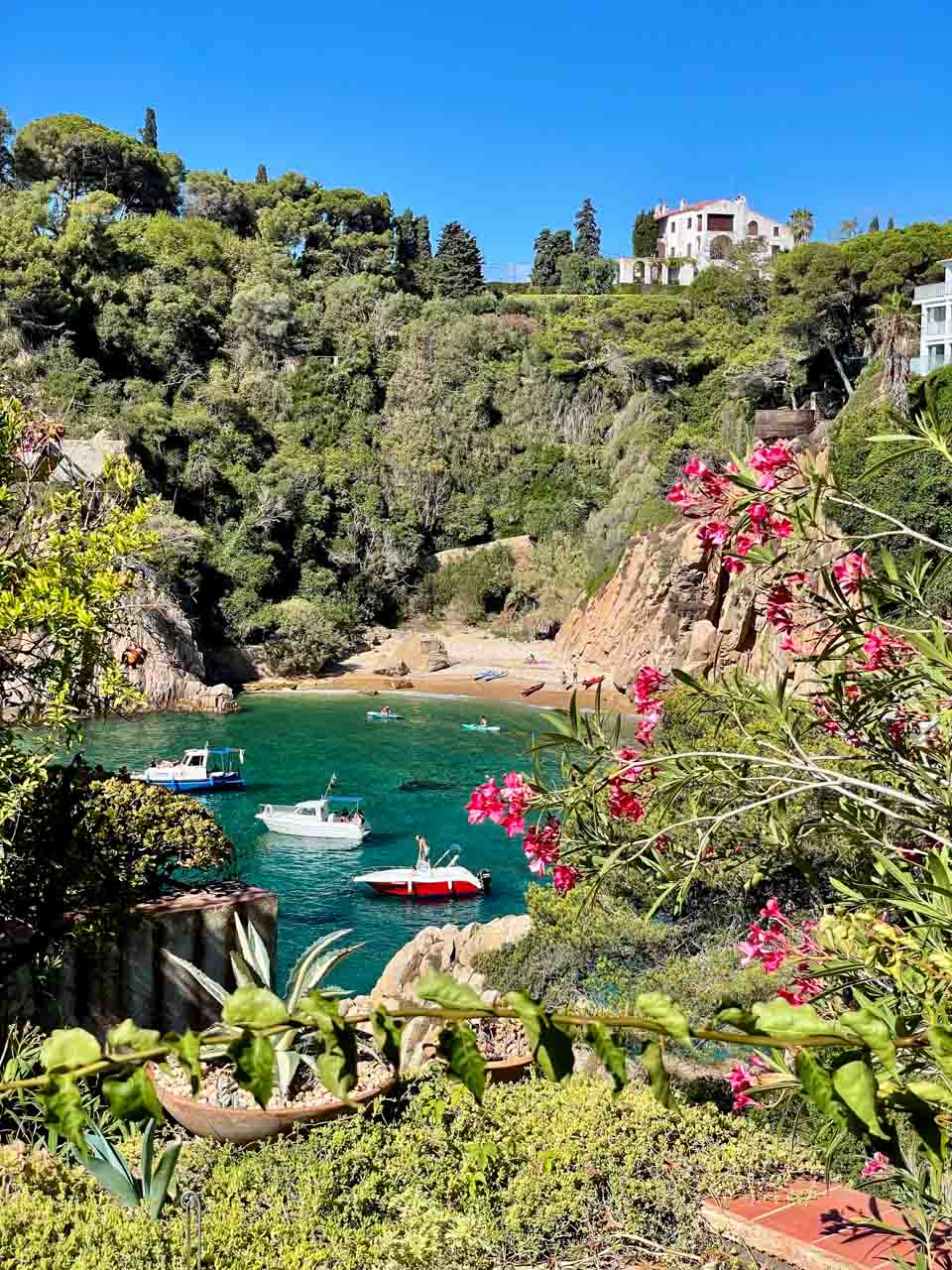
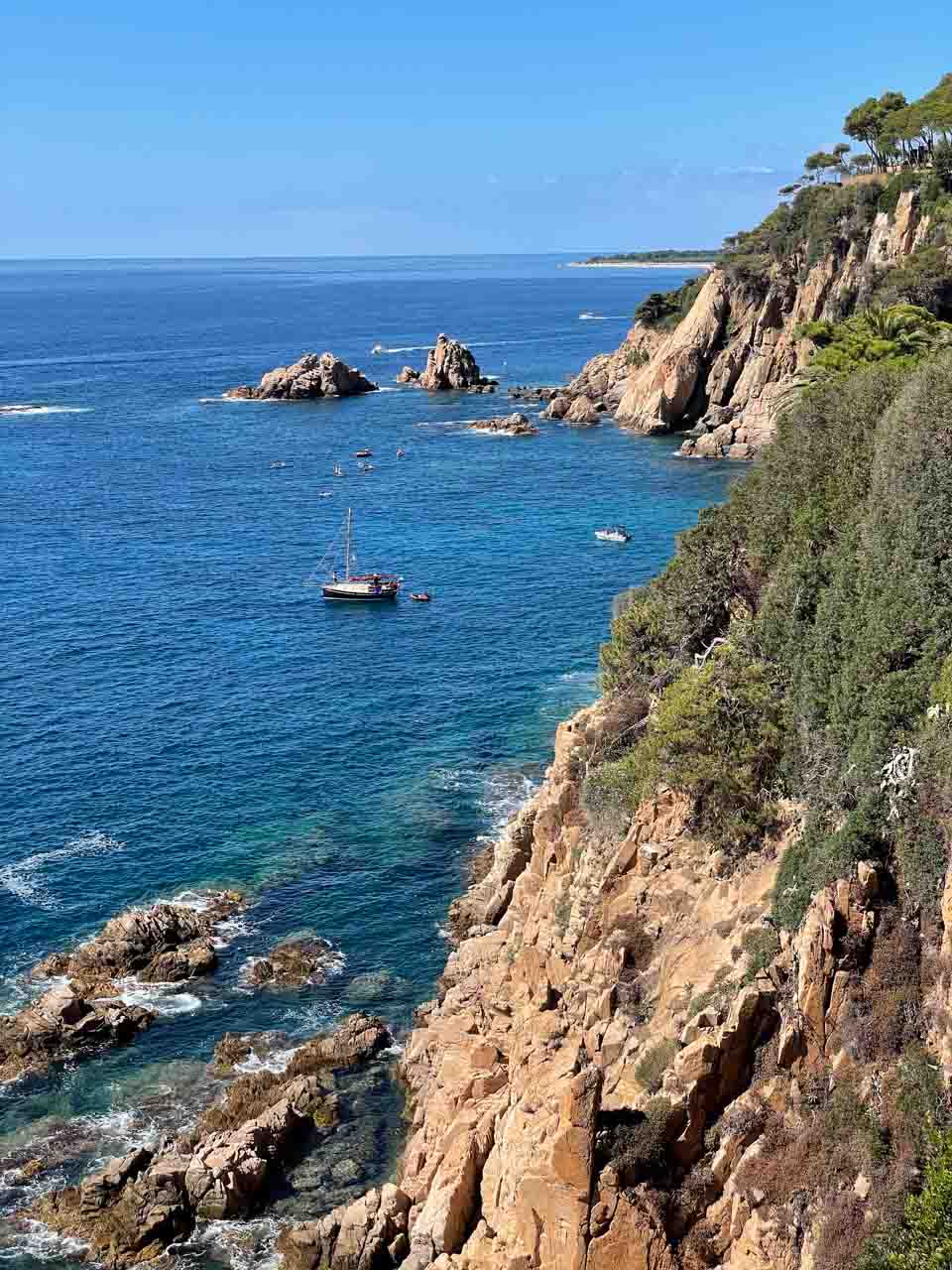
I took the above photos of the Costa Brava from the cliff-top Marimurtra Botanical Garden near Blanes.
FIGUERES – Dali Theatre-Museum
Near the border with France and about 136 kilometres north of Barcelona, Figueres is famous for being the birthplace of the artist Salvador Dali.
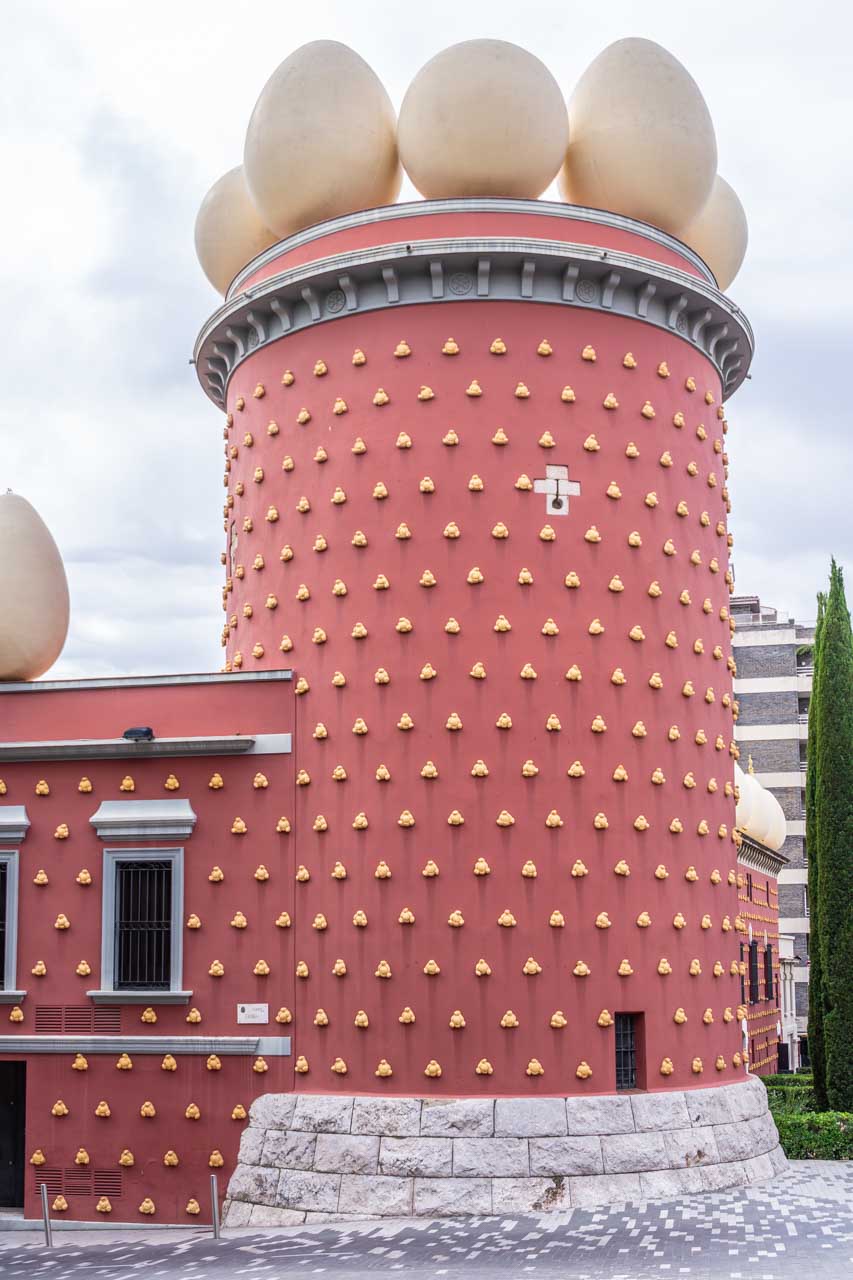
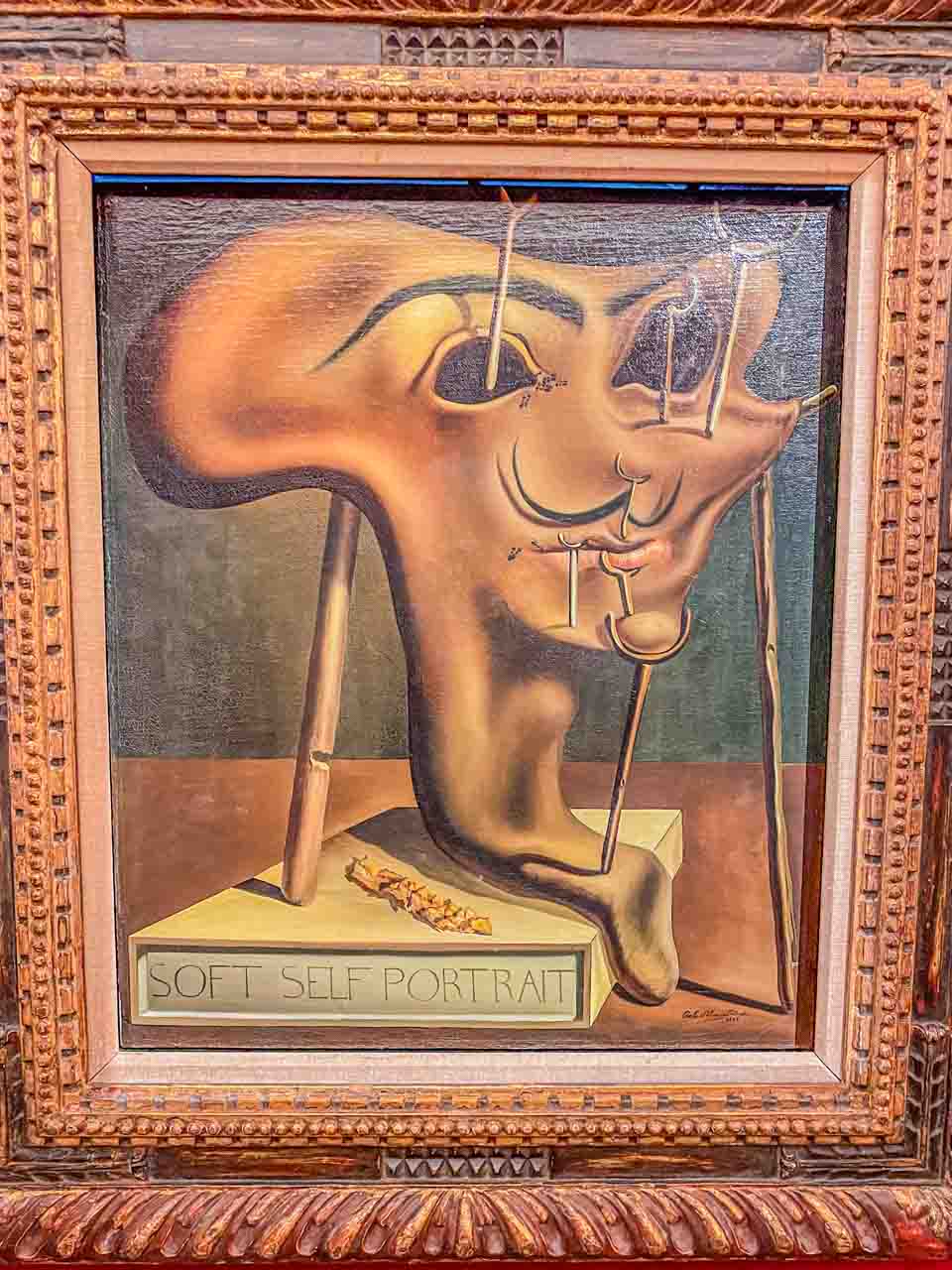
The Dali Theatre-Museum in Figueres, Catalana, is a museum solely dedicated to the Spanish artist Salvador Dali – a genius of Surrealism. The museum, built by Dali, is considered the largest surrealist object in the world and is crowded with his artworks – paintings, sculptures, photographs, and jewellery.
I have been a fan of Salvador Dali for many decades, and visiting his theatre-museum was on my bucket list as soon as I started planning my trip to Spain. And I wasn’t disappointed! Over several hours wandering through the theatre-museum, I got a glimpse into his unique world.
Dali is buried in a crypt beneath the dome of his Figueres Theatre-Museum.
Here’s some trivia for you: Dali designed the Spanish lollipop Chupa Chups logo. I never knew Chupa Chups were Spanish! I may need to attend more trivia nights because who created the Chupa Chups logo is, apparently, a frequently asked trivia question.
GIRONA
Girona is a city located between the Pyrenees and Costa Brava – just a short train ride from Barcelona and about 60 kilometres south of the French border. Girona is famous for preserving the medieval old city, located at the confluence of the Ter, Onyar, Galligants, and Guell rivers.
For Game of Thrones fans, you can take a tour of all the filming locations in Girona.
Jewish Girona
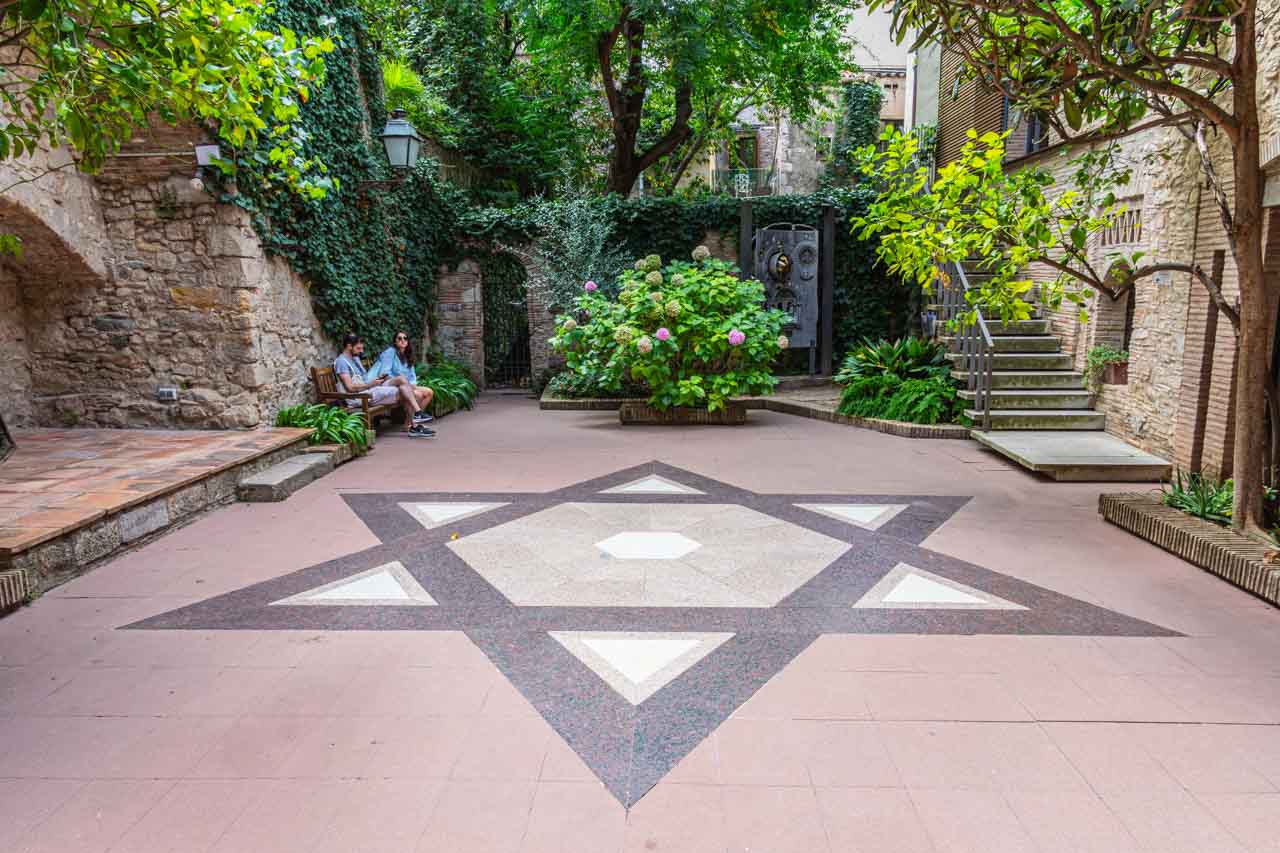
Courtyard with the Star of David in the Museum of Jewish History.
Girona has a long history of Jewish habitation, dating back to at least the 9th century AD and is one of the best-preserved Jewish Quarters in Europe. A guided walking tour of Girona’s Jewish Quarter in the old town, known as El Call, takes you on a fabulous history and architectural trip as you make your way through a labyrinth of narrow streets.
The walking tour I joined concluded with a guided tour through the Museum of Jewish History.
Girona’s last remaining synagogue is home to the Museum of Jewish History. The synagogue was in use until 1492 when the Jews were expelled from Spain. The museum aims to preserve and spread the history of the Jewish life that developed in Spain and Girona.
Medieval Girona
A walk along Girona’s three kilometres of medieval walls is a walk along the path of history and provides fantastic panoramic views of Girona and the Old Town.
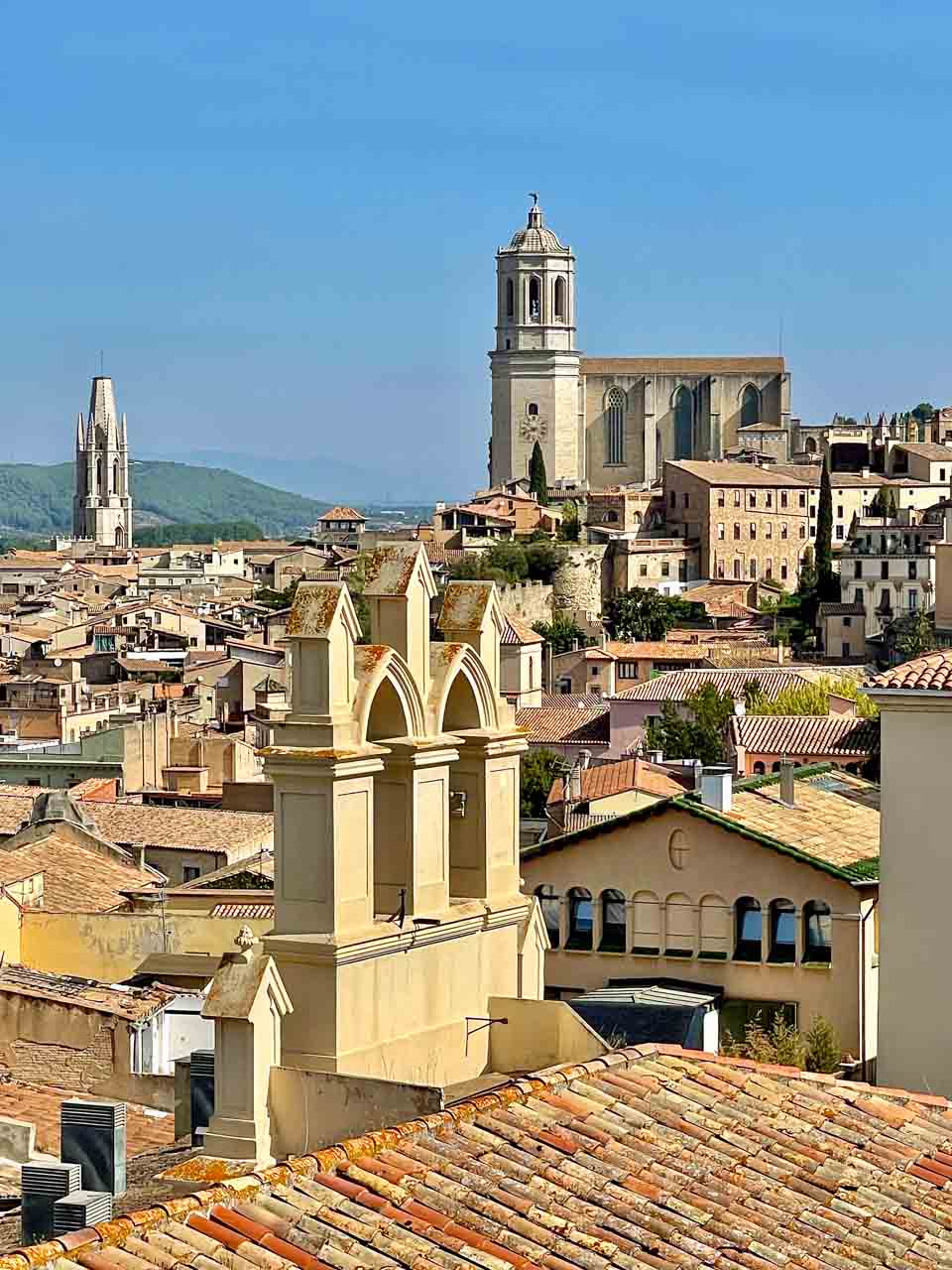
View of Girona’s Old Town from the medieval wall.
Initially built by the Romans, Girona’s medieval walls were rebuilt and extended in the Middle Ages. The walls surround the historic city centre and are some of the most complete walls in Spain. There are four access points to the walls, but I recommend waking the entire length for the ever-evolving views of this beautiful city. I accessed the wall at Placa Catalunya (Catalonia Square) and walked its length to the Jardins de la Francesa (French Gardens).
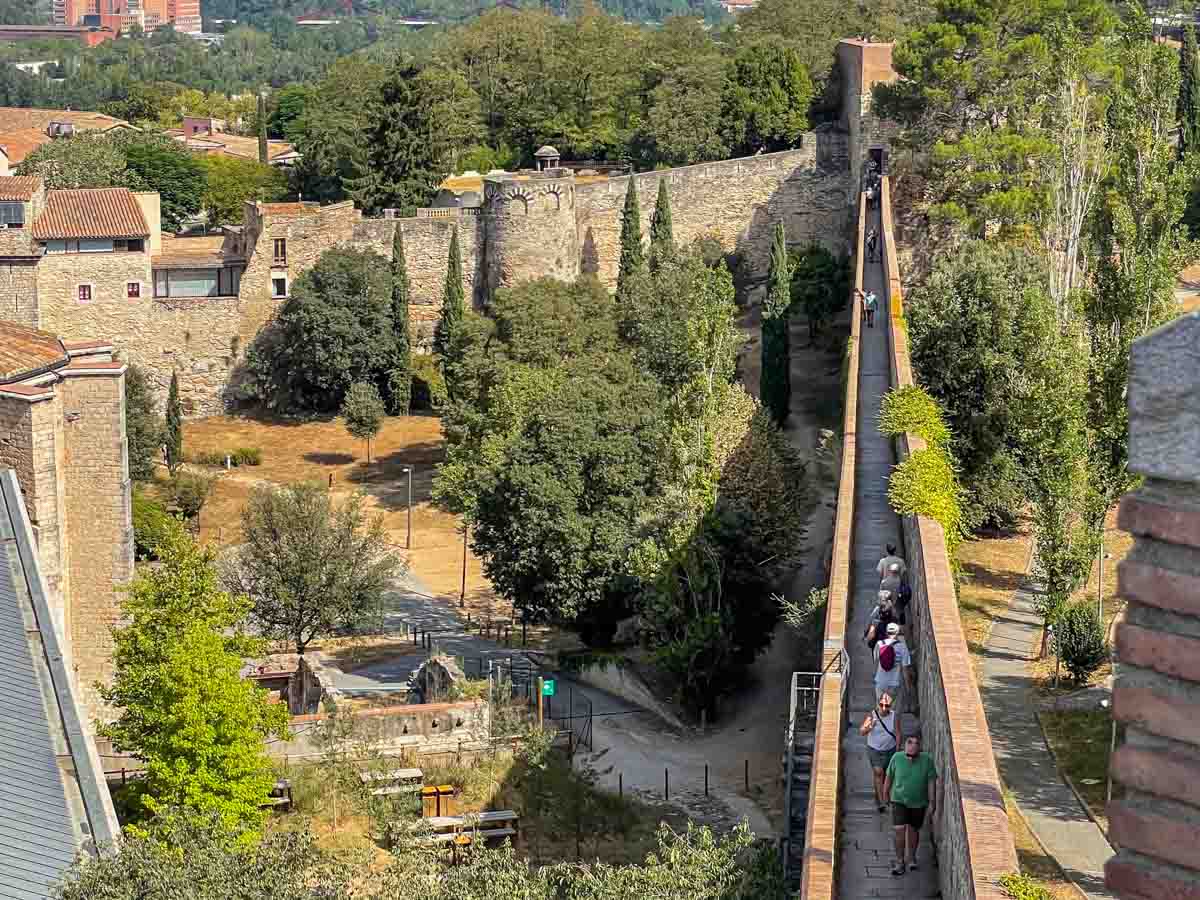
Girona’s medieval walls.
Painted Girona
Girona is a city in Spain’s northeastern Catalonia region, at the confluence of the Onyar, Ter, Galligants, and Guell Rivers. It’s known for its medieval architecture, walled Old Quarter, Barri Vell), Jewish Quarter (Call), and the Roman remains of the Forca Vella fortress.
The colourful houses on the banks of the Onyar River are perhaps the most recognised and photographed landmark of Girona.
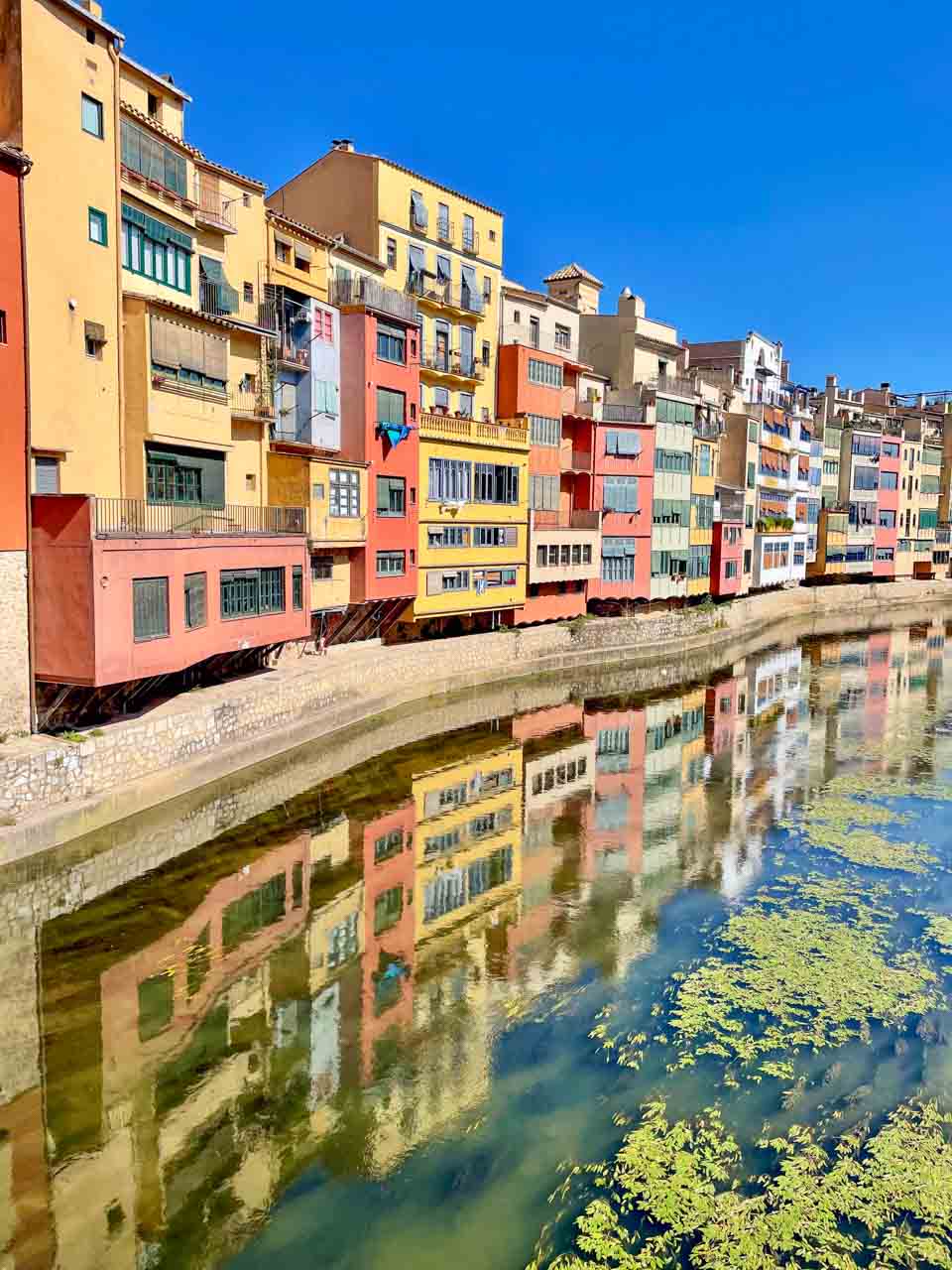
The coloured houses of Girona reflected in the Onyar River.
In the late 20th century, a small group of artists and architects chose the colour palette for the houses’ facades. The best way to see them is from one of the bridges spanning the Onyar River. I took the photo above from Pont de Sant Agusti, my favourite reflection spot.
Initially built by the Romans, Girona’s medieval walls were rebuilt and extended in the Middle Ages. The walls surround the historic city centre and are some of the most complete walls in Spain. There are four access points to the walls, but I recommend waking the entire length for the ever-evolving views of this beautiful city. I accessed the wall at Placa Catalunya (Catalonia Square) and walked its length to the Jardins de la Francesa (French Gardens).
GRANADA
In the foothills of the Sierra Nevada Mountains in southern Spain’s Andalusia region, Granada is a culturally rich city with 800 years of history as a Muslim Kingdom. Granada’s architecture strongly reflects its Muslim heritage.
The Albaicin
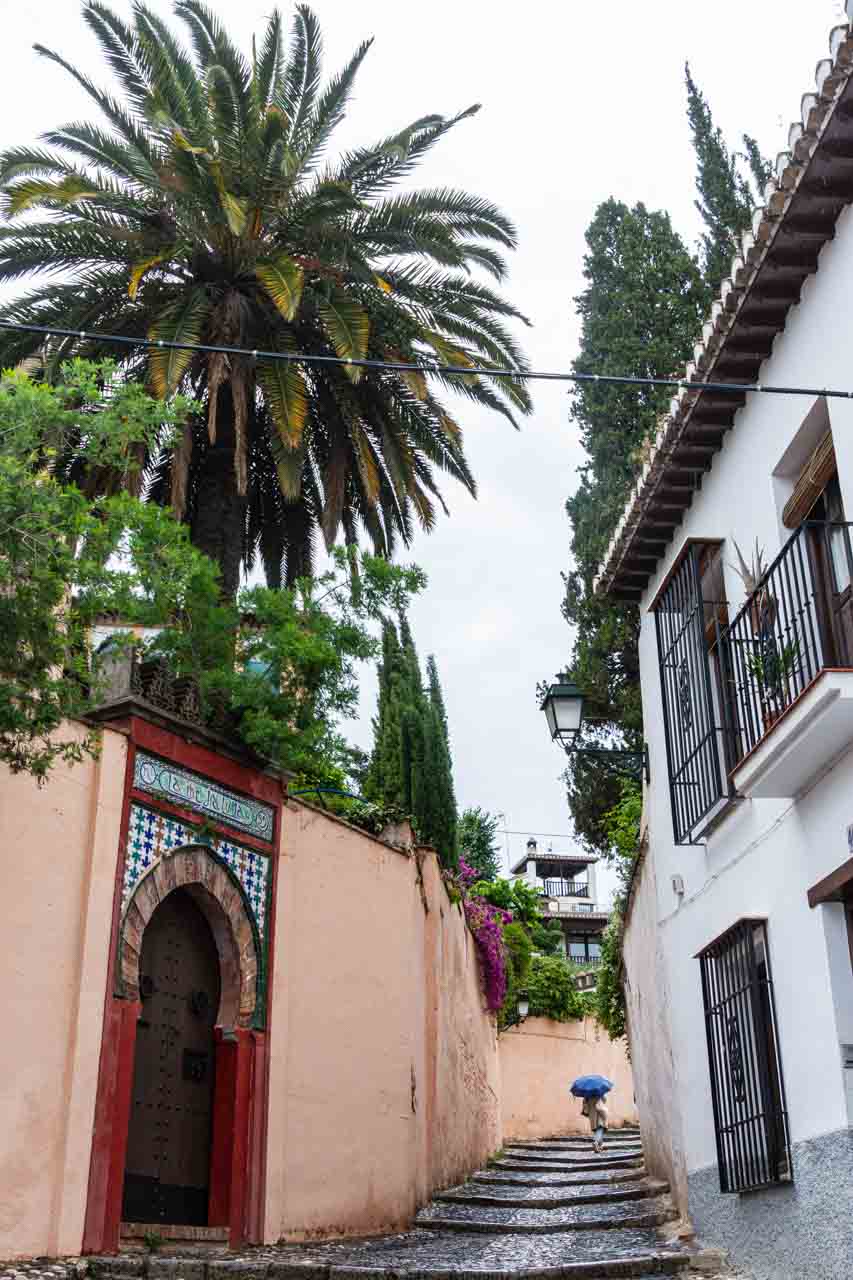
Moorish and Andalusian architecture coexist in World Heritage Albaicin.
Walk through Granada’s ancient Arab Quarter that retains its medieval Moorish origins. Get lost in the Albaicin’s maze of narrow cobbled streets and small squares washed in white. Situated on the hill across from the Alhambra, Granada was founded in the Albaicin and was the capital of the Nasrid Kingdom in the 15th century.
The Albaicin was declared a UNESCO World Heritage Site because of its eclectic but harmonious mix of Moorish and traditional Andalusian architecture.
The Alhambra
The Alhambra is a massive palace and fortress complex located in Granada. Built by the Nasrid Dynasty – the last Muslims to rule in Spain – and commencing in 1238, the Alhambra is a beautiful testament to Islamic architecture and Moorish culture. The complex includes the Alcazaba, palaces, the Medina, gardens, cemetery, workshops, baths, etc. and is enclosed by a massive, fortified wall with towers.
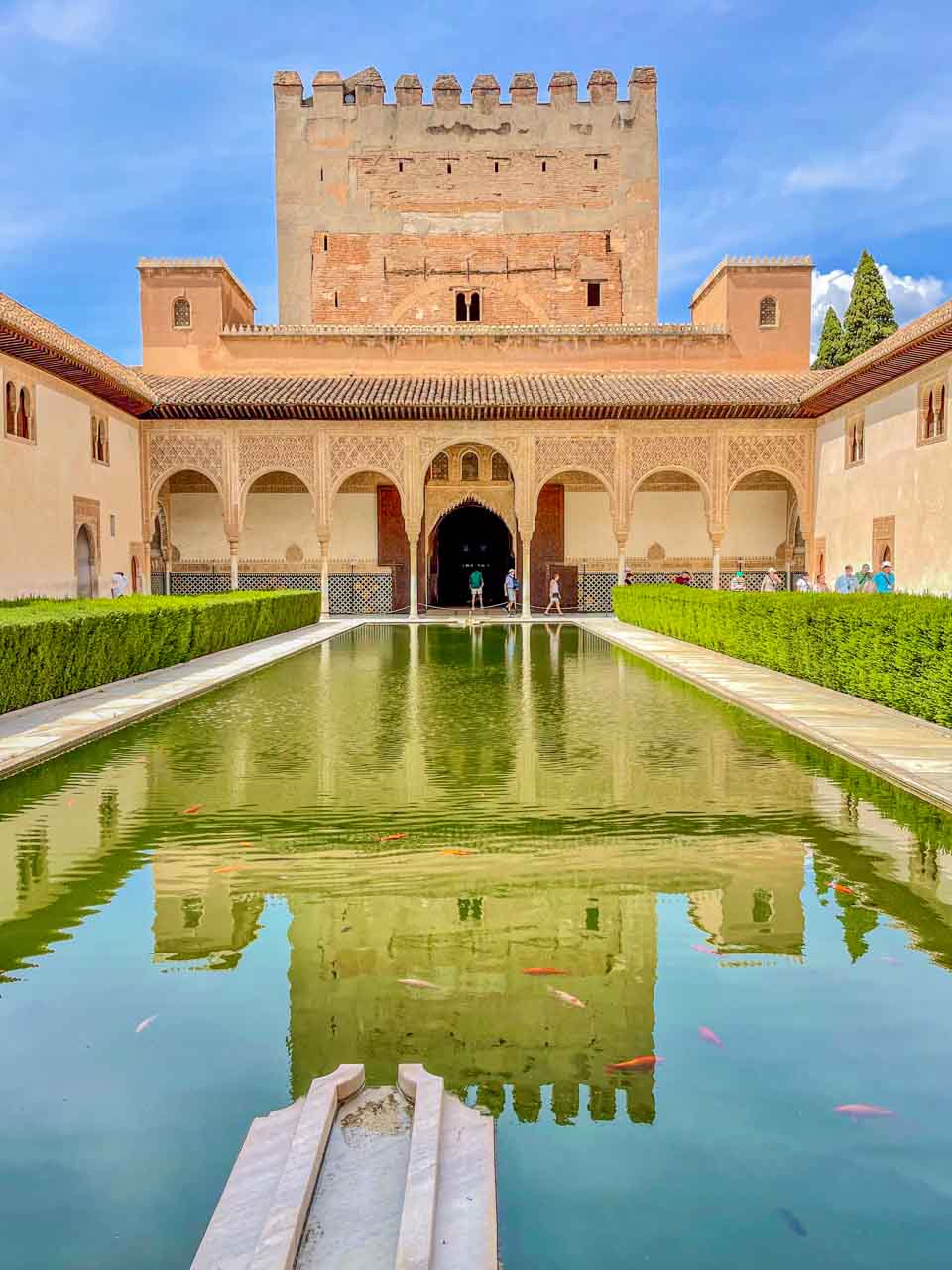
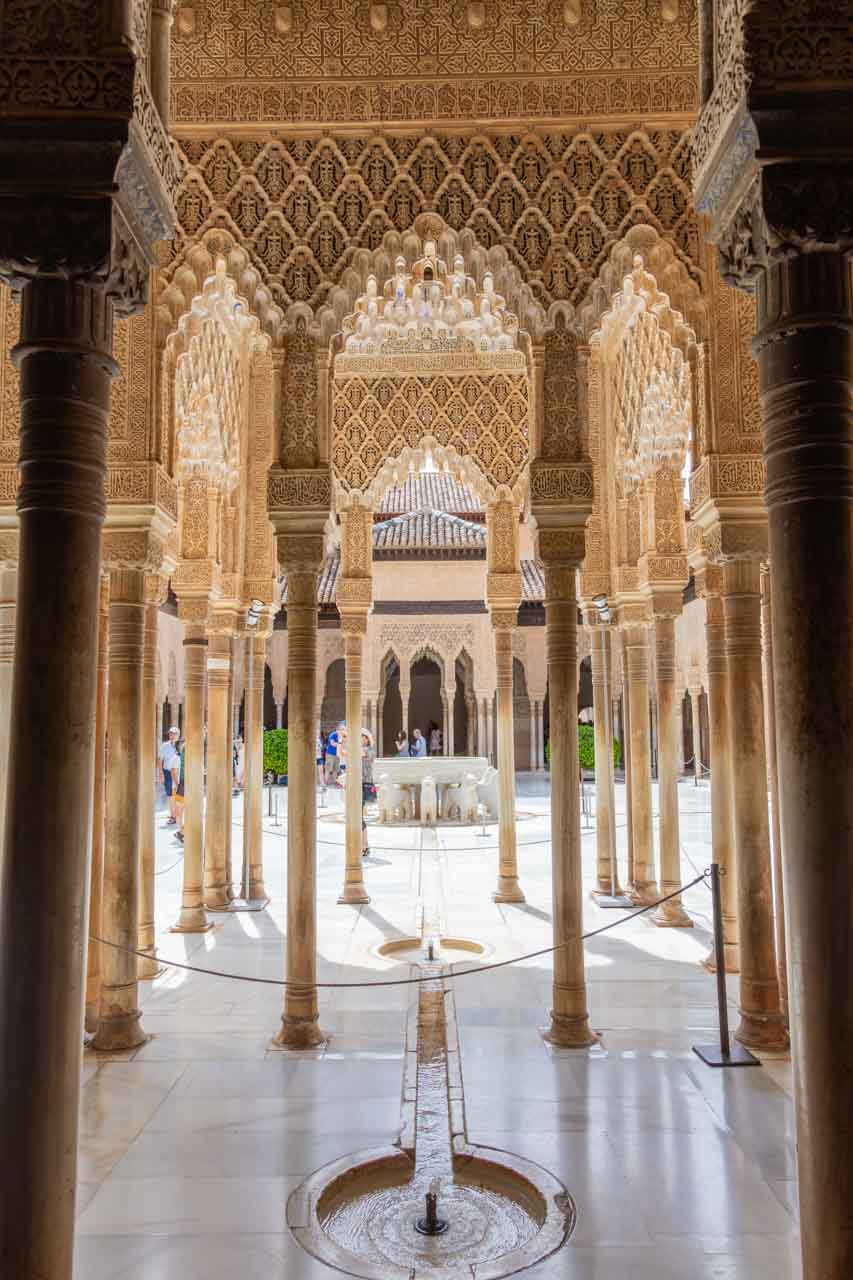
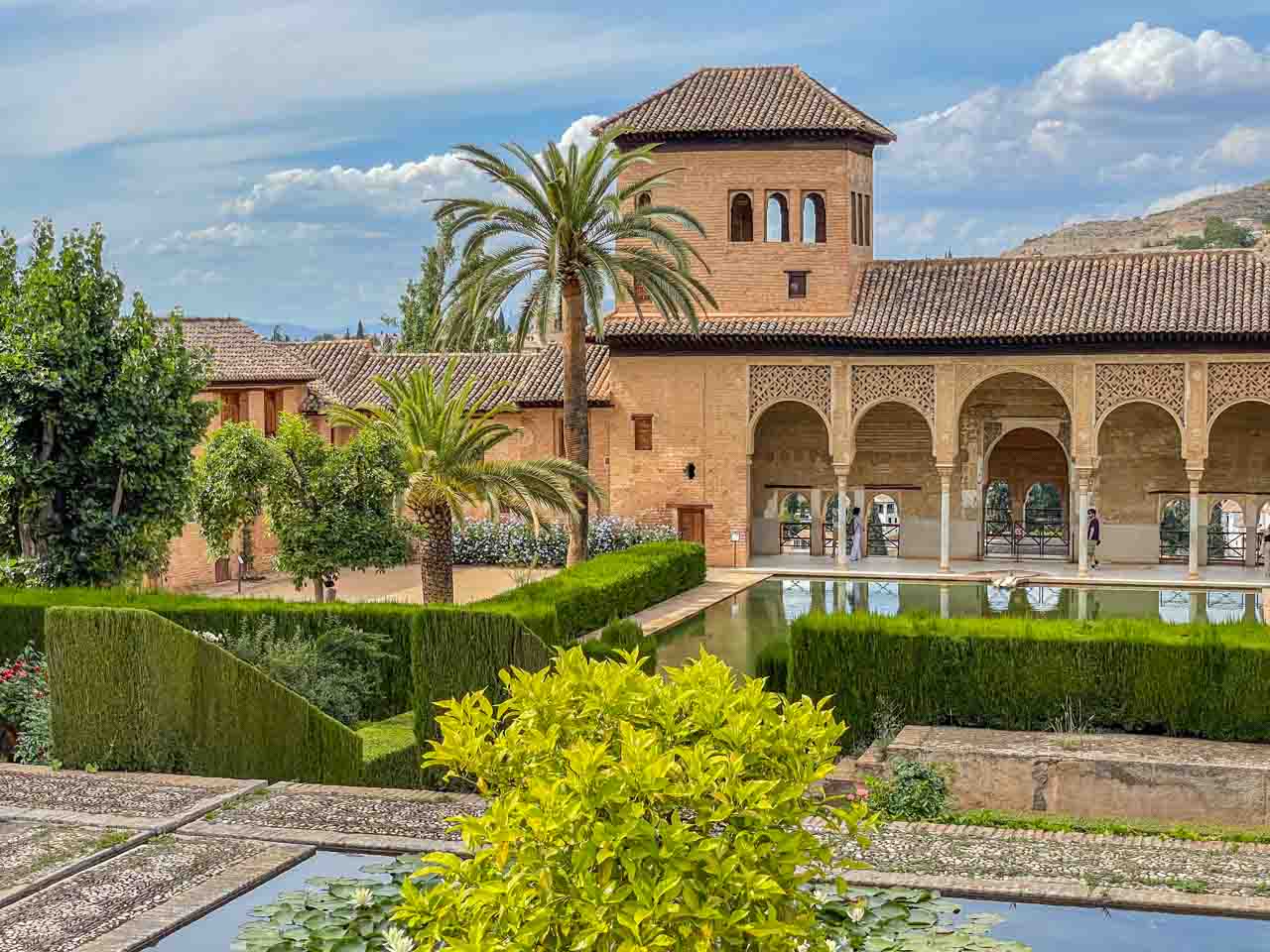
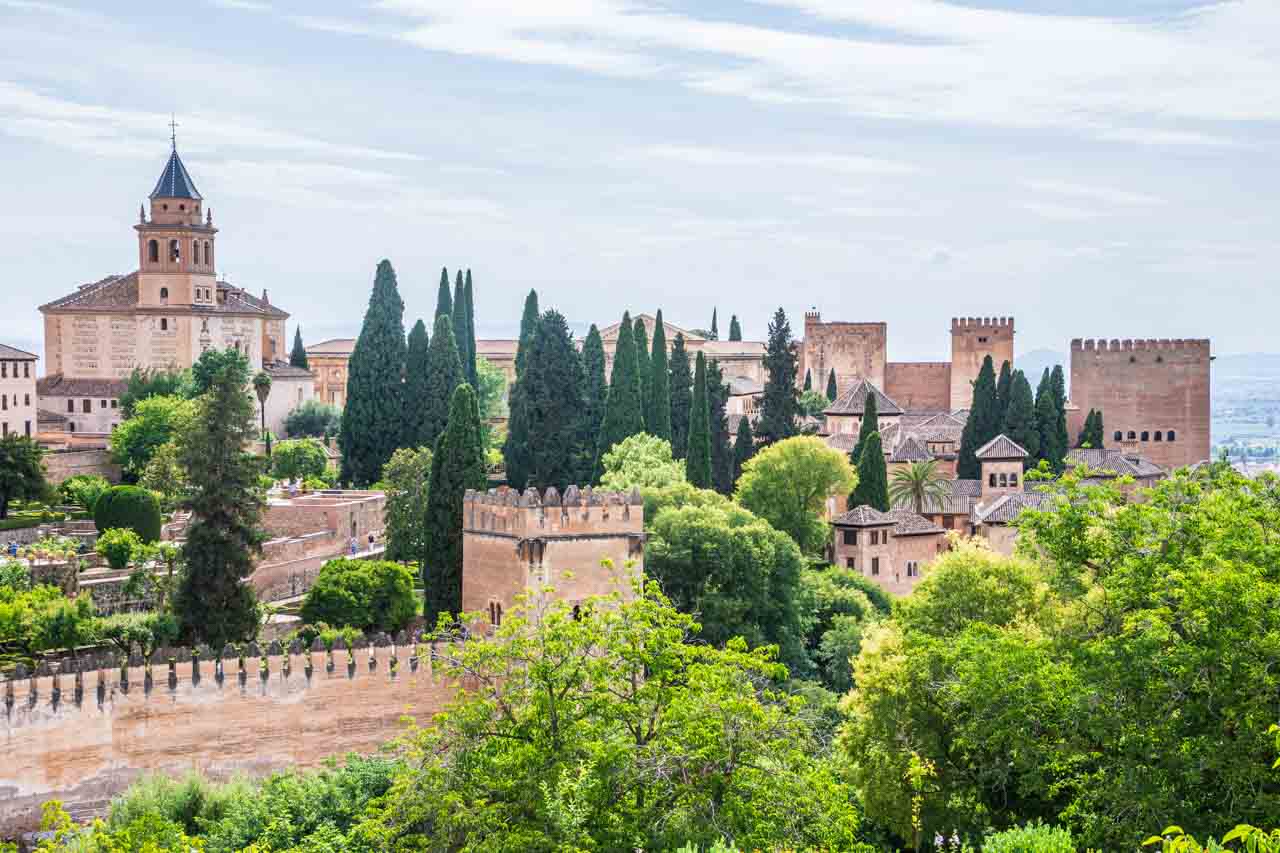
The Alhambra is just one of ten UNESCO World Heritage Sites in Andalusia. However, many believe it to be the most spectacular.
Often referred to as the 8th wonder of the world, the Alhambra was on my must-see list of places to visit in Spain, and I wasn’t disappointed. I had a three-hour guided tour around Alhambra, but you could easily spend all day in the complex.
I crossed this one off my bucket list!
MADRID – Madrid Architecture
Madrid is the capital of Spain and sits almost exactly in the middle of the country. Most famous for the Prado Museum, it was Madrid’s eclectic architectural styles that endeared the city to me.
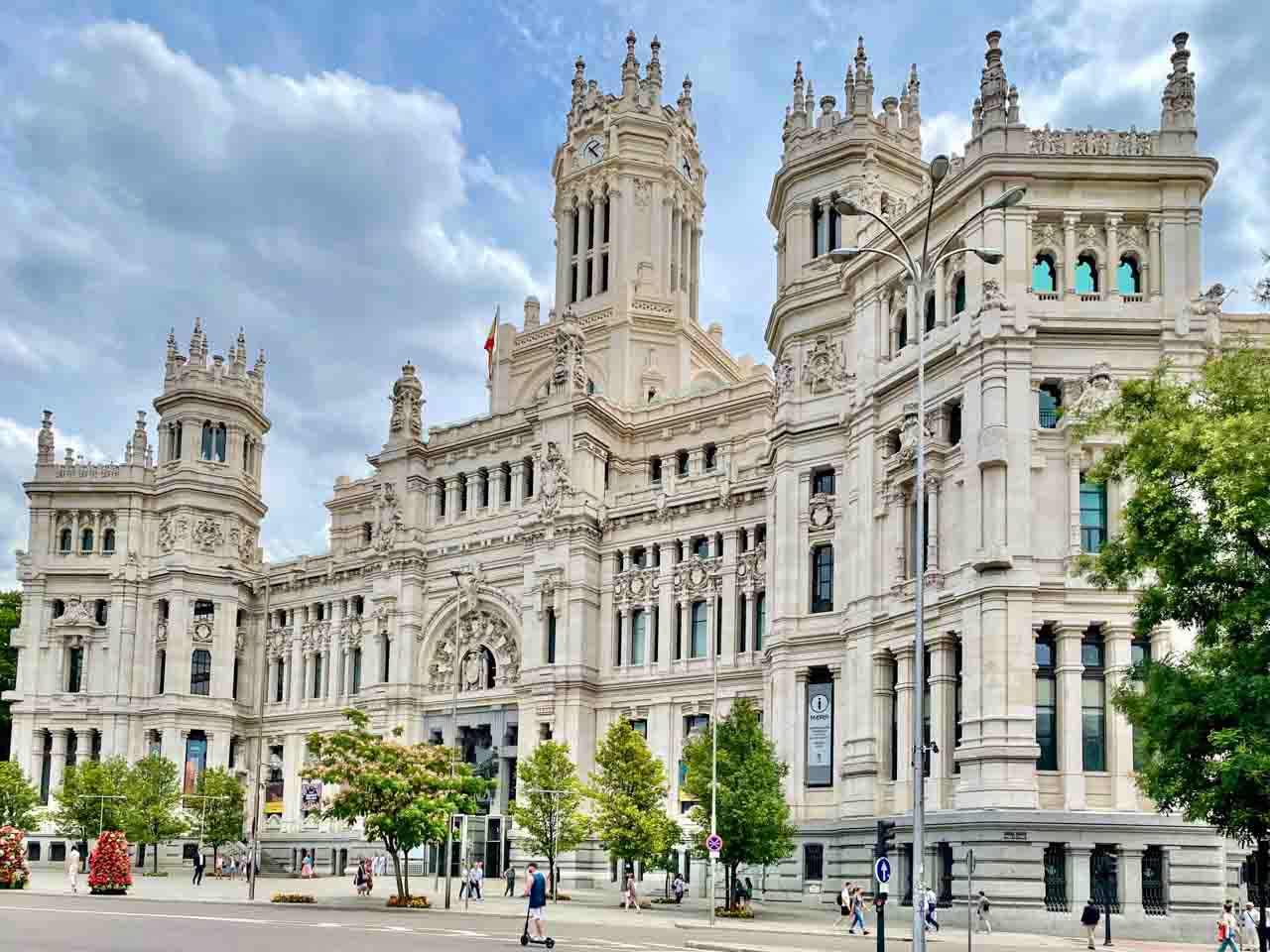
Cibeles Palace (Madrid’s City Hall)
Madrid has some of the most beautiful architecture in Spain, and Cibeles Palace (the former headquarters for the Spanish Post Office) deserves all the photographic and film attention it gets.
Now Madrid’s City Hall, the post office, I discovered when I had to post a parcel to Australia, can still be found in the building through a side entrance.
The best way to appreciate Madrid’s architecture is to walk the city.
MERIDA
A visit to Merida in Spain’s Extremadura region in southwest Spain is like a trip back to the Roman Empire. Founded in 25 BC (Colony of Augusta Emerita), this UNESCO World Heritage City is one of the best-preserved Roman sites in the world. The Roman theatre, amphitheatre, and bridge are unmissable stops along any tour of the ancient Roman city of Merida, and all within an easy walk of each other.
A Modern Play in an Ancient Setting
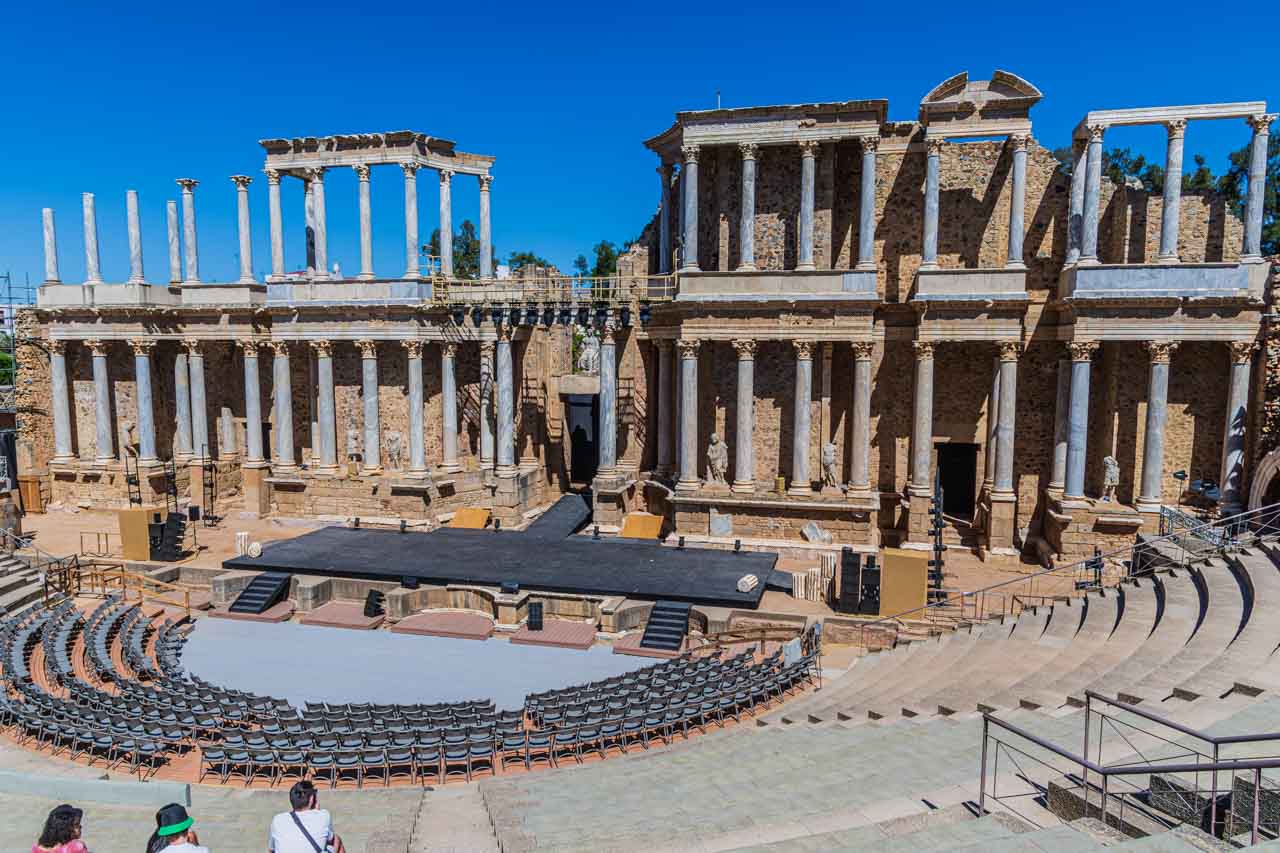
Merida’s Roman Theatre.
The Roman Theatre, with a seating capacity of about 5,000 spectators, was built from 16 to 15 BC and is Merida’s most spectacular Roman monument. I liked that, centuries later, it is still being used for its intended purpose.
I saw a musical play in the Roman Theatre on my second night in Merida. The play, which didn’t start until 11 pm because of the heat, was entirely in Spanish. I didn’t understand a word, but seeing the play in that ancient setting was one of those once-in-lifetime experiences and was magical.
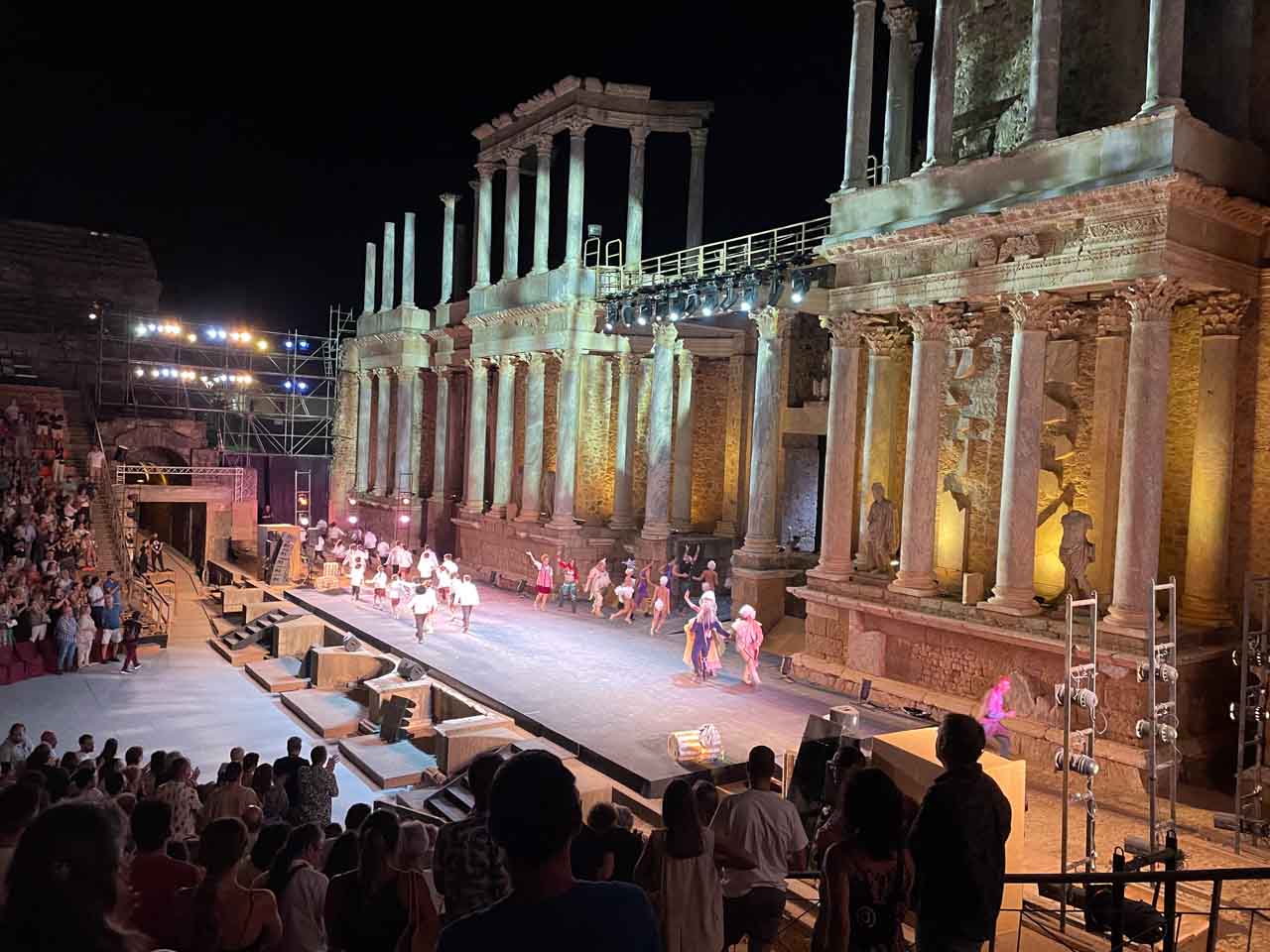
A standing ovation for the actors of the play in Merida’s Roman Theatre.
Roman Bridge of Merida
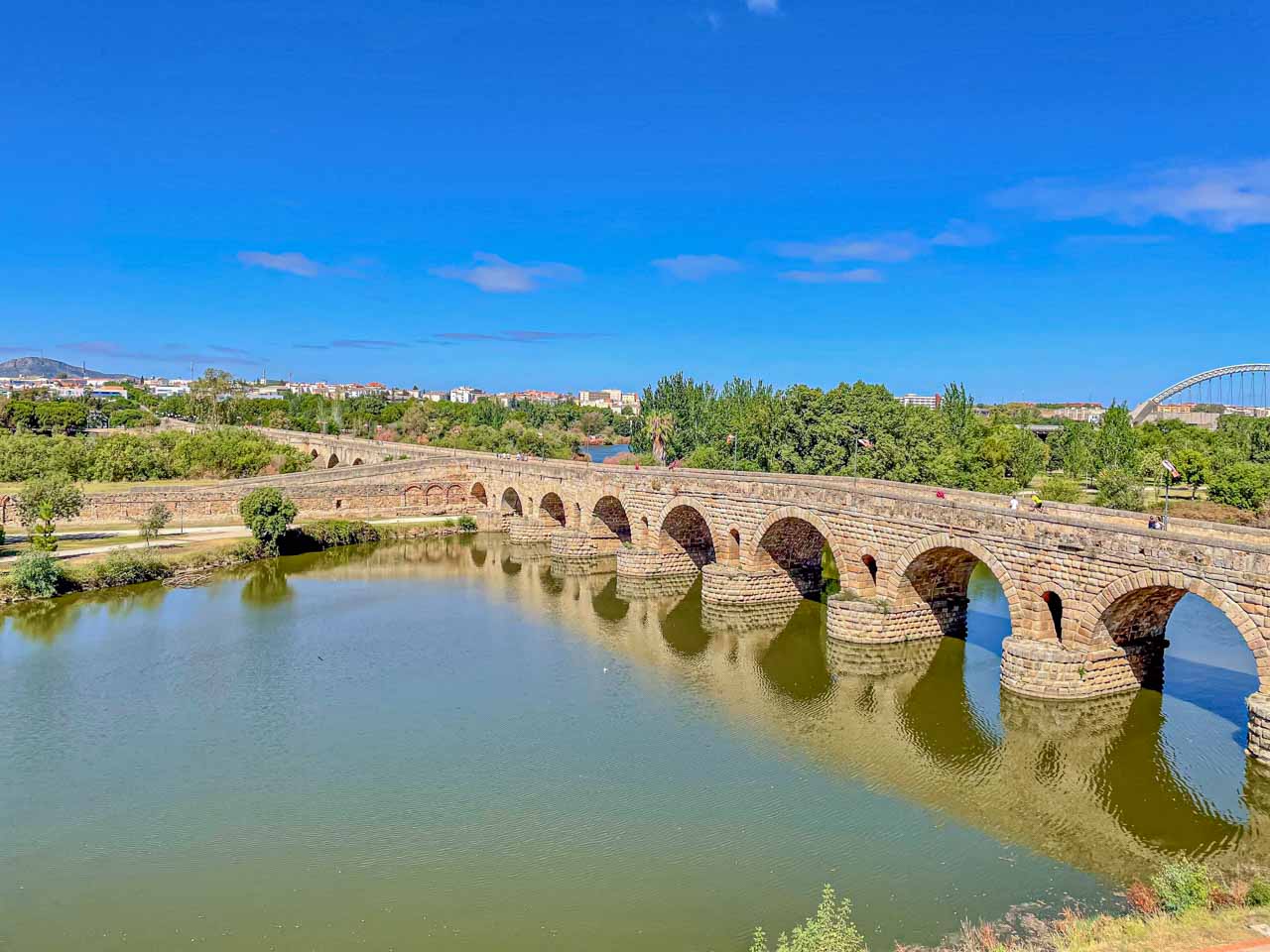
Roman Bridge, Merida
Merida’s Roman Bridge over the Guadiana River was built in the first century BC. At a length of 792 metres and with 60 arches, it is one of the longest bridges in Spain and the longest surviving bridge from ancient times. Carrying road traffic for most of its life, it became a pedestrian-only bridge in 1991.
The Roman Bridge requires two visits – one during the daylight hours and the other at night after sunset. Why? At night, the bridge is lit in multiple colours and is best viewed from the path bordering the Guadiana River.
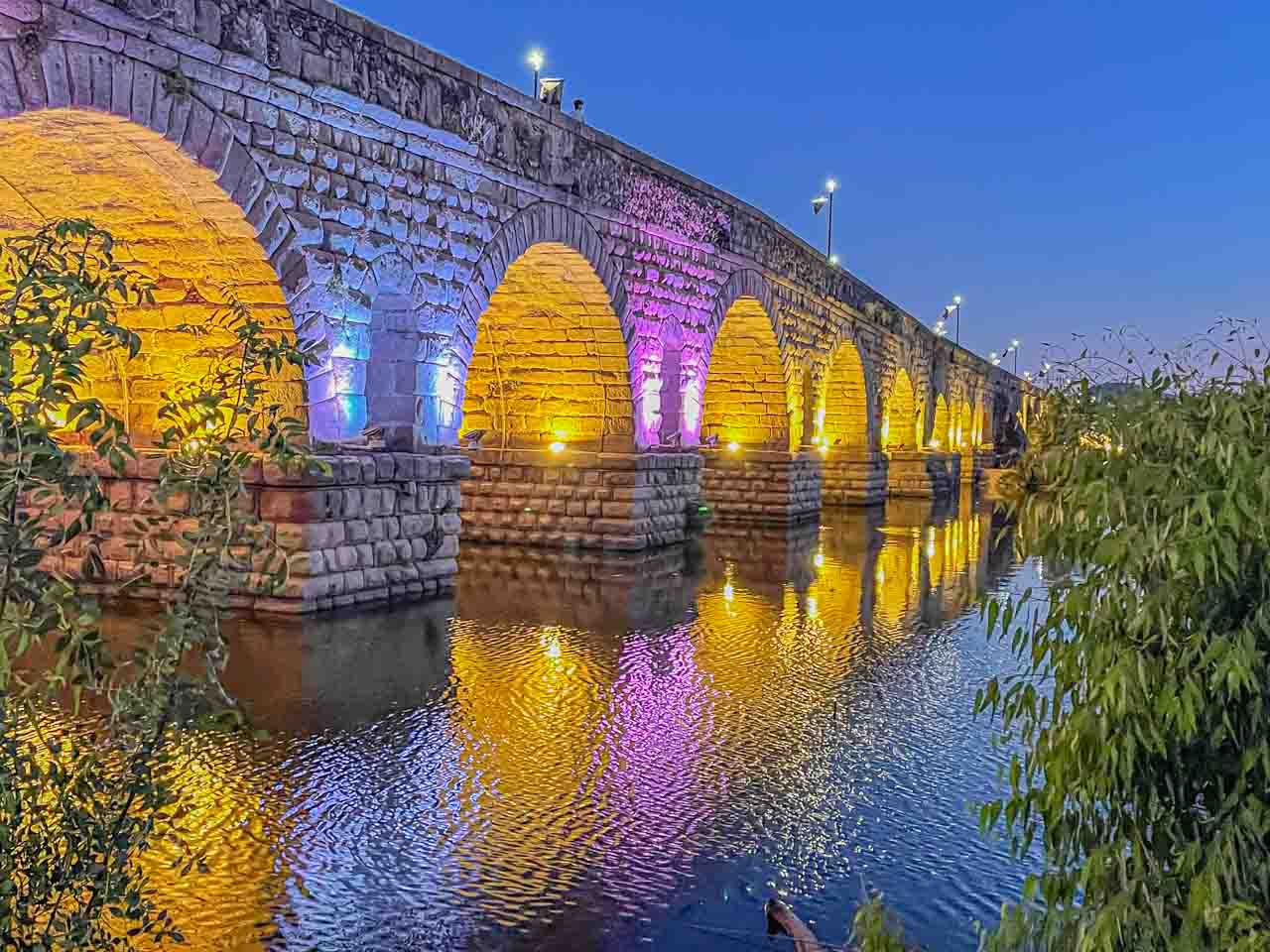
The Roman bridge lit up at night.
Roman Merida
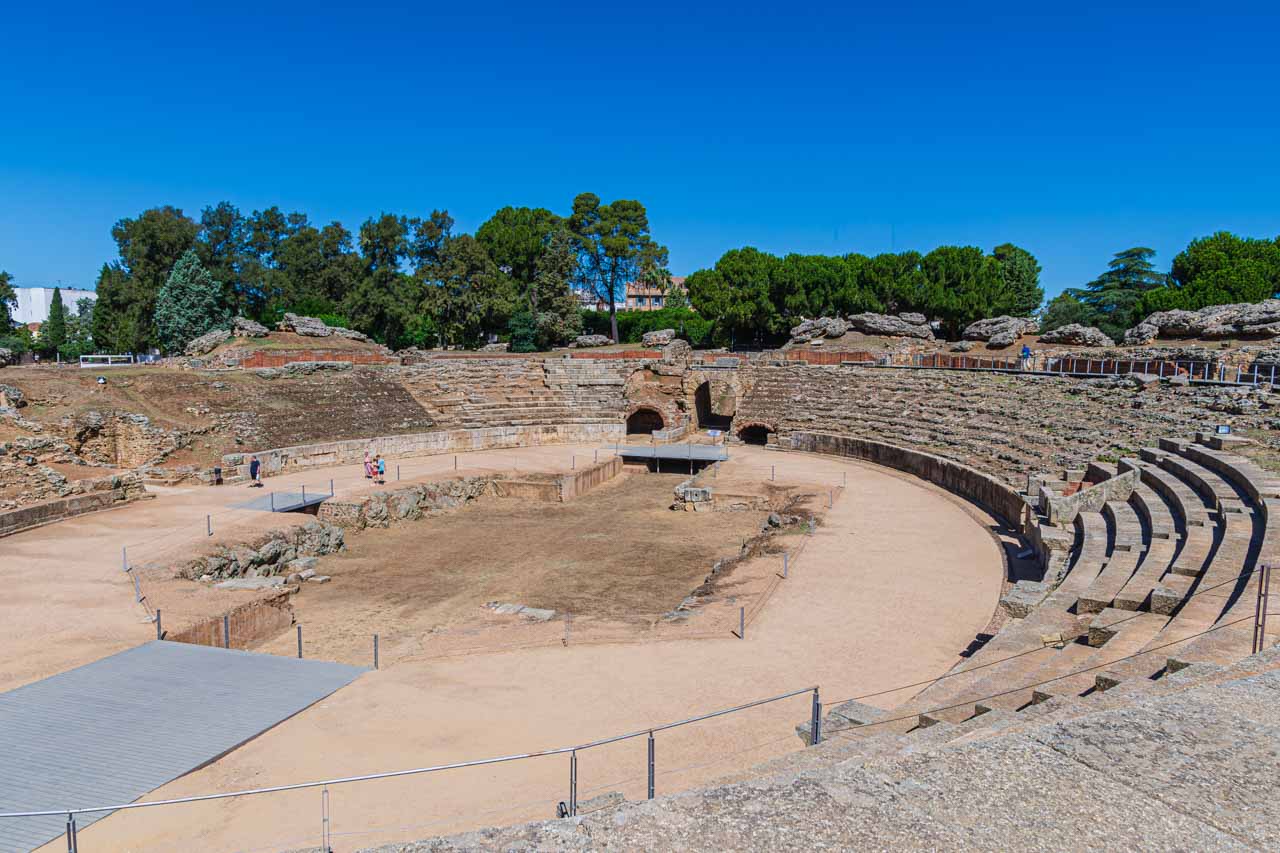
Roman amphitheatre, Merida.
Opened in 8 BC, Merida’s Roman amphitheatre was the setting for popular gladiatorial contests and beast hunts. It has been determined that the arena could seat between 15,000 and 16,000 spectators from all social standings.
Roman Merida is much more than the amphitheatre, bridge, and theatre. Don’t miss the Temple of Diana, Triumphal Arch, Roman Forum, La Cassa del Mitreon, and the Archeological area of Moreria.
MONTSERRAT MONASTERY – Monastery and Hiking Experience
Montserrat Monastery is an 11th-century Benedictine monastery on Montserrat Mountain (meaning ‘serrated mountain’), 60 kilometres northwest of Barcelona. The monastery hangs onto the side of the mountain 725 metres above sea level.
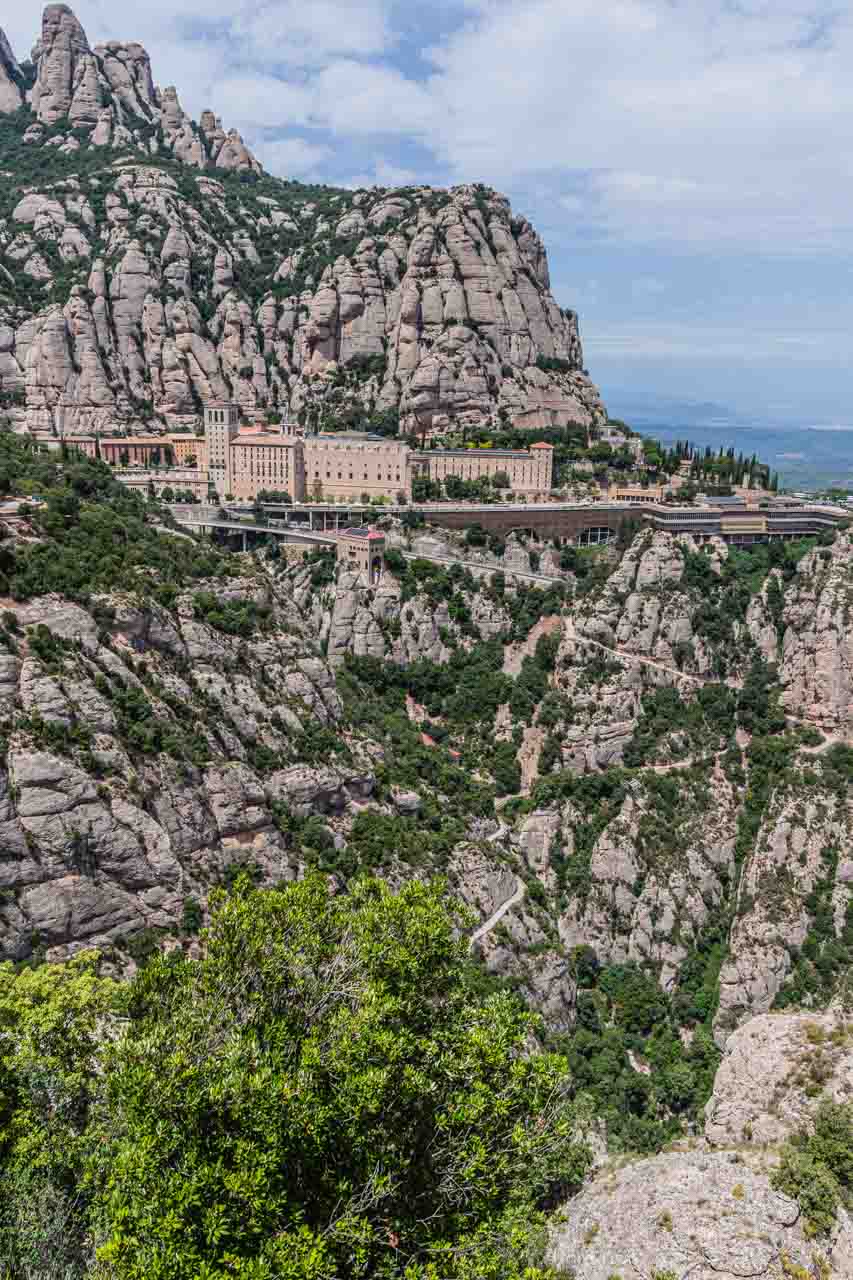
Montserrat Monastery is perched on the side of the mountain.
I took this photo of Montserrat Monastery across the valley at the Cross of St Michael. This lookout was about one and a half hours into my very steep descent down Montserrat Mountain, and I still had about 20 minutes to go before I arrived back at the monastery.
To start my hike from the top of Montserrat Mountain, I rode the Funicular de Sant Joan from the monastery to the summit, about 300 metres above the monastery. I took the path to the left of the Funicular station that wound around and down the mountain, taking in spectacular views.
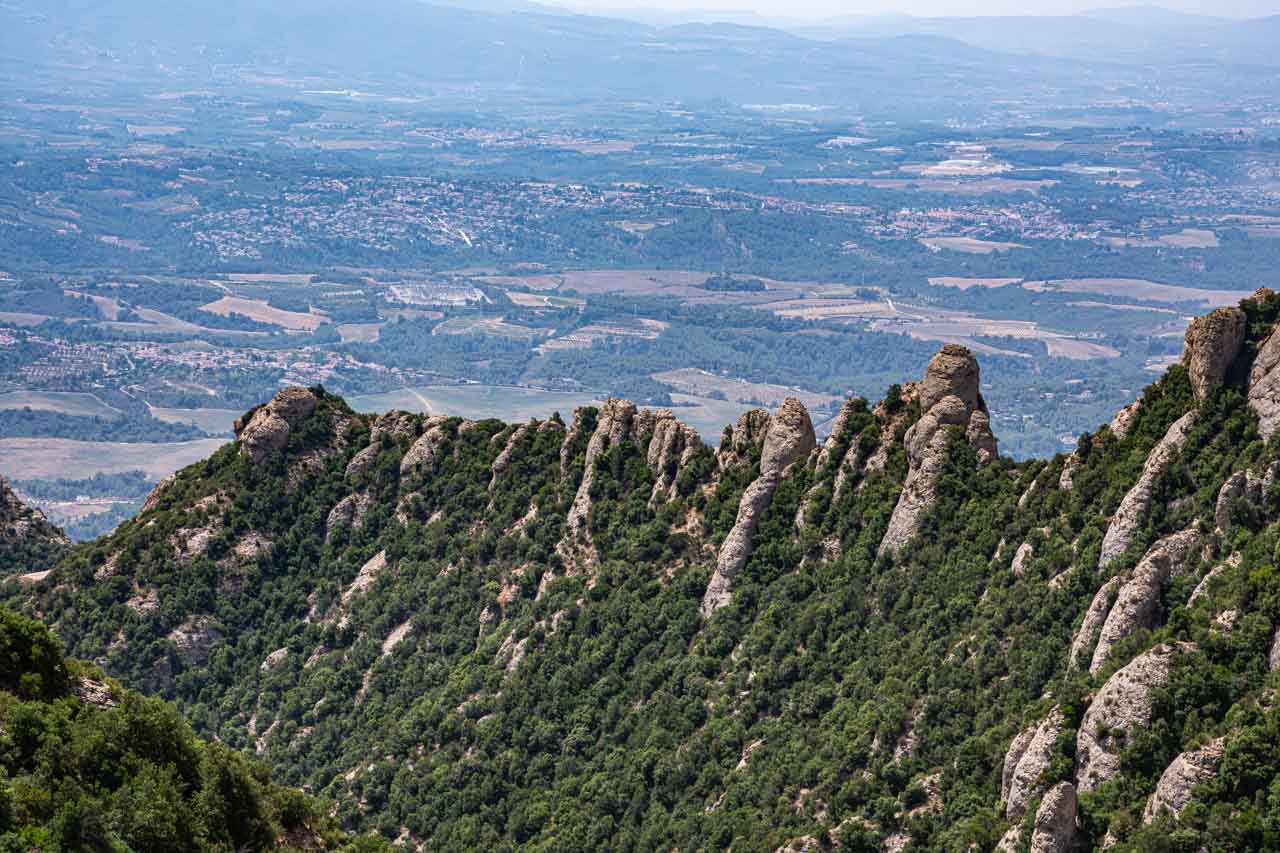
View from Montserrat (‘serrated’) Mountain.
While the hike down the mountain was not technically demanding (it’s a paved path nearly all the way), I did find the steep descent challenging. There were times when the decline was so steep my back was almost vertical to the path. The heat was another challenging factor. I’m sure I was on that mountain on its hottest day ever recorded!
A trip to Montserrat Monastery is about more than just a starting point for hiking around the mountain (and there are several you can do). The monastery is famous for the statue of the Black Madonna housed in the basilica and for one of the oldest boys’ choirs in Europe.
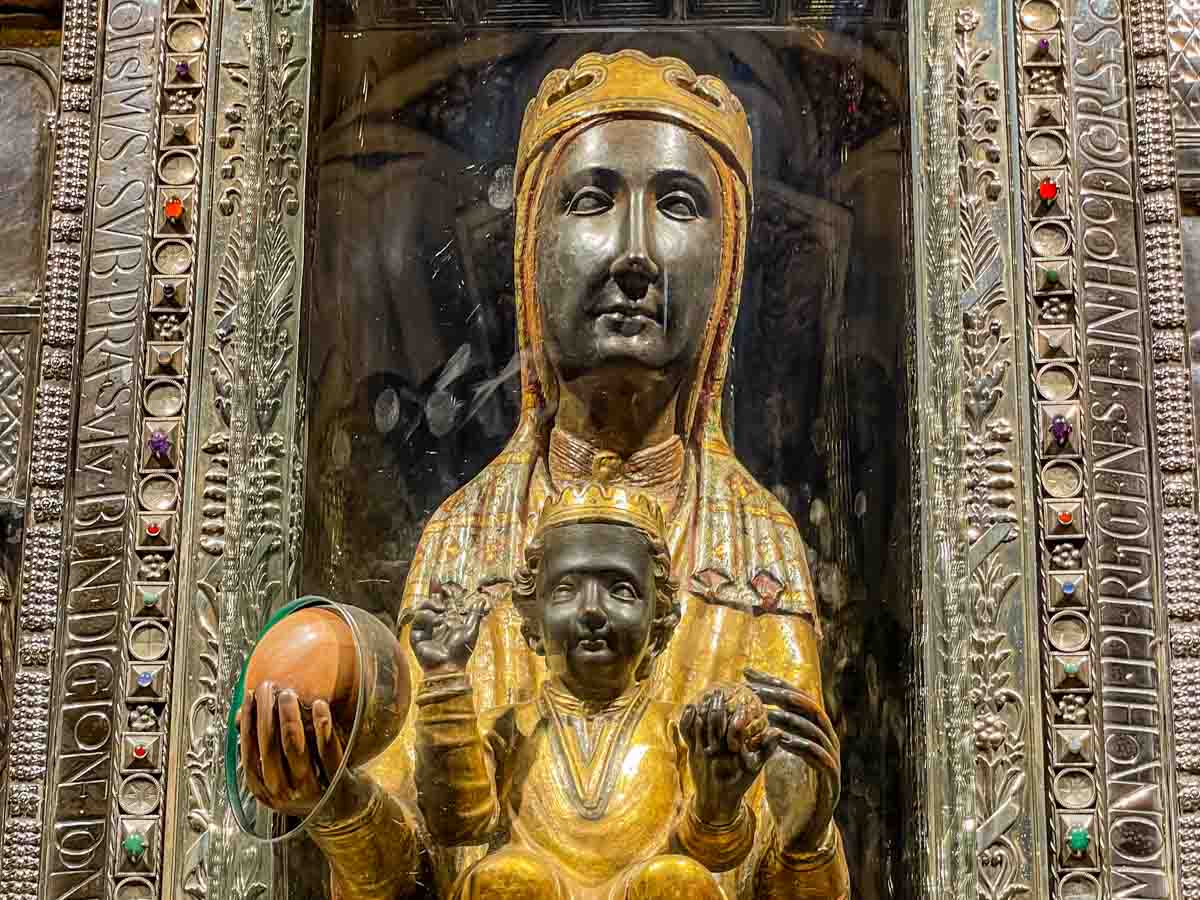
The Black Madonna inside Montserrat Basilica.
The setting alone makes Montserrat Monastery worth a visit. The hike added value!
PAMPLONA
Pamplona is best known for its legendary multiday festival, the Running of the Bulls (Feast of San Femin) in July.
A Monument to Culture
Agree with it or not, the annual running of the bulls is an integral part of Pamplona’s culture. The city even has a monument (Monumento al Encierro) dedicated to the traditional bull-running, freezing a moment in time of the race.
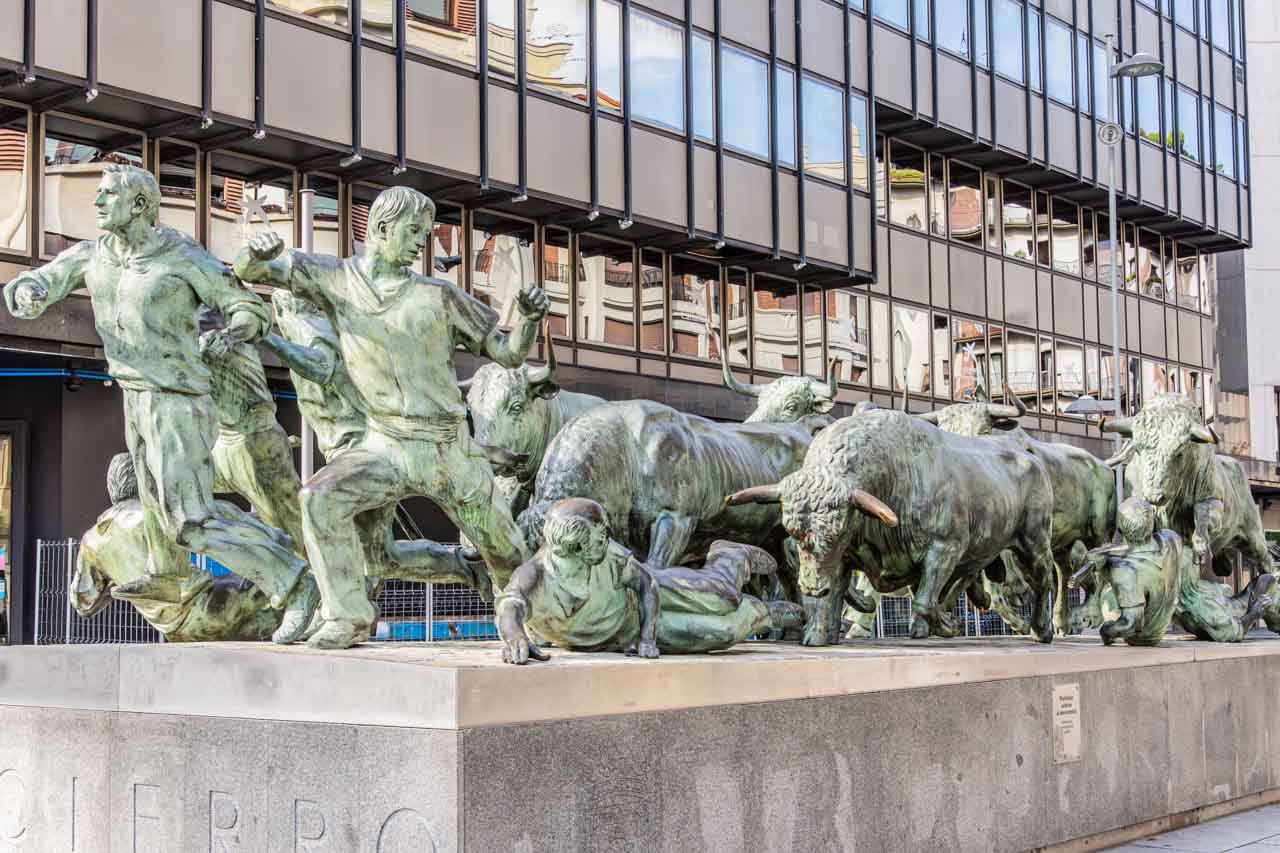
Pamplona’s monument to the running of the bulls.
For those who don’t know, the running of the bulls occurs during the festivities of San Fermin, where thousands of people try to outrun stampeding fighting bulls through the streets of Pamplona.
Ernest Hemingway in Pamplona
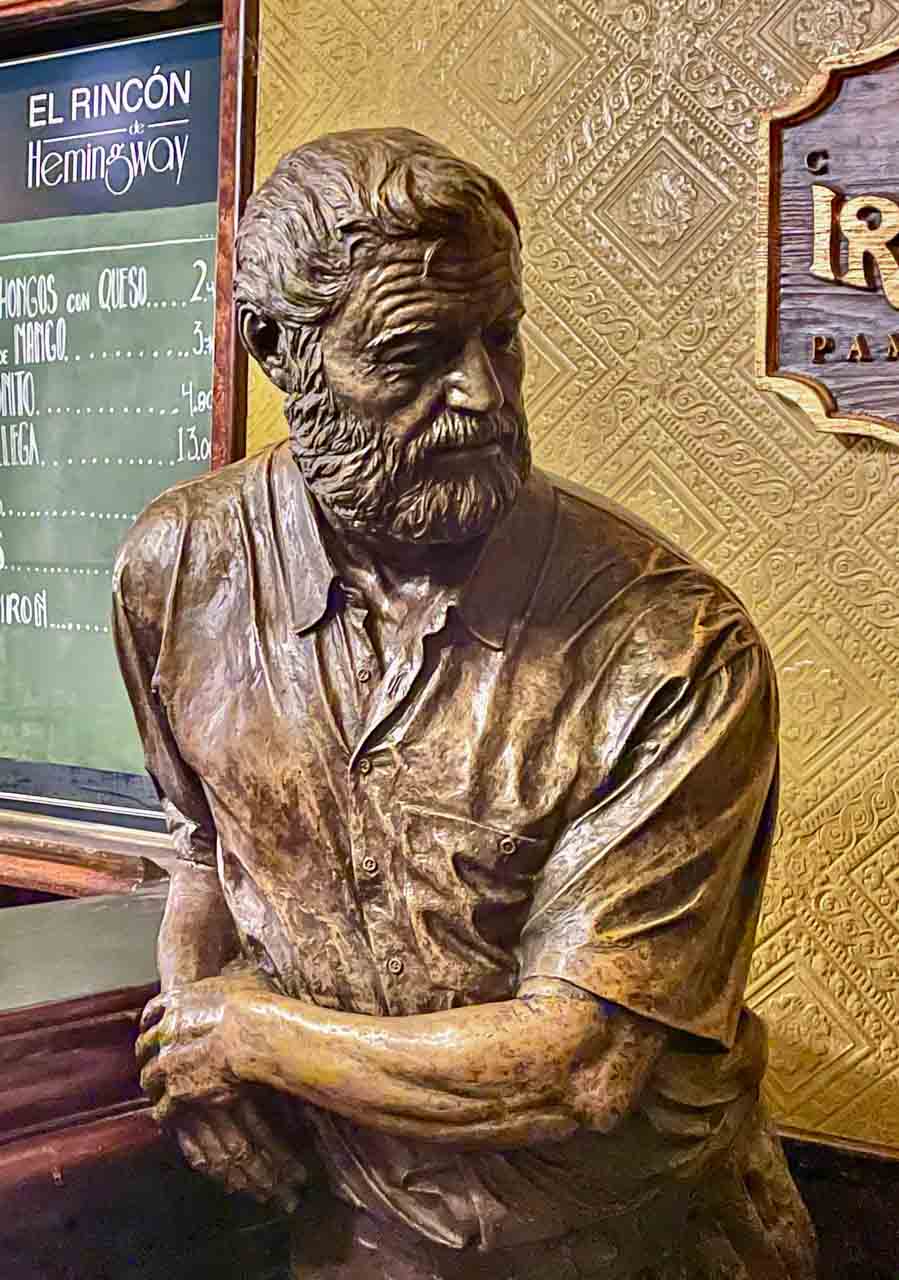
Statue of Ernest Hemingway in Cafe Irina.
Ernest Hemingway props up the bar in his favourite café in Pamplona – Café Iruna on Plaza del Castillo.
Hemingway had a love affair with Pamplona, visiting the city nine times, each time for the Festival of San Fermin and the running of the bulls.
Hemingway’s first novel, “The Sun Also Rises” (1926), is set in Spain, with Pamplona and Café Iruna heavily featured. The novel portrays American and British expats who travel along the Camino de Santiago from Paris to the Festival of San Fermin in Pamplona and watch the running of the bulls and the bullfights.
PUBOL – Gala Dali Castle
Pubol is a small village where Salvador Dali bought a castle for Gala, his wife. Her castle is now a museum. I recommend taking a guided tour.
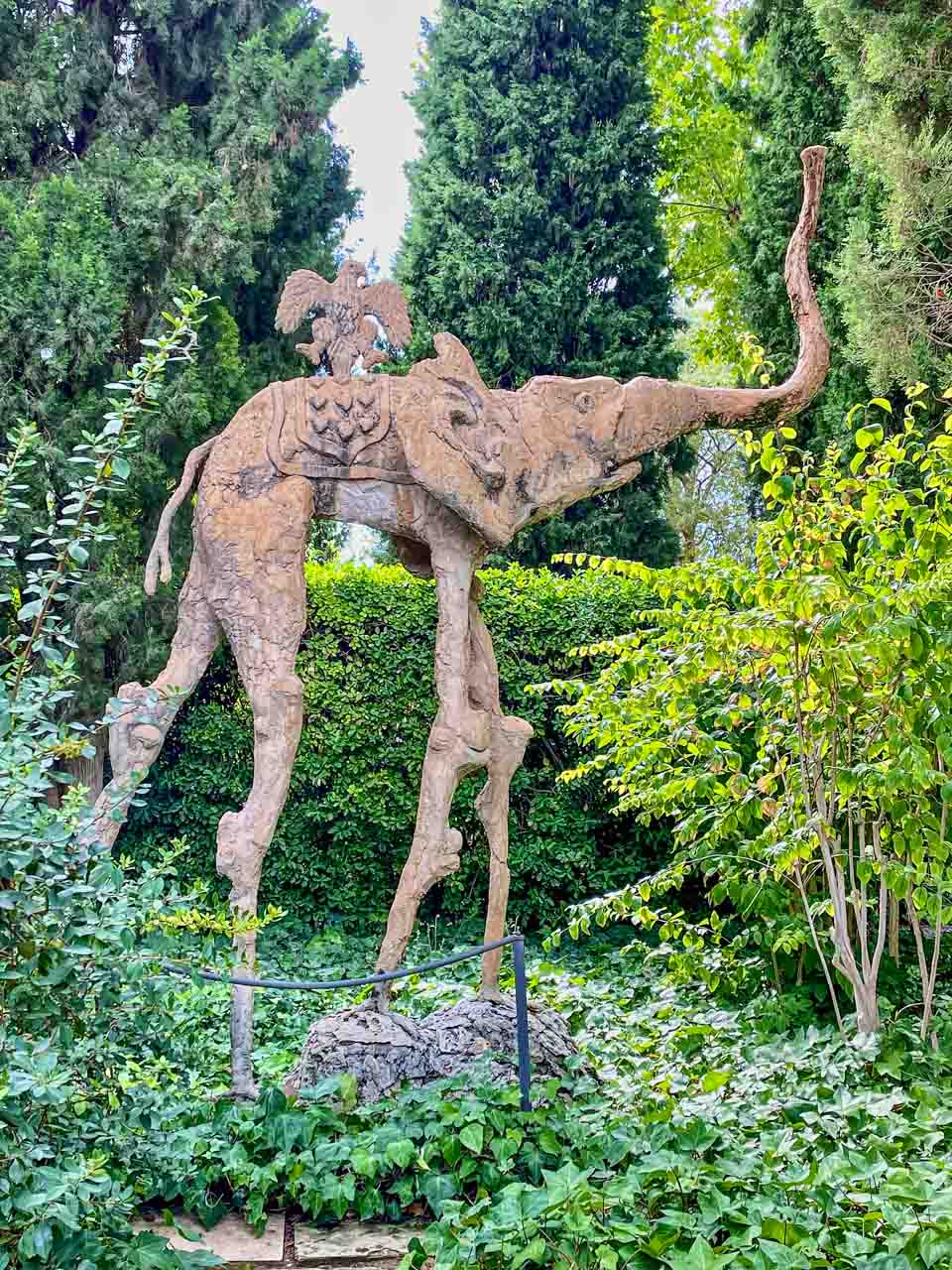
There’s an elephant in the garden.
You will find four elephant sculptures by Salvador Dali in Gala Dali’s castle garden. The castle features other artworks by Salvador Dali, and Gala’s crypt is there.
I knew Dali was a painter but was unaware his artistic talents extended to sculpturing.
Interesting fact: Dali needed Gala’s written permission to visit her at the castle.
QUERALBS – Ancient Village in the Pyrenees
Queralbs is a small village in the Pyrenees with a population of about 80. It sits at an elevation of 1,236 metres above sea level. It is the last vehicle-accessible village on the way up to Vall de Nuria (Nuria’s Valley), a beautiful valley in the eastern Pyrenees. The final six kilometres from Queralbes to Vall de Nuria must be travelled by rack railway – a 20-minute journey to an altitude of 1,964 metres. But first, there was a guided walking tour through Queralbs.
Queralbs is an ancient village dating back to 833 AD. With its traditionally built stone houses perched on the side of the mountain, it is a lovely, picture-perfect village.
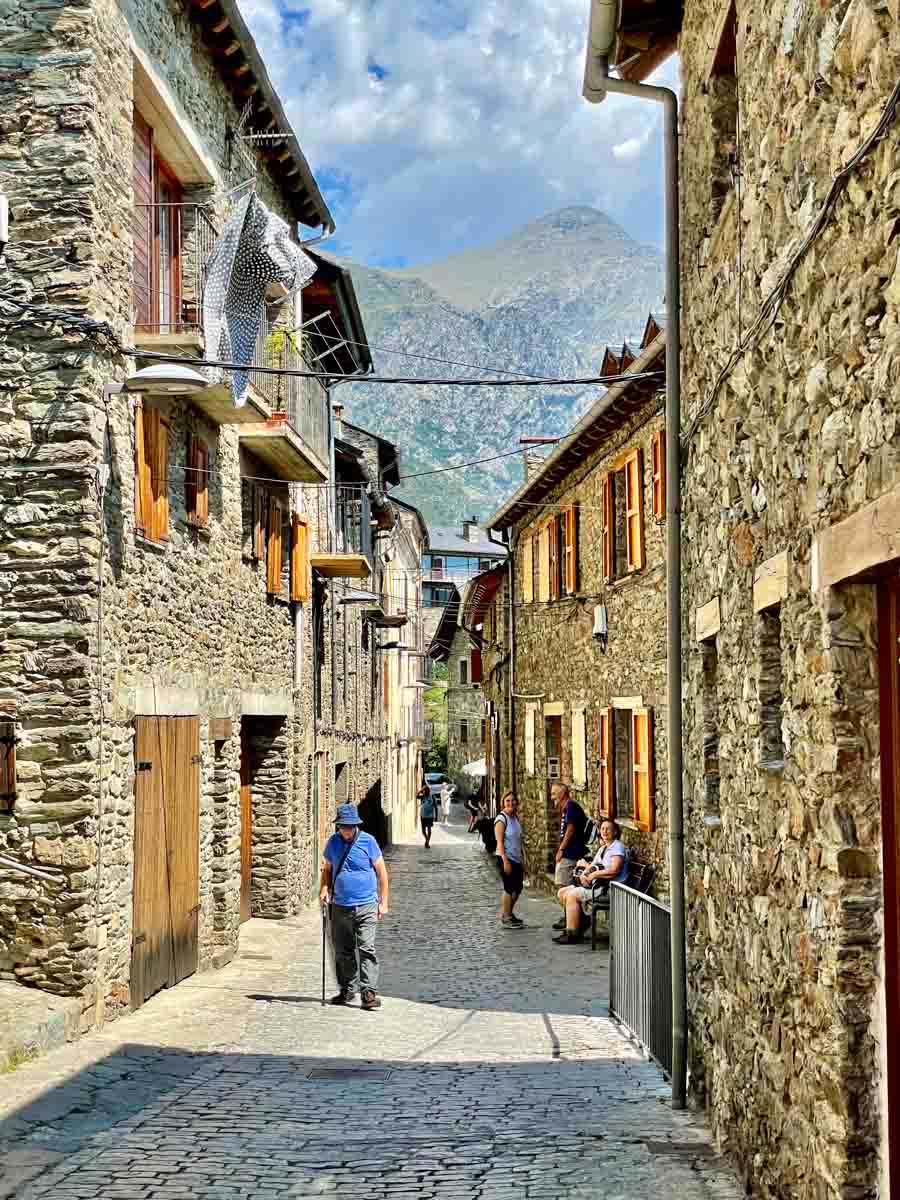
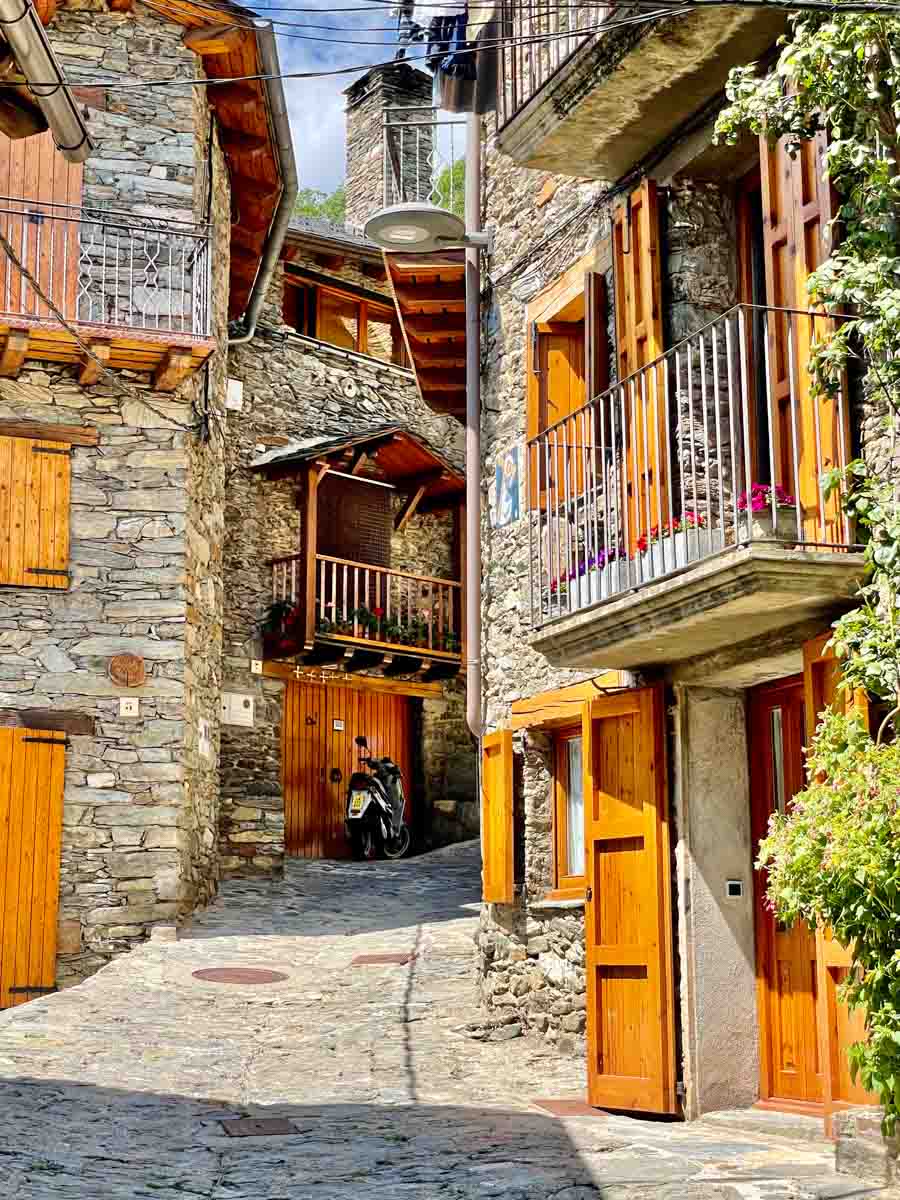
The walking tour ended at the Romanesque Church of Sant Jaume (Saint James).
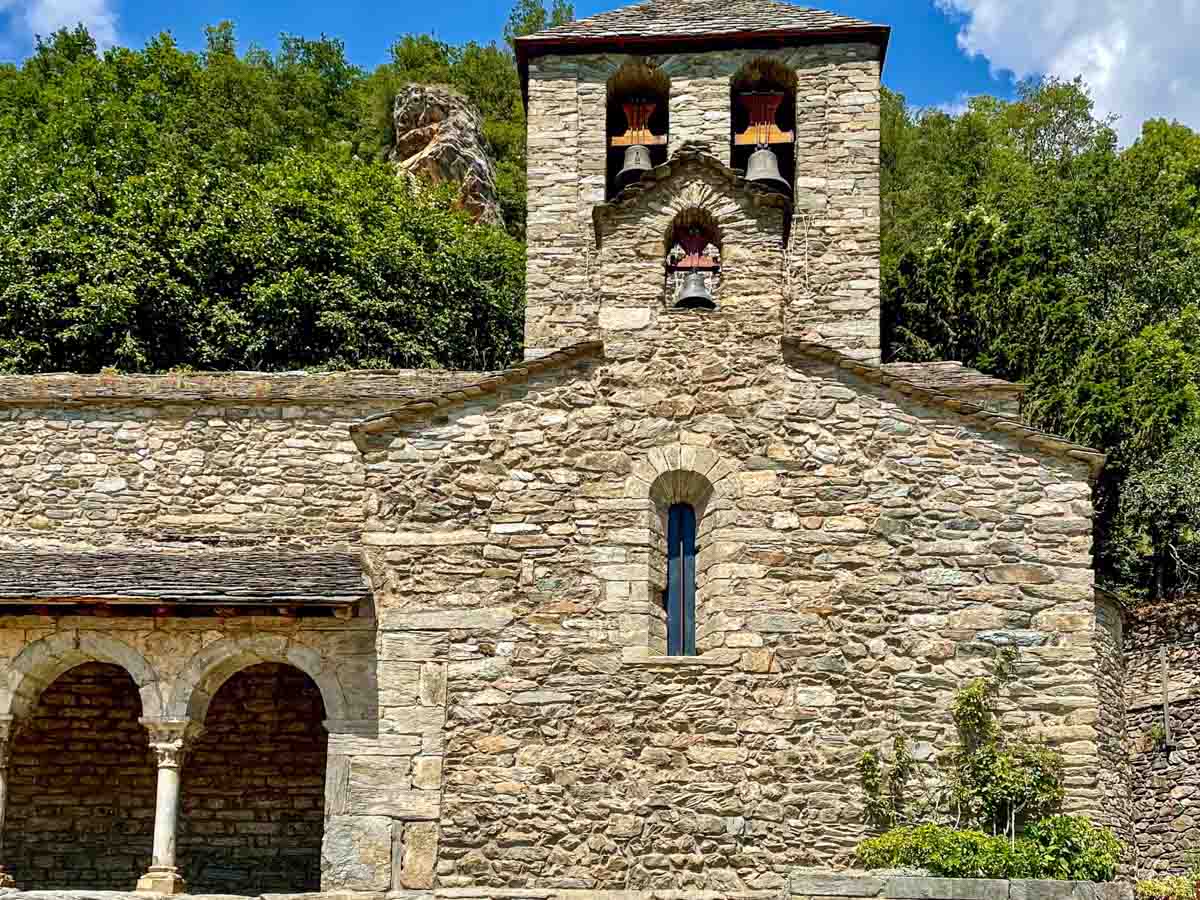
Queralbs’ Romanesque St James Church.
Time to catch the rack railway train to Vall de Nuria!
RONDA – New Bridge
Ronda is a hilltop city in the Andalusian Province of Malaga. It sits dramatically above a deep gorge that separates the city in two. It is the home of modern bullfighting, but that wasn’t why I was there. I was in Ronda to see the New Bridge.
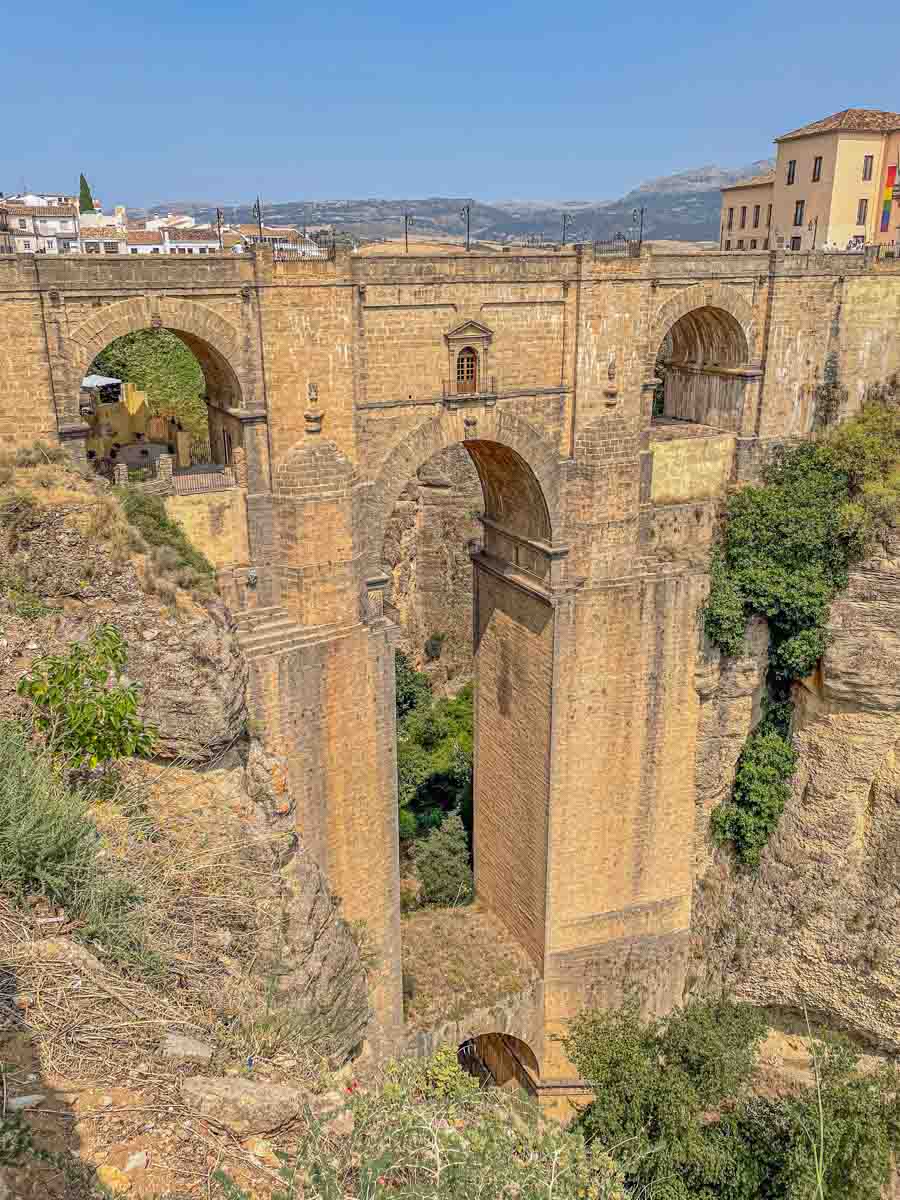
Ronda’s New Bridge spans El Tajo Gorge.
I have seen many photos of Ronda’s New Bridge on Instagram, been amazed, and wanted to see it myself. It was on my bucket list of sites to visit when in Spain.
The New Bridge (Puente Nuevo) spans the 98-metre-deep El Tajo Gorge, separating Ronda’s old town from its new town. The New Bridge is not new; it was completed in 1793 after 40 years of construction and with the loss of 50 lives.
It wasn’t easy to get photos of the bridge from the top. Unfortunately, my visit did not take me to the valley below New Bridge, where I would have been able to view the entire bridge.
SAN SEBASTIAN – Swim, Eat, Repeat
San Sebastian (called Donostia in Basque) is a resort town on the Bay of Biscay in northern Spain’s Basque Country.
There are no Roman ruins or Moorish architecture in San Sebastian, but you will find urban beaches, eclectic architecture, and a food lover’s paradise. San Sebastian has the second most Michelin stars per capita in the world.
San Sebastian’s famous La Concha Beach is said to be the most beautiful urban beach in Europe. The beach can be busy, but it offers magnificent views of the city and Old Town. Of San Sebastian’s two other main beaches, Ondarreta Beach is a family favourite, while Zurriota Beach is popular with young people and surfers.
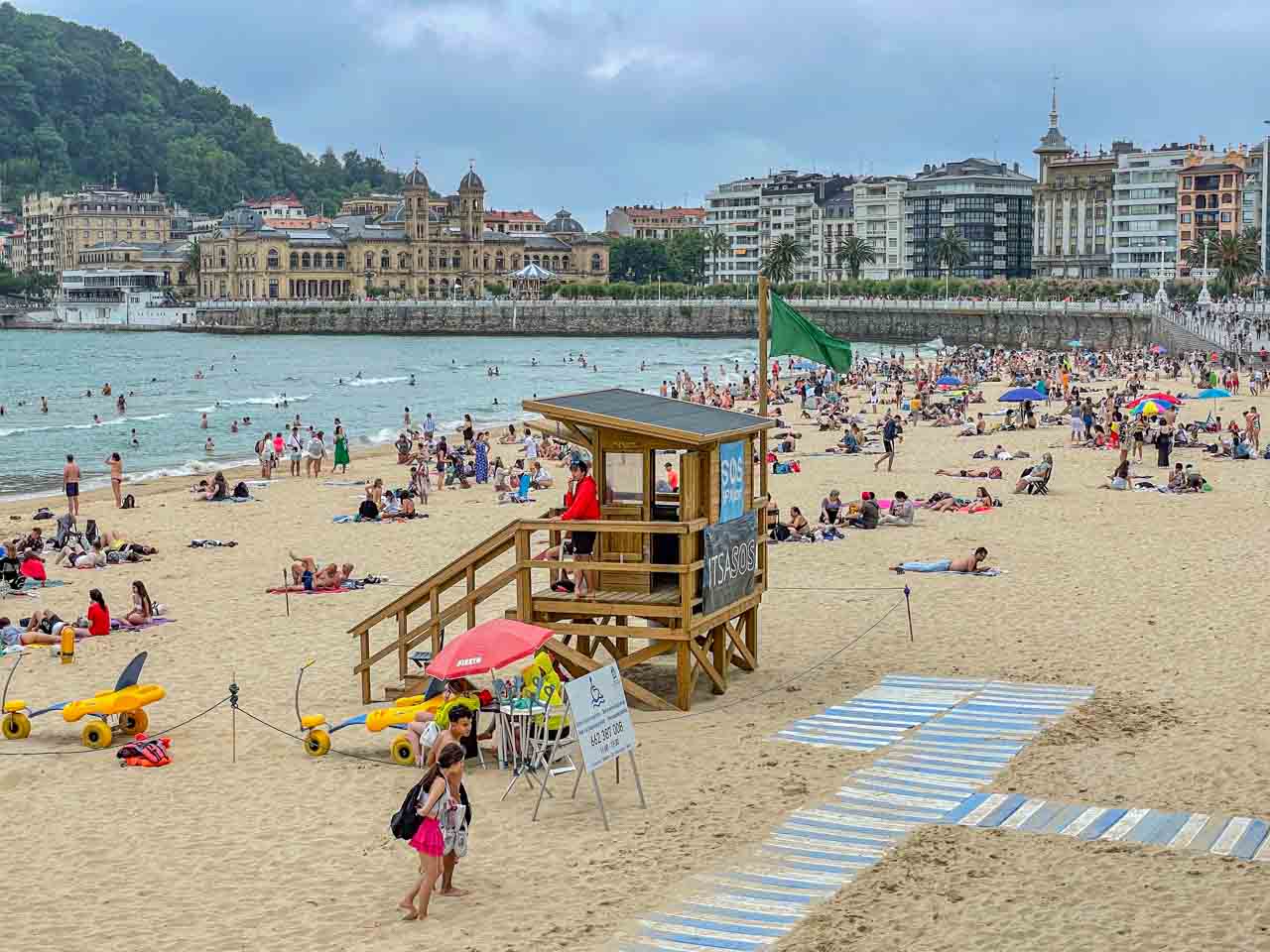
San Sebastian’s La Concha Beach with city views.
Strolling along the city’s promenade is a must to admire the beaches and mansions that line this iconic walk.
Conde Nast Traveller’s 2023 Readers’ Choice Award voted San Sebastian the best city to visit in Europe.
SANTIAGO DE COMPOSTELA – Cathedral of Santiago de Compostela
Santiago de Compostela is the capital of Galacia, in the far northwest of Spain.
Arriving in Santiago de Compostela with Insight Vacations, I joined a small group on a guided walk through the city’s parks and old town, ending at the cathedral in Plaza del Obradoiro.
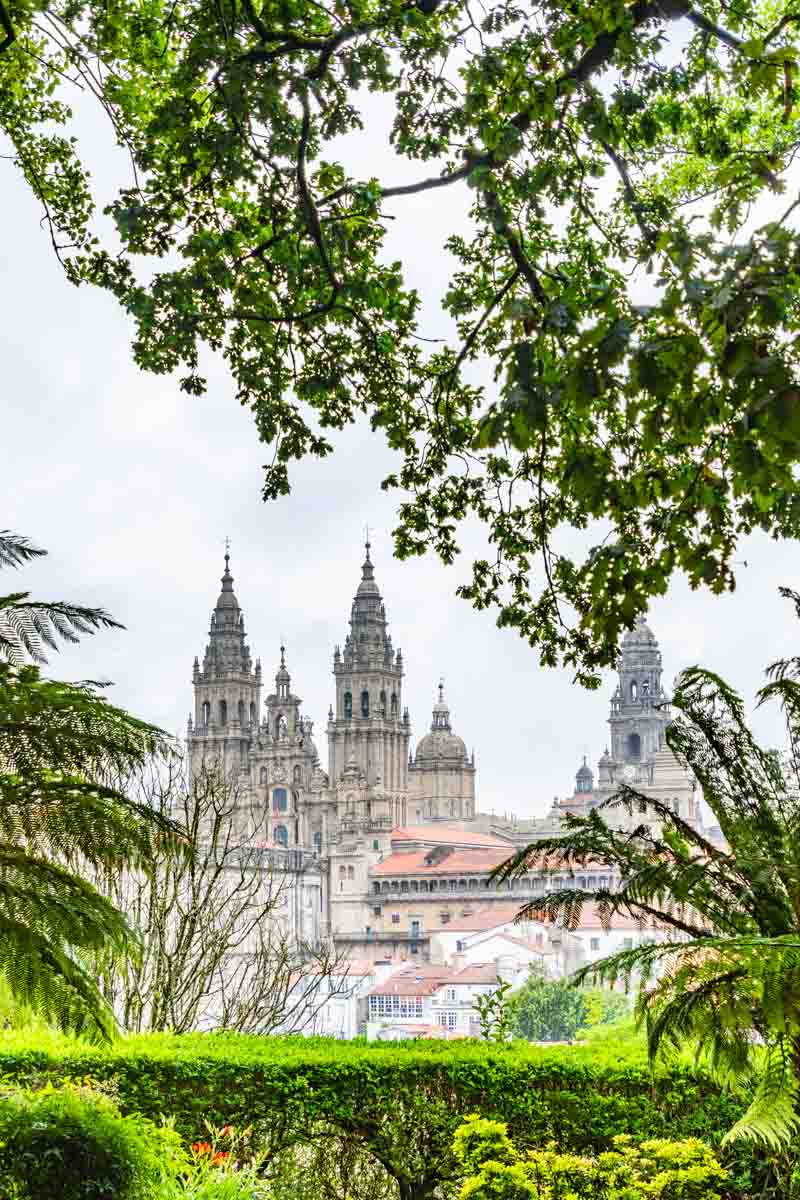
View of the Cathedral of Santiago de Compostela from Alameda Park.
The Cathedral of Santiago de Compostela is the reputed burial place of Saint James the Great, one of the apostles of Jesus Christ. The cathedral fronts Plaza del Obradoiro and is the destination for pilgrims walking or cycling the Camino de Santiago (the Way of St James).
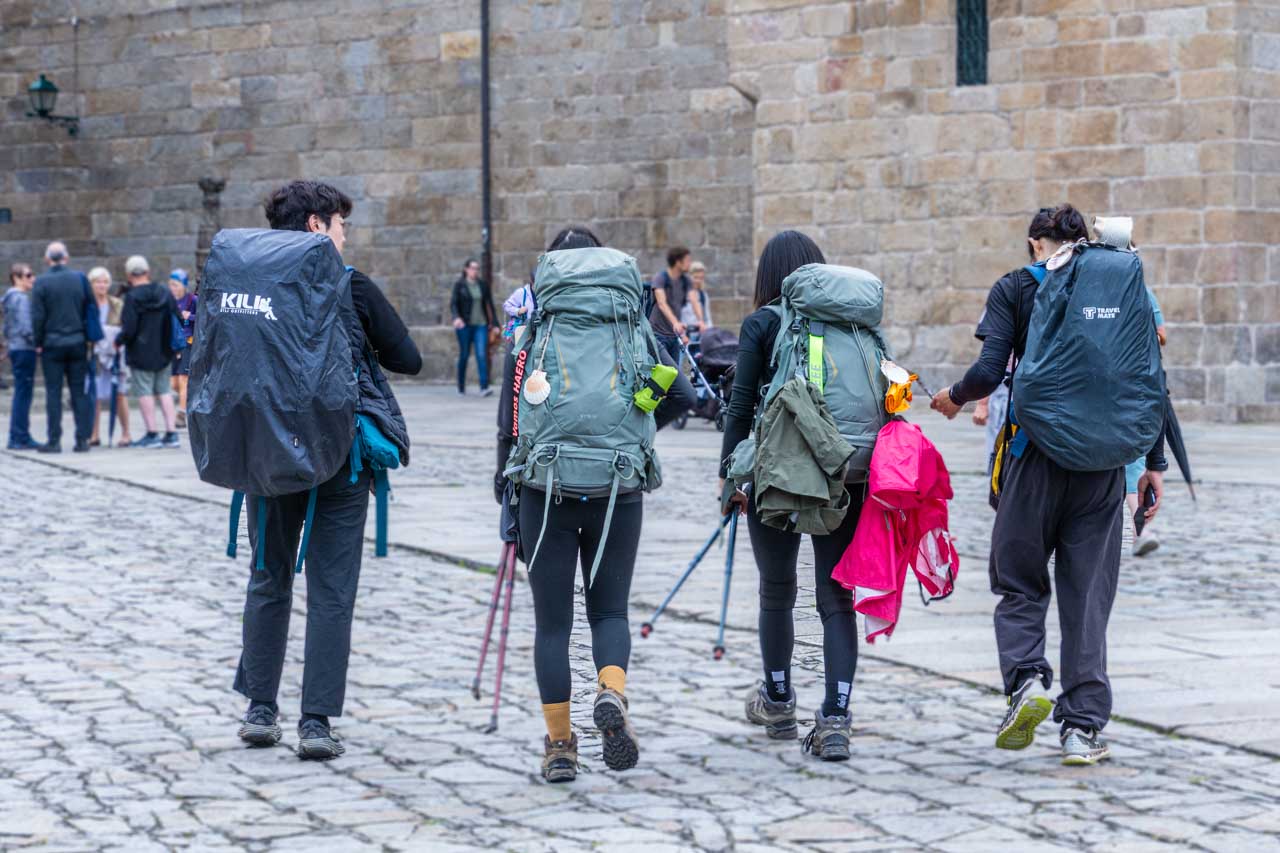
Pilgrims arrive in Plaza del Obradoiro after completing the Camino.
The Cathedral and the Camino are UNESCO World Heritage-listed – 1985 and 1993, respectively.
SEGOVIA
Segovia is in central Spain, about 90 kilometres north of Madrid. It is famous for its historic buildings and a great city to visit.
Alcazar of Segovia
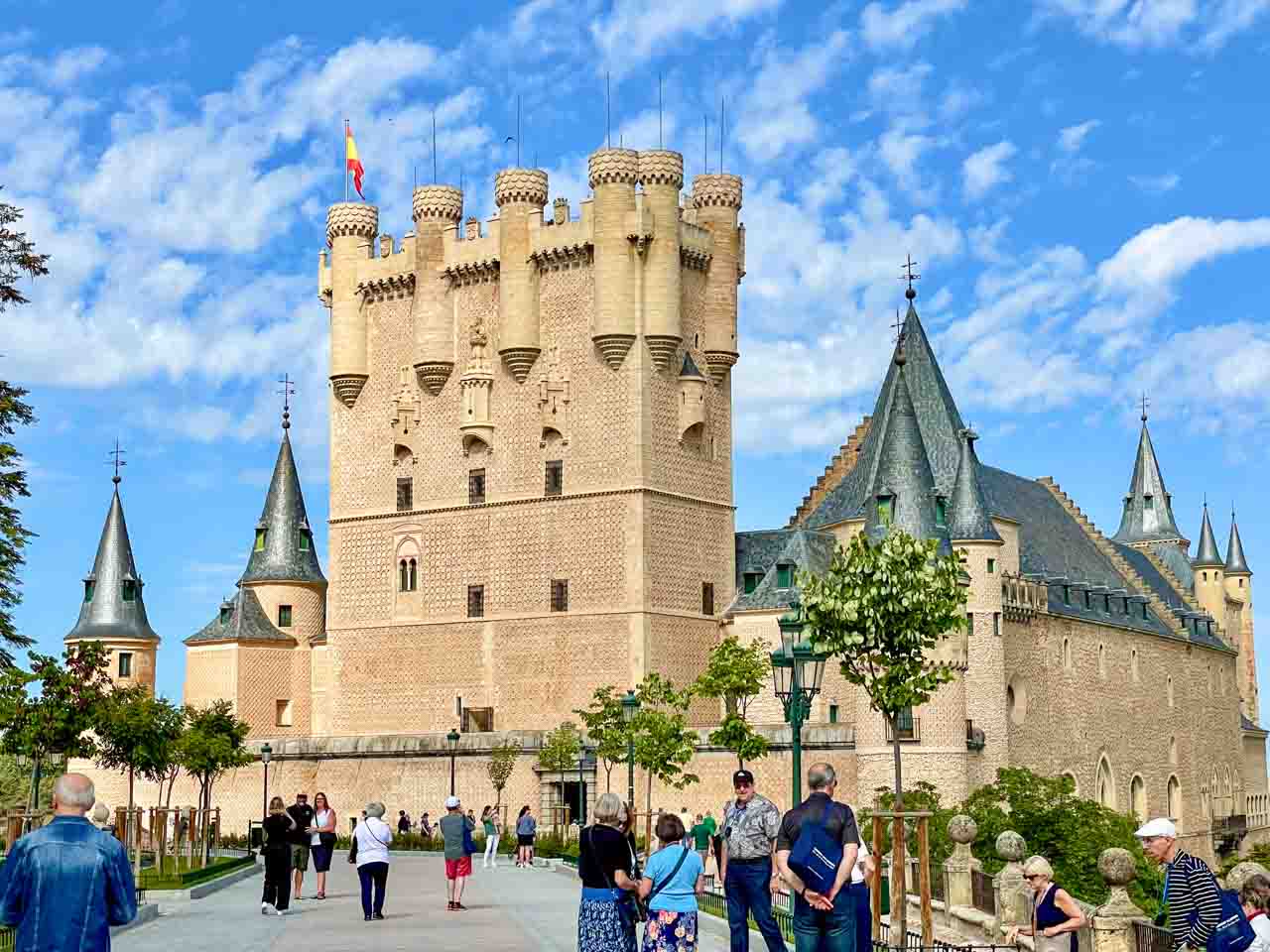
The fairy tale Segovia Alcazar.
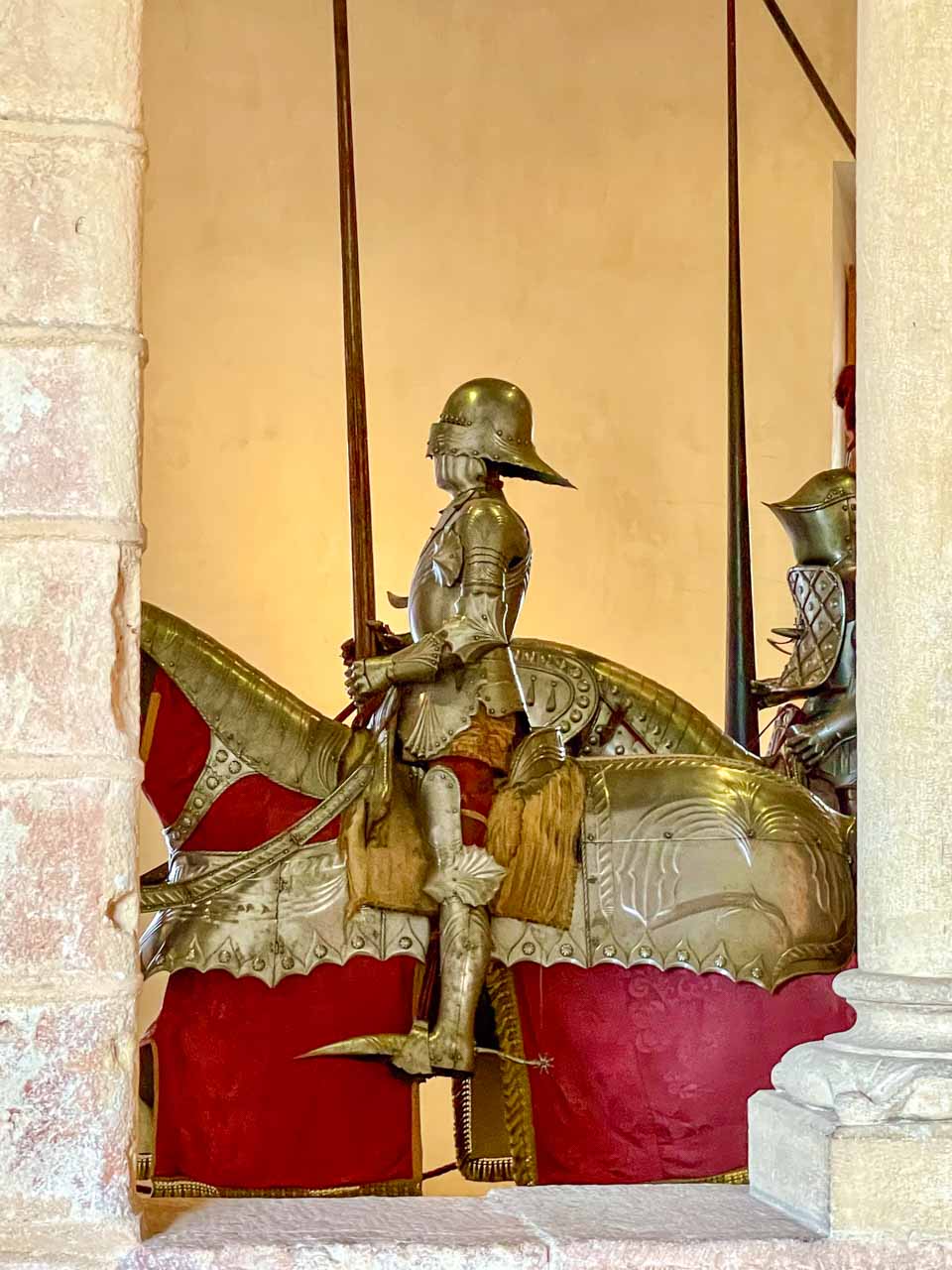
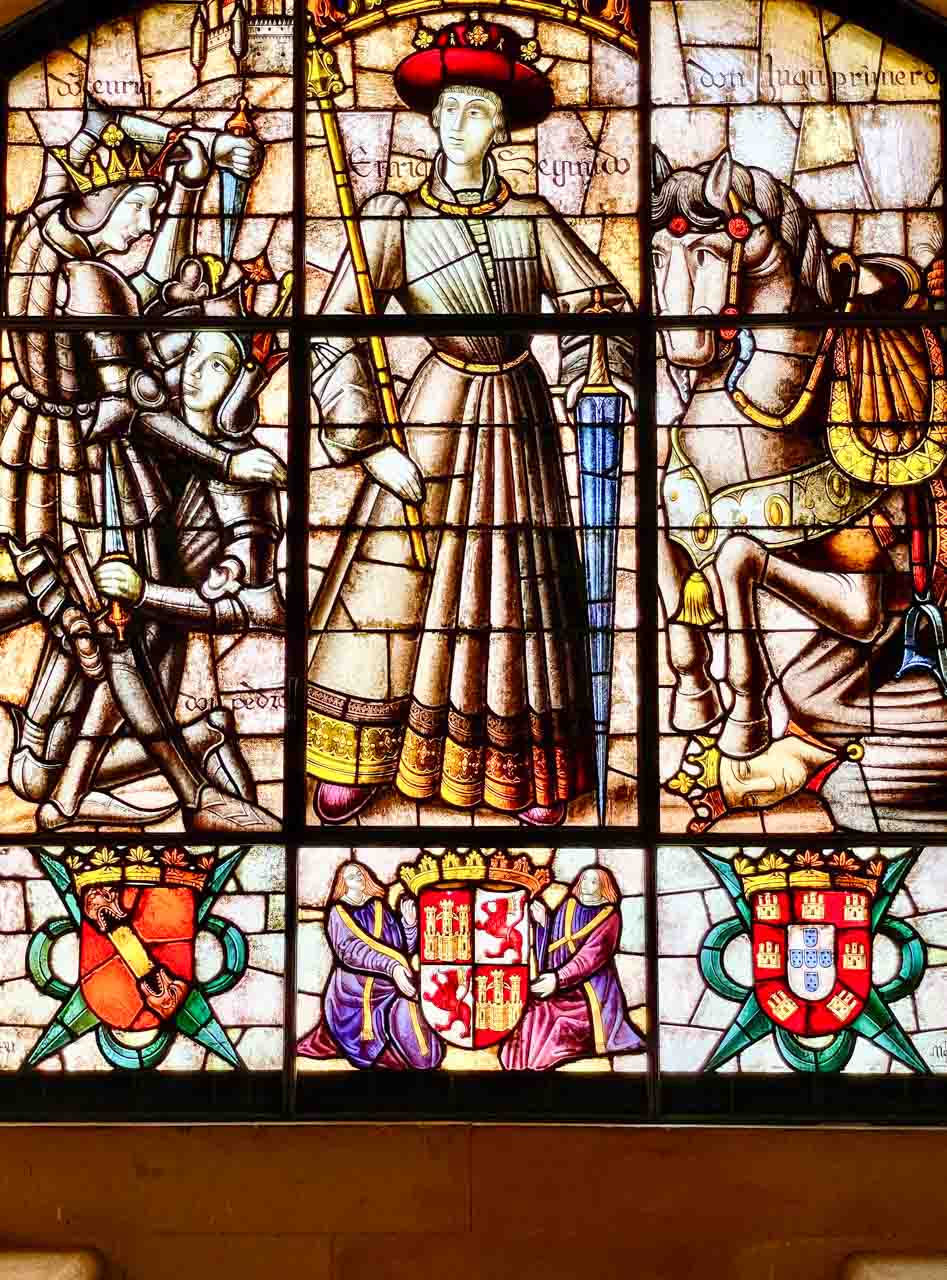
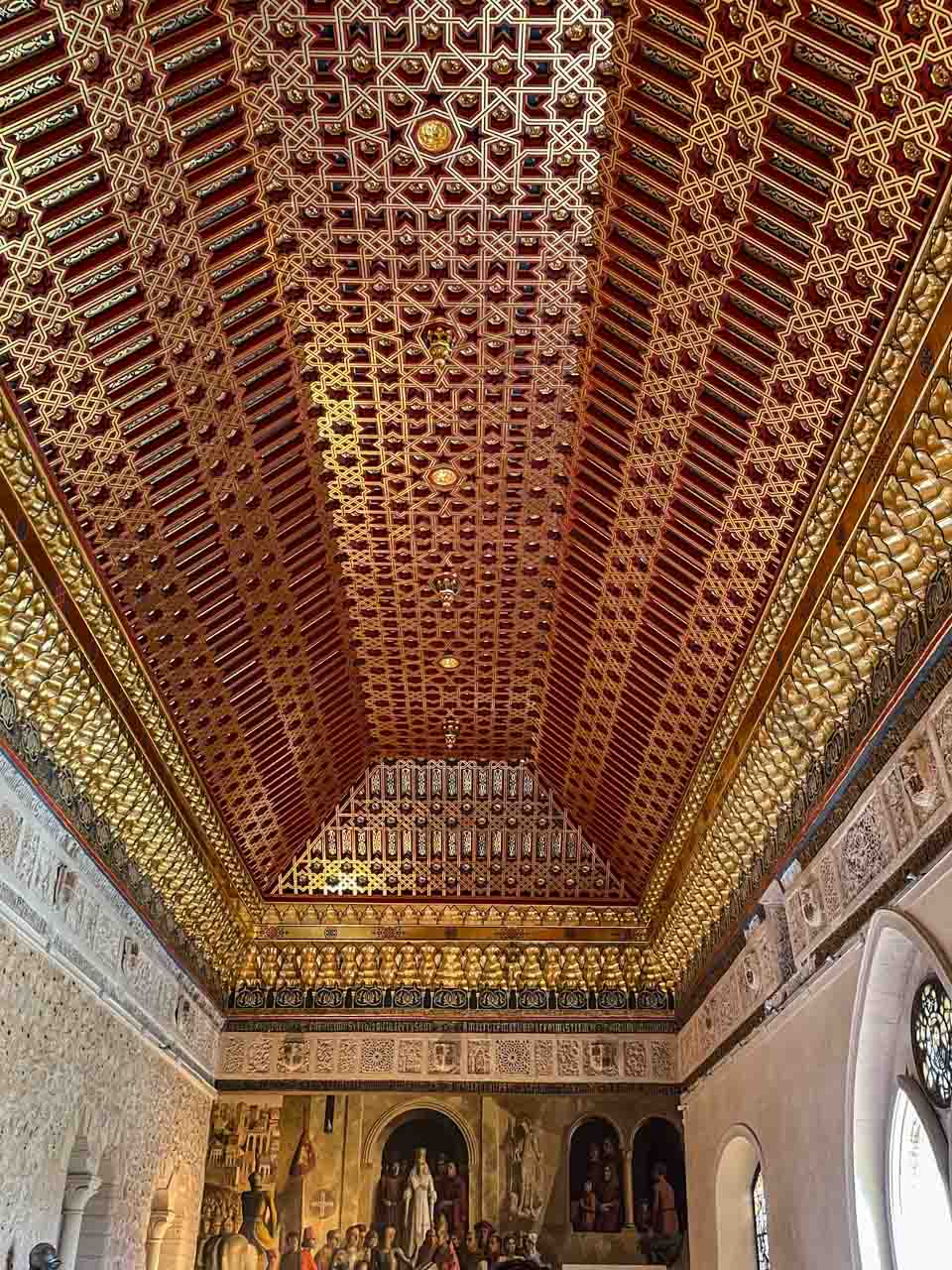
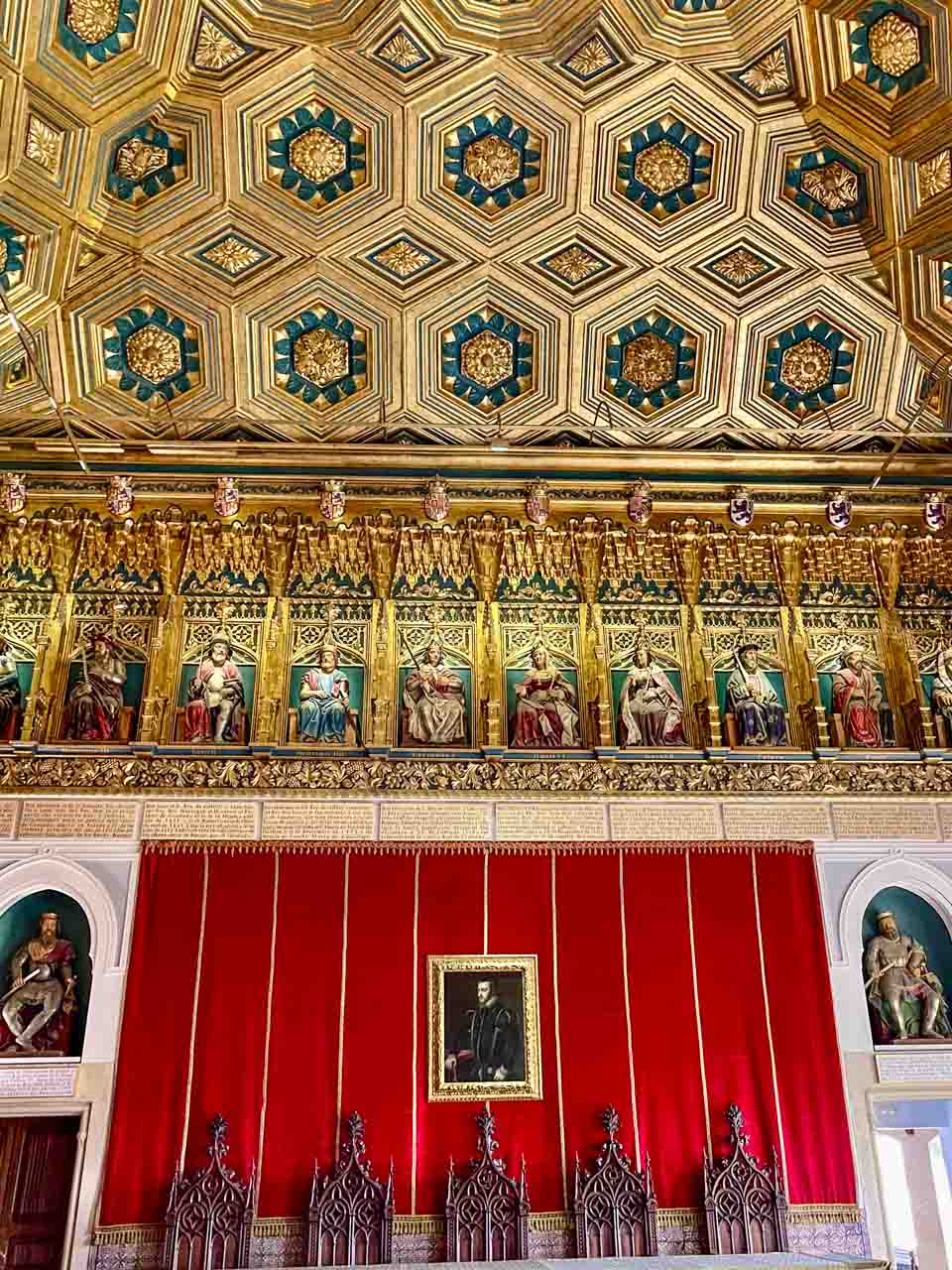
Continuing a UNESCO World Heritage theme in Segovia, the Alcazar of Segovia (Fortress of Segovia) is a medieval castle that was home to 22 kings.
Its exterior looks like something out of a fairy story. Some say the castle inspired the design of Cinderella’s Castle at Walt Disney World. Can you see the similarity?
Of all the Alcazars I visited in Spain, the Alcazar of Segovia was my favourite. The decorated ceilings were beautiful, and I loved the stained-glass windows.
Cathedral of Segovia
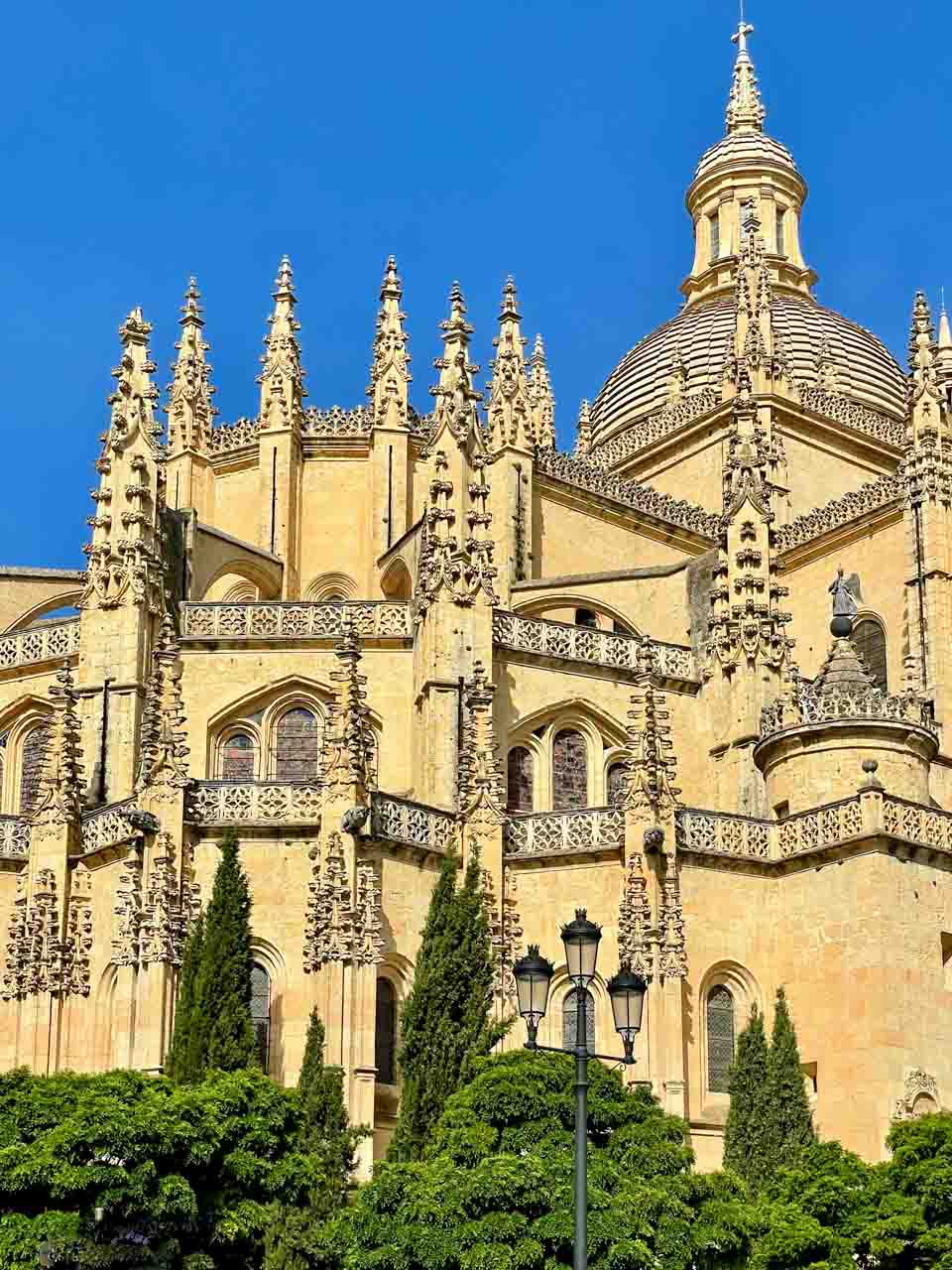
Segovia Cathedral.
UNESCO World Heritage-listed in 1985, Segovia Cathedral was the last Gothic cathedral built in Spain.
Construction on the cathedral began in 1525, but it wasn’t consecrated until 1768. Sitting on Segovia’s highest point in Plaza Major (the city’s main square), the Cathedral of Segovia is an imposing building.
I couldn’t enter the cathedral because the Corpus Christi service was underway.
Roman Aqueduct
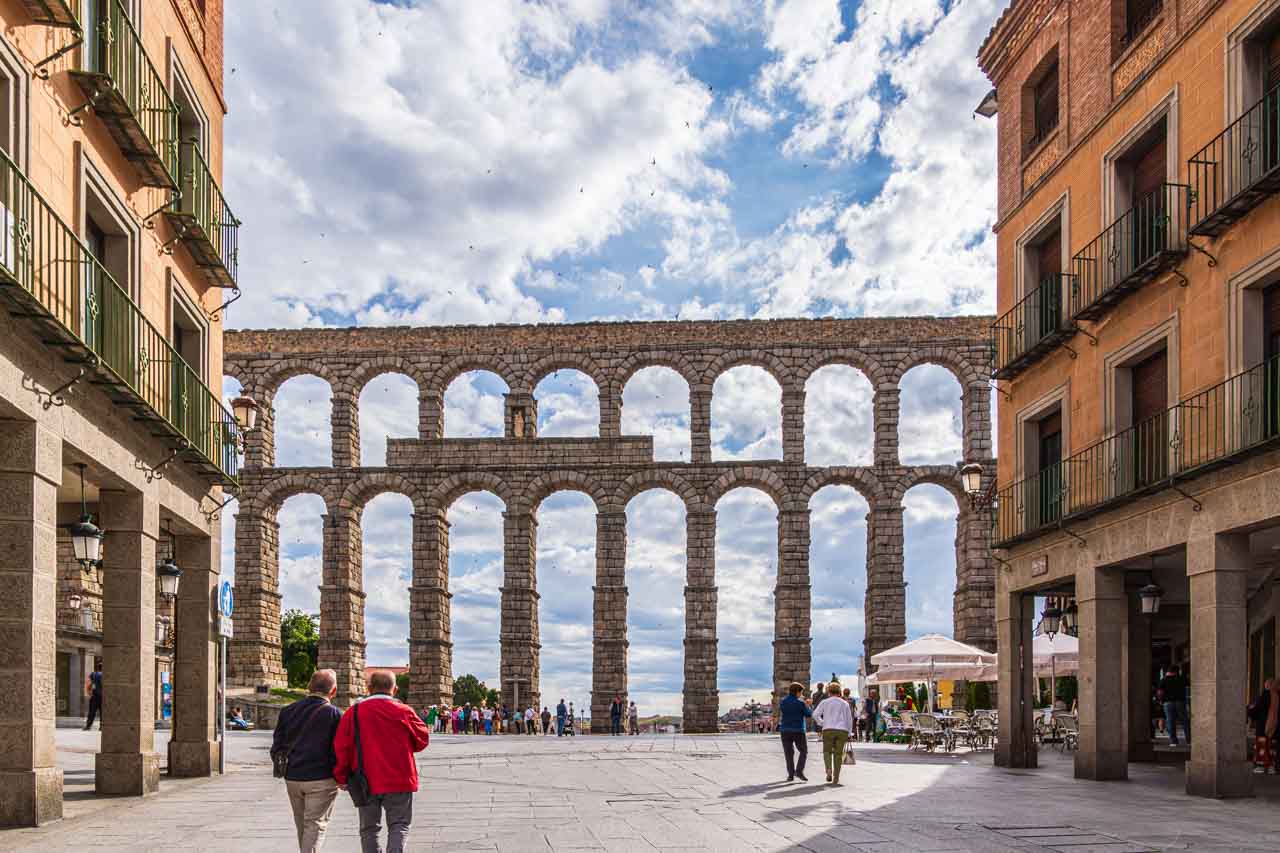
Segovia Roman Aqueduct.
The Aqueduct of Segovia is a Roman aqueduct built around the first century AD to channel water from springs in the mountains 17 kilometres away to the city’s fountains, public baths, and private houses. Said to be the world’s best-preserved Roman aqueduct, it was in use until 1973.
Twenty thousand four hundred stone blocks were used to construct Segovia’s Aqueduct with no mortar or cement between them. The highest point of the aqueduct is on Plaza del Azoguejo, which stands over 28 metres high, with a total of 167 arches.
This masterpiece of engineering was declared a UNESCO World Heritage Site in 1985.
SEVILLE
Seville is the capital of Andalusia and the former capital of Muslim Spain. It is a charming city that lacks the crowds of Barcelona and Madrid. Seville is a city of large open spaces, beautiful architecture, and Moorish influences. It is home to the biggest Gothic cathedral in the world, has the largest historic centre in Europe, and is famous for its flamenco dancing. It is hard not to fall in love with Seville when its people evidently take so much pride in their city.
Jardines de Murillo
Exploring the old Jewish Quarter on my own in Seville’s Old Town, I came across the pretty, landscaped, well-maintained urban Jardines de Murillo (Murillo Gardens). Its ceramic tile-covered benches provide welcome spots to relax from the heat under the shade of enormous fig trees.
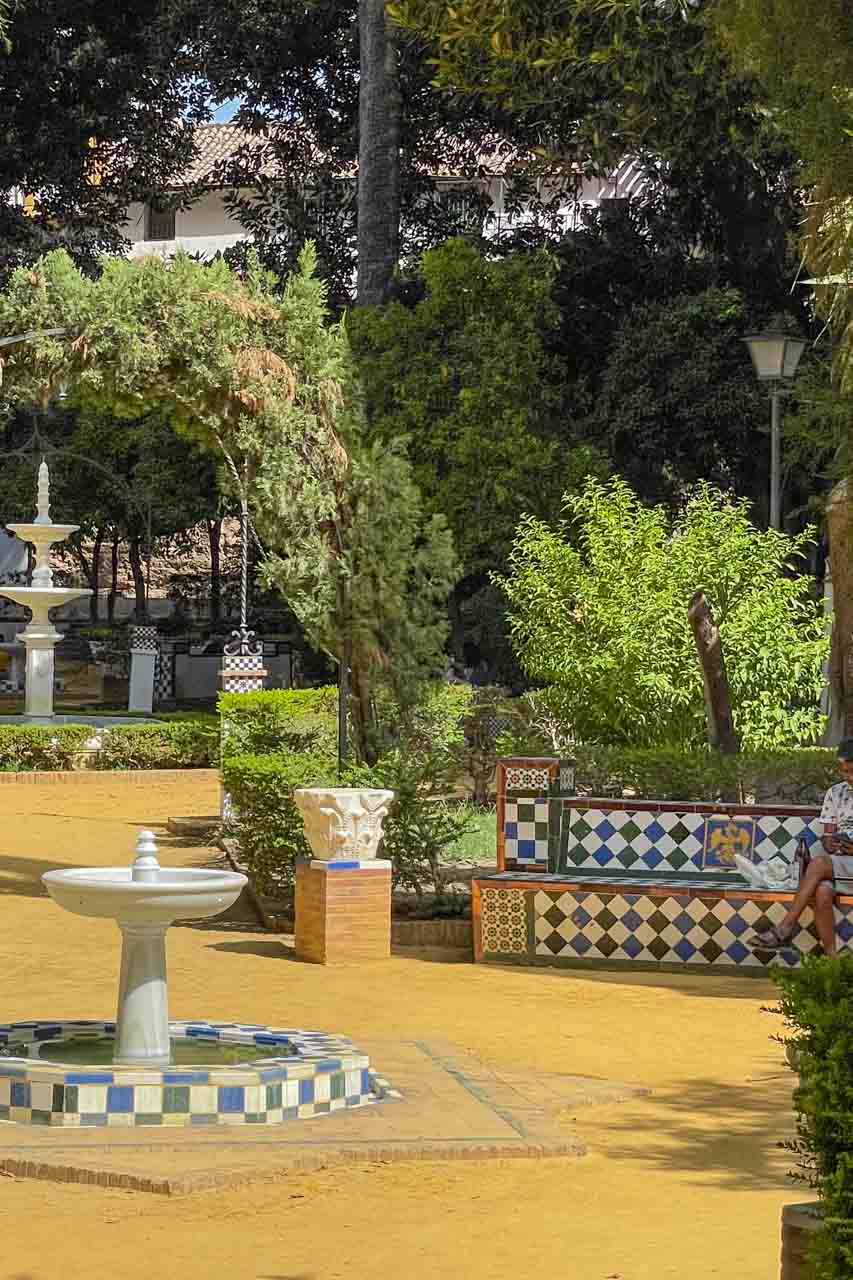
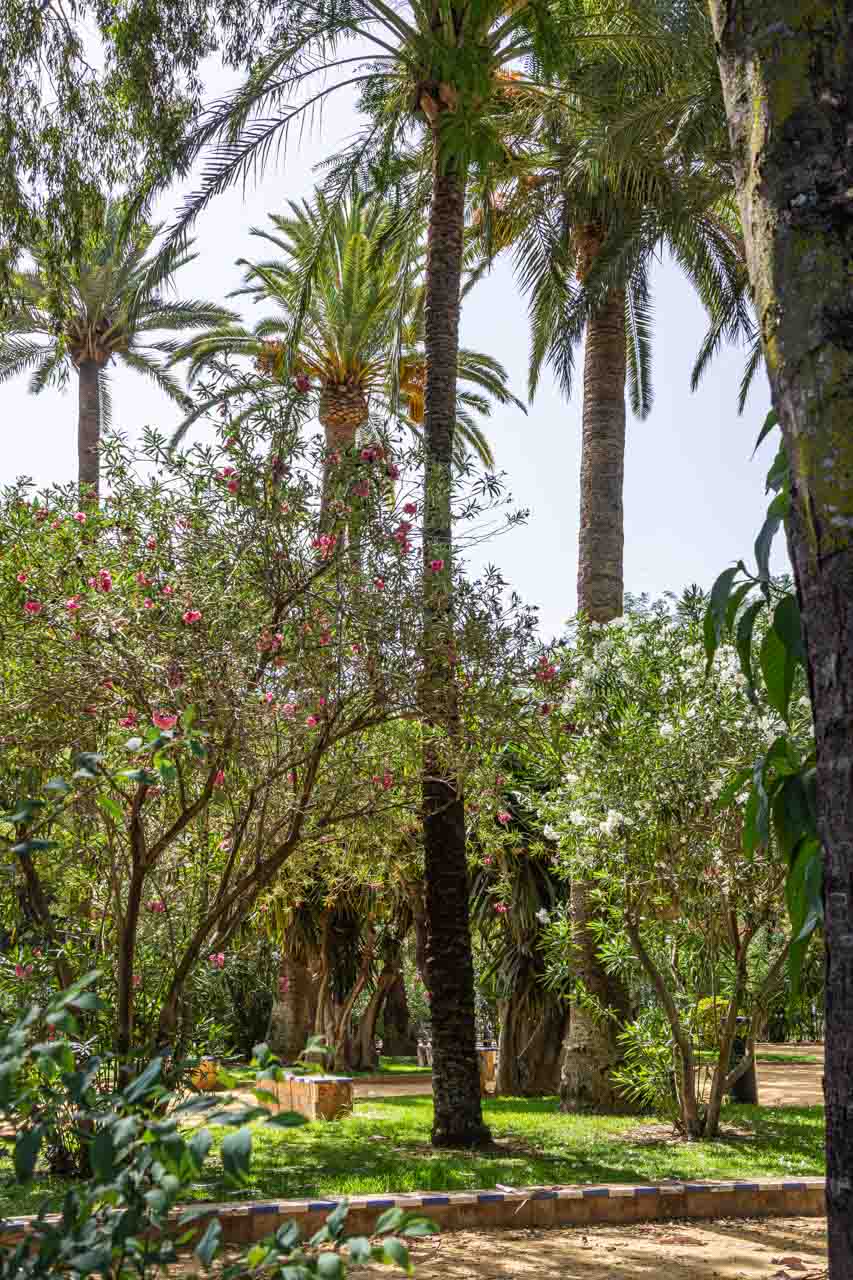
The gardens border the external walls of the Real Alcazar. The gardens are filled with fountains, children’s play equipment, and a monument to Christopher Columbus.
Jardines de Murillo was my favourite garden in Seville. Its intimate atmosphere saw me returning several times. Never crowded, I would take a book to read while eating a sandwich or sit to gather my energy to continue exploring Seville.
Plaza de Espana
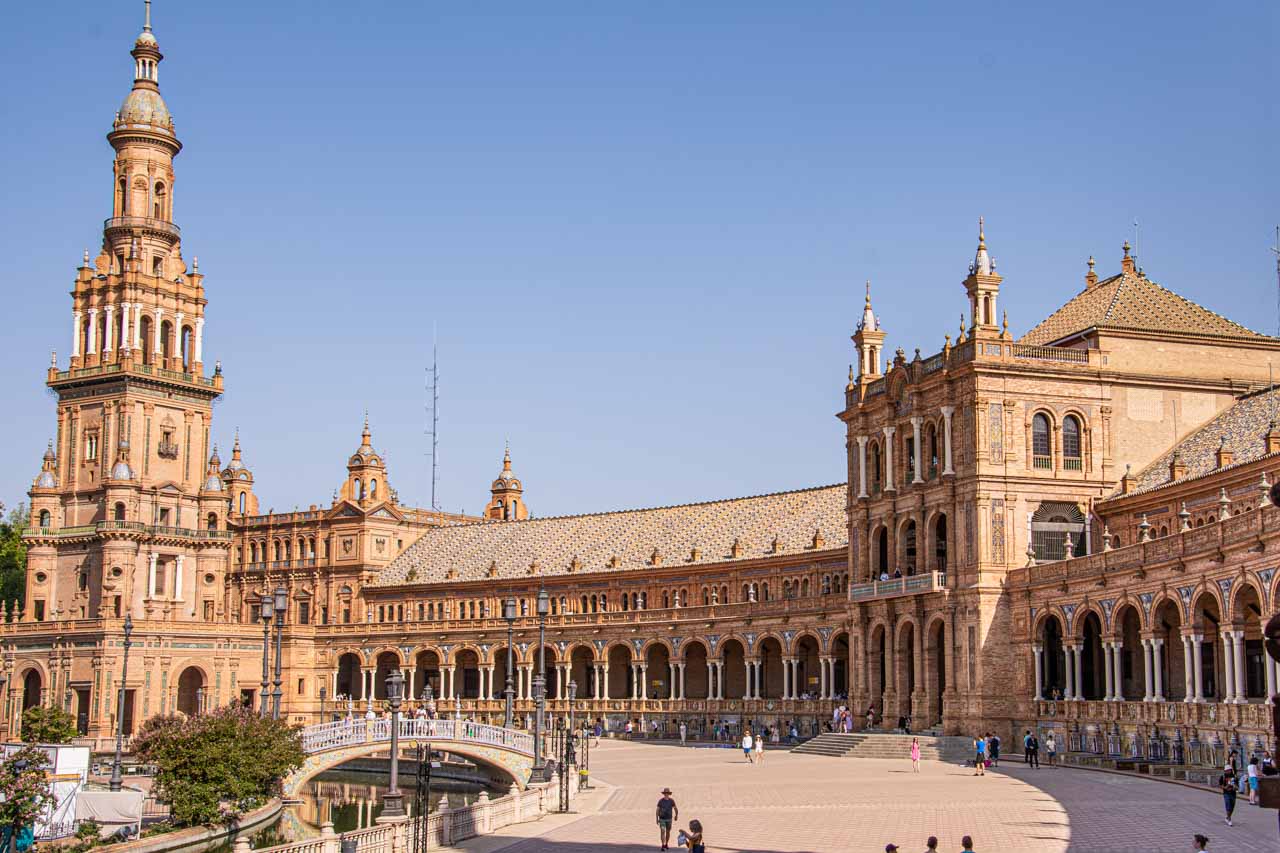
Iconic Plaza de Espana, Seville
The semicircular Plaza de Espana (Spain Square) in Maria Luisa Park blends Renaissance and Moorish-inspired architectural styles. It was built specifically for the 1929 Ibero-American Expo, which aimed to improve Spain’s relations with its former Latin American colonies and make symbolic peace.
Plaza de Espana is a cultural icon, Instagramable, and touted by all the guidebooks as a must-see. So early one morning, on a cooler day in Seville (only 39 degrees Celsius), I played tourist and walked to the plaza.
Along the base of the building, there are 48 benches representing each of Spain’s provinces decorated with colourful ceramic tiles depicting significant historical events. Expect to find visitors and nationals alike taking photos of themselves sitting on the bench of their province or the province of their heritage. Not being of Spanish parentage, I took photos of the benches of the places I had visited.
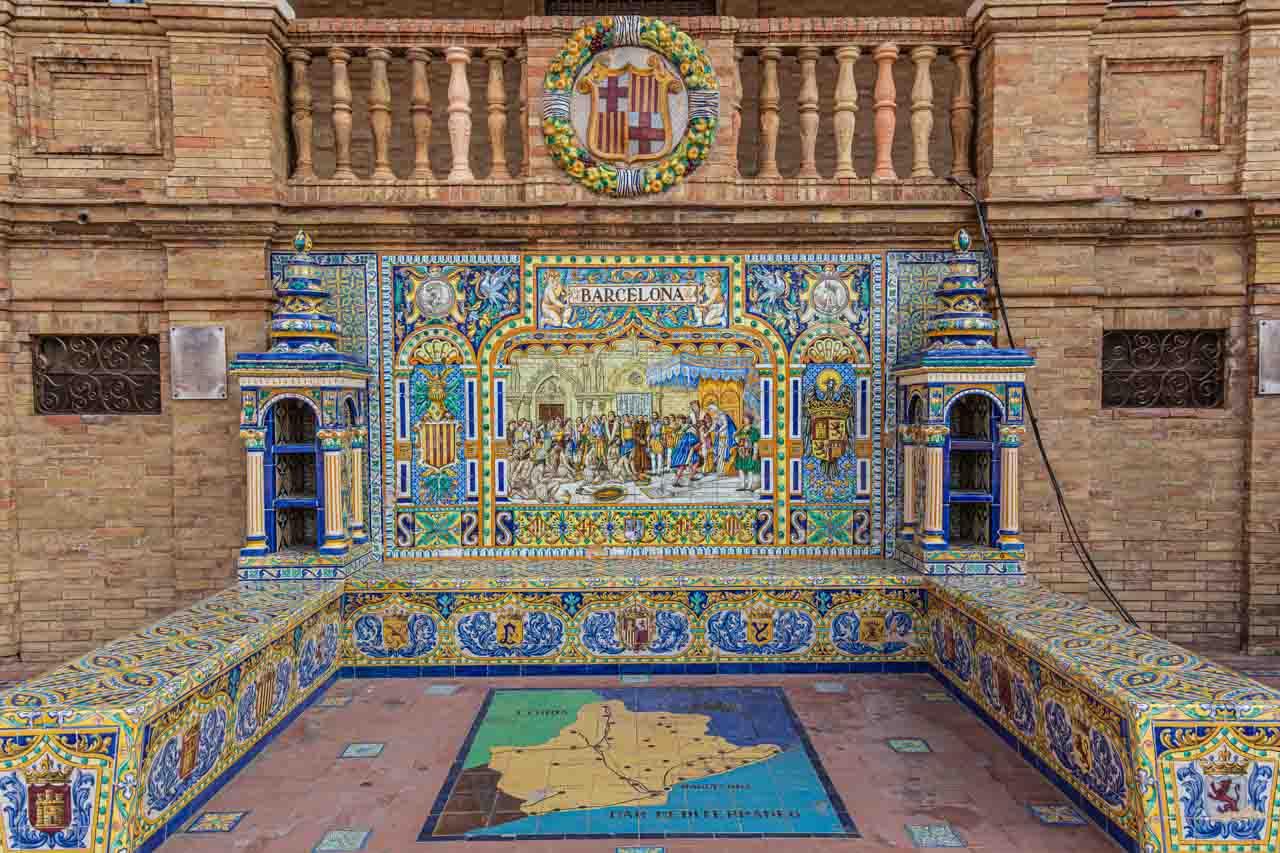
Plaza de Espana – The tiled bench representing Barcelona.
There are four bridges over the mini canal in front of the plaza. These represent the ancient kingdoms of Spain: Castile, Leon, Navarre, and Aragon.
I enjoyed my few hours at Plaza de Espana and even saw an impromptu flamenco show on the building steps.
Don’t leave Maria Luisa Park without a stroll through its tropical gardens.
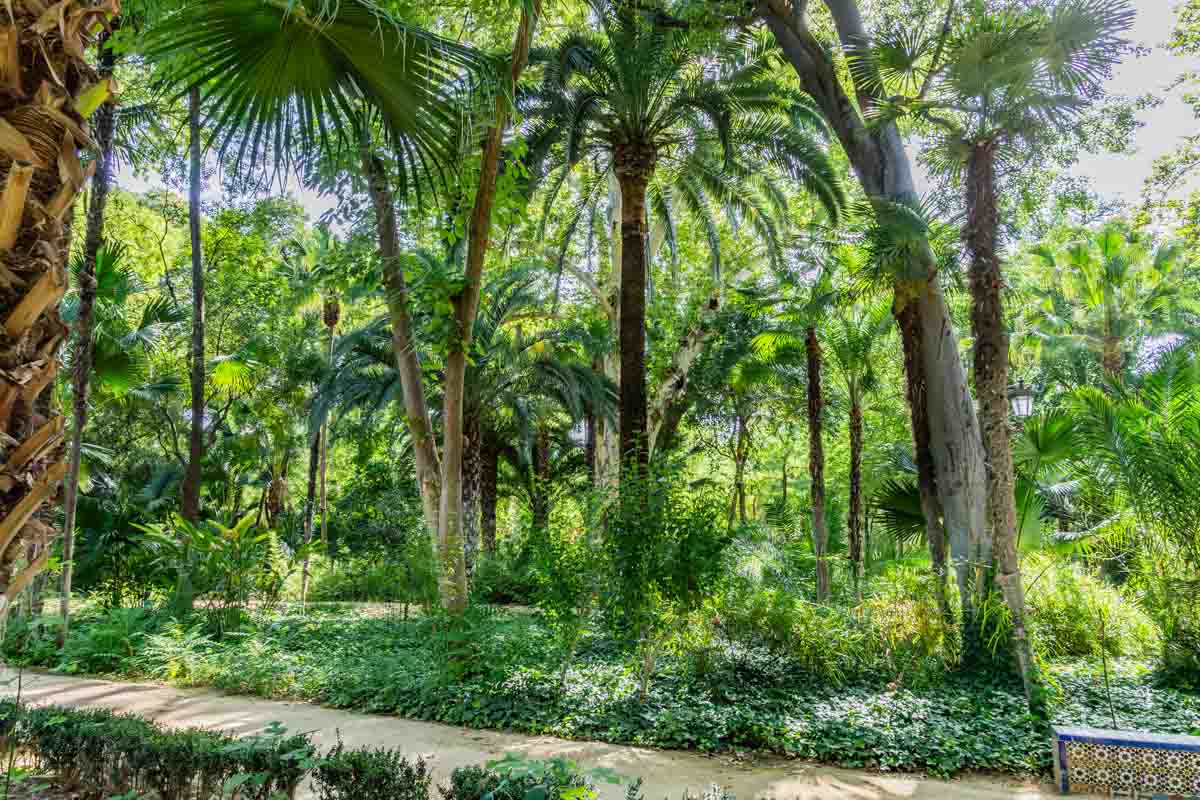
Maria Luisa Park.
Real Alcazar (Royal Alcazar of Seville)
The Alcazar of Seville is a thousand years of art and history, combining five periods: Muslim, Gothic, Mudejar, Renaissance, and Romantic.
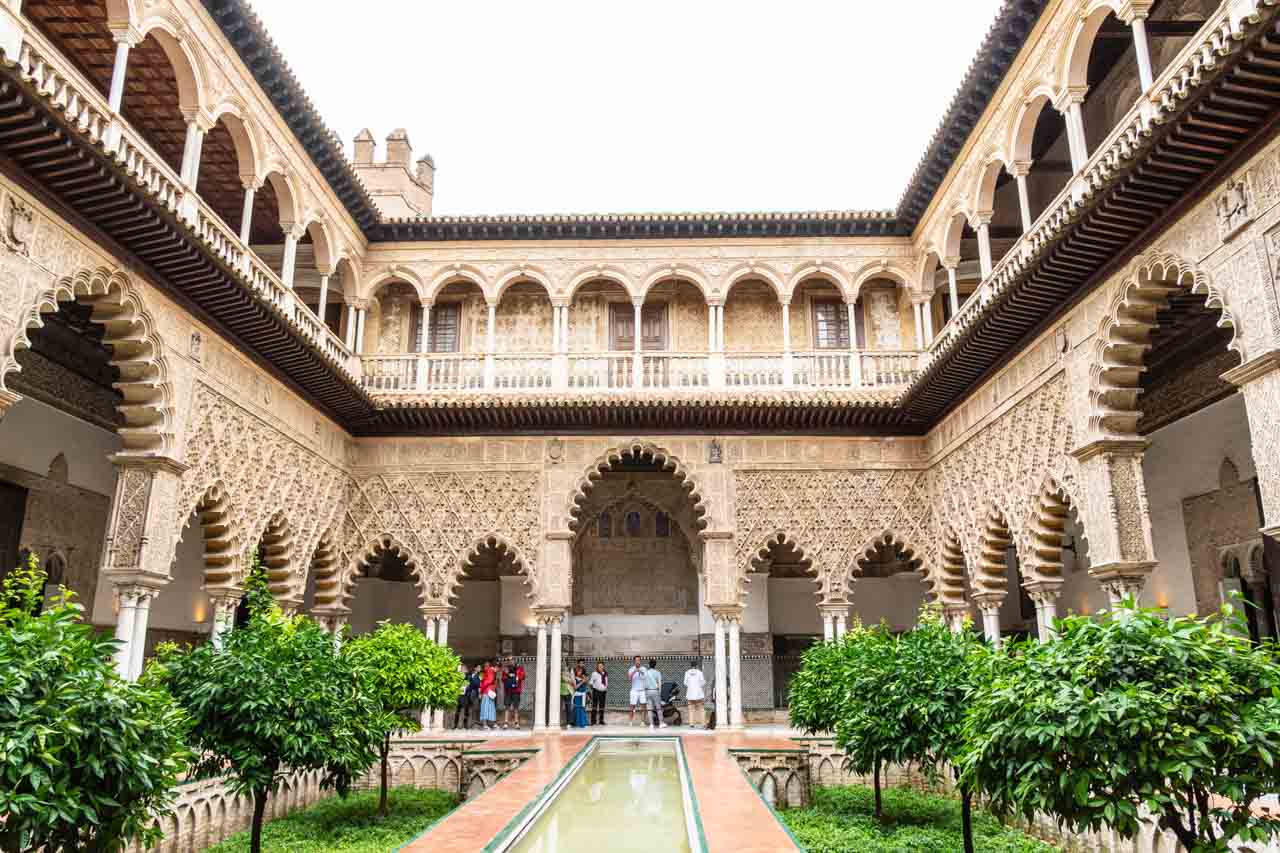
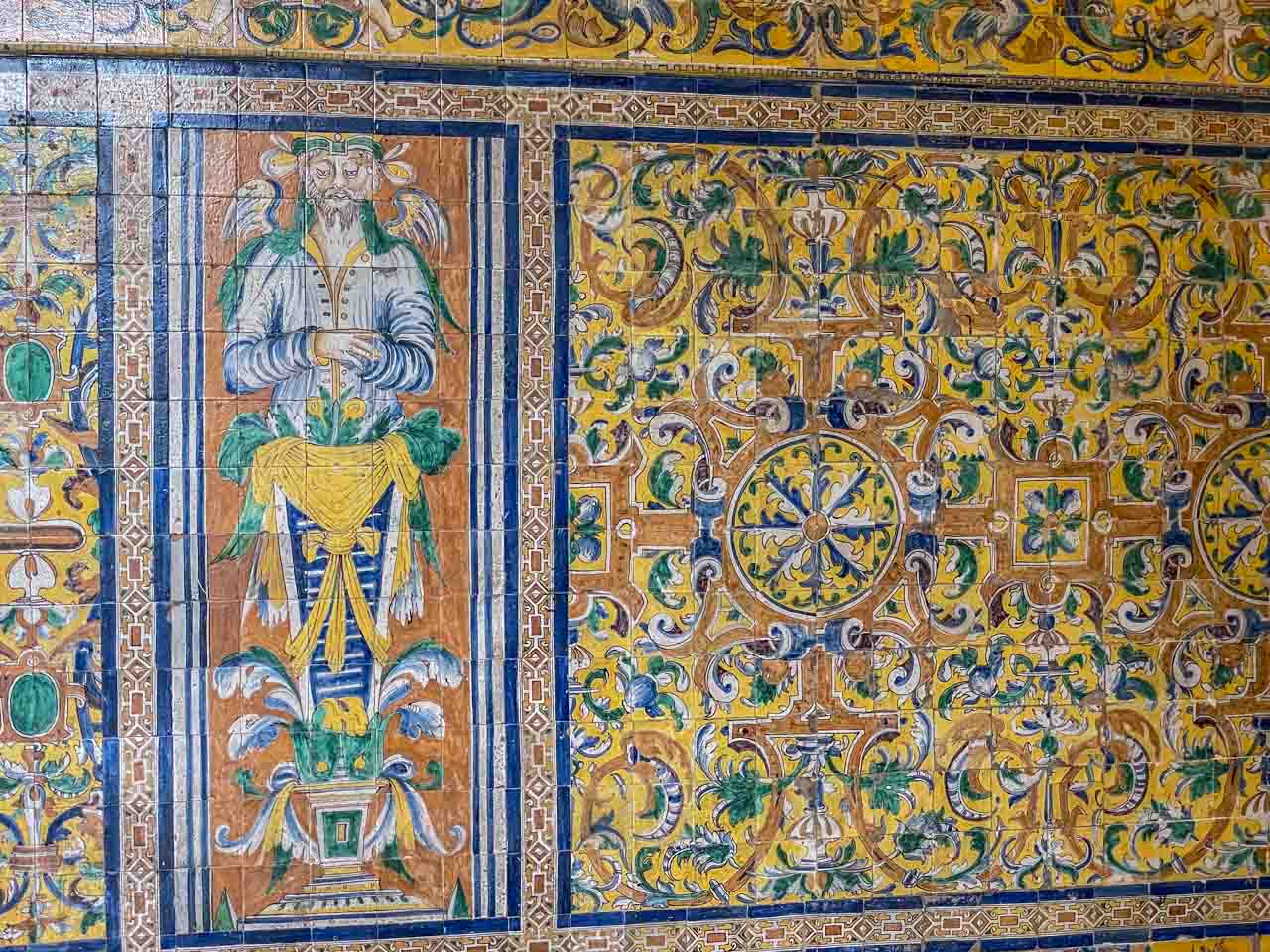
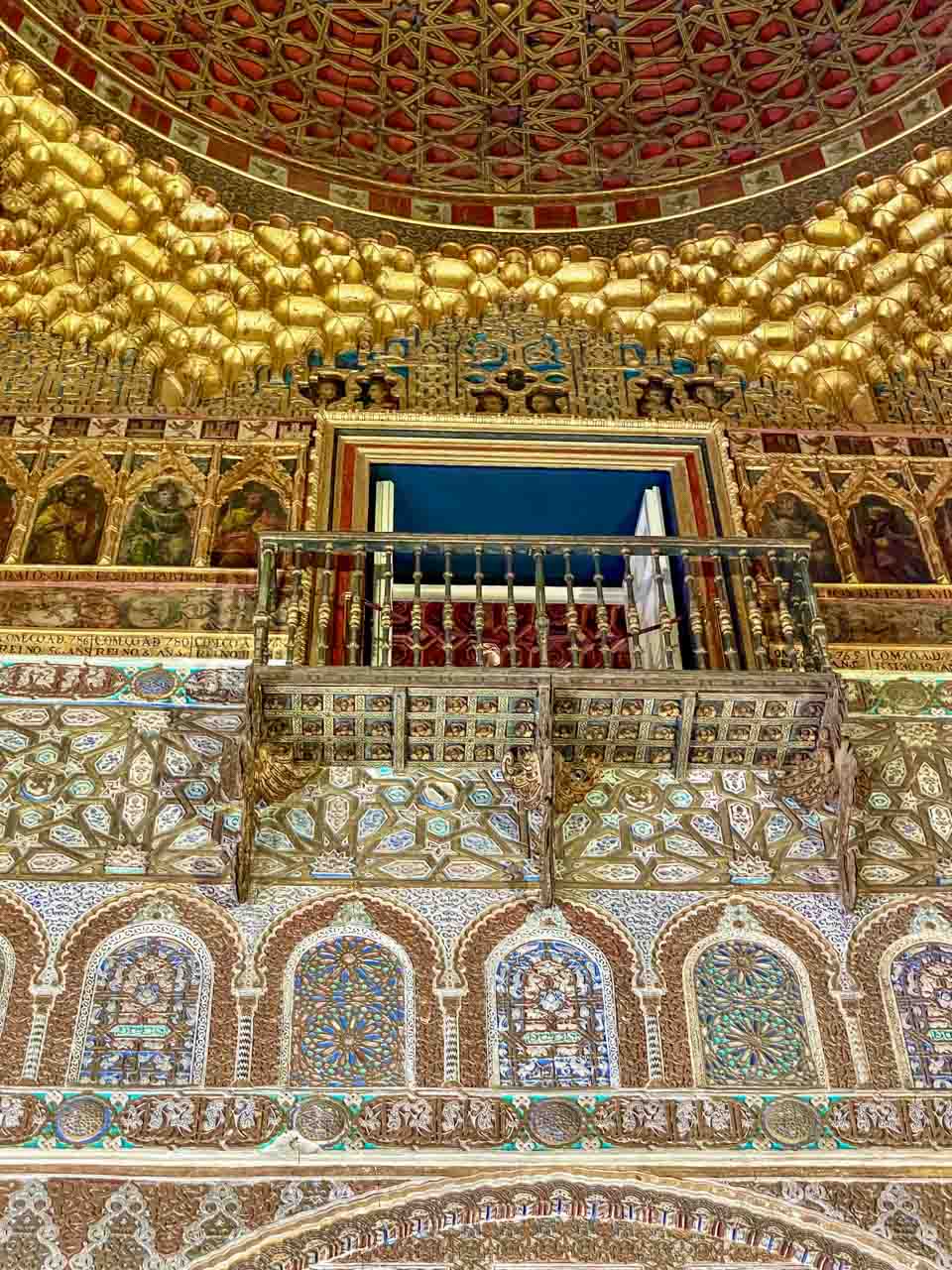
The Moors greatly influenced southern Spain, and Real Alcazar is another example of beautiful Islamic architecture. Built in the tenth century as government premises, it became a Royal Residence in 1248 when Ferdinand lll moved into it. A UNESCO World Heritage Site, Real Alcazar is the oldest Royal Palace still in use today and is used by the King of Spain and his family when in Seville.
The Alcazar’s formal gardens are worth a wander through but don’t eat at the café (unappetising fast food).
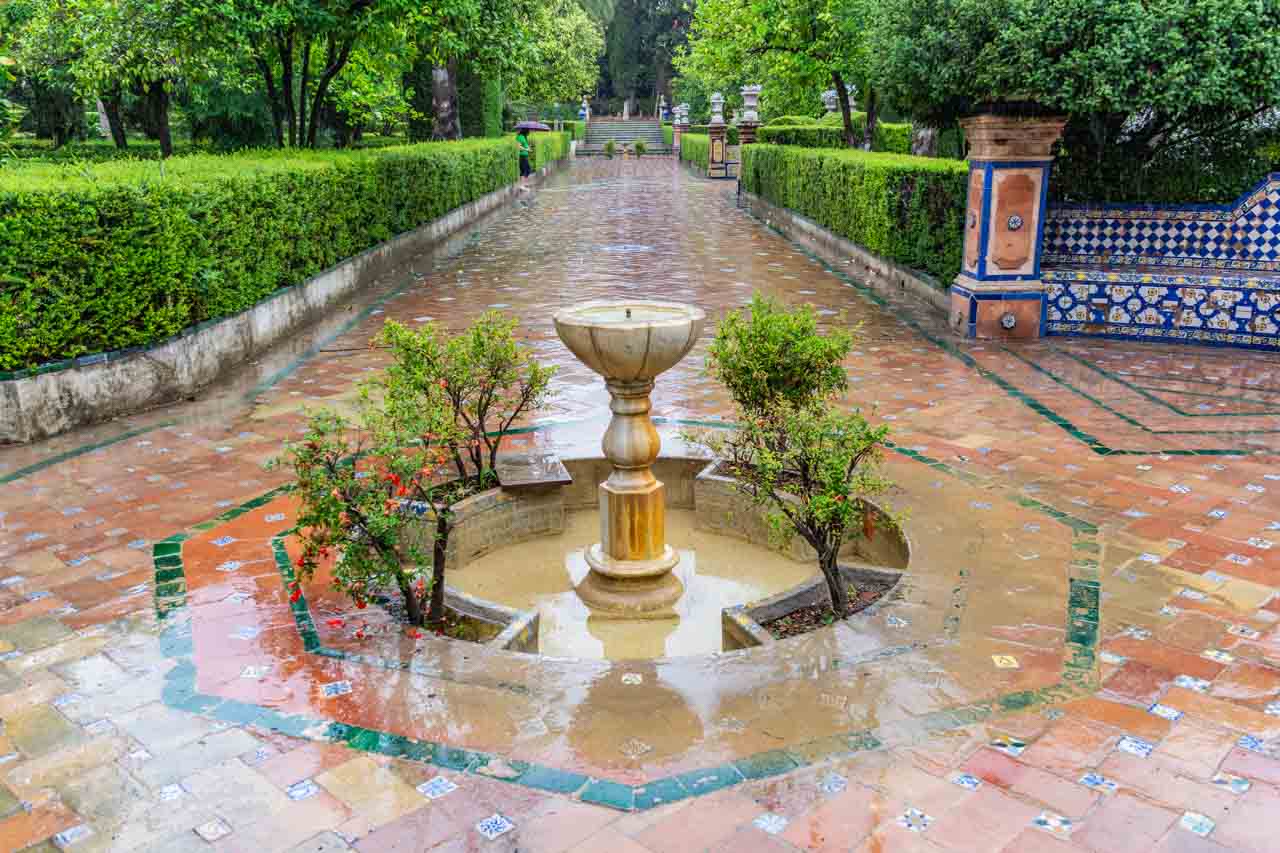
One of the many fountains in the Alcazar’s historic gardens.
Seville’s Real Alcazar featured as a location in the Game of Thrones television series.
Seville Cathedral – The Tomb of the Great Navigator
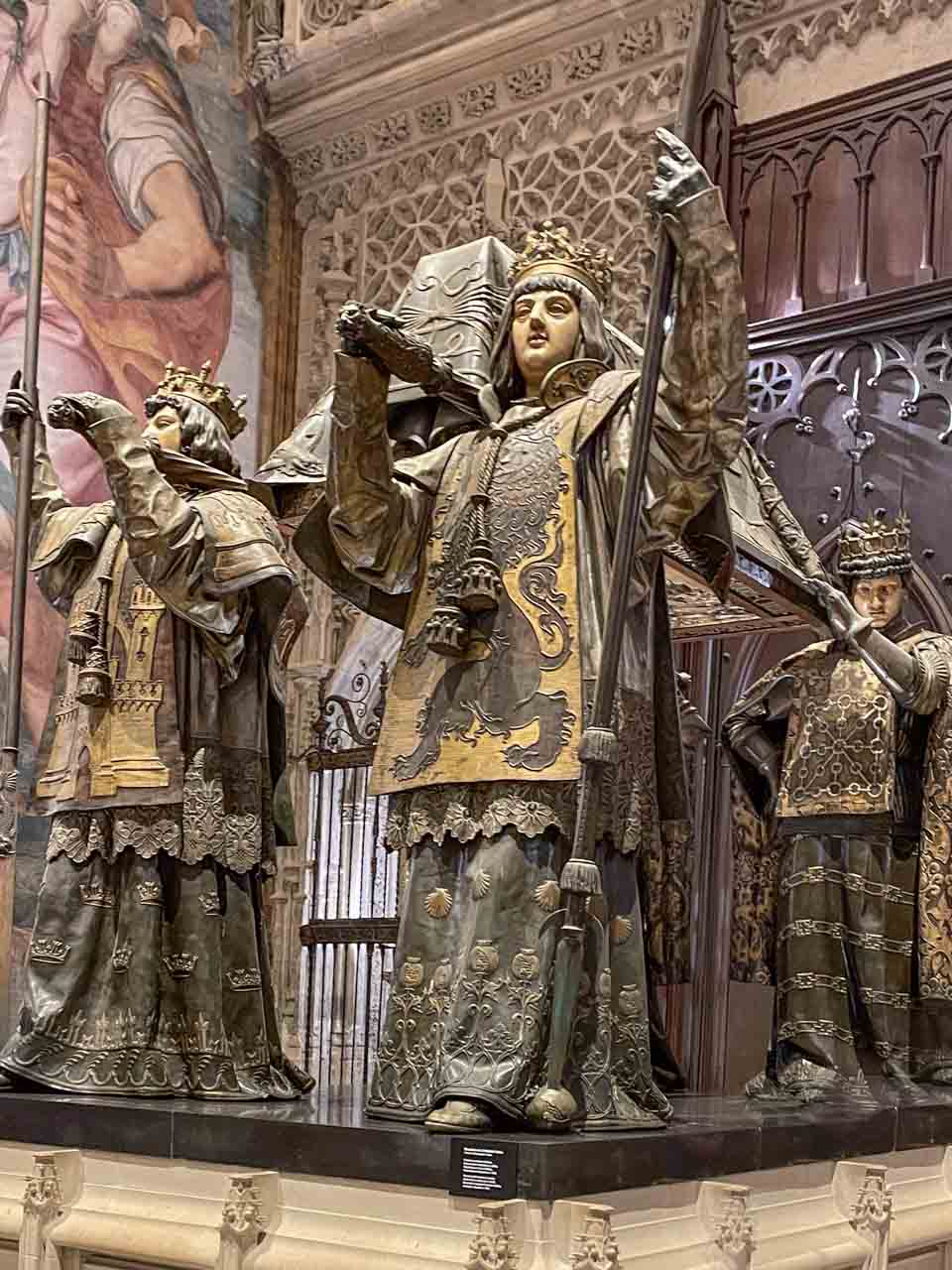
The tomb of Christopher Columbus in Seville Cathedral.
Although probably Italian by birth, Christopher Columbus (known in Spain as Cristobal Colon) completed four voyages across the Atlantic Ocean sponsored by the Spanish monarchy.
His tomb in the Cathedral of Seville is held aloft by four figures representing the four kingdoms of Spain during Columbus’s life: Castile, Aragon, Navarre, and Leon.
Columbus’ body has been moved several times, and the remains in Seville Cathedral are in doubt. DNA testing in 2006 confirmed the body in Seville was either Christopher Columbus or his brother.
Seville Cathedral was designated a UNESCO World Heritage Site in 1987.
Triana
Triana is a charming working-class neighbourhood in Seville on the west bank of the Guadalquivir River. Puente de Isabel ll (often called Triana Bridge) is the gateway to Triana from the city. Don’t expect spectacular sights but an authentic quarter with surprisingly few tourists.
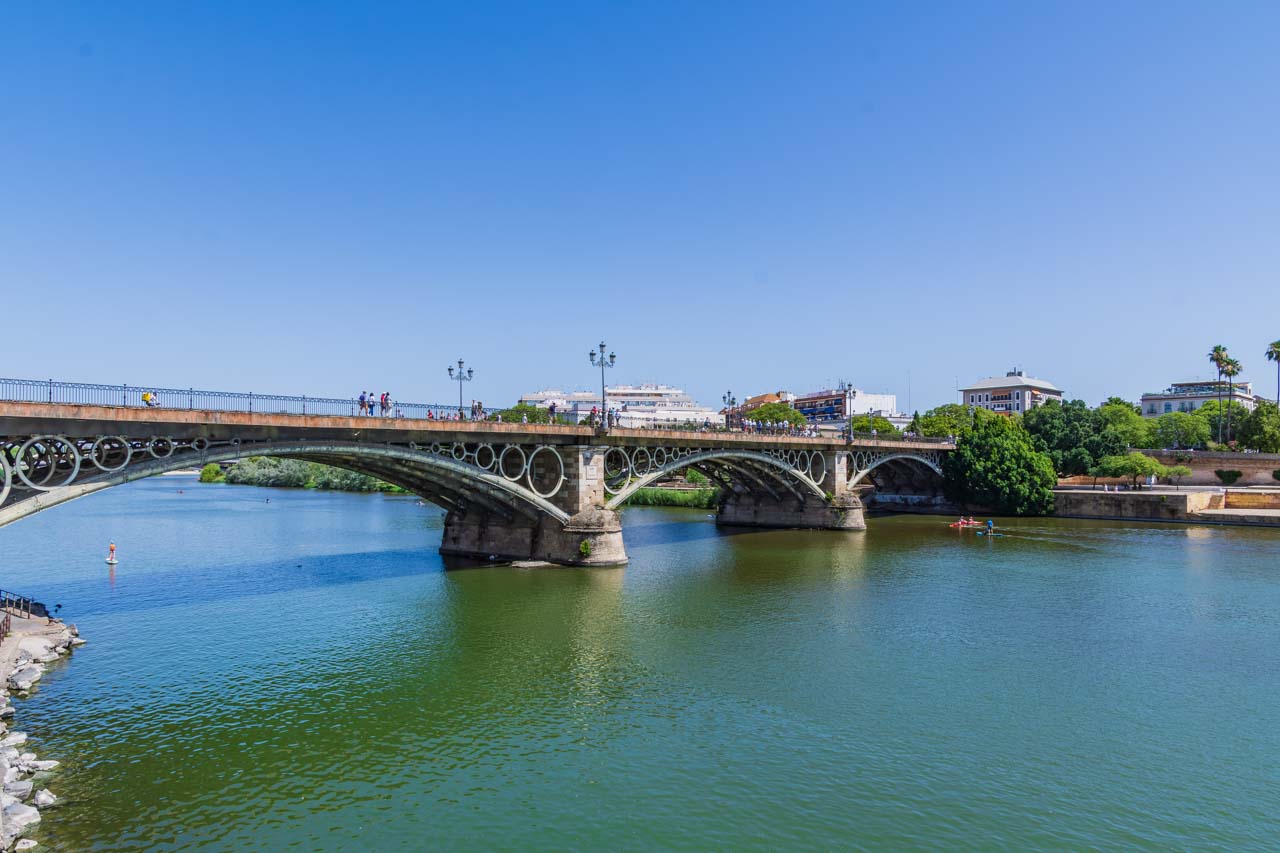
Isabel ll Bridge viewed from Triana.
Traina is especially famous for:
- The Azulejo tiles you see throughout Spain.
- Being the birthplace of flamenco.
Azulejos are terracotta tiles covered with opaque glazing. They have been used in Spain since around the 13th century. You will see them everywhere, decorating walls (internal and external), fountains, pavements, and much more. Triana has some lovely shops where you can buy good quality Azulejo products to take home.
See an authentic flamenco show at Almoraima (Calle Pages del Corro, 70) – an intimate venue where the passion of the dance is tangible and visible.
Mercado de Triana (on your right as you leave the bridge) is a lively indoor market with fresh fruits, vegetables, meat (especially Iberian ham), herbs, and fish. You can grab lunch while in the Mercado.
Calle de San Jacinto is Trian’s pedestrian-only street. With its plethora of cafes, bars, and restaurants, you are spoilt for choices of somewhere to eat and people-watch.
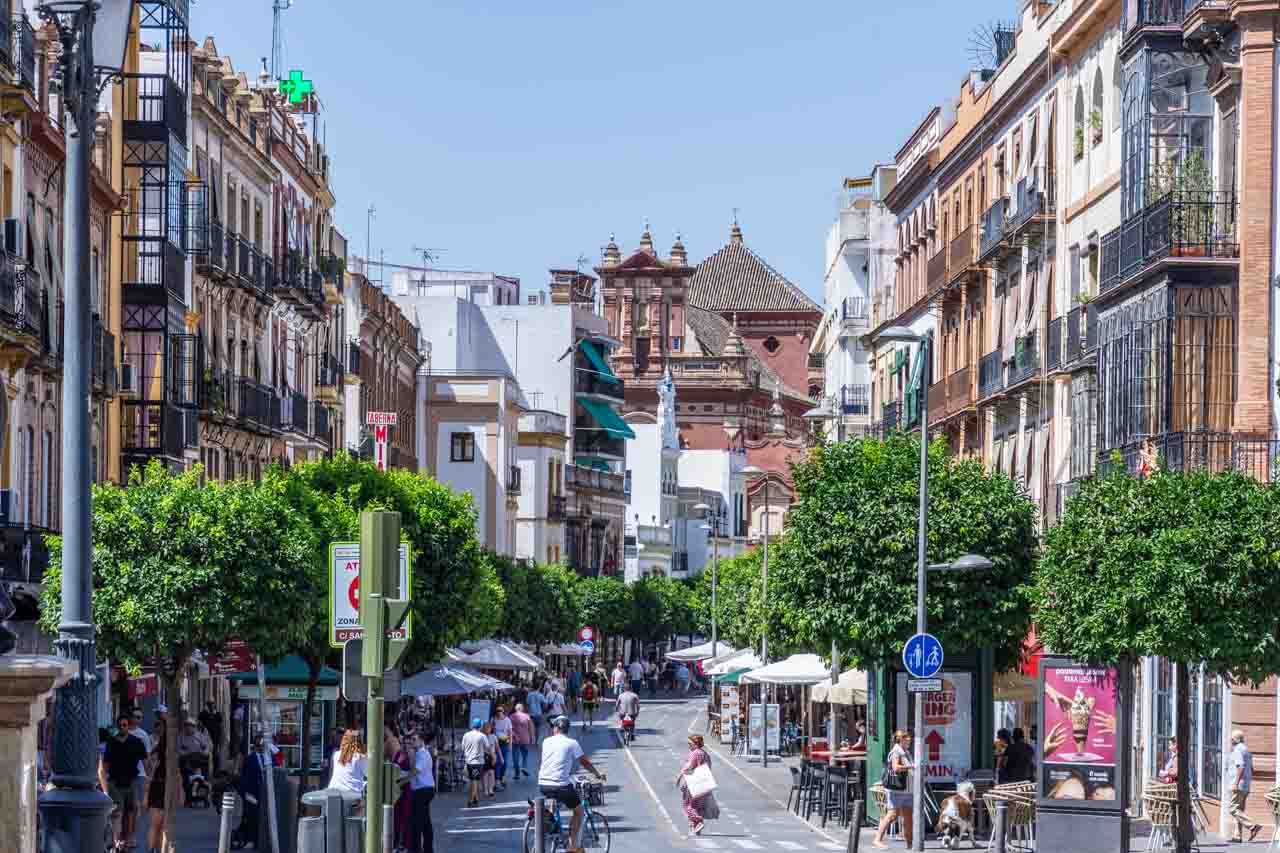
Head to Calle de San Jacinto for lunch or dinner.
TOLEDO
While travelling with Insight Vacations through Spain, I opted for a day trip to Toledo, about 70 kilometres south of Madrid, the former capital of Spain.
The Mirador del Valle Lookout
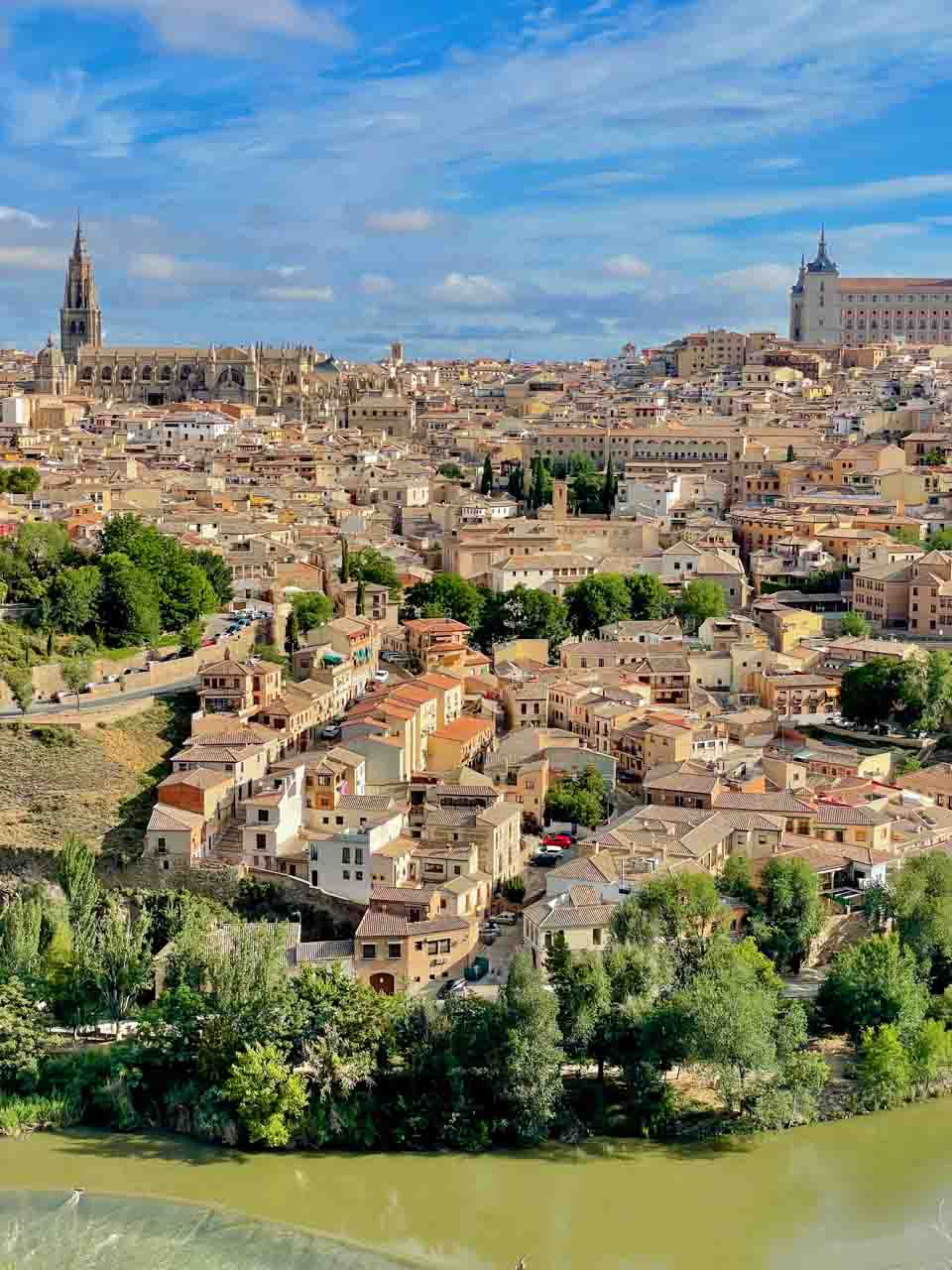
Toledo panorama.
The panoramic view of Toledo from the Mirador del Valle Lookout was breathtaking and a great introduction to this ancient city that owes its rich heritage to the Jews, Muslims, and Christians who lived there in harmony. A city of three cultures, Toledo is a melting pot of Judaism, Christianity, and Islam with impressive monuments. The two large buildings on the city horizon in the photo above are the Cathedral of Toledo on the left and the Alcazar Fortress on the right.
Toledo’s historic centre was designated a UNESCO World Heritage Site in 1986 as an outstanding museum city.
Toledo Cathedral
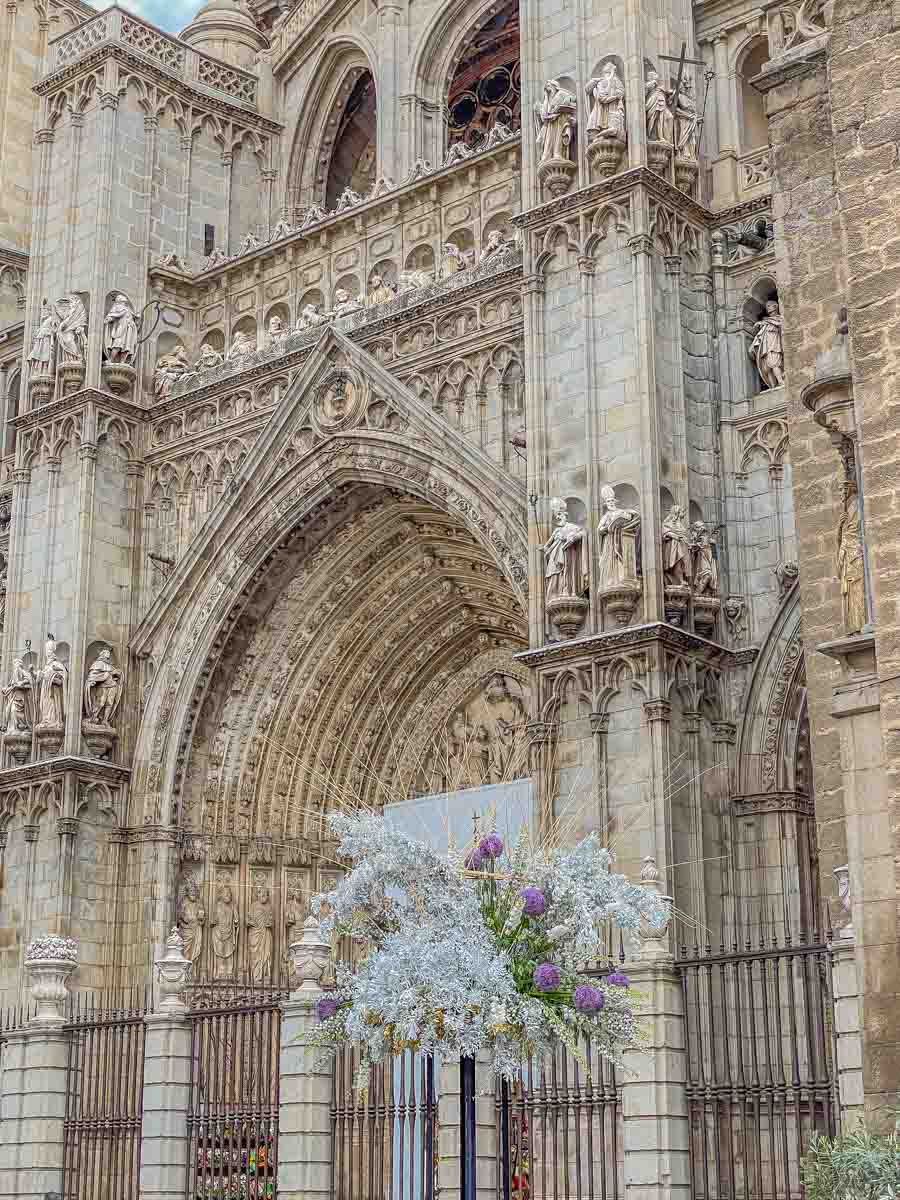
Toledo Cathedral’s main facade from the Plaza del Ayuntamiento.
The magnificent Toledo Cathedral was built on the site of a former mosque and took more than 250 years to complete. It is one of Spain’s most famous and important cathedrals, with several monarchs buried in it. The cathedral is dedicated to Saint Mary and features Mudejar architecture (pointed horseshoe arches and ribbed vaults). It is considered one of Spain’s best examples of High Gothic architecture.
The famous “Transparente”, the cathedral’s altarpiece, is seen by many as Spain’s most important Baroque masterpiece. Created in 1732 by the sculptor Narciso Tome and his four sons, the altarpiece is several stories high, with fantastic figures done in marble, bronze castings, stucco, and painting.
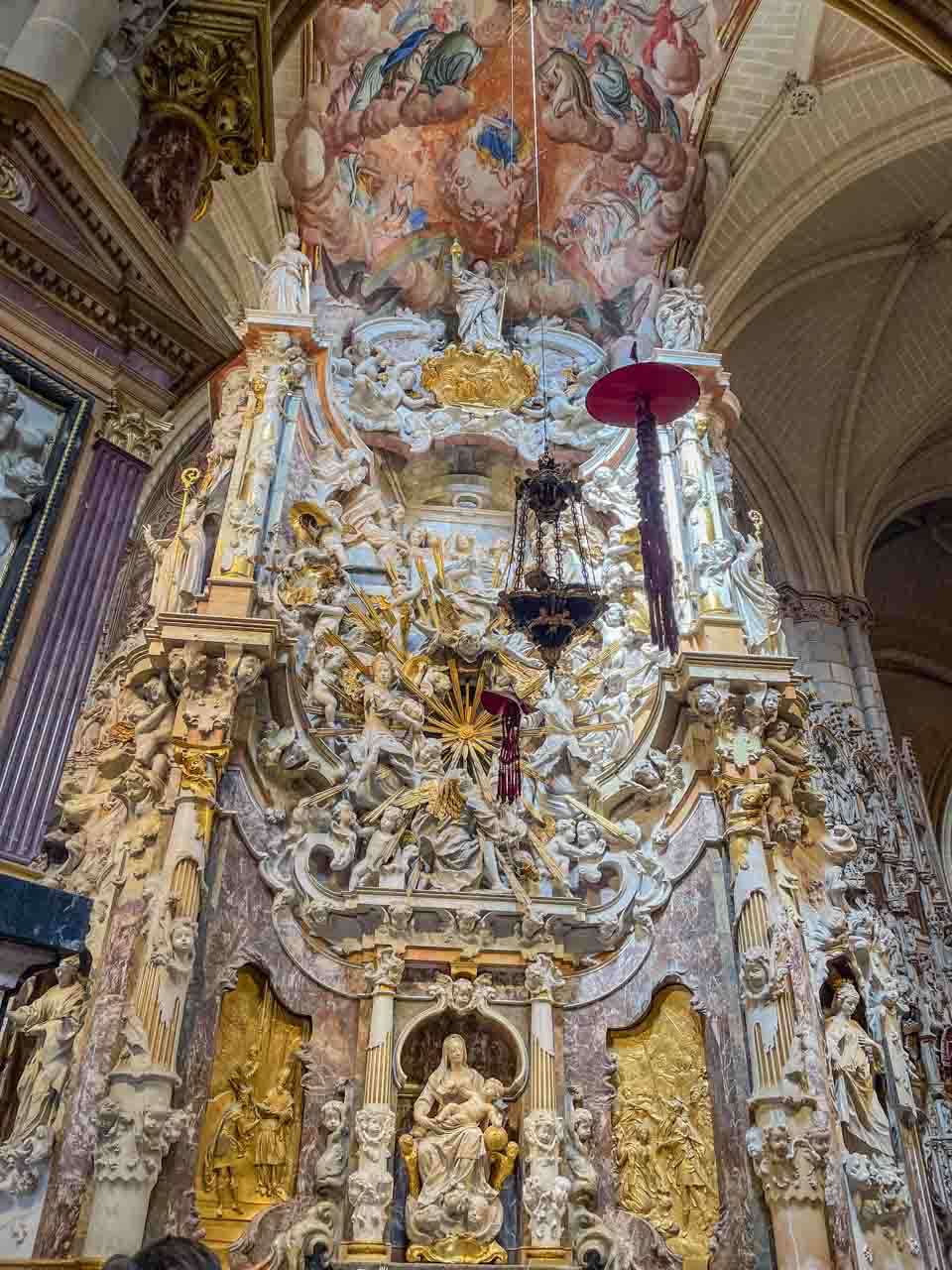
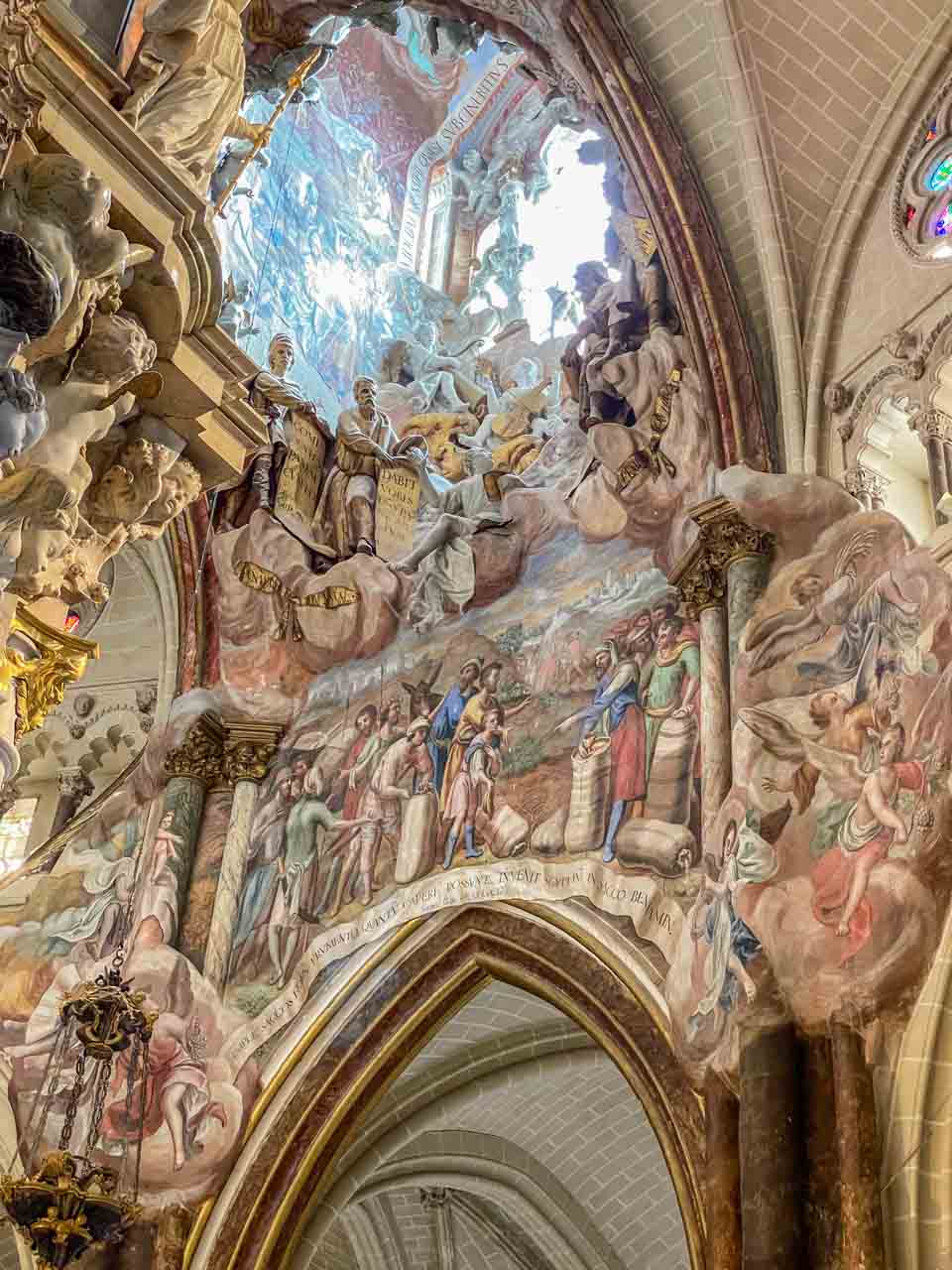
Toledo Cathedral is a veritable art gallery with paintings by notable artists: El Greco, Caravaggio, Van Dick, Goya, and Bellini, to name a few. The Sacristy is a small art gallery with a beautiful ceiling fresco painted by Luca Giordana and El Greco’s “The Disrobing of Christ” (“El Expolio”, 1579), taking centre stage on the high altar. Don’t miss the portraits of the 12 apostles painted by El Greco in the cathedral’s Sacristy.
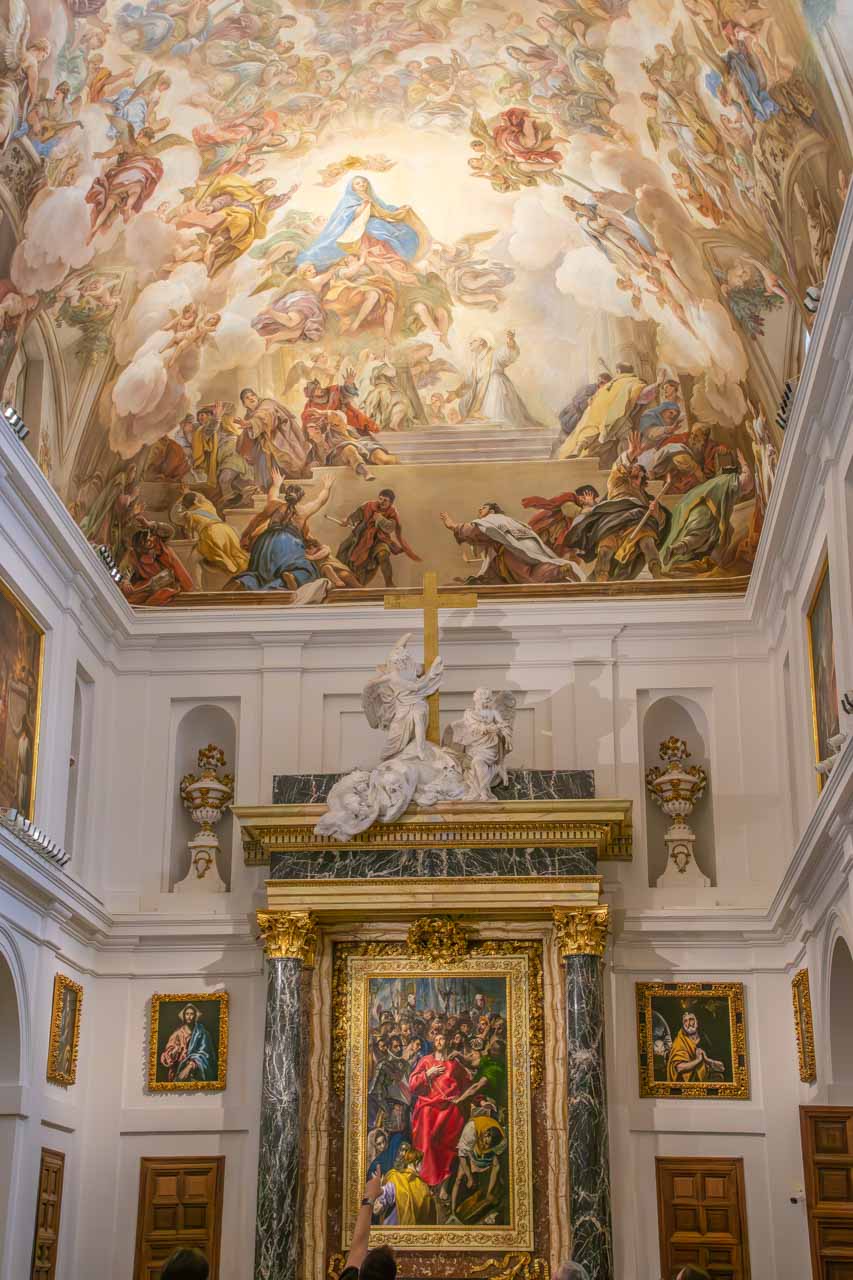
The beautiful ceiling fresco and El Greco’s painting “The Disrobing of Christ”.
The Cathedral of Toledo is home to more than 100 relics, including fragments of the crown of thorns and the breast milk of the Virgin Mary. None are on public view!
My visit to Toledo was memorable, but the city deserved longer than a day trip.
VALENCIA
Valencia is a hidden gem often overlooked by tourists. It is a city that embraces its past while acknowledging the future. It is also the home of paella (a rice dish originally from Valencia). Contrary to common belief, traditional paella is not made with seafood but is made with chicken or rabbit.
My tour with Insight Vacations included a paella cooking demonstration and tasting at la Cigrona in Valencia’s Old Town.
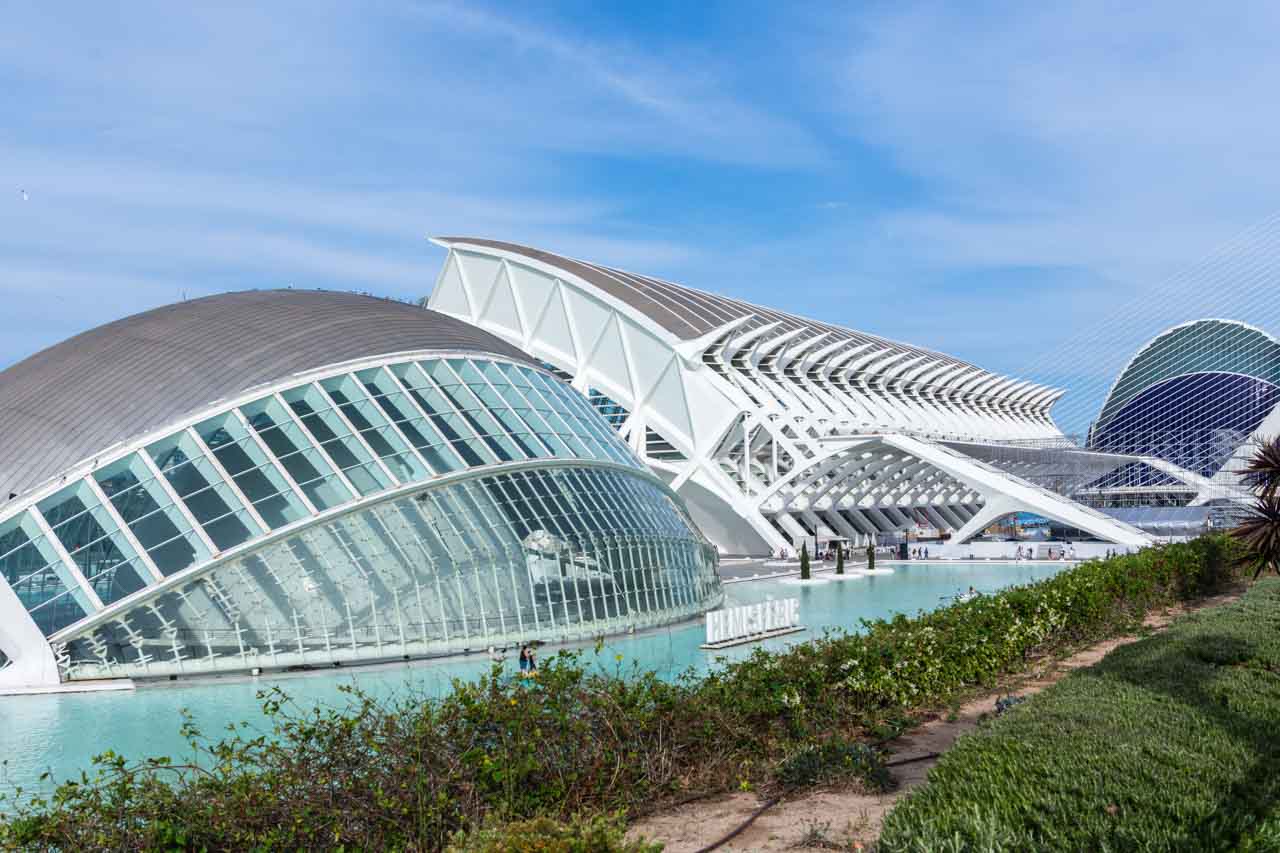
Futuristic Valencia
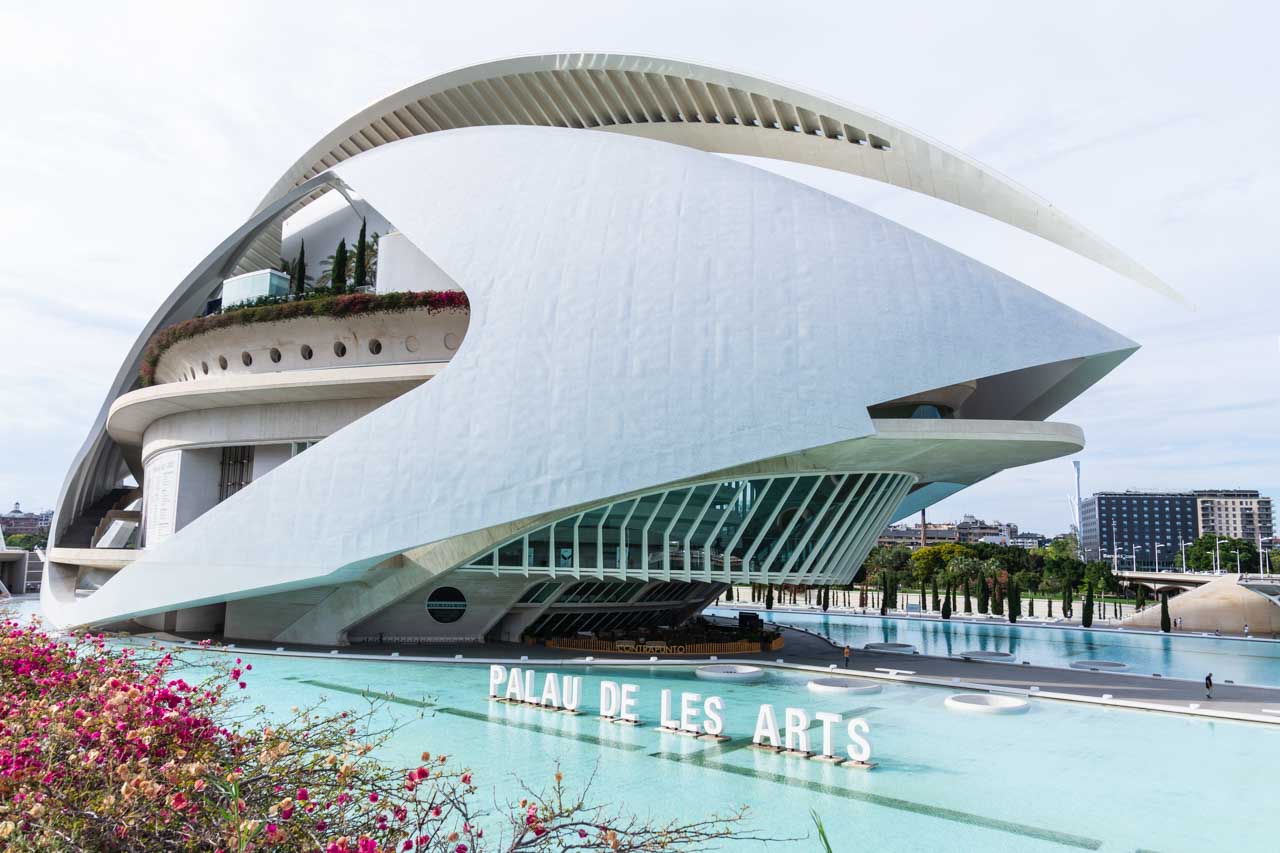
The City of Arts and Sciences (La Ciudad de y las Artes las Ciencias) is a leisure and cultural complex with its architecture taking Valencia into the 21st century. The complex includes the Science Museum, an IMAX Cinema and Planetarium, Europe’s largest aquarium, and the Palace of Arts.
Valencia’s Old Town
Founded in 130 BC, Valencia has been home to Romans, Visigoths, and Muslims, giving it a rich history. Its Old Town is one of the largest in Europe and the heart of the city.
Walking around the Old Town is like travelling back to the Middle Ages. La Plaza del Ayuntamiento is the main square and the hub of activity. It is enclosed by beautiful historic buildings featuring Gothic architecture.
I particularly enjoyed escaping the crowds and walking around the Old Town’s residential streets.
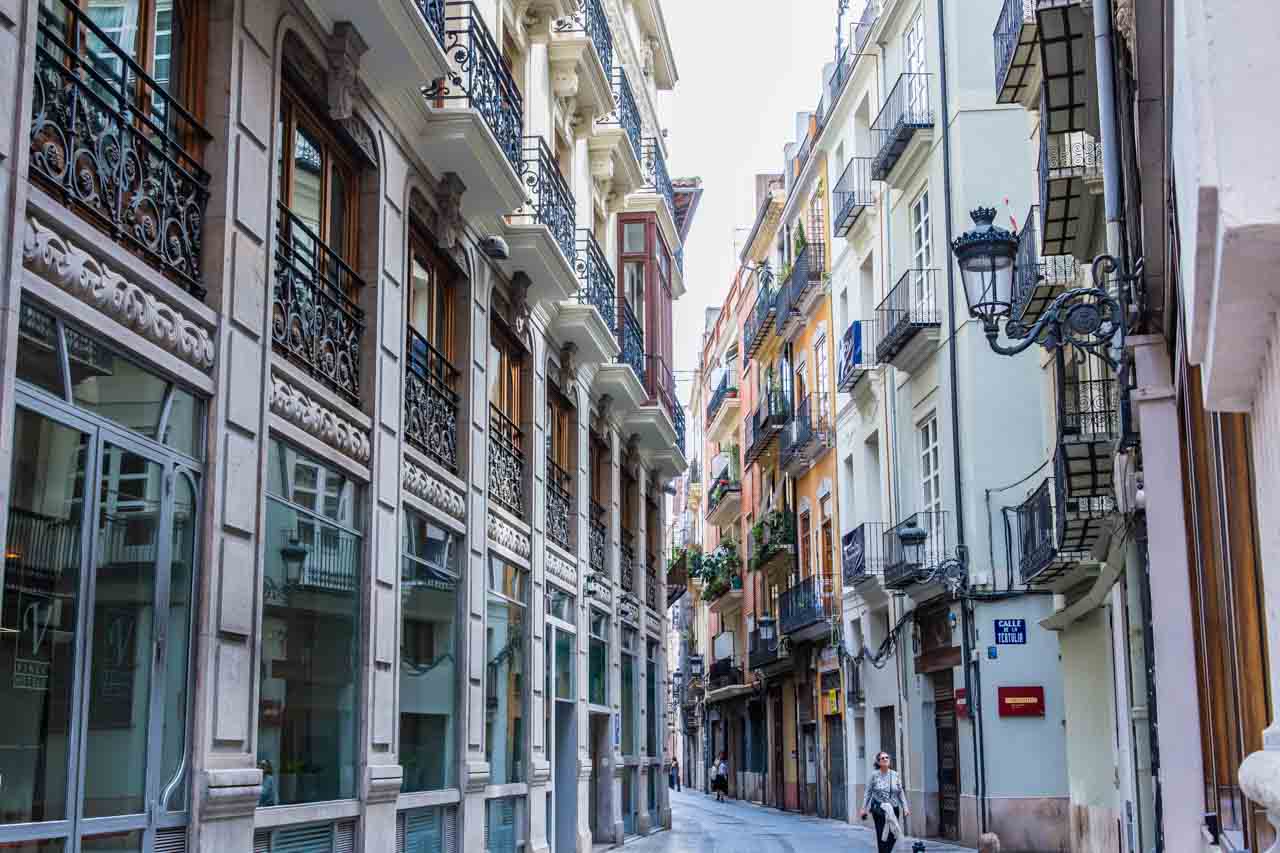
A residential street in Valencia’s Old Town.
A half day exploring Valencia’s Old Town with Insight Vacations was not long enough. I want to explore more! Valencia, I will be back!
VALL DE NURIA – A Beautiful Valley in the Pyrenees Mountains
Taking the rack railway from Queralbs, travel the six kilometres to the resort in Vall de Nuria (Nuria Valley). The journey took 20 minutes, climbing from an altitude of 1,236 metres at Queralbs to 1,964 metres at Vall de Nuria.
Vall de Nuria is a valley in the eastern Pyrenees offering spectacular mountain landscapes, winter skiing, and summer hiking trails.
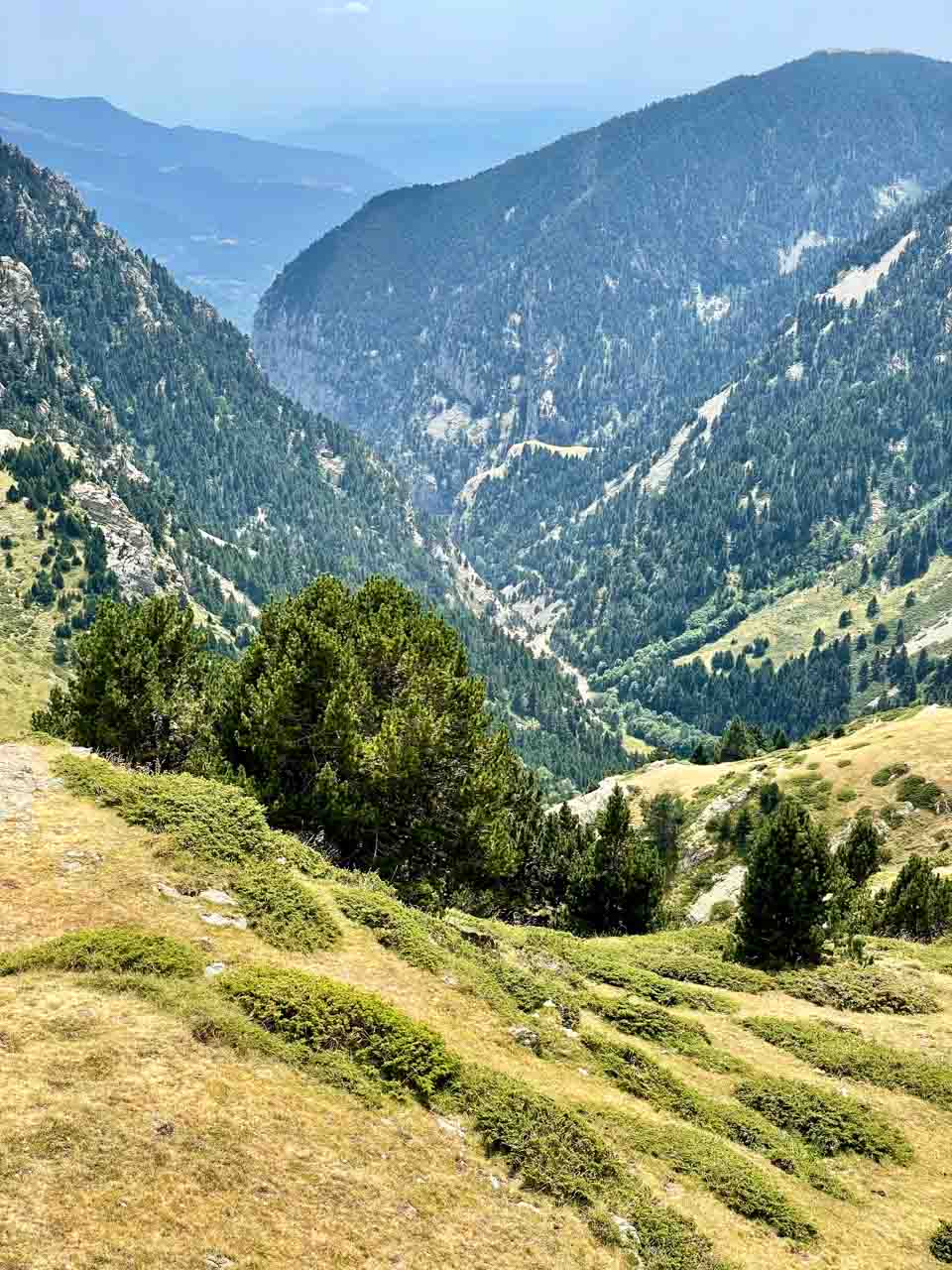
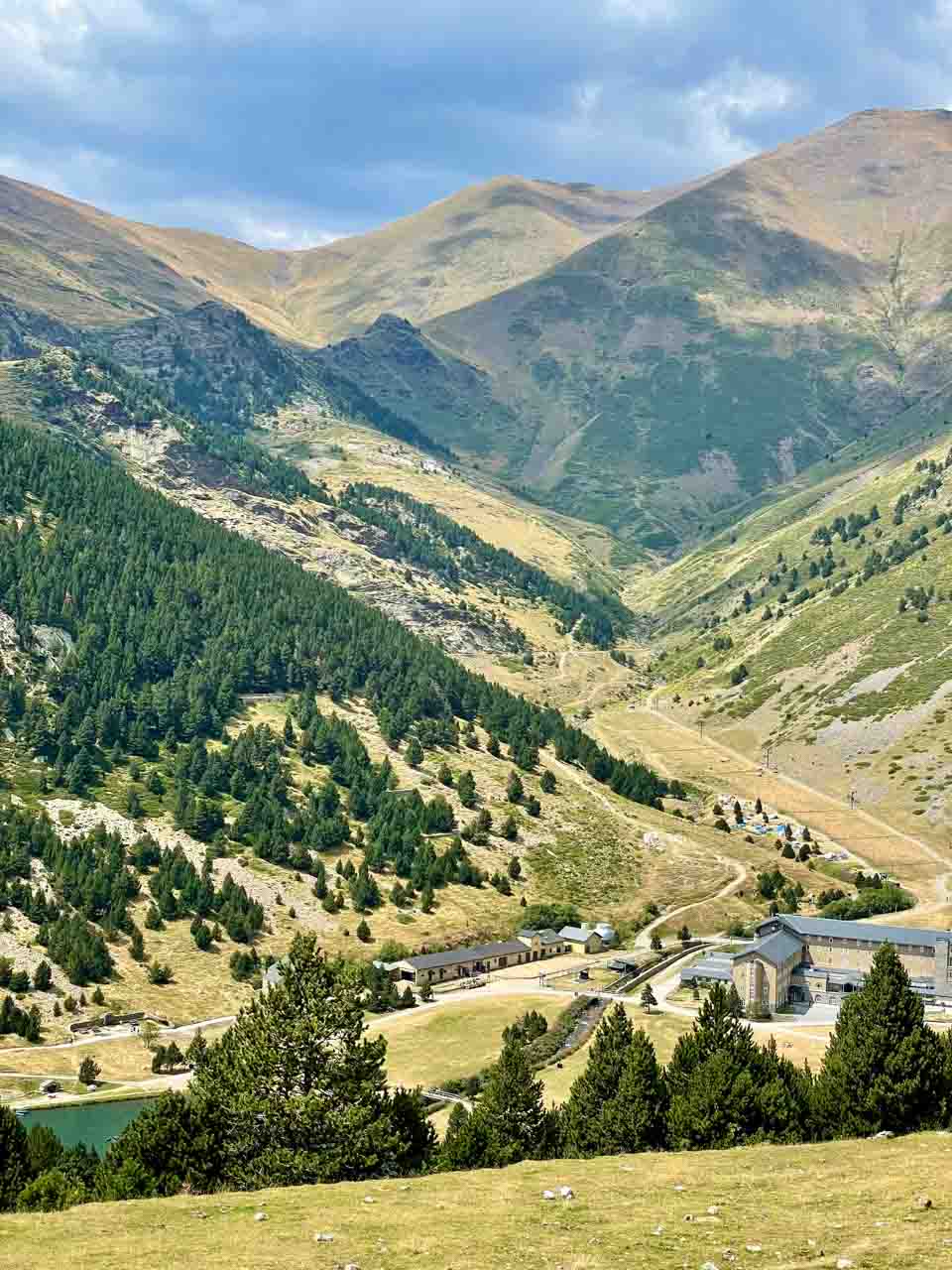
With two hours to explore the valley before catching the train back down the mountain, I decided to hike one of the many trails in the hills around the valley. These trails range from easy to challenging.
Given my limited time, I chose an easy trail, the Way of the Crosses. I was told it would take 50 minutes to walk, but I knew it would take longer as I would constantly stop to take photos. The trail gets its name from the Christian Way of the Cross tradition, with twelve crosses along the way. I made the hike easier on myself by walking down the mountain rather than up. I did this by taking the cable car to the summit, bringing me to an altitude of 2,170 metres. Consequently, I passed the crosses in reverse – from twelve to one.
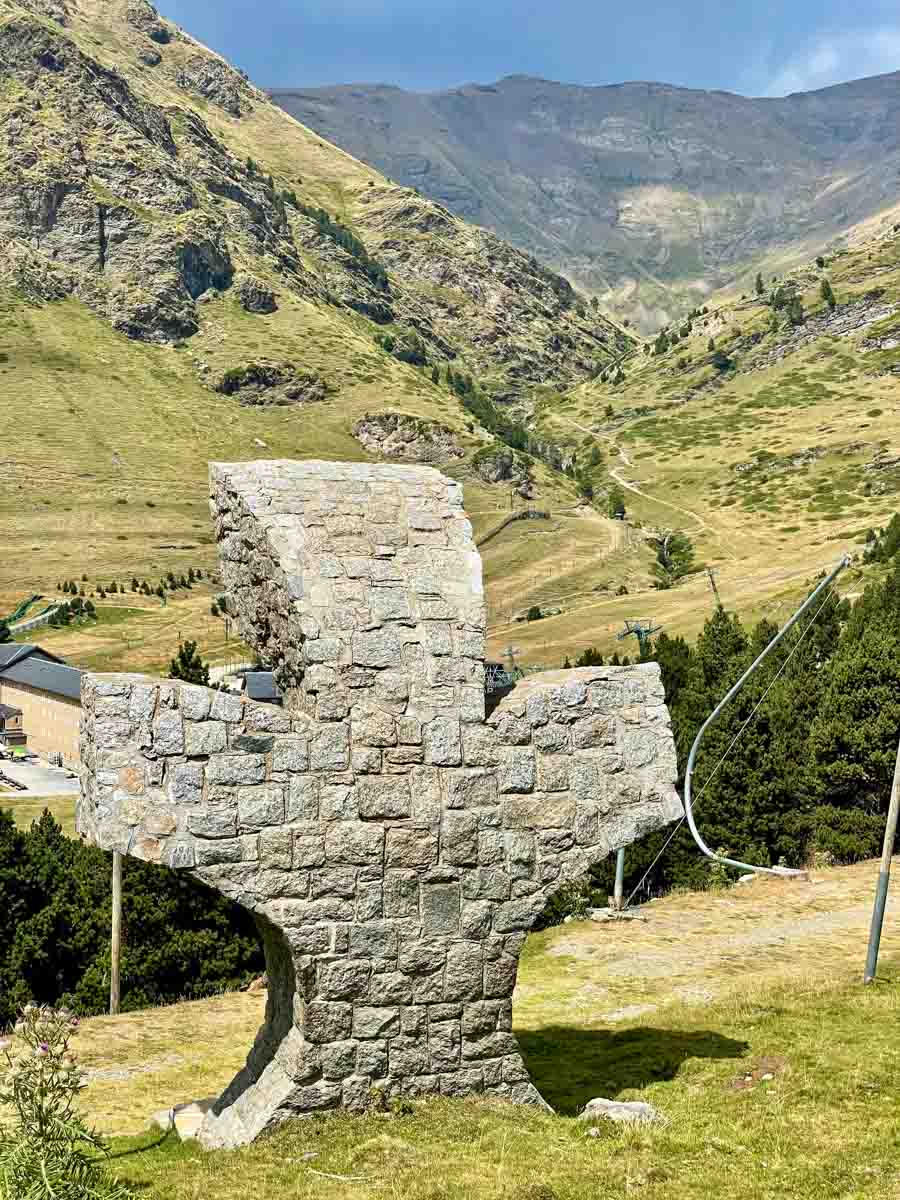
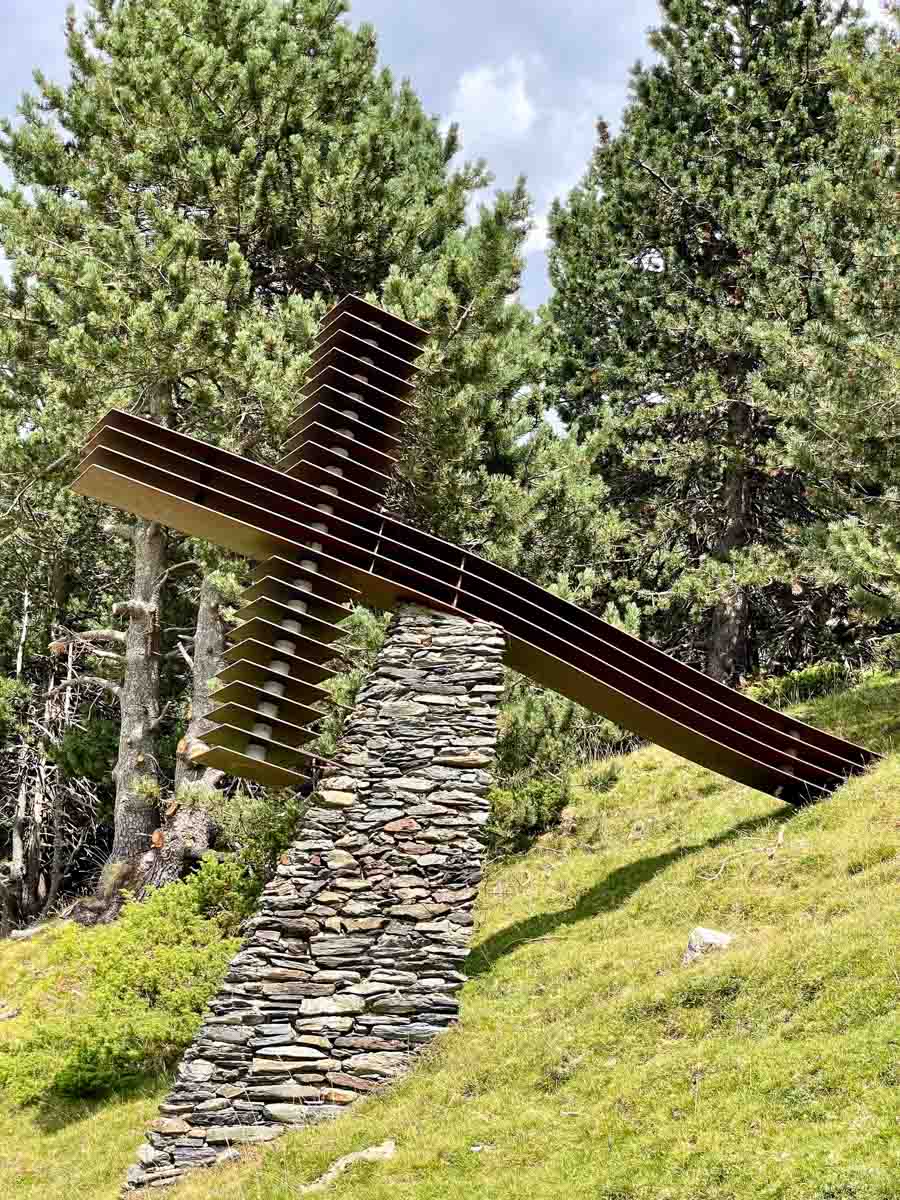
I journeyed to Vall De Nuria on a day trip with Explore Catalunya.
VIC – The Old Town
The city of Vic (pronounced Bic) is about 69 kilometres north of Barcelona on the Meder River. It is an ancient city, dating back to the Ausetan Iberians before Roman occupation in the 1st century AD, with an interesting and picturesque Old Town.
On a guided walking tour around the Old Town, we passed through several small pretty squares with cafes preparing for the day.
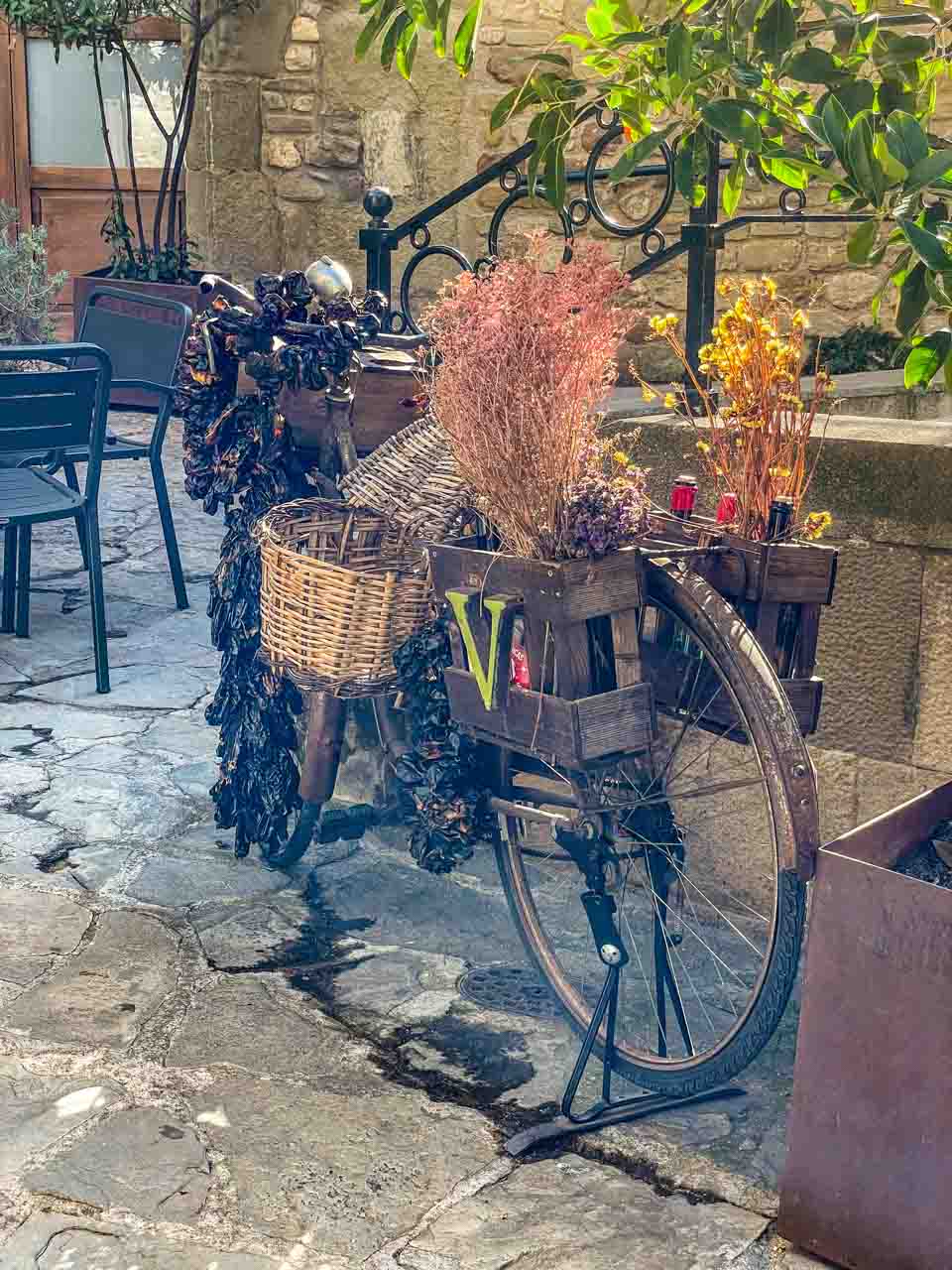
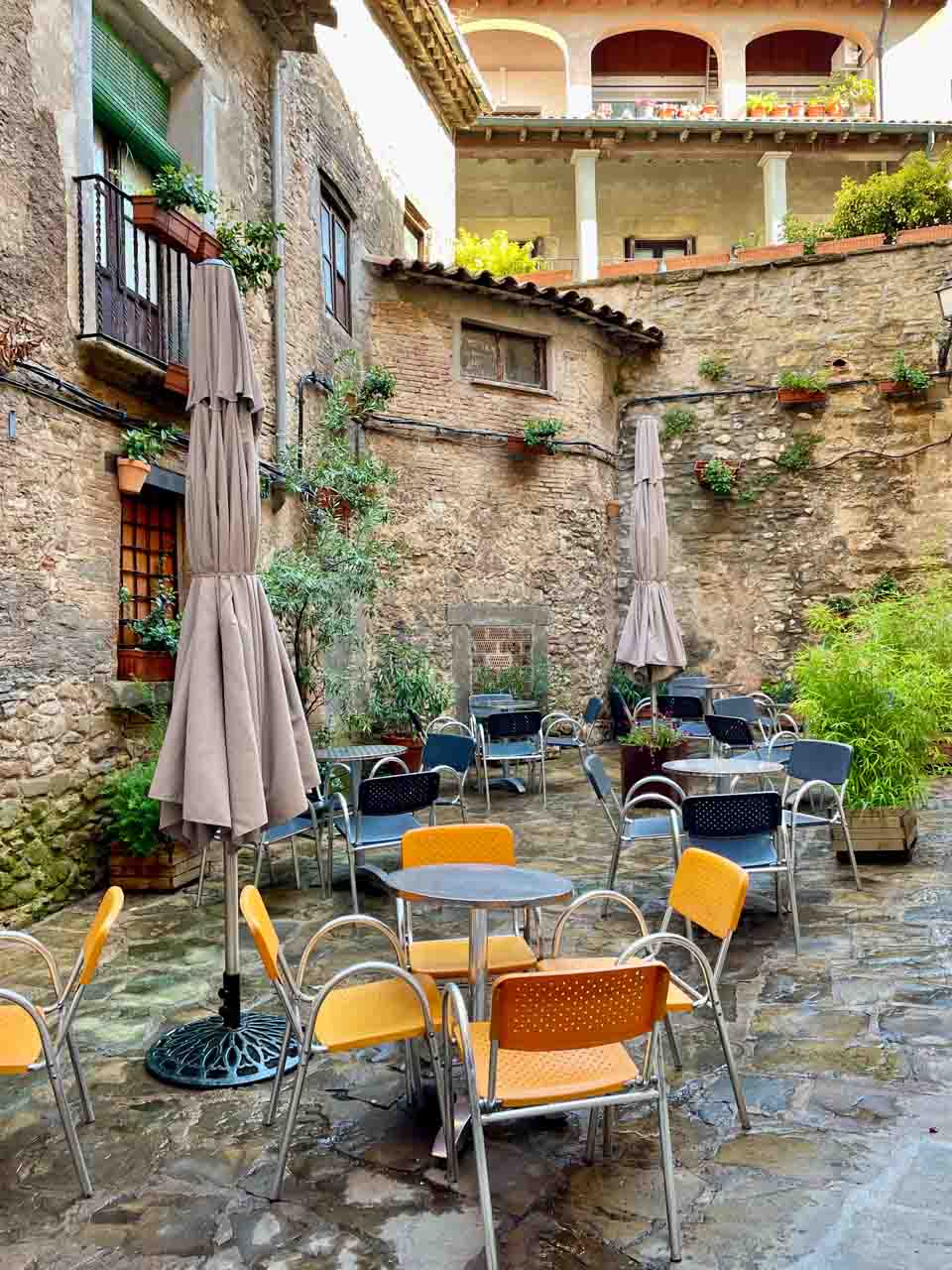
I found the interior of Vic’s Sant Pere Cathedral to be unlike anything I had seen previously. Huge, almost monochromatic canvases painted by Joseph Maria Sert cover the walls, making the interior dark and gloomy – an unexpected contrast to the cathedral’s exterior. It wasn’t a place I wanted to linger! However, your reaction may be very different.
Time your visit for market day, which takes place on Tuesdays and Saturdays, with stalls filling the main square.
WHITE VILLAGES OF ANDALUSIA
The name White Village comes from the uniform white colour of the village houses and buildings, covered in lime to keep them cool in the hottest months as the white reflects the sun’s rays.
I visited two White Villages in the province of Cadiz – Grazalema and Zahara de la Sierra.
Grazalema
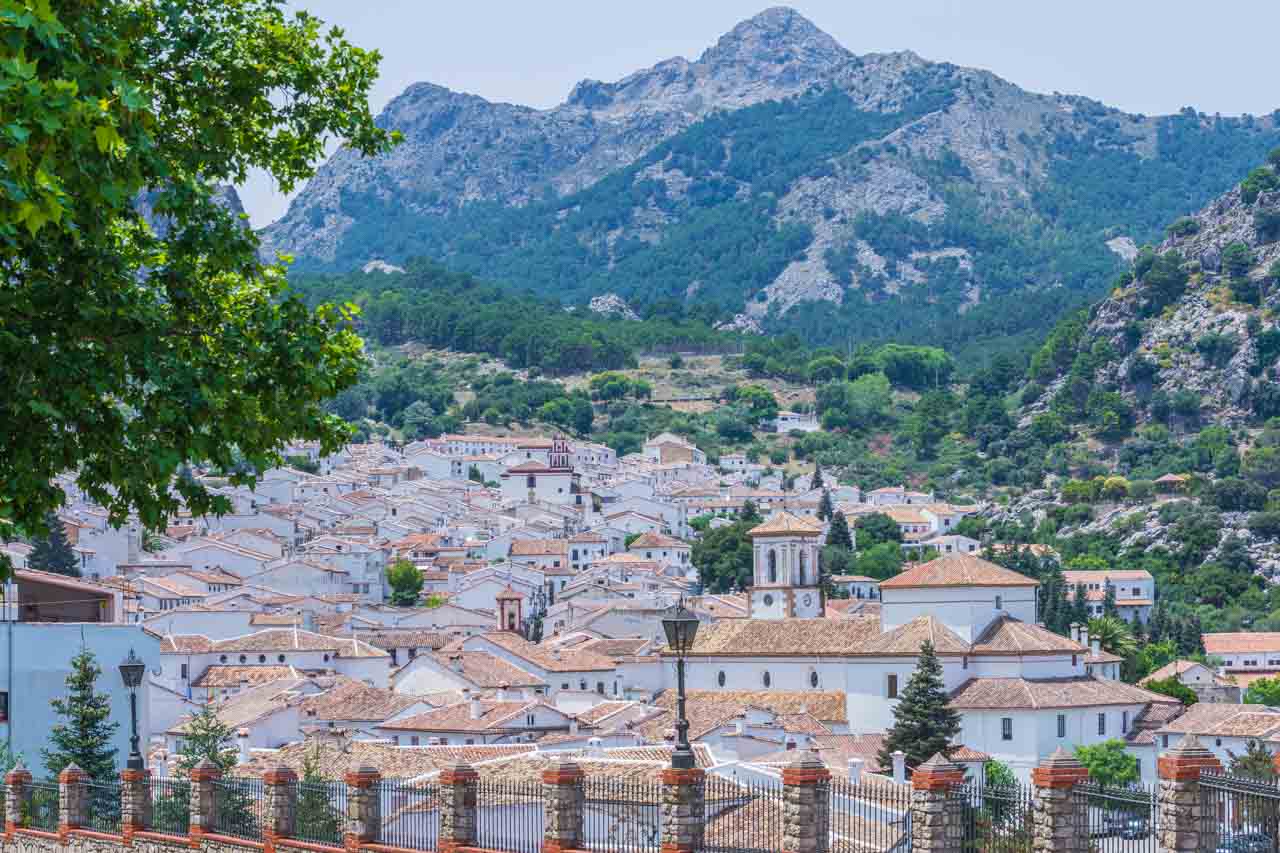
Grazalema, White Village of Andalusia.
Grazalema, located in Sierra de Grazalema National Park, receives the highest rainfall of the entire Iberian Peninsula. However, on the day of my visit, the skies were clear blue. I had a delicious salad for lunch in Grazalema at Restaurant Cadiz el Chico – Ensalada Caprichosa (lettuce, cheese, nuts, mustard and quince jelly, yoghurt, and red berry coulis) (€12 / AU$19.74).
Grazalema is an attractive village with the tiny porches of its whitewashed houses spilling over with potted flowers.
Zahara de la Sierra
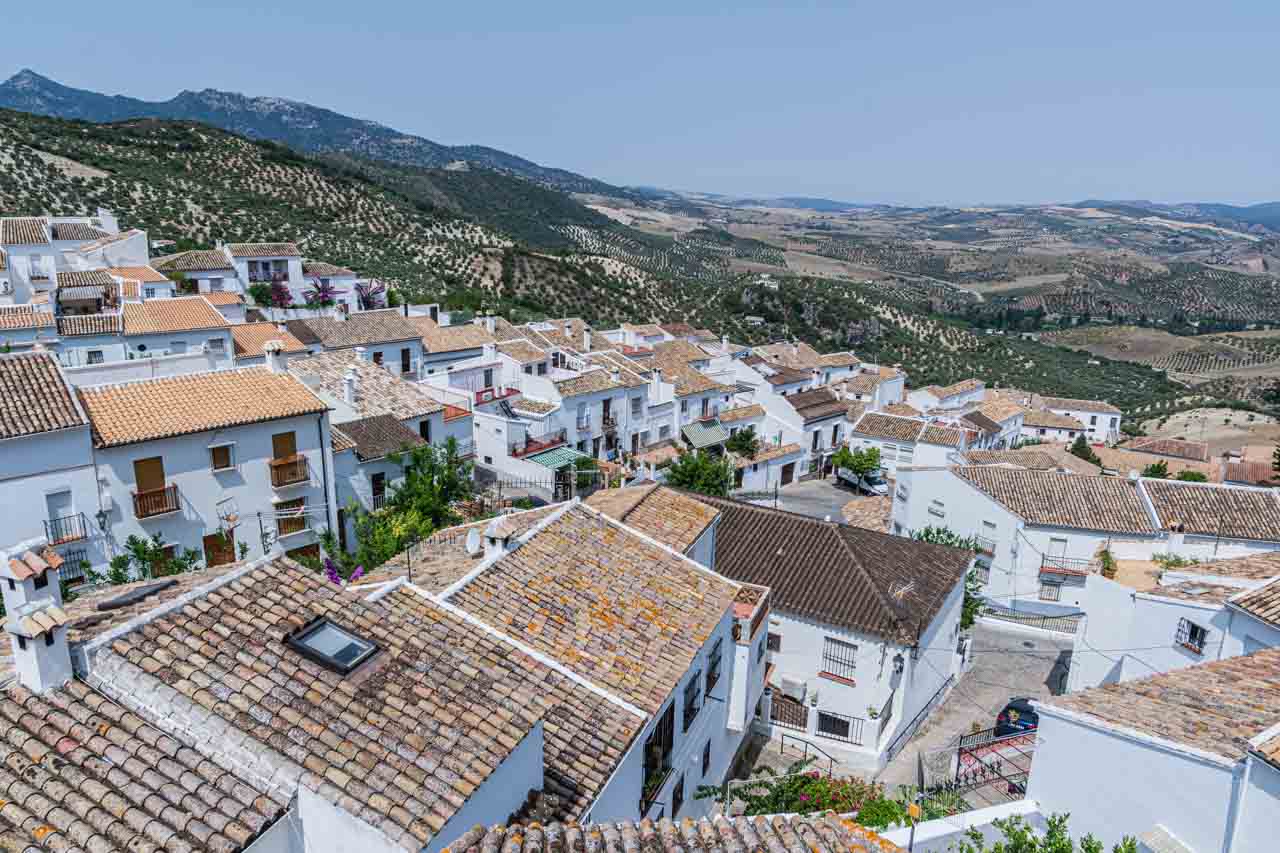
Zahara de la Sierra, White Village in Andalusia.
Zahara de la Sierra is also located in Sierra de Grazalema National Park and has been declared a Historic Site. Being situated on the slopes of the Sierra del Jaral forces the streets to be staggered at different levels. Luckily, the guided walking tour through the village started at the top of the village, and we walked down.
Grazalema and Zahara de la Sierra have been chosen by the Association of the Most Beautiful Villages in Spain as two of the four most beautiful villages in Cadiz Province.
Adios Espana.
THE TWELVE TREASURES OF SPAIN
The Twelve Treasures of Spain lists twelve sites of great historical and cultural value to the Kingdom of Spain. The sites were chosen via a poll by two Spanish broadcasting stations, and the results were announced on 31 December 2007.
- Mosque-Cathedral of Cordoba
- Cave of Altamira (Cantabria)
- Seville Cathedral
- Alhambra (Granada)
- Basilica of Our Lady of the Pillar (Zaragoza)
- Teide National Park (Tenerife, Canary Islands)
- Roman Theatre (Merida)
- Cathedral of Santiago de Compostela
- Ciudad de las Artes y las Ciencias (City of Arts and Sciences, Valencia)
- Sagrada Familia (Barcelona)
- Beach of la Concha (San Sebastian)
- Guggenheim Museum Bilbao
Spain is a country that seamlessly weaves together a rich history, vibrant culture, breathtaking landscapes, and unforgettable experiences. In wrapping up this extensive guide to the ultimate Spain bucket list, I hope to have ignited your wanderlust and provided invaluable insights to help you plan an unforgettable trip to Spain.
From the architectural masterpieces of Antoni Gaudi in Barcelona and the ancient wonders of the Alhambra and Mosque-Cathedral of Cordoba to the natural beauty of the Pyrenees and the hidden gems tucked away in charming villages, this bucket list is not just a checklist but intended as a practical guide for planning your itinerary, offering something for every visitor. My 47 memorable postcards spanning the length and breadth of Spain are just a glimpse into the diverse and incredible things not to be missed when visiting the Iberian Peninsula.
Happy planning and even happier travels!
Disclaimer: This post contains no affiliate links. All views and opinions are my own and non-sponsored. All photos are my own and remain the copyright of Just Me Travel.
© Just Me Travel 2018-2024.
Have you been able to find this Spain Bucket List a helpful resource? I love hearing from you. Please feel free to leave a comment below.
I look forward to reading and responding to your comments on where and what you might include on your trip to Spain that this post has inspired.
Like this post? Save it for later!
Author’s Note: Please check the latest travel restrictions before planning any trip and follow government advice.
You might also like
 5 FABULOUS DAY TRIPS FROM BARCELONA SPAIN: Your Reliable Guide. Create lasting memories! Explore beyond Barcelona and discover the breathtaking landscapes and rich history of Catalonia on 5 unforgettable day trips. Click on the link for inspiration.
No Comments on SPAIN BUCKET LIST: The 47 Incredible Things You Should Not Miss