Just Me Travel

Just Me Travel

Solo Travel Blogger

Tag: Heritage tourism

FROM QUEENSTOWN INTO THE WILDERNESS ABOARD TASMANIA’S HISTORIC TRAIN

My Unbiased Review of Tasmania’s West Coast Wilderness Railway.   Tasmania’s West Coast Wilderness Railway is much more than a scenic train ride, as the slower pace makes the journey…

My Unbiased Review of Tasmania’s West Coast Wilderness Railway.


Tasmania’s West Coast Wilderness Railway is much more than a scenic train ride, as the slower pace makes the journey itself the highlight. It travels through some of the island’s most remote and dramatic landscapes, following tracks built initially to serve the booming late-19th-century mining industry and now restored as a heritage experience. Dense rainforest, deep river valleys, and weathered remnants of the past unfold slowly outside the carriage windows.

I joined the West Coast Wilderness Railway in Queenstown for its Rinadeena, Rack & Rainforest expedition, travelling in the Wilderness (Premium) Carriage, where the combination of comfort, onboard dining, attentive service, and unhurried storytelling made the three-hour journey genuinely memorable.

This post is a detailed personal review of my experience and shares photos from the journey through one of Tasmania’s most remote regions.


About the West Coast Wilderness Railway

The West Coast Wilderness Railway is a historic 34.5-kilometre tourist railway linking Queenstown and Strahan on Tasmania’s rugged west coast, built through cliffs, rivers, and rainforest. It is renowned for using restored 120-year-old steam locomotives and the rare Abt rack-and-pinion (cogwheel) system to climb steep, dense rainforest terrain. Initially built in the 1890s to transport copper from the Mount Lyell mines, the railway offers heritage, wilderness, and dining experiences.

Rack-and-pinion railways are specialised mountain railways designed for extremely steep gradients. The West Coast Wilderness Railway has three kilometres of rack-and-pinion track to haul the train up the mountain between Rinadeena Station and Dubbil Barril Station. In this section, the train climbs from 90 metres above sea level to 270 metres over 2.5 kilometres, reaching a gradient of 1 in 16 and using 3,000 litres of water to cover that distance. It is the steepest steam railway journey in the Southern Hemisphere.

My West Coast Wilderness Railway steam train experience was on the “Rinadeena, Rack and Rainforest” 3-hour expedition, departing Queenstown and featuring off-train activities at Lynchford and Rinadeena stations, with views of the King River and ancient temperate rainforests.

The railway crosses the King River Gorge, a popular spot for river rafters.


This wilderness railway trip was an included excursion on Fun Over 50 Holidays’ 10-day Tasmina tour. It was one of the many highlights of the trip.

Choosing the Wilderness (Premium) Carriage

Travelling in the Wilderness (Premium) Carriage was the decision of Fun Over 50 Holidays when creating the itinerary – an excellent decision at that!

West Coast Wilderness Railway offers two very different carriage experiences. The Heritage (Standard) Carriage features upholstered seating and large windows for scenic viewing. The carriage can accommodate up to 40 passengers.

At the time of writing, the price for travel in the Heritage (Standard) Carriage is $95 per adult and $75 per child. Family tickets are available.

In contrast, the Wilderness (Premium) Carriage offers a more exclusive, relaxed, and personal travel experience:

  • Fewer passengers (a maximum of 26),
  • Spacious, comfortable leather booth seating with tables,
  • Attentive service,
  • Food and beverages served on board,
  • A dedicated host who shares stories and historical insights throughout the journey, and
  • A balcony for up close images as you wind your way through the rainforest.

At the time of writing, the price for travel in the Wilderness (Premium) Carriage is $135 per person. No family tickets are available.

Is the premium upgrade worth it? Absolutely!

The Journey: Highlights Along the Route

Map of the West Coast Wilderness Railway’s Rinadeena, Rack & Rainforest route, which starts and ends in Queenstown.


With its hillsides left bare by 19th-century copper mining, deforestation, and sulphur fumes, Queenstown is not a pretty town. However, soon after leaving the station, the train begins to wind its way through mountainous scenery characterised by dense, cool-temperate rainforest, steep, rocky terrain, and deep, lush gullies.

Railway track with cog-wheel tack in rainforest.

The train travels through cool-temperate rainforest as it climbs the mountainous terrain.


The journey includes several stops along the route, offering opportunities to stretch our legs, photograph the landscape, and learn more about the region’s mining history.

At Lynchford Station, in a historic former gold-mining area, we could try our hand at gold panning, explore the Pioneer Room to learn about the area’s history, or walk alongside the Queen River through the rainforest.

Don’t leave Lynchford Station without pouring a cup of black coffee into the orange-coloured Queen River beside the station. The river is so polluted from historic copper mining upstream that the black coffee turns green when it hits the water. The Wilderness Carriage host showed this ‘trick’ to a friend and me.

Lynchford marks the start of the steep, dramatic climb through temperate rainforest, mountainous terrain, and rugged wilderness towards Rinadeena. Before reaching Rinadeena, the train uses the three-kilometre rack-and-pinion system to ascend the steep grade, beginning just beyond Halls Creek Siding and ending just before Dubbil Barril Station. It is the steepest incline of any railway in the Southern Hemisphere.

The steam locomotive takes on water on the Rinadeena, Rack & Rainforest journey.


We stopped for half an hour at Rinadeena Saddle. The station offers breathtaking views of the surrounding mountains and untouched rainforest, especially from its overhead bridge. It is here that you realise how remote and inaccessible the area is.

The last stop was at Dubbil Barril Station on the northern bank of the King River. It is the turnaround point for the West Coast Wilderness Railway, where the steam locomotive is turned on a turntable to reconnect with the carriages for the return journey to Queenstown.

The time taken to turn the steam locomotive around allowed me to explore the rainforest adjacent to the station.

A walk through the rainforest at Dubbil Barril Station.


Food and Drink in the Wilderness Carriage

One of the perks of travelling in the Wilderness (Premium) Carriage was the onboard catering included in the fare, a service not provided in the Heritage (Standard) Carriage, where snacks and drinks can be purchased on board or at stations along the way.

Boarding our Wilderness Carriage, we were welcomed with a glass of wine or orange juice and canapés as we departed Queenstown Station. Morning tea and lunch were served at our table during the journey, allowing us to chat with new friends and watch the landscape slowly pass by.

The quality and presentation of the catering elevated the journey, turning the day trip into a dining experience as well as a historic steam train ride. It added a relaxed rhythm to the day and reinforced that this was indeed a premium experience to be savoured by all the senses.

Service and Onboard Experience

Service throughout the journey was warm, knowledgeable, and unobtrusive. The Wilderness Carriage host shared stories and historical context without overwhelming the experience, striking a balance between informative and relaxed.

Questions were welcome, and the host showed genuine pride in the railway and its history. Combined with the slower pace of travel, the service helped create an immersive atmosphere rather than a rushed one.


Travelling aboard Tasmania’s West Coast Wilderness Railway was not just a scenic train ride. As we travelled through dense rainforest, alongside rivers and past relics of a brutal mining past, the journey itself became the highlight. The combination of a heritage steam locomotive, the rare rack-and-pinion climb, and the attentive hospitality of the Wilderness (Premium) Carriage transformed the Rinadeena, Rack & Rainforest journey into an unforgettable adventure.

Whether you’re a railway enthusiast, a lover of the wilderness, or simply seeking a unique Tasmanian experience, the West Coast Wilderness Railway from Queenstown offers a journey that lingers long after you return home.


Disclaimer: This post contains no affiliate links. All views and opinions are my own and non-sponsored. All photos are my own and remain the copyright of Joanna Rath/Just Me Travel.

© Just Me Travel 2018-2026.


Are you planning your own trip to Tasmania and have questions about the West Coast Railway? Drop them below, and I’ll be happy to help.


Like this post? Save it for later!


Author’s Note: Please check the latest travel restrictions before planning any trip and follow government advice.


Sign up to receive the latest in travel destinations, topics, resources and guides.


© Just Me Travel 2018-2026. All rights reserved.


No Comments on FROM QUEENSTOWN INTO THE WILDERNESS ABOARD TASMANIA’S HISTORIC TRAIN

OLD BEECHWORTH GAOL GUIDED TOUR – An Authentic and Educational Step Back in Time

Old Beechworth Gaol – A Horrible History Tour.   The Old Beechworth Gaol guided tour is much more than a walk through a heritage-listed building. It is the perfect way…

Old Beechworth Gaol – A Horrible History Tour.


The Old Beechworth Gaol guided tour is much more than a walk through a heritage-listed building. It is the perfect way to explore the gaol and have history come alive. Beechworth Gaol is a time capsule that offers an authentic and educational look into the past. Visit the cells that housed notorious bushrangers, learn about convict life, and uncover some of the gaol’s darker history. Step inside and go back in time with an expert guide.


Beechworth is North East Victoria’s best-preserved gold rush town, leaving a legacy of colonial architecture that boasts 32 heritage-listed buildings. Old Beechworth Gaol is one of those buildings, and it is heritage-listed by the National Trust for its historical, architectural, and archeological significance to the state of Victoria.

Getting there

A short drive from Albury (45 kilometres), Beechworth is in my backyard.

For those living further afield, Beechworth is a 3-hour drive northeast of Melbourne (284 kilometres), 4 hours southwest of Canberra (391 kilometres), and about 6 hours southwest from Sydney (593 kilometres).

Don’t have a car? From Melbourne, Canberra, and Sydney, take a train to Wangaratta and then the bus to Beechworth on Wangaratta Coachlines.

Old Beechworth Gaol is located on the corner of Williams Street and Ford Street, Beechworth.

Tours of Old Beechworth Gaol operate daily at 11.00 am and 1.00 pm and take about one hour. You can purchase your guided tour tickets at the Old Beechworth Gaol Cafe located in the gaol wall near the main gates. Alternatively, you can book your tickets in advance online. Please check their Facebook page, The Old Beechworth Gaol, for updates on tours.

Our guided tour of old Beechworth Gaol started with a double vaccination status check. Walking through the main gates, the courtyard provided a venue for Daniel, our tour guide, to give us an overview of the history of Beechworth gaol.

  • Taking approximately six years to build, Beechworth Gaol was opened in 1864 and initially housed men and women.
  • The outer stone walls are granite.
  • The razor wire on top of the gaol’s walls replaced the original barbed wire.
  • The current iron gates replaced the original wooden gates in 1879 when there was a suspected prison outbreak.
  • Beechworth Gaol was a medium-security prison.
  • The prison has a history spanning 140 years, closing in 2004.

From the courtyard, our tour took us to the hard labour yard where male prisoners were put to work crushing granite rocks into gravel for roads and footpaths. The guards in the towers overseeing the hard labour yard worked 12-hour shifts.
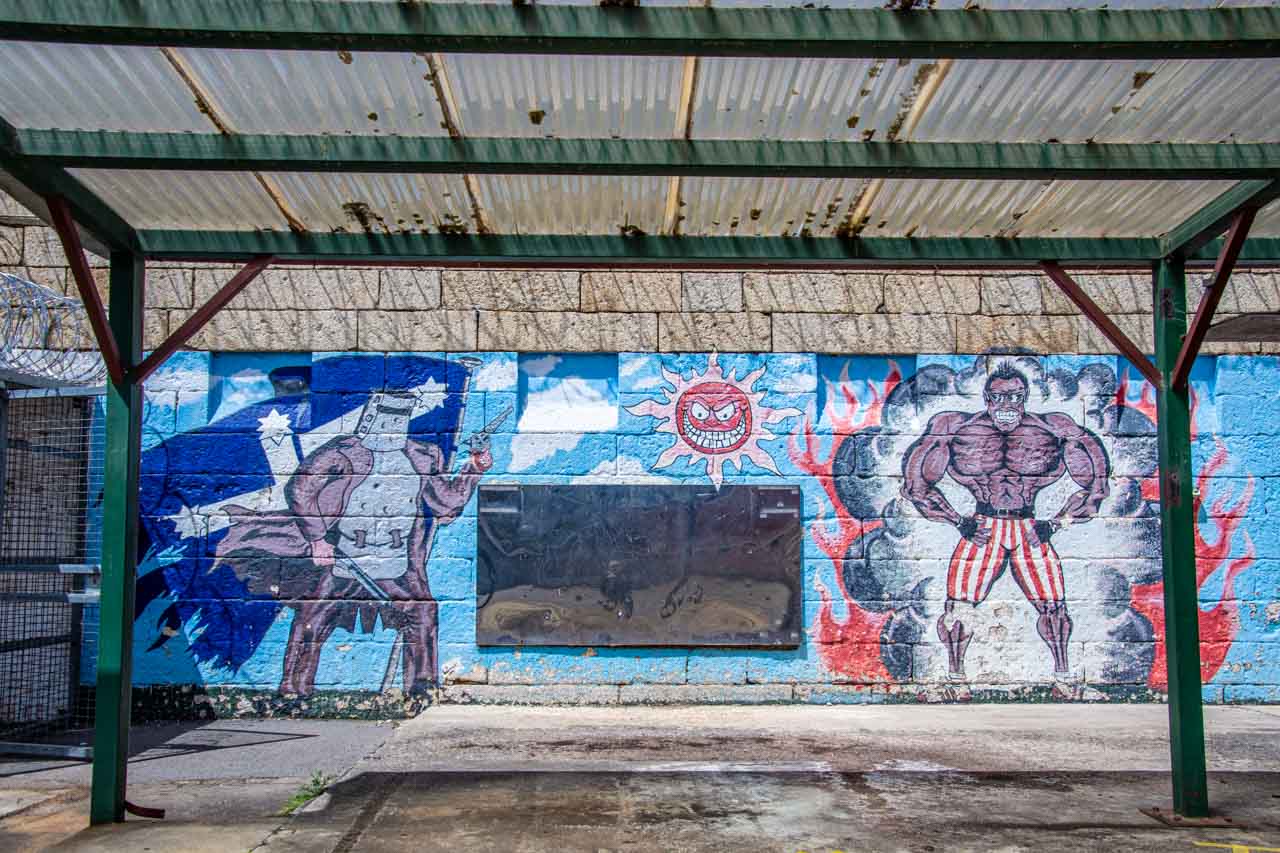
A painting on a brick wall of a man in metal armour and helmet with a gun in each hand. Also painted is a man with very muscly arms and chest.

The mural in the hard labour yard painted by the inmate, Woodsie


Moving into the cell blocks was like entering a time capsule, where time has stood still since the prison’s closure in 2004. The feeling of being locked in time was confirmed by Daniel when he advised the cells have not been touched since 2004.
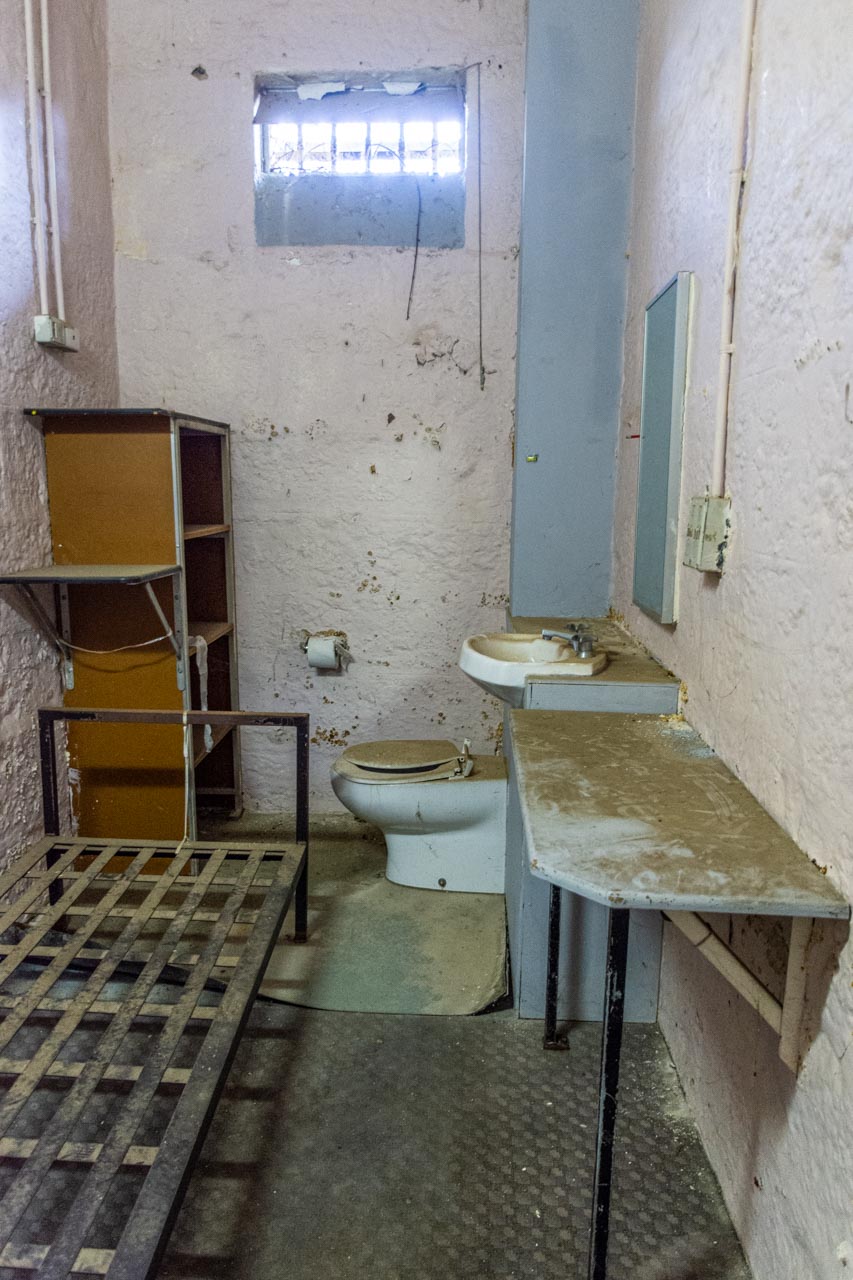
A prion cell in an old gaol with toilet, hand basin, bench, cupboard, and iron single bed.

A cell on old Beechworth Gaol – a time capsule


In the men’s cellblock, the gallows with the hangman’s noose was visible on death row – the top floor of the men’s cellblock. Eight men were executed in Beechworth Gaol between 1865 and 1881, and they are buried in unmarked graves in the exercise yard against the western wall.
A prison cell block with open doors to cells on the lower floor and gallows and hangman's noose on the upper floor.

The gallows and hangman’s noose on death row in the men’s cellblock


Daniel regaled us with stories of Ned Kelly’s misadventures (murder, assault, theft, and armed robbery) that landed him in Beechworth Gaol. Daniel was an entertaining storyteller. See below for details of who was Ned Kelly and his connection to Beechworth Gaol.
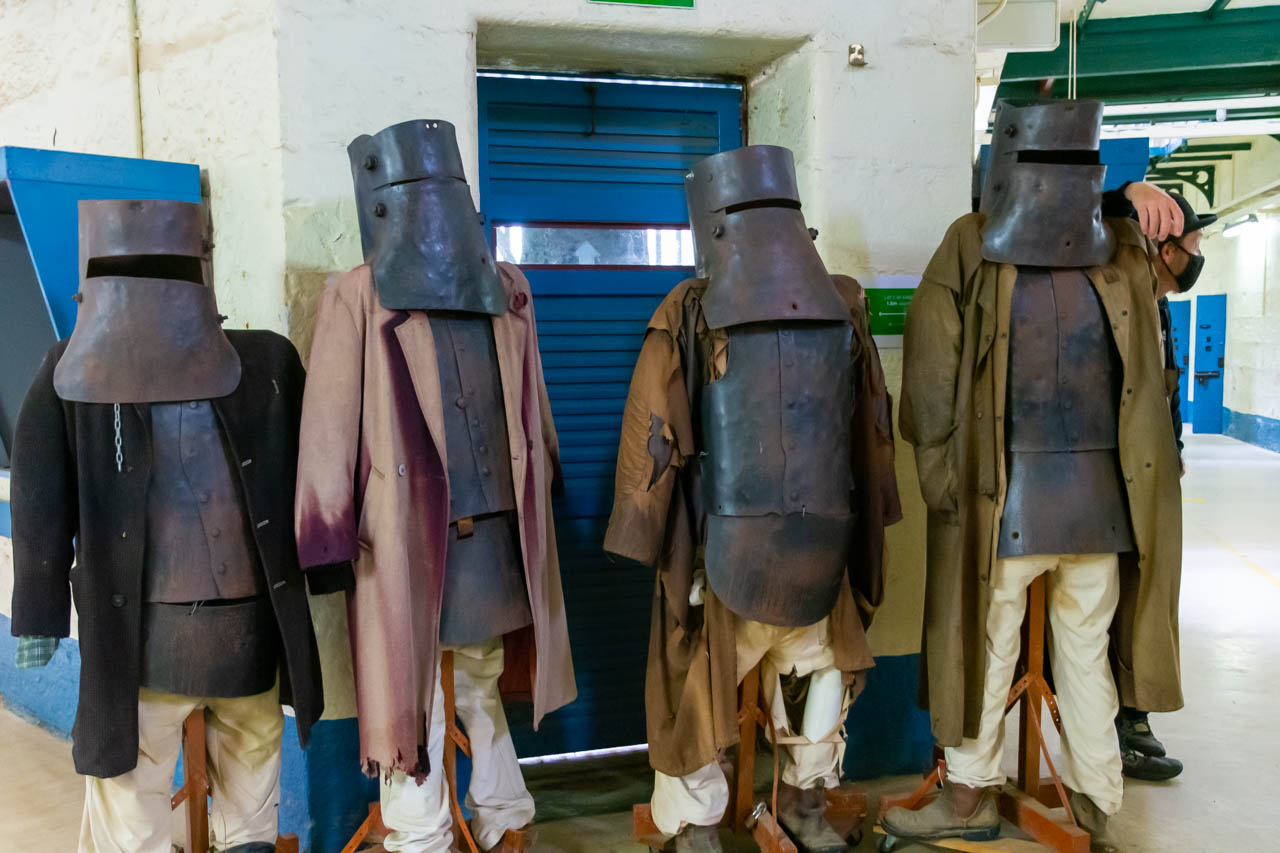
An image of four dummies wearing metal body armour and helmets

Effigies of Ned Kelly and the Kelly gang


In the women’s cellblock, cell 10 was the designated mother’s cell with its two doors. One door (the front door) led into the cellblock, and a guard could open the back door to allow the mother to let her children outside to play. Daniel explained that the children were not prisoners but were locked up with their mother.
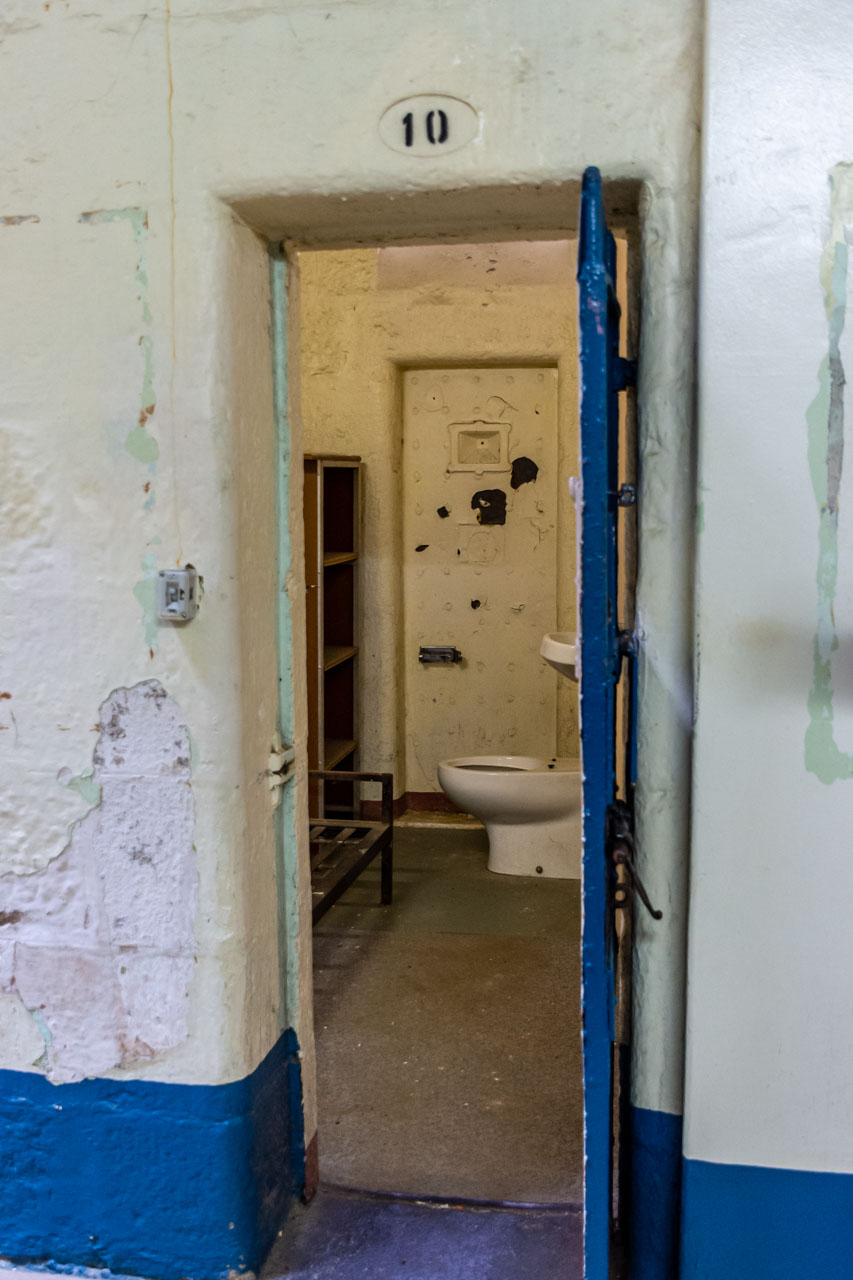
A prison cell with front and back doors

Cell 10 – the mother’s cell with its double doors


At the end of the women’s cellblock is the solitary confinement cell where a prisoner was locked in the cell 23 hours a day. The prisoner was allowed outside in a caged area for one hour a day.
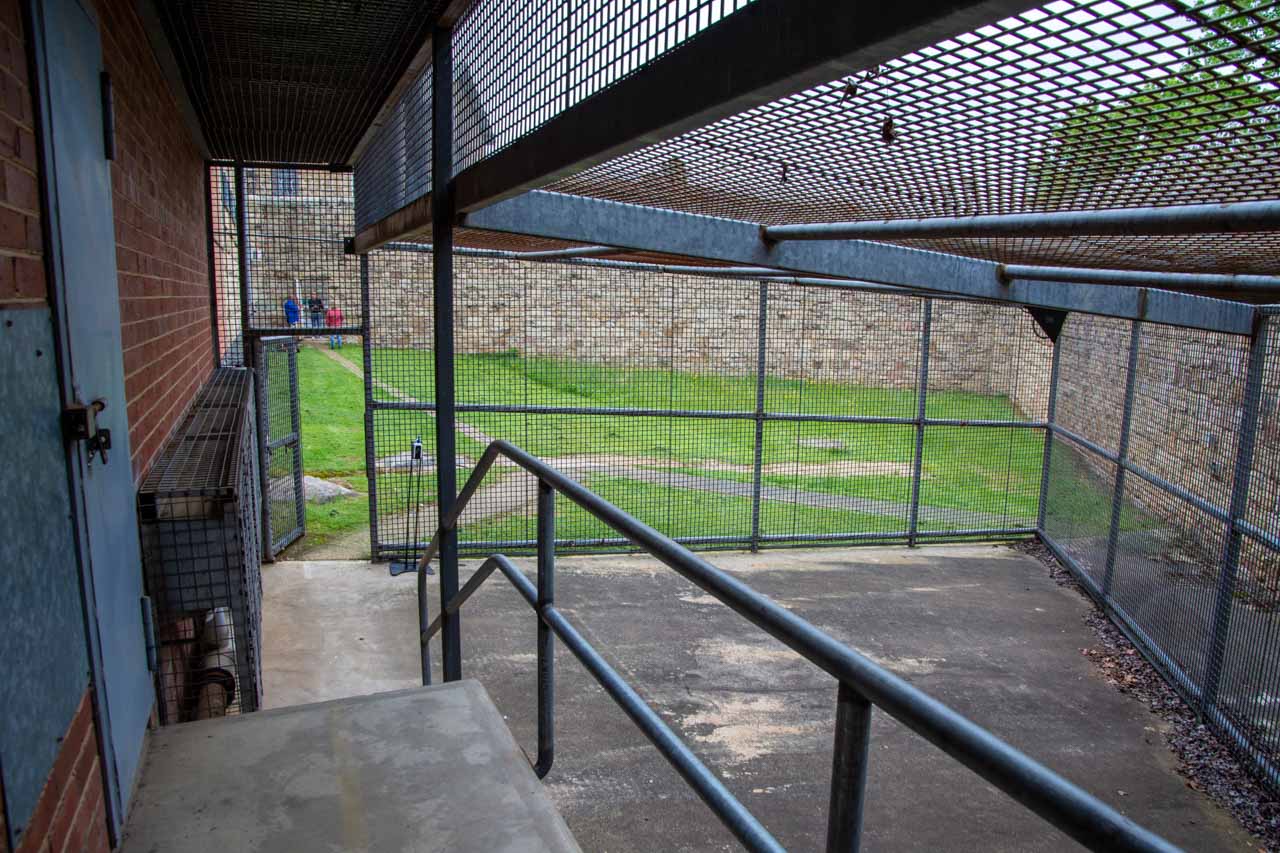
A large cage within a grassed and walled area.

The prisoner solitary confinement exercise cage


Our final tour stop was the exercise yard, the burial site of the executed men. An empty swimming pool dominates this lawned area.
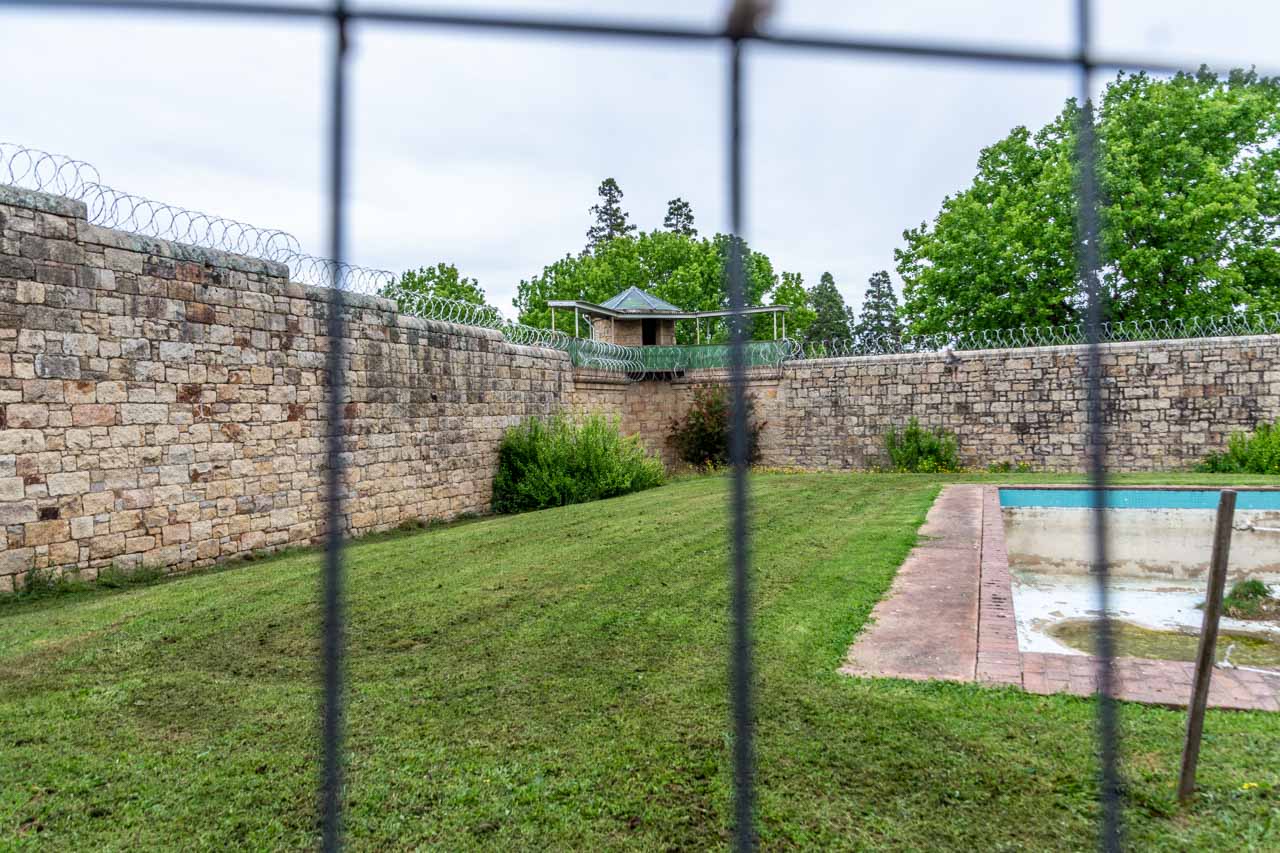
Image of a lawned area with empty swimming pool, surrounded by stone walls with razor wire and overlooked by a watch tower.

Old Beechworth Gaol and the Ned Kelly connection

Ned Kelly was Australia’s most notorious bushranger and known for wearing a suit of iron armour during his final shootout with police. He was immortalised in the 1970 Ned Kelly movie starring Mick Jagger in the title role.

For those not familiar with Australian colonial history, escaped convicts who used the bush to hide from authorities were the original bushrangers. By the 1820s, the term had evolved to refer to those who took up armed robbery as a way of life, using the bush as their base.

Ned Kelly first became intimately acquainted with the inside of Beechworth Gaol at the age of about 13. Over the ensuing years, he became more familiar with the gaol on at least two other occasions.

Daniel was a wealth of information about Ned Kelly and his time spent in Beechworth Gaol. He held our undivided attention when telling of Ned’s imprisonment for lewd behaviour and assault when he was 16 years old. According to Daniel, Ned sent a package to a lady containing a man’s testicles and later assaulted her husband. There is great truth in the story as Ned did indeed send testicles to the lady. However, depending on your resource will determine the nature of the testicles. A man’s testicles, a calf’s testicles, two calves’ testicles – believe what you will. I suspect the story has grown legs.

For the lewd behaviour and assault crimes, Ned Kelly received 6 or 8 months (once again, depending on your resource) imprisonment in Beechworth Gaol.

Time for lunch

Whether you do the old Beechworth Gaol guided tour in the morning or afternoon, you must eat in Beechworth.

You are spoiled for choice for places to eat in Beechworth. I have eaten at several places and never had a bad meal.

On the day of my old Beechworth Goal tour, I ate at the Beechworth Pantry Gourmet Delicatessen & Coffee Shop on Ford Street. I ordered the Asparagus, Leek and Cheese Quiche with apple and Pear Salad and couldn’t resist the Hazelnut Meringue with Berries and Cream. I left the cafe very satisfied and with bars of fruit nougat in hand for later enjoyment.

My final review

If you plan to visit Beechworth, do yourself a favour and take a step back in time with a guided tour of old Beechworth Gaol. The tour provides all ages with an authentic and educational experience in which local, expert guides bring a dark history to life. It is a unique experience not to be missed and highly recommended.
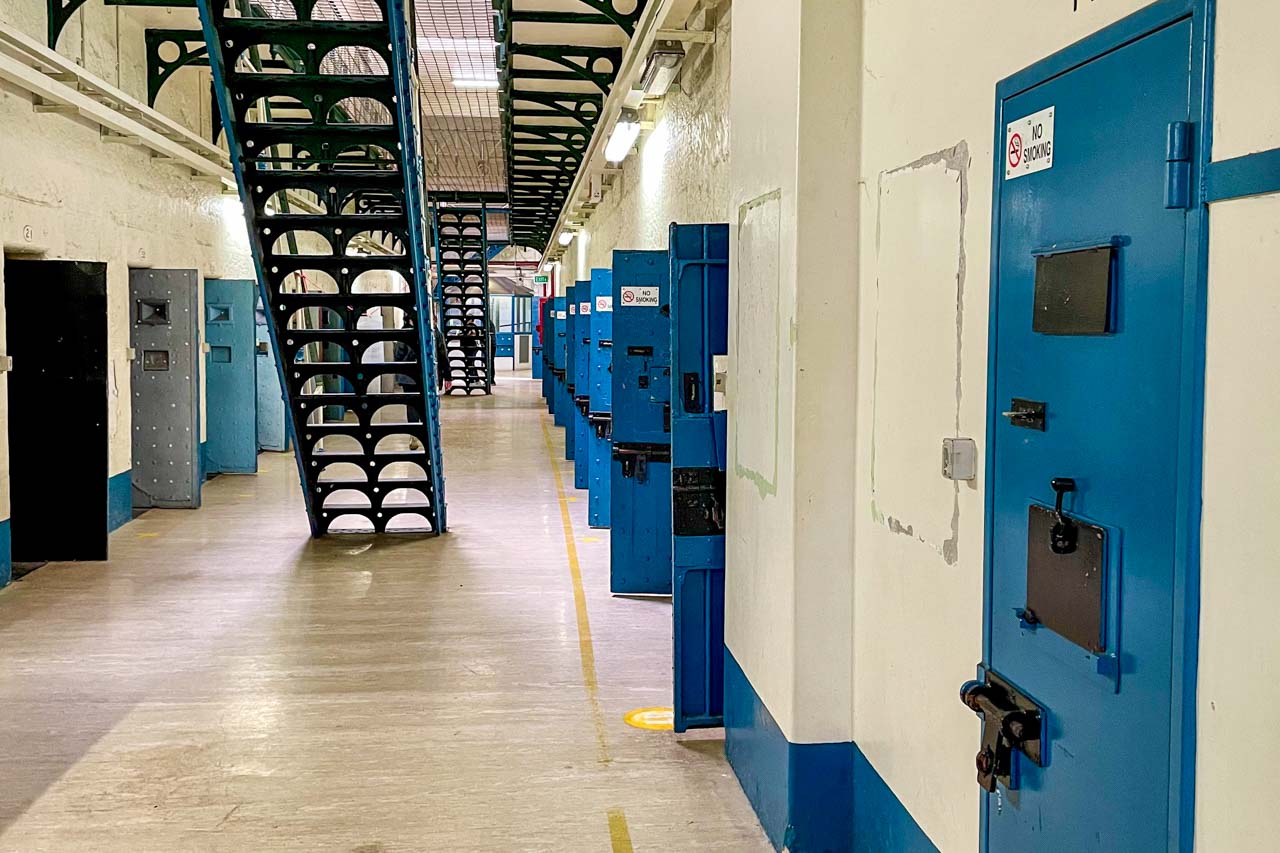
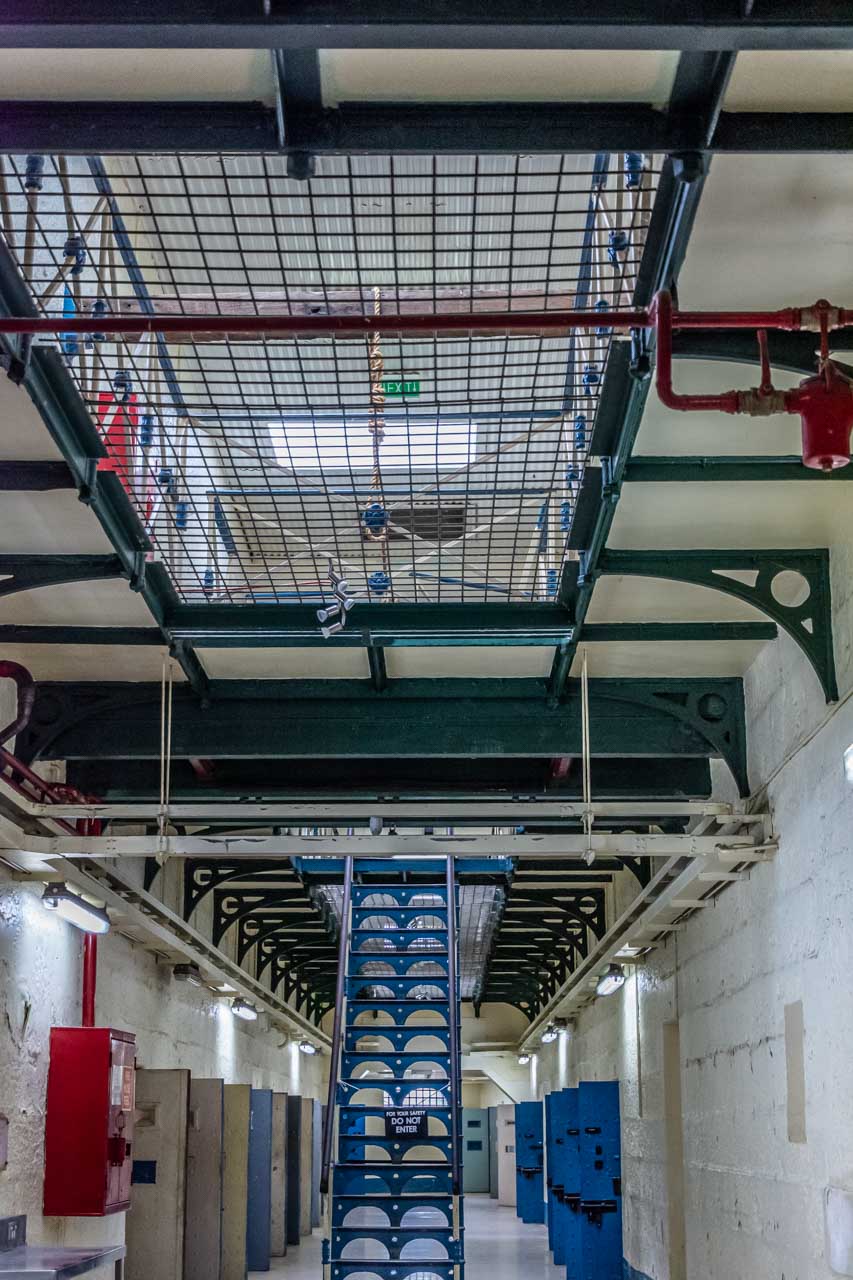
A corridor with numerous open blue metal doors with heavy metal bolts on the doors. Two set of stairs are in the middle of the corridor.

The female cellblock in old Beechworth gaol


Disclaimer: This post contains no affiliate links. All views and opinions are my own and non-sponsored. All photos are my own and remain the copyright of Just Me Travel.

© Just Me Travel 2018-2022.


Please leave a comment below to share your thoughts. The only other prison tour I have taken was to Alcatraz when I was visiting San Francisco. Where have you taken a prison tour?


Like this post? PIN it for later!
 

Author’s Note: Please check the latest travel restrictions before planning any trip, and always follow government advice.


No Comments on OLD BEECHWORTH GAOL GUIDED TOUR – An Authentic and Educational Step Back in Time

Type on the field below and hit Enter/Return to search